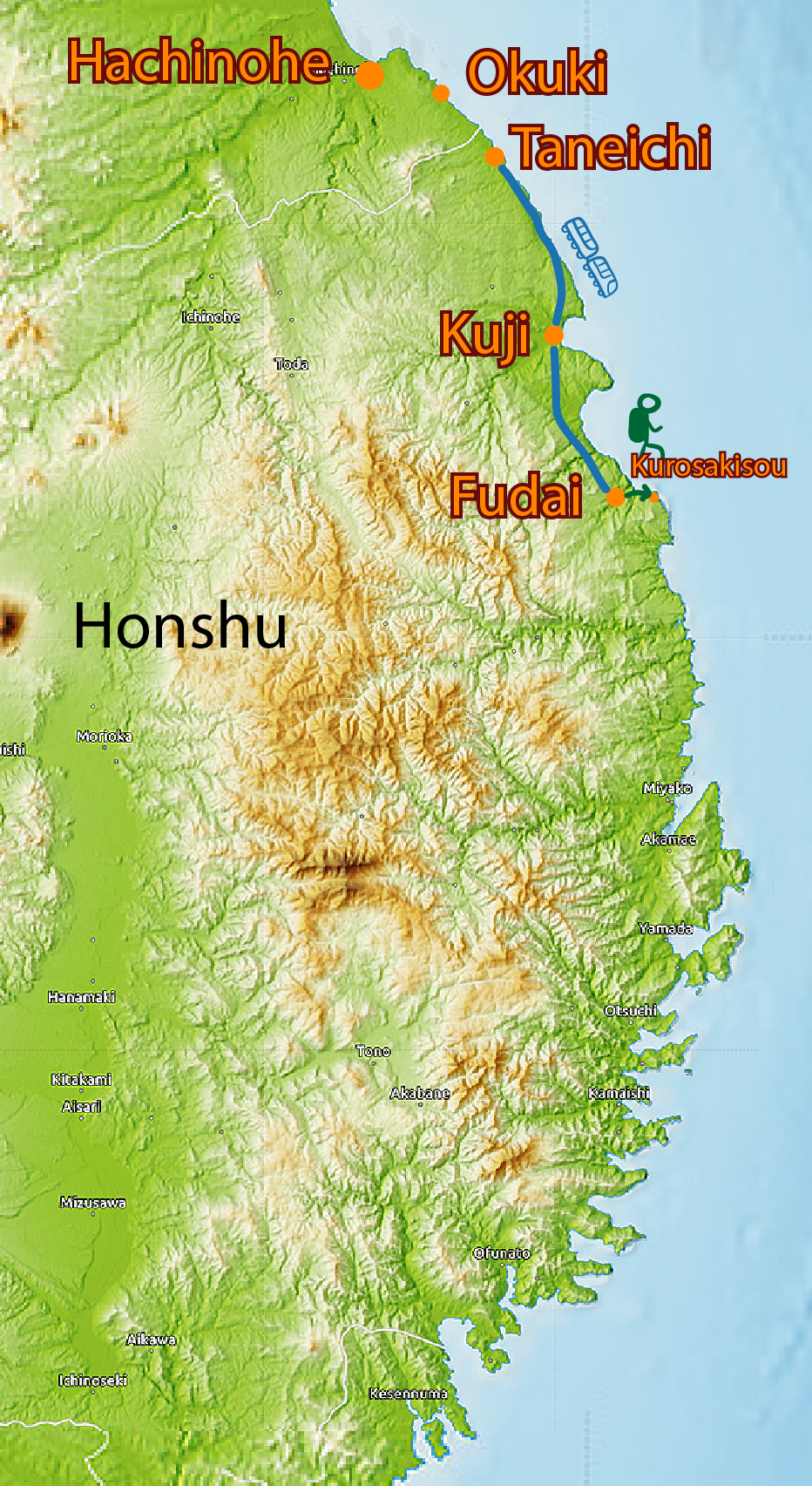
Our next trip was another short one, because the reststations on the way are not very evenly distributed. In total we hiked from the Fudai train station to the Tanohata train station with a night spent at Kurosakiso hotel.
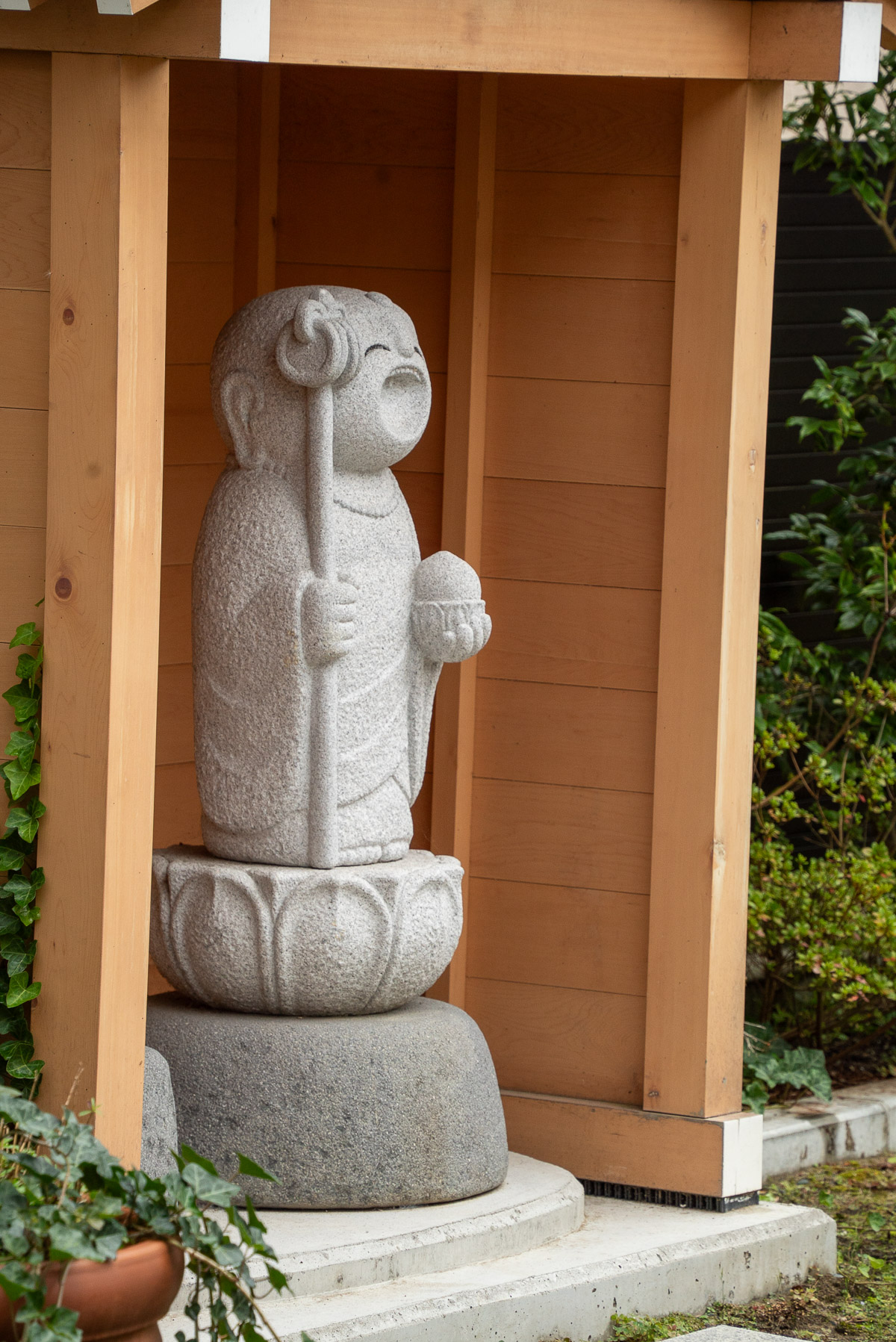
On our way in Taneichi we met this singing monk.
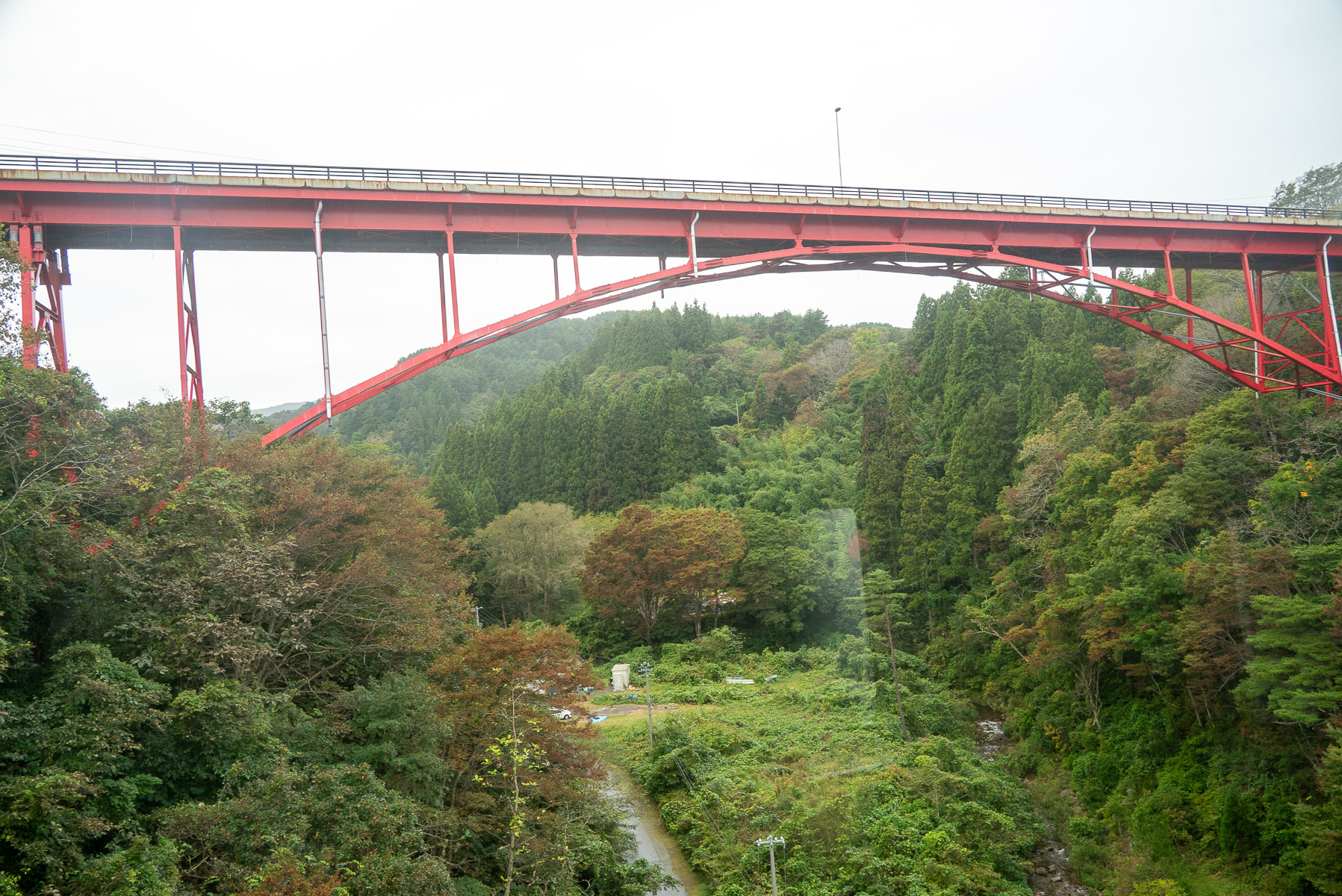
The train which we took to Fudai would regularly give announcements about upcoming sights and even stop from time to time to give the passengers time to take photos.
This part of the trail is definitly less well developed than the Hachinohe part and we had to walk part of it on a regular road without a sidewalk, which we didn’t appreciate so much.
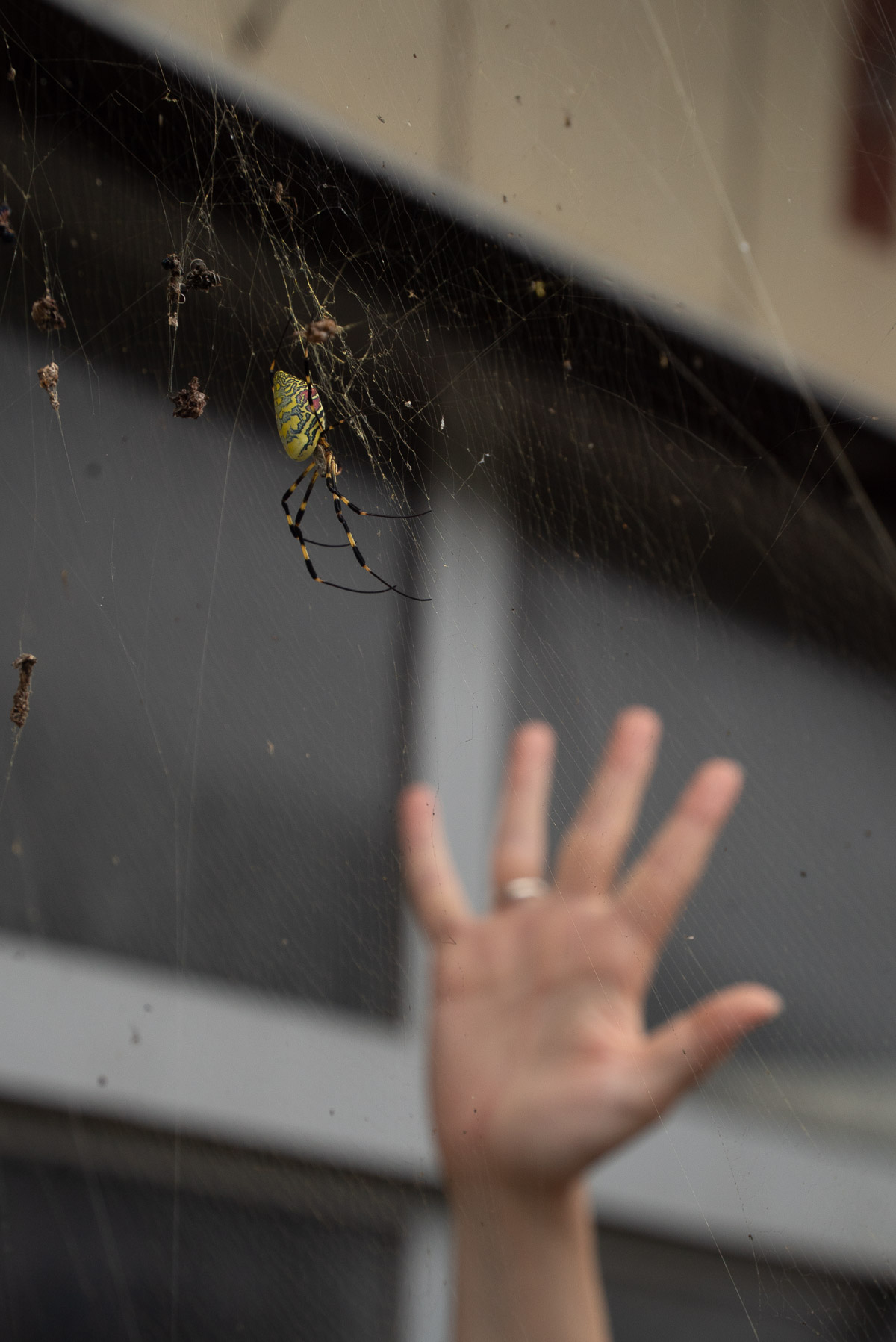
We first noticed the Jorougumo (Jorou-spider – Trichonephila clavata) in Fudai – Charlie’s hand is about 30cm (12 inches) from the web. Outside of Hokkaido they are native to all of Japan, but we’re certain that here in Iwate we met by far the biggest specimen. And since they were so plentyful and we had to go underneath them frequently, we thought that it was only a matter of time until Jörg would walk into one of their webs face-first. Luckily this horror scenario did not come true – phew!
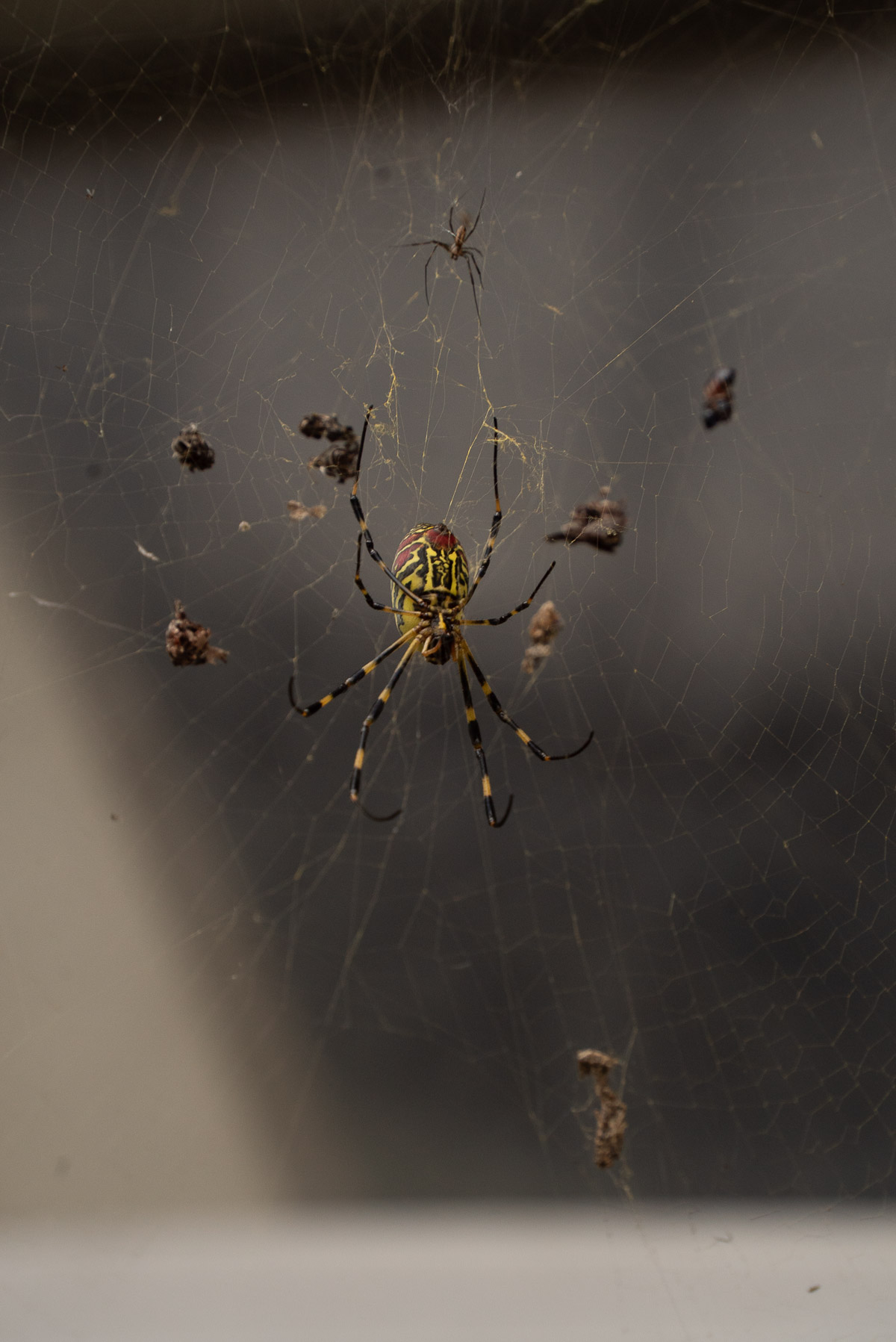
Here we can see the strong sexual dimorphism – the small male is barely noticable! Despite their impressive size and fancy colouring these spiders pose no danger to humans. Their fangs are weak so that they seldomly bite humans and their venom is mostly harmless, though slightly painful.
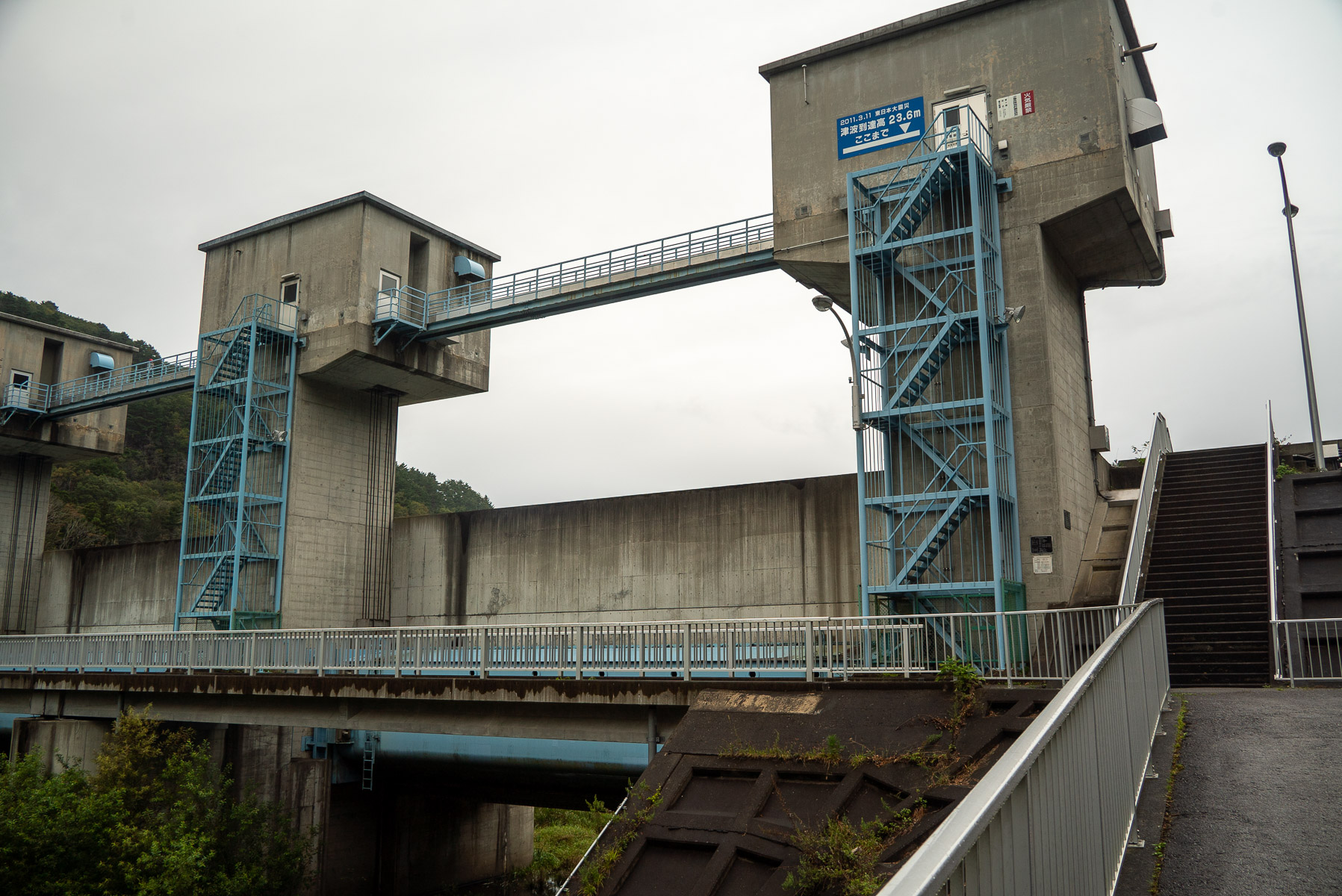
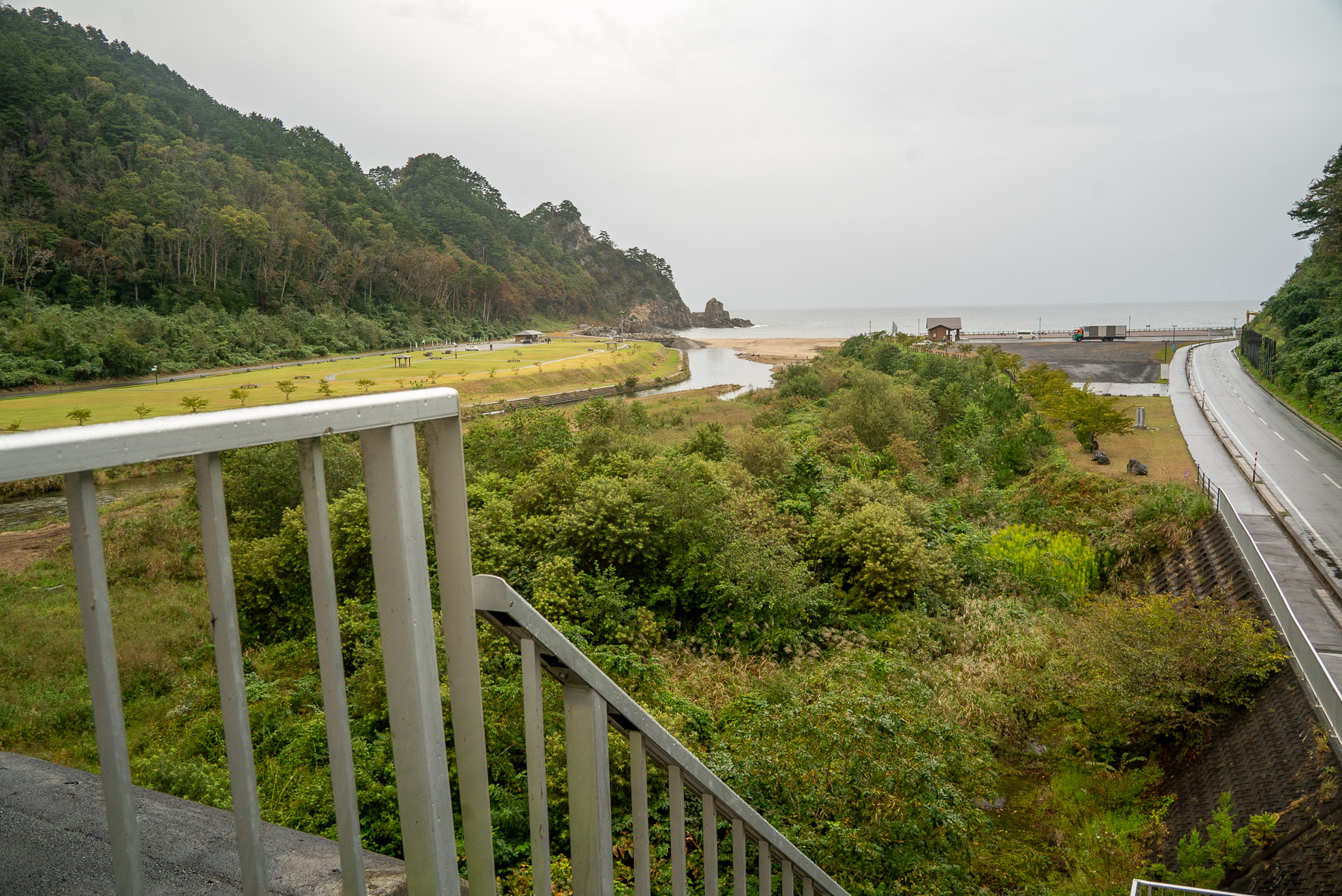
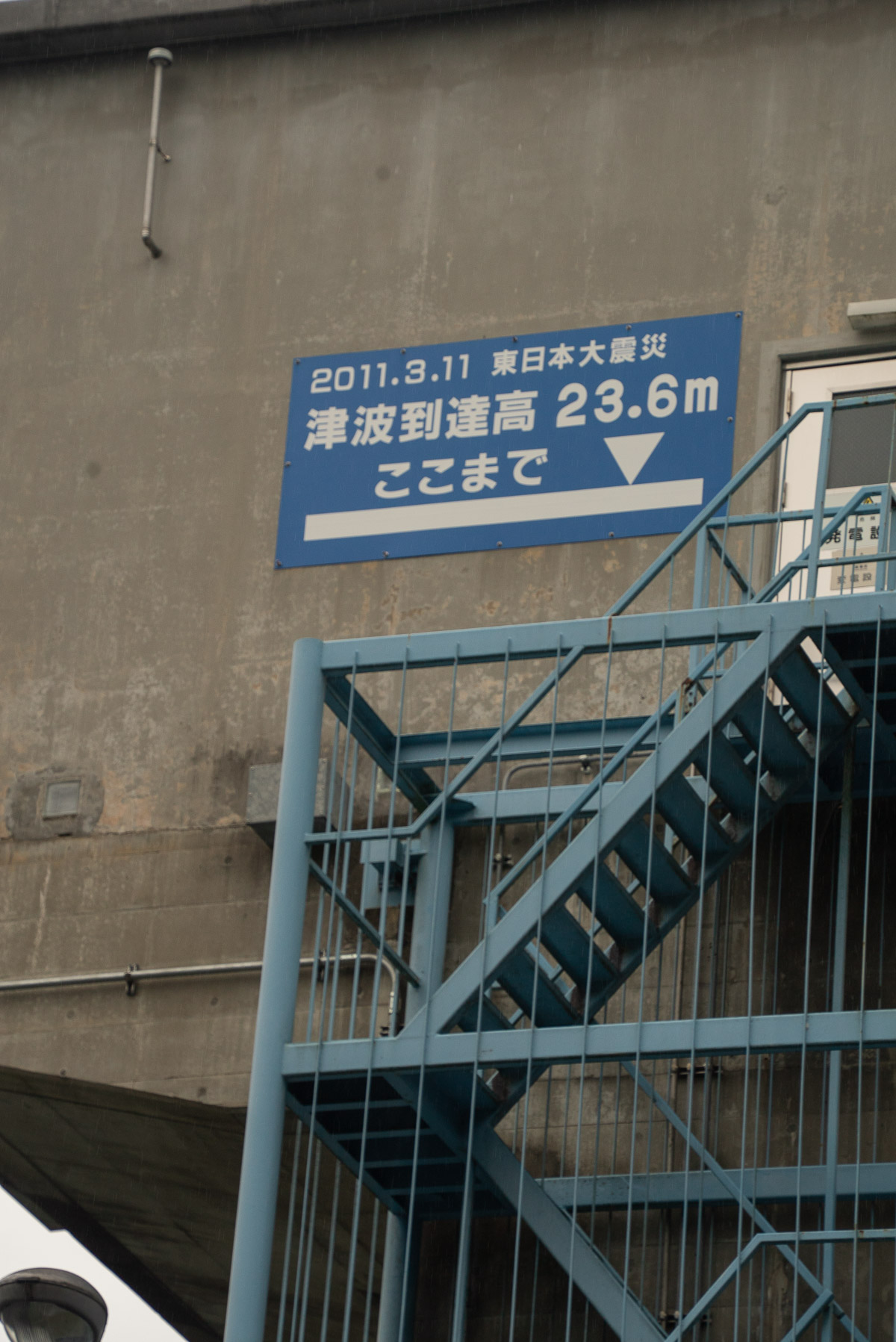
There is a floodgate in Fudai that is very impressive, but doesn’t really translate to the picture.This area was completely flooded in the Tsunami following the 2011 Touhoku earthquake.
This marking shows how high the tsunami reached. Though the gate was submerged, it held off the brunt of the wave resulating in Fudai only suffering smaller damages and only one person, that went outside the wall, dying in the catastrophy.
We made fun of this sign for weeks after
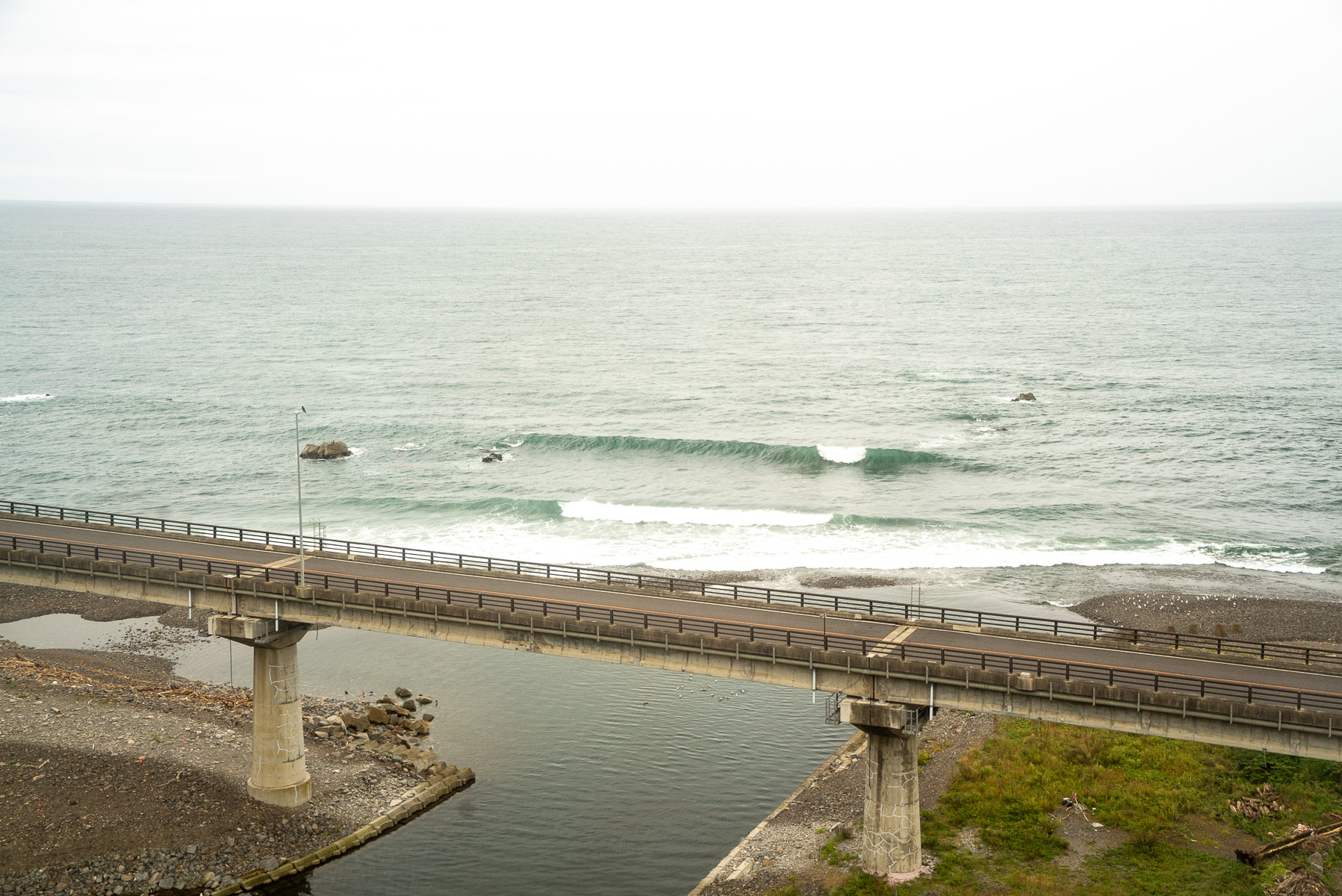
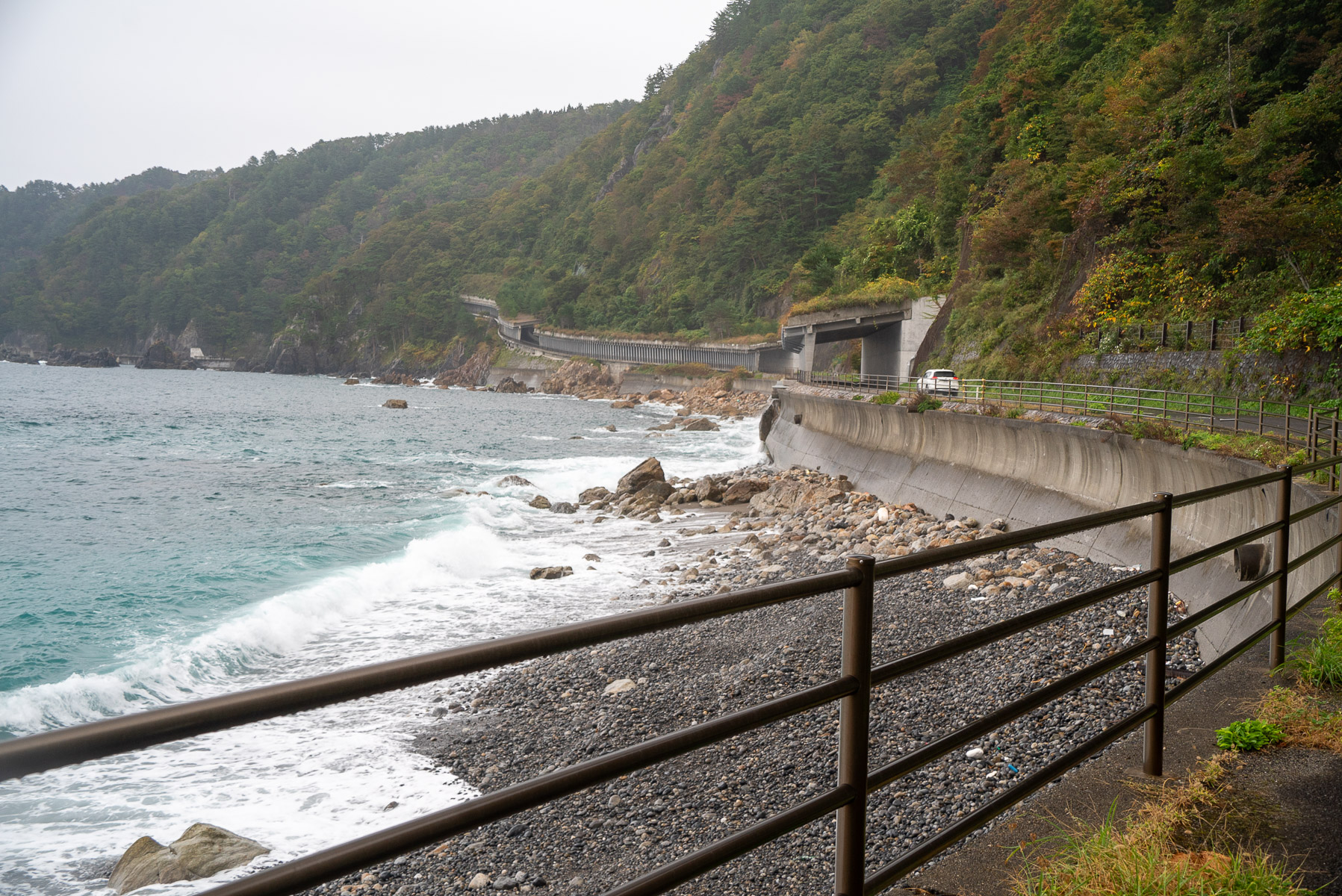
But since there were few cars on the road, by the time we reached the “open” tunnels, our dismay quickly dissipated. For the first tunnel we still had to walk right next to the traffic, but all tunnels thereafter had a sort of column design on the side facing the ocean. As a pedestrian you can simply pass between these columns and walk on a path next to the tunnel from which you had a terriffic view of the pacific.
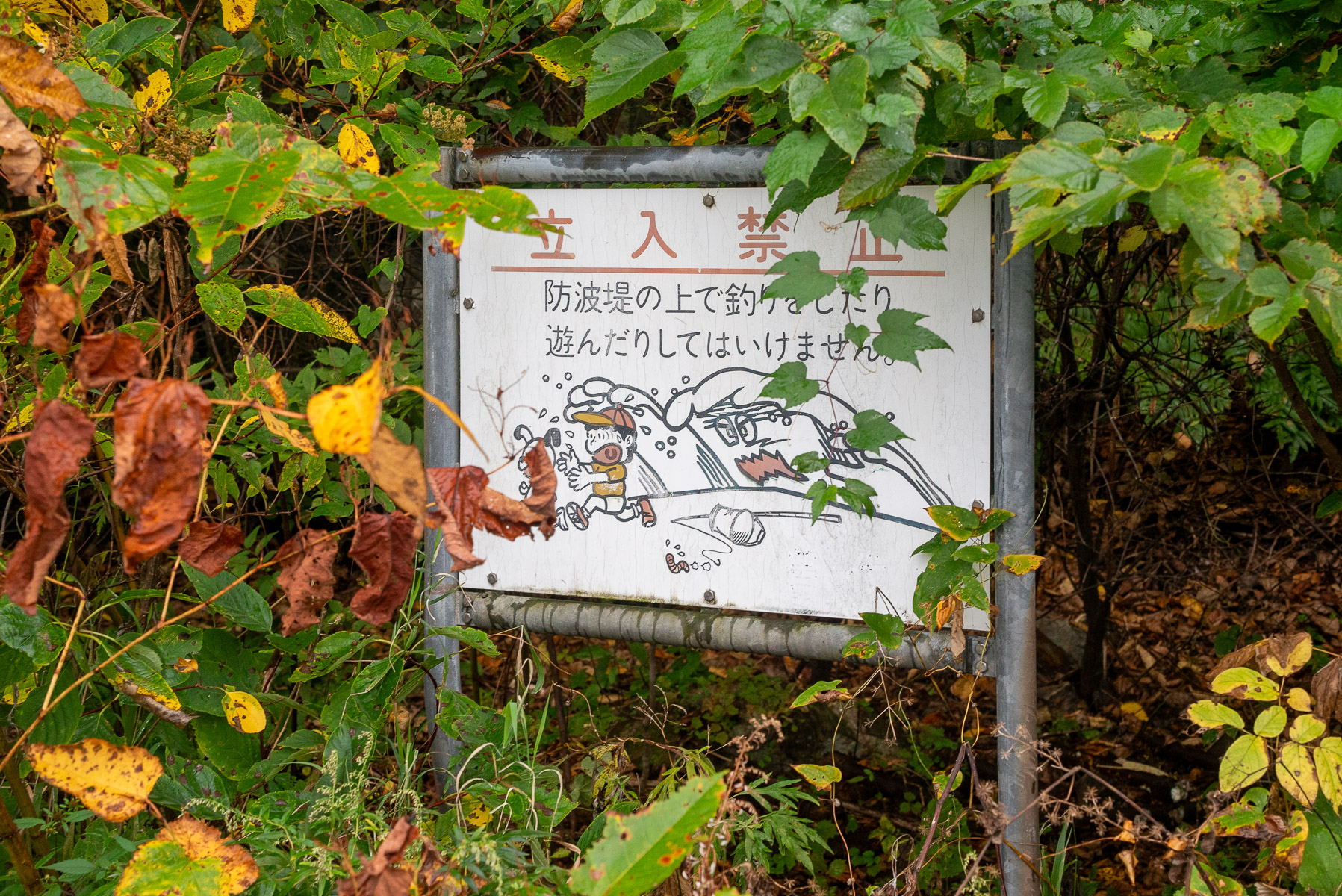
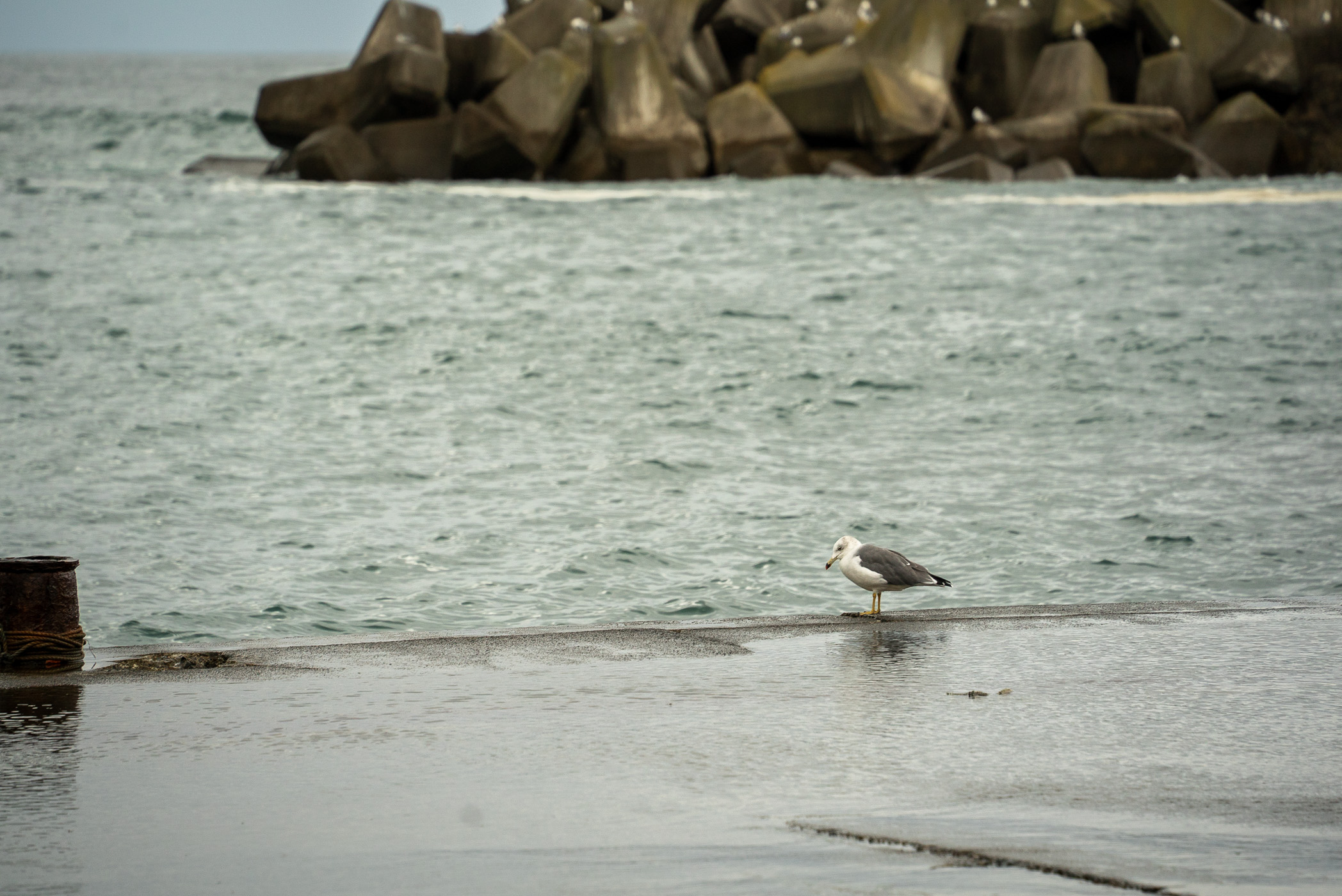
“Do not enter – fishing and playing are not allowed on the breakwater!”
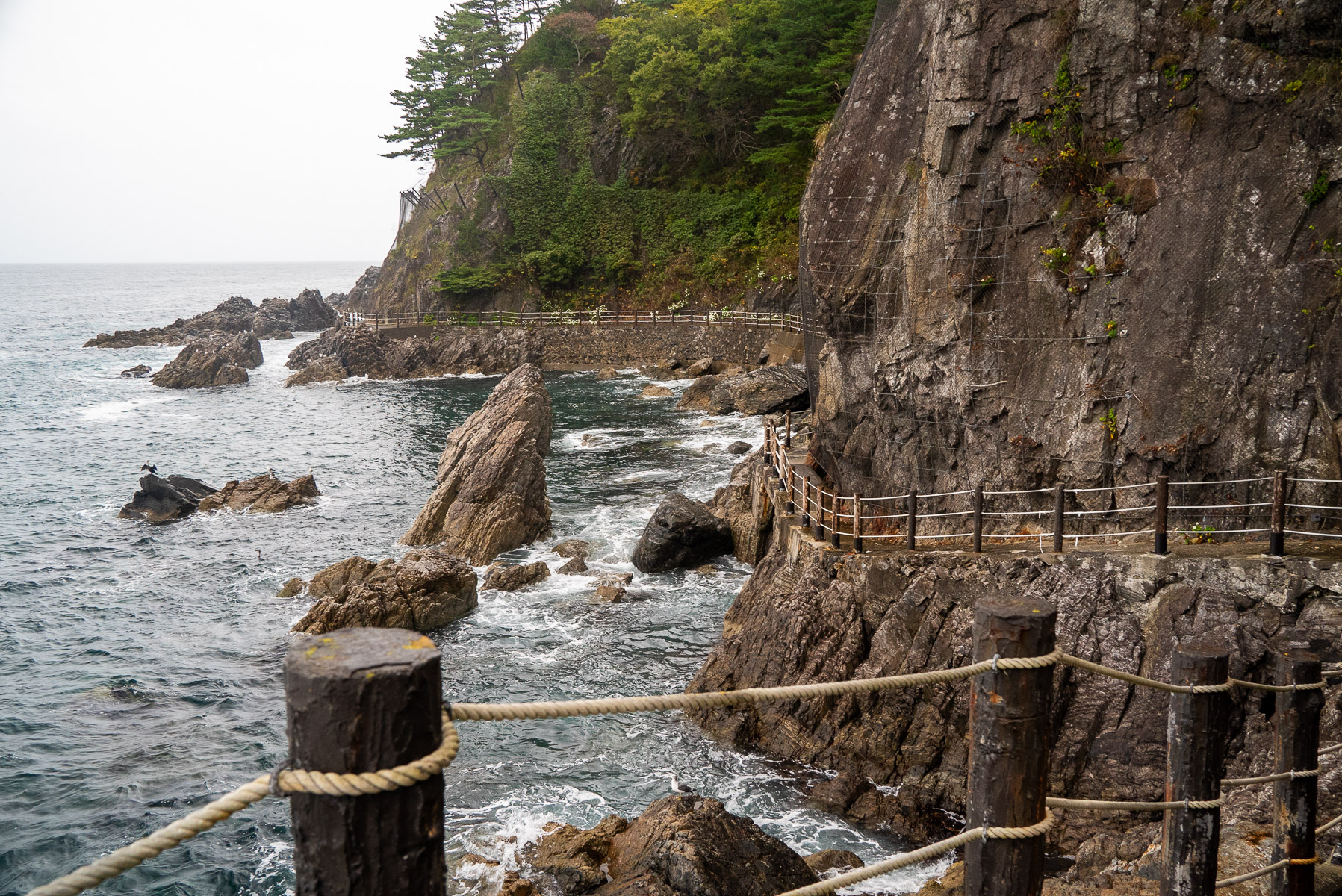
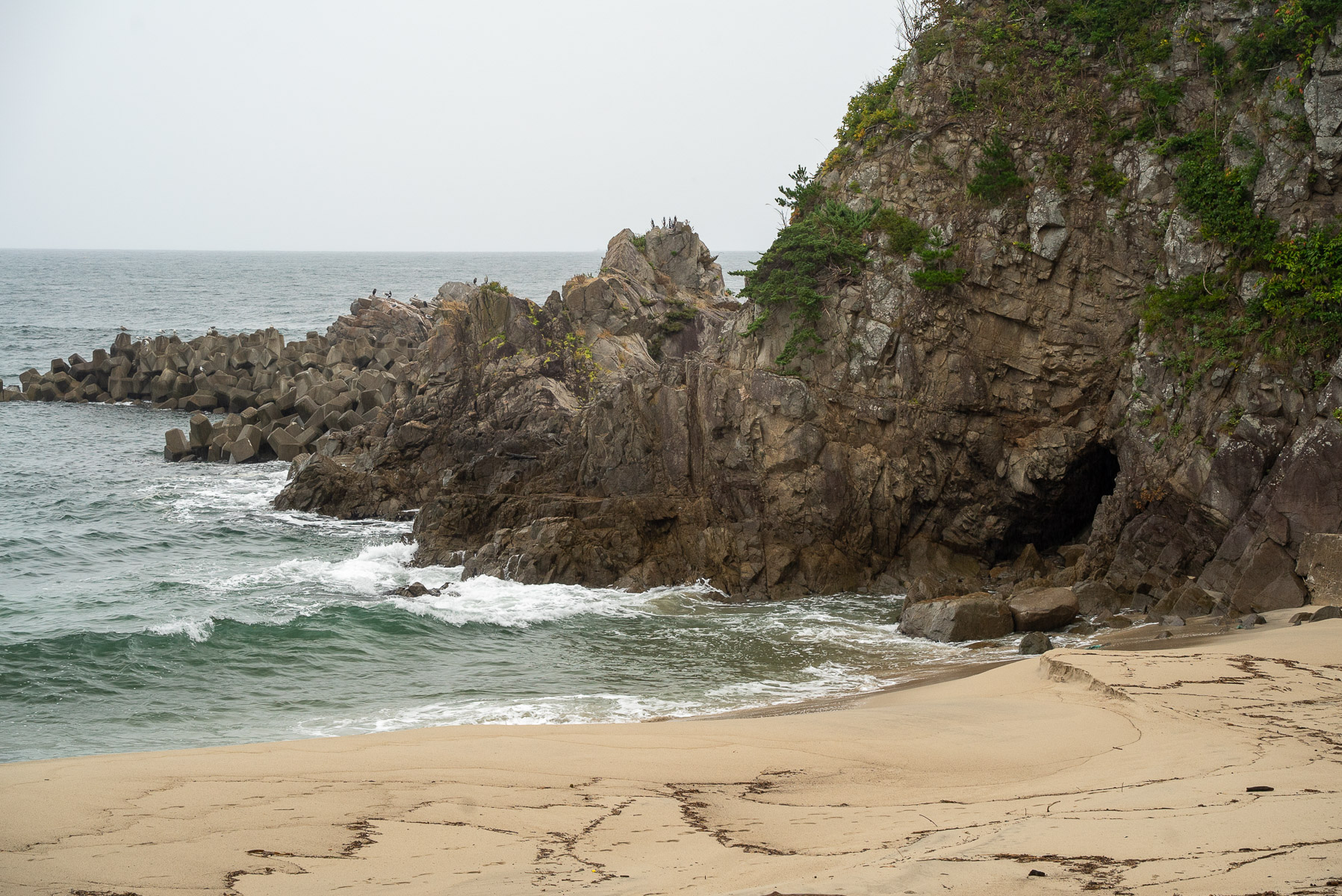
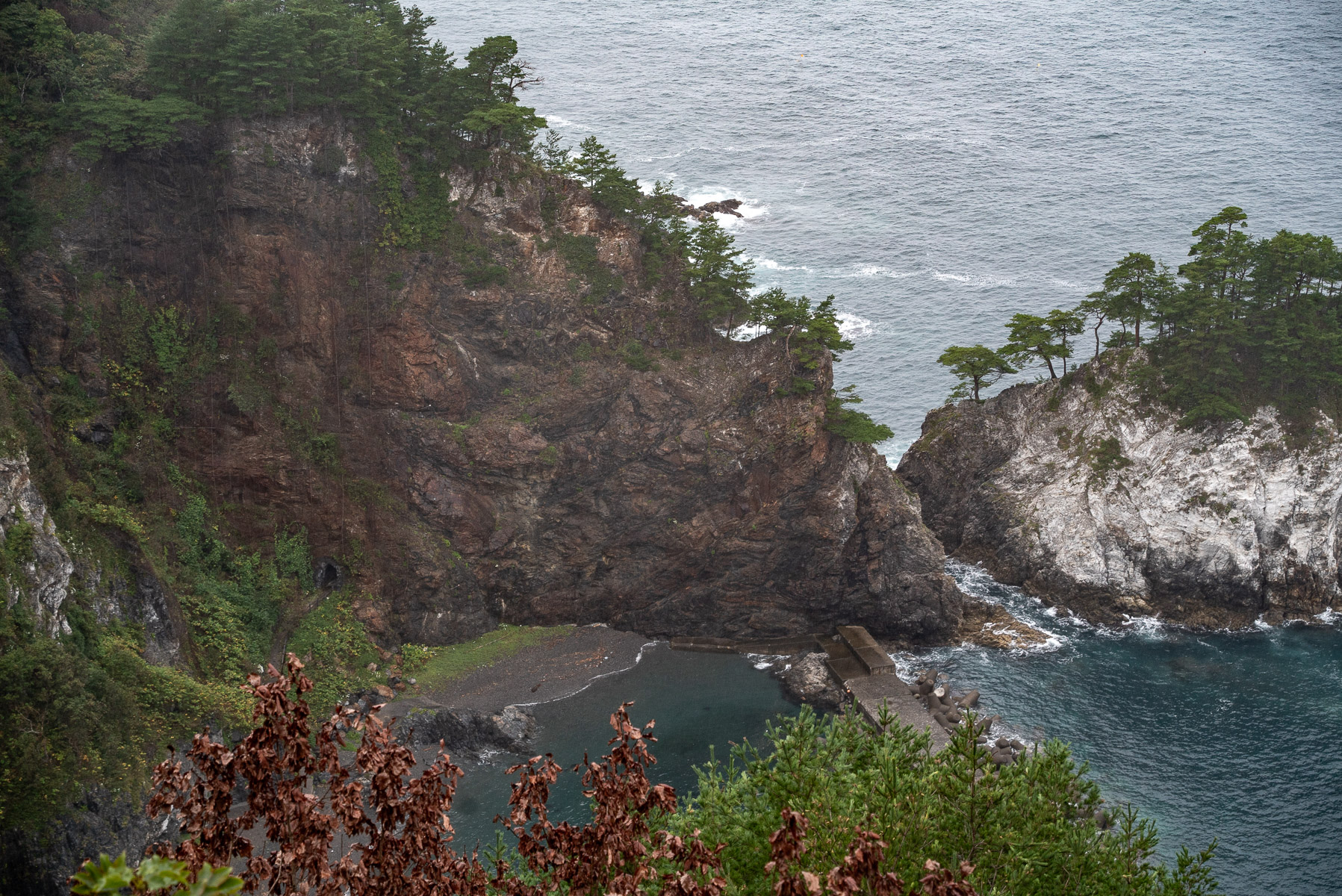
The way to our hotel was relatively easy to hike with few ascends and many beautiful vistas.
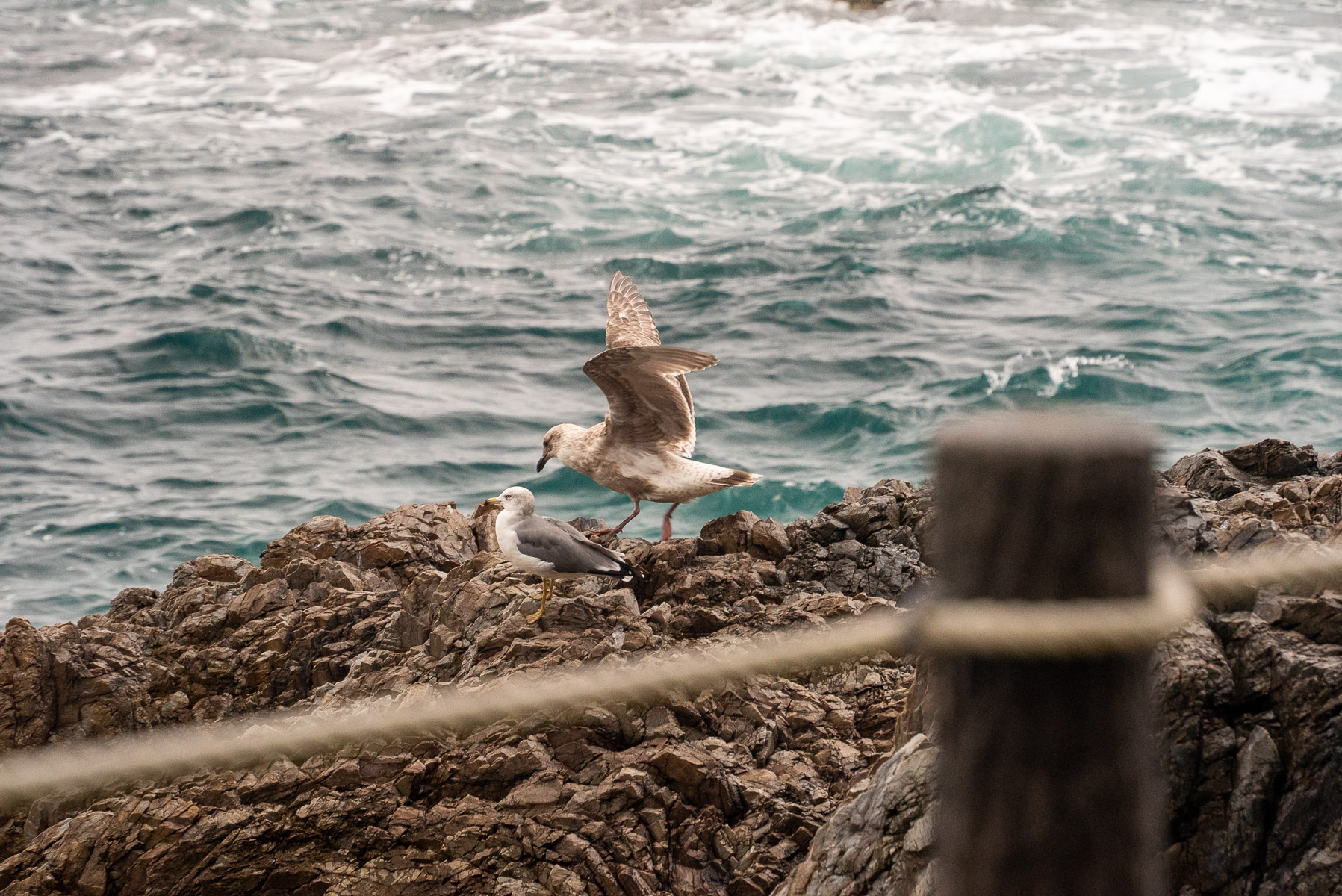
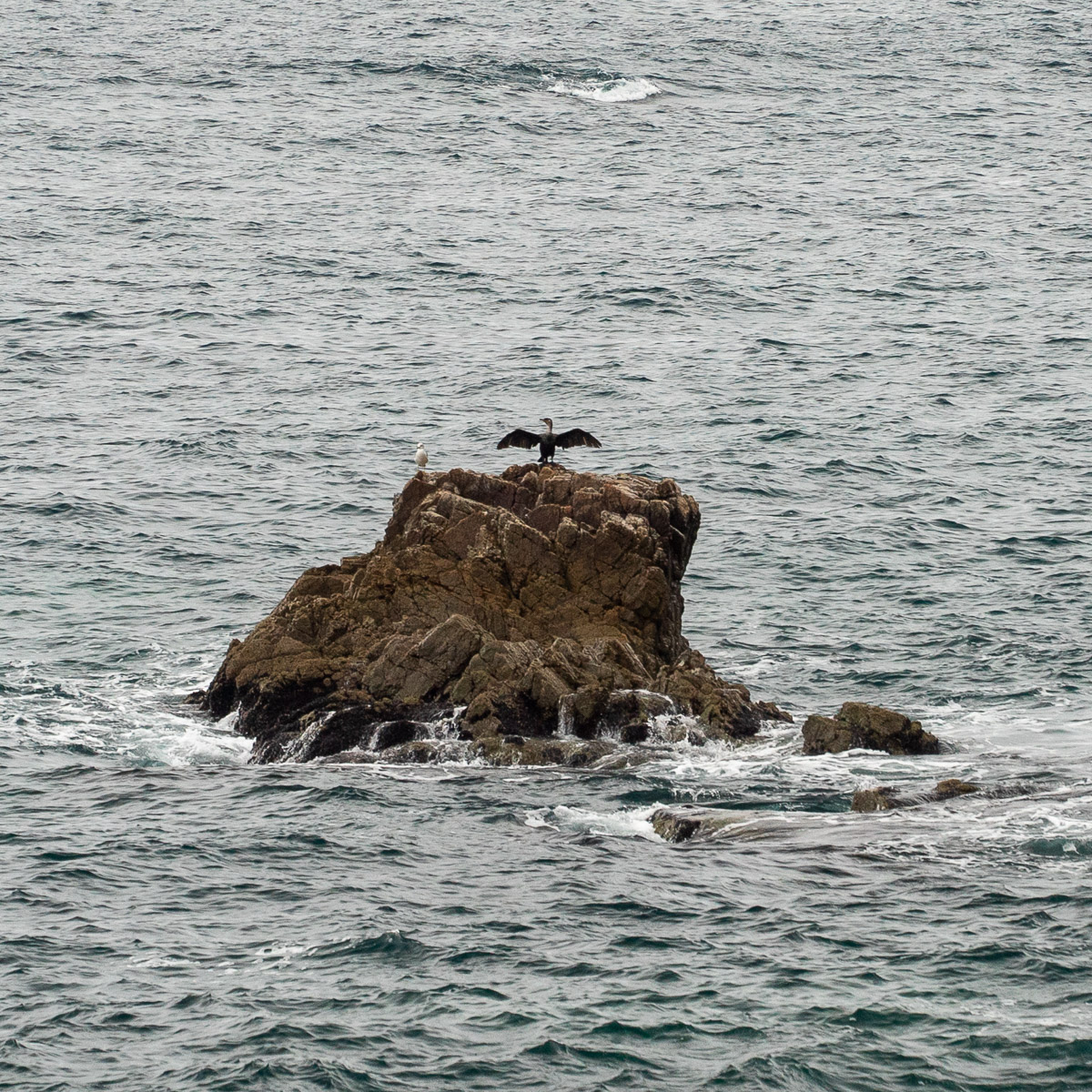
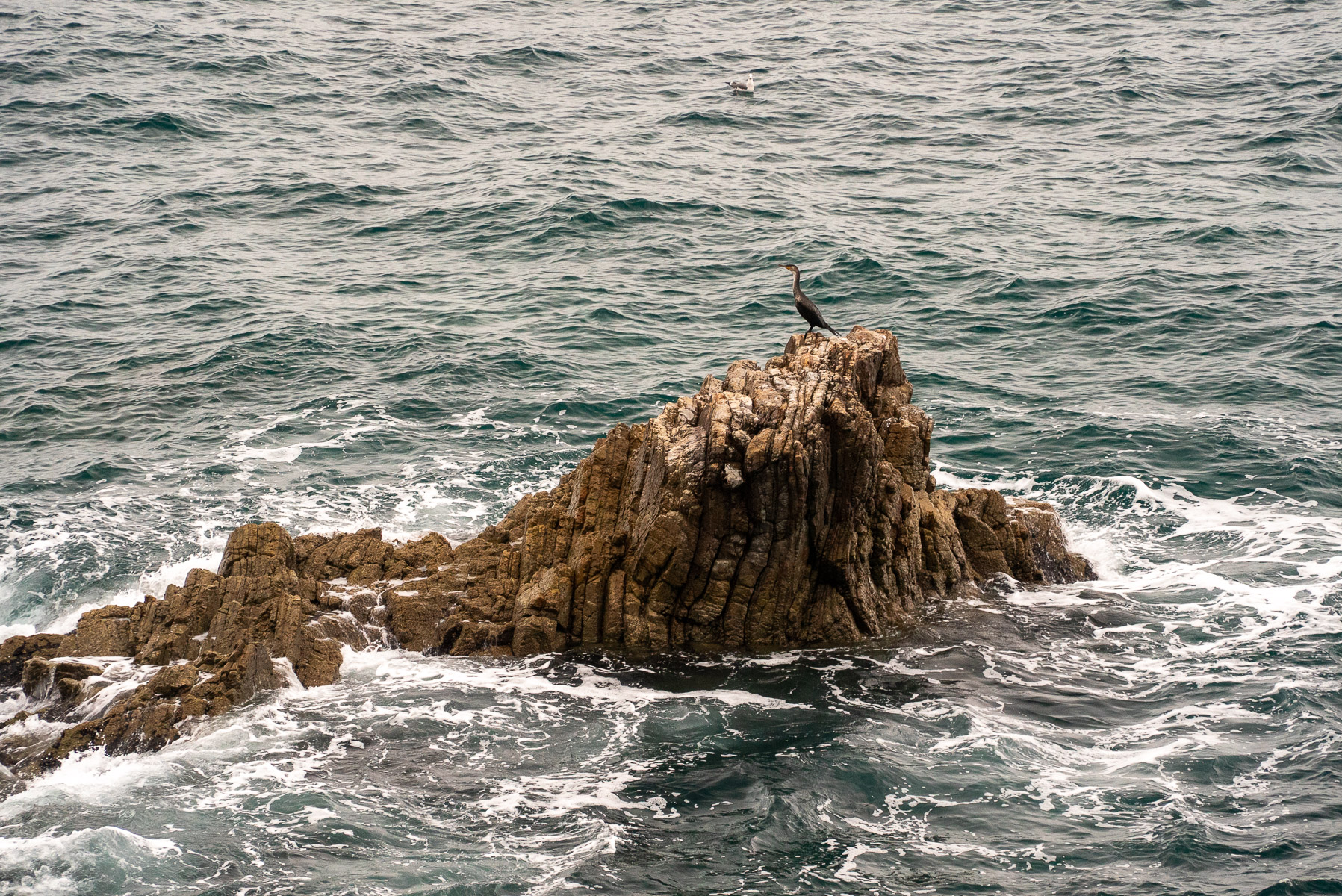
a photogenic cormorant
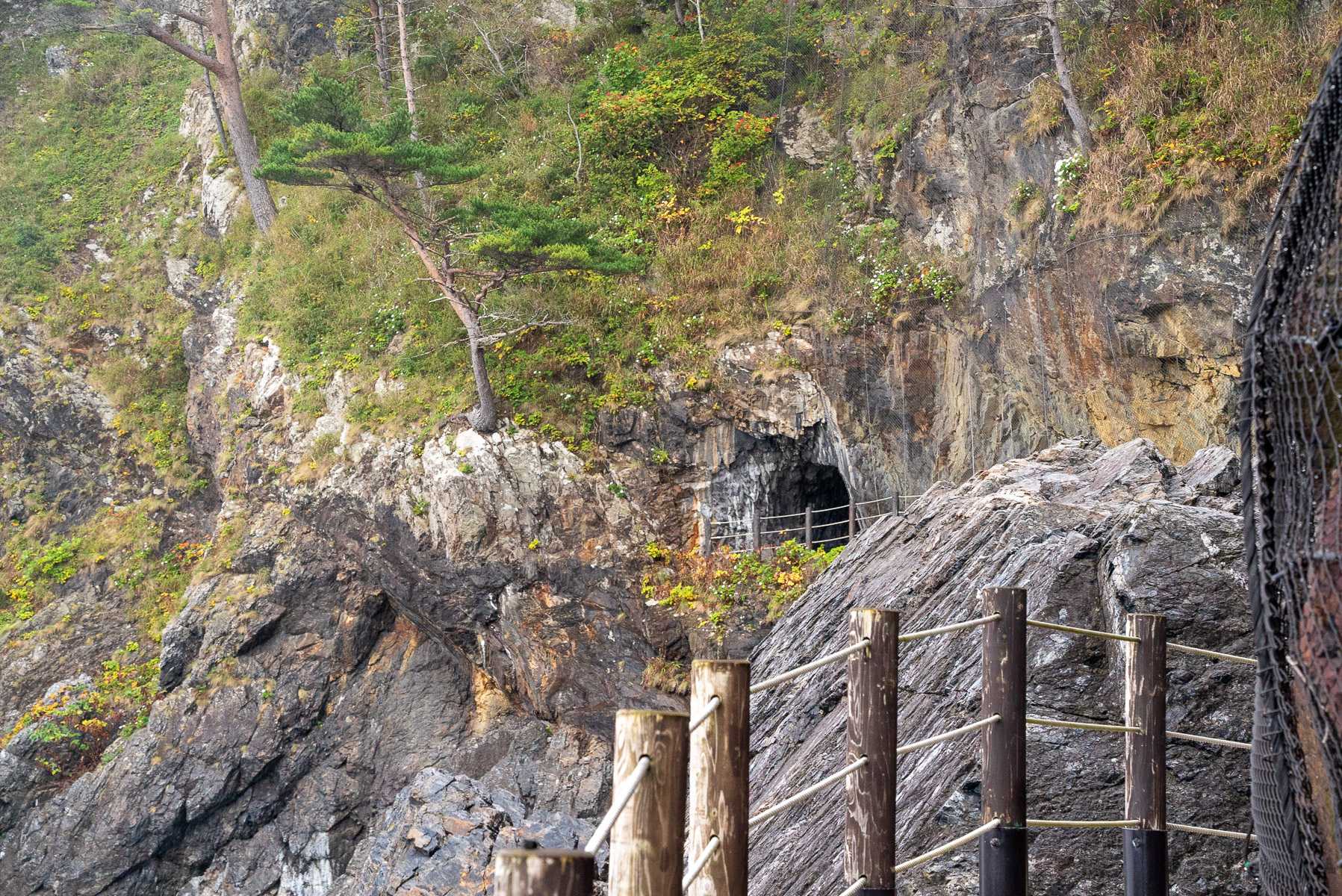
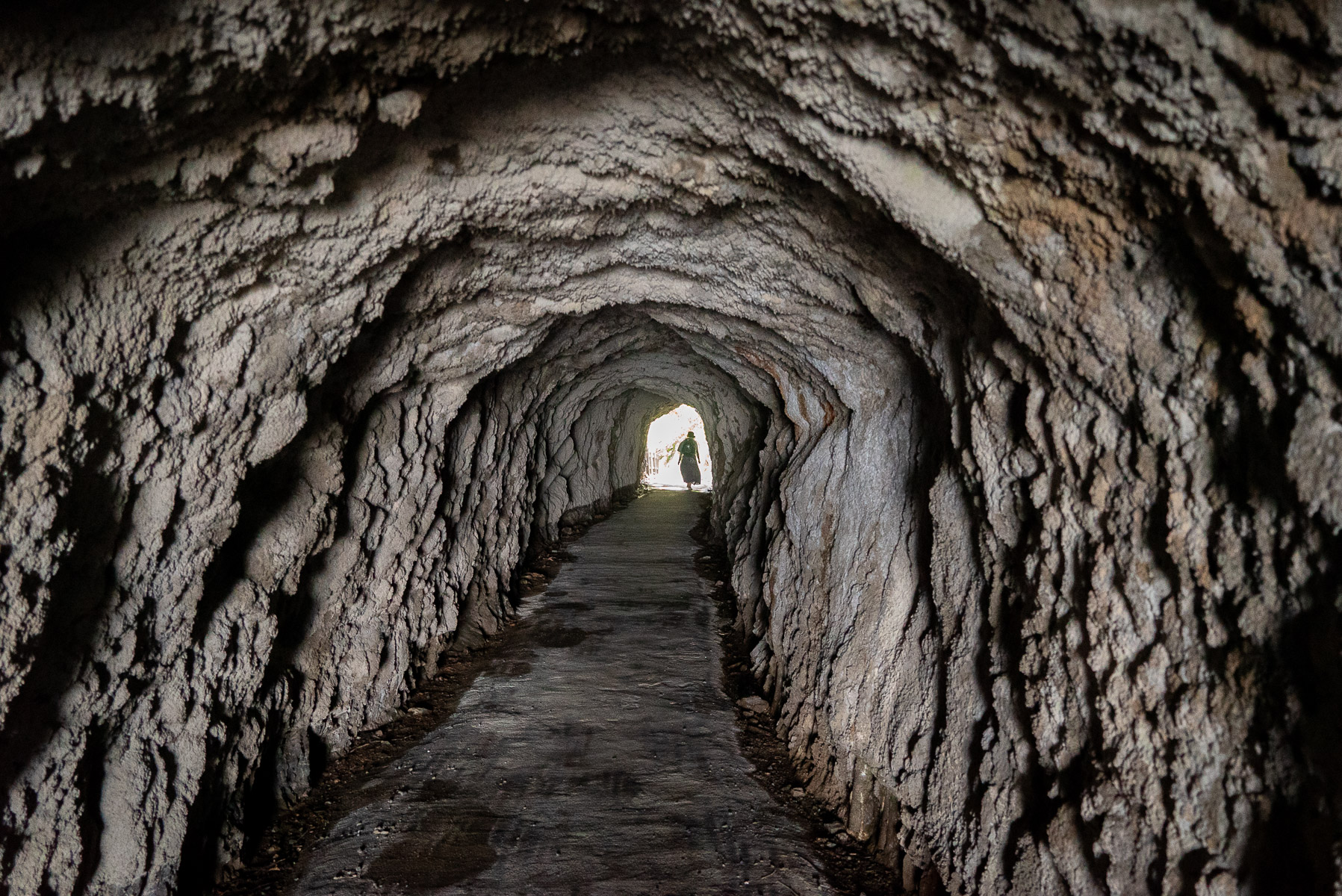
We also went through a cool tunnel – a small taste of what lay ahead the next day.
free art gallery in a breakroom next to the beach
When we arrived at the hotel, we were asked about dinner and breakfast times and we mentioned that we are vegetarian and they told us that this is impractical, because we would have needed to tell them in advance. Which we did in our reservation 2 months prior (in English and Japanese!) and it even said so on the printed out reservation the receptionist had on his desk. After this slight downer, we arranged that we would get something to eat, but since the hotel wasn’t cheap, we were a bit annoyed. If they just say “We don’t serve vegetarian food” that would have been one thing, but to tell us that we would have needed to annouce this sooner felt a bit brazen. However, the food we received in the end was good (and we think for the most part vegetarian – only the soup contained a piece of Kamaboko (fish cake)) and we didn’t go hungry which was our main concern.
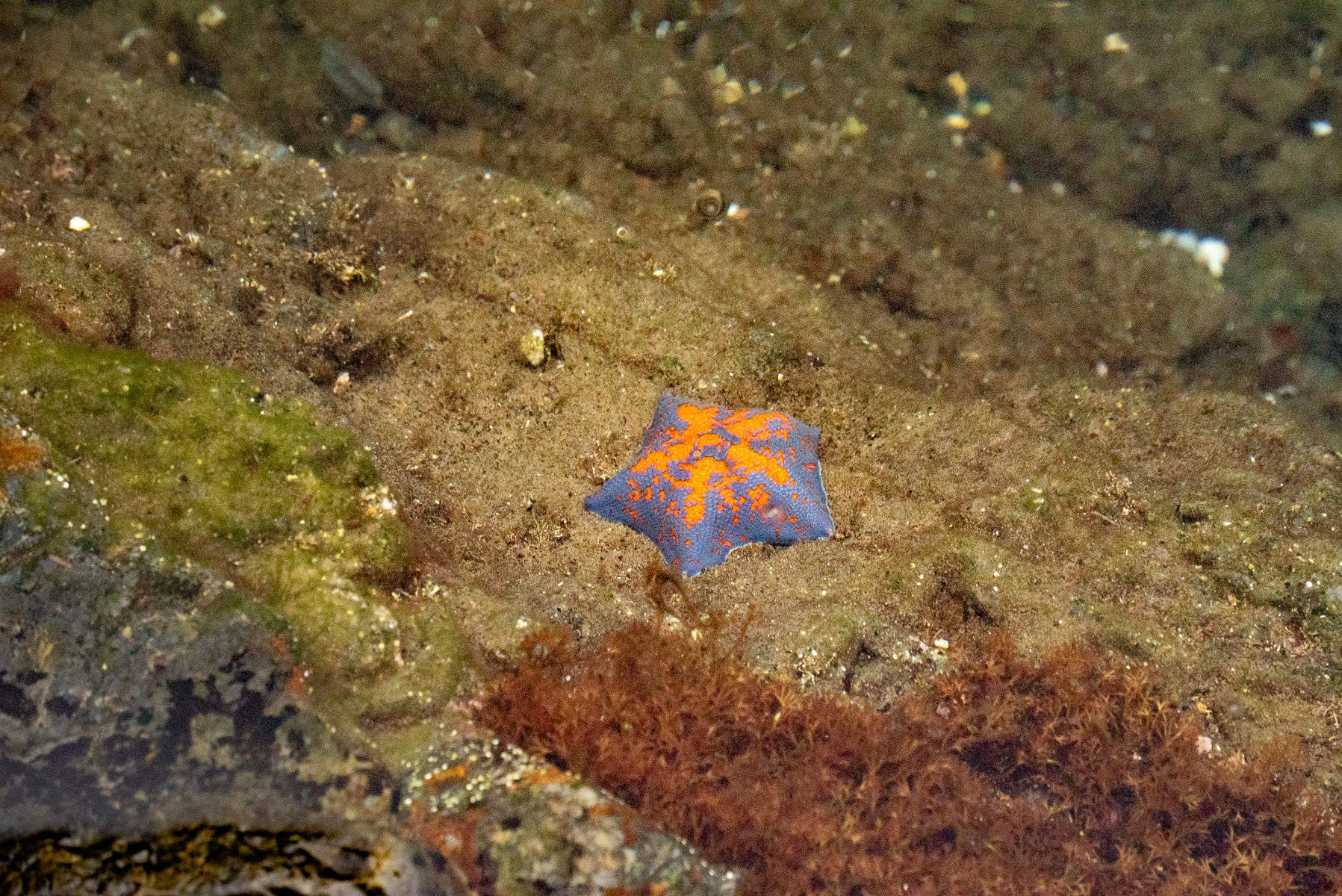
There were many tide pools and in some we saw these beautiful starfish.
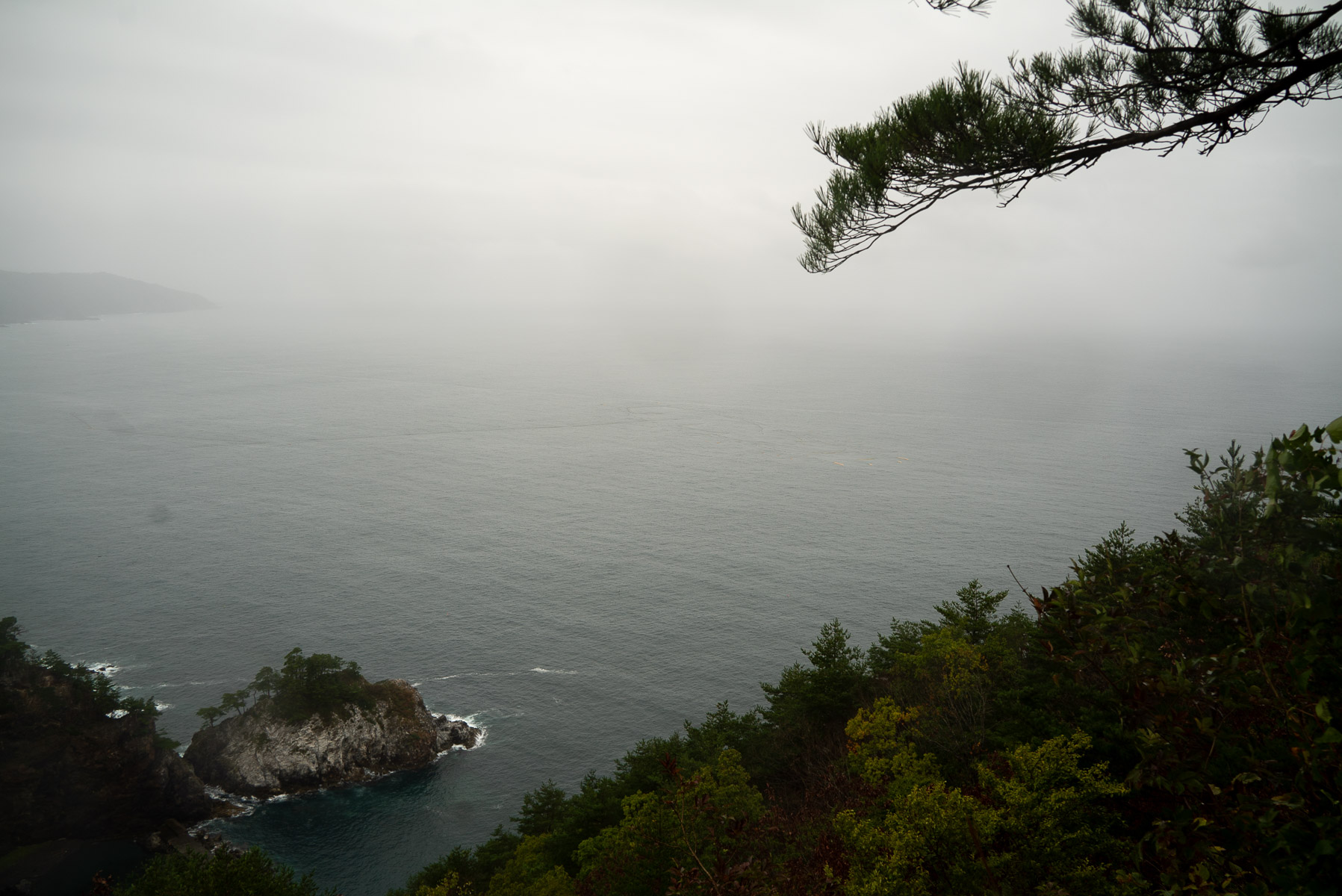
Before dinner we took a bath in the Onsen which was an absolut highlight with its unimpeded view of the Ocean and a small Lighthouse. We were glad that we arrived so early so that we could still see that view before the sun set at 5 pm rendering the ocean view quite unspectacular.
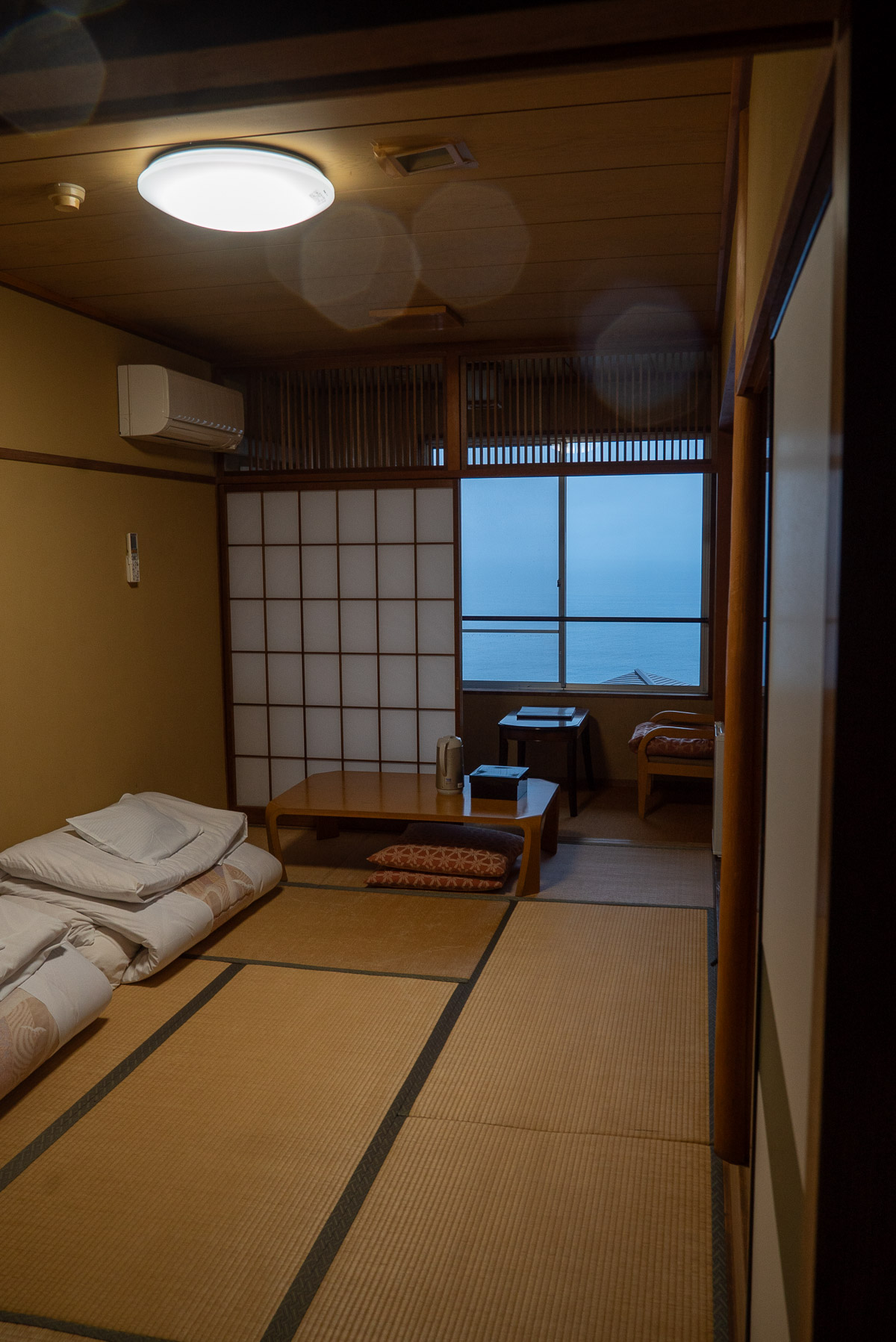
our room in Kurosakisou
When talking about the breakfast time we asked the receptionist how long it usually takes to walk the Michinoku-Trail from here to Tanohata Station. We asked in Japanese, of course, and explicitly said “Tanohata Eki” (meaning Station). He replied that it takes between 4 and 6 hours. Charlie had planned much more time for that trip and we spontaneously decided to start our hike 1,5 hours later, as the tour appeared to be so much shorter than initially anticipated…
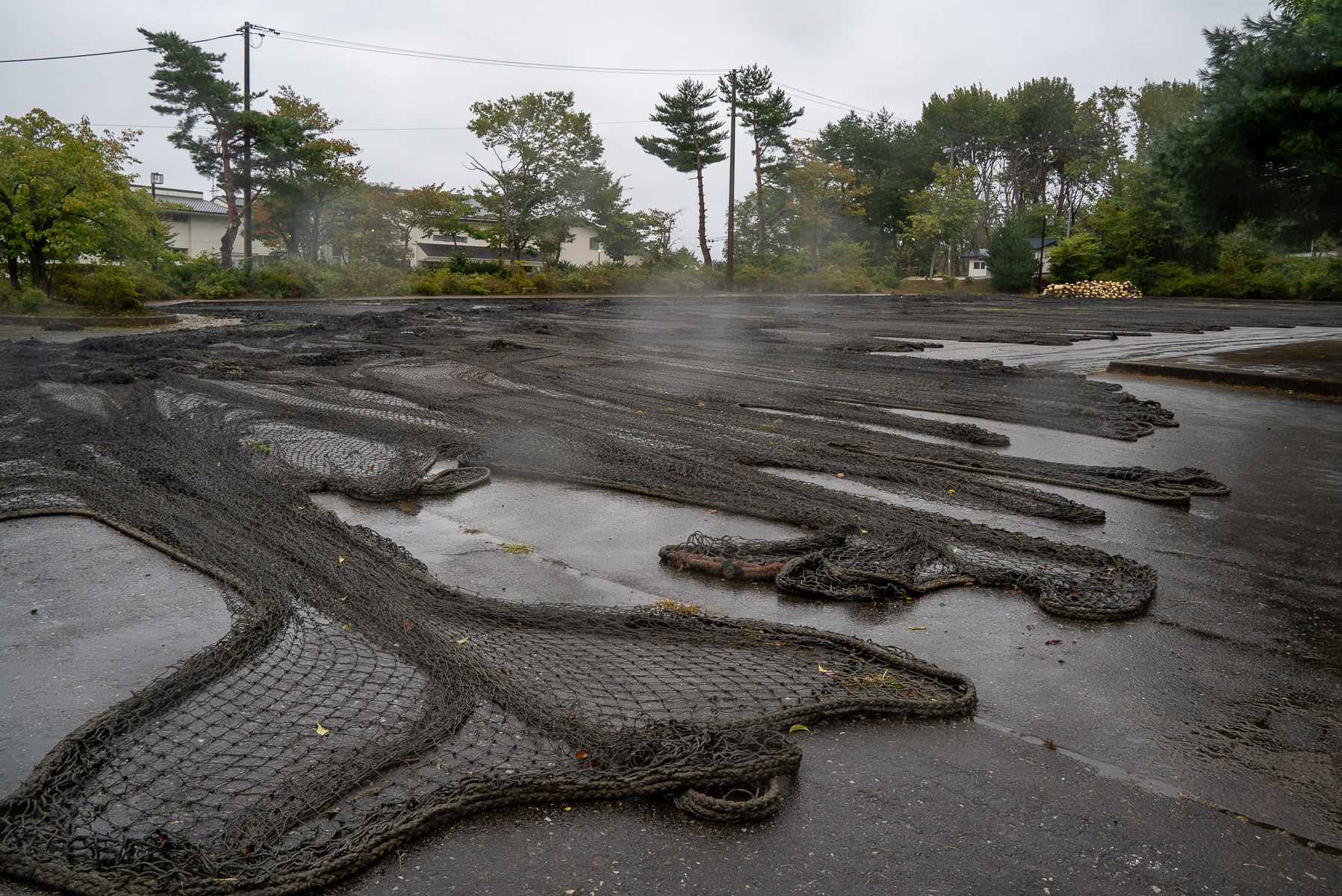
In Japan, there will be giant fishing nets on the ground sometimes.
Our first hiking trip (October 2nd) was the one that the Michinoku-Trail-Website listed as “Tanesashi-Coast”.
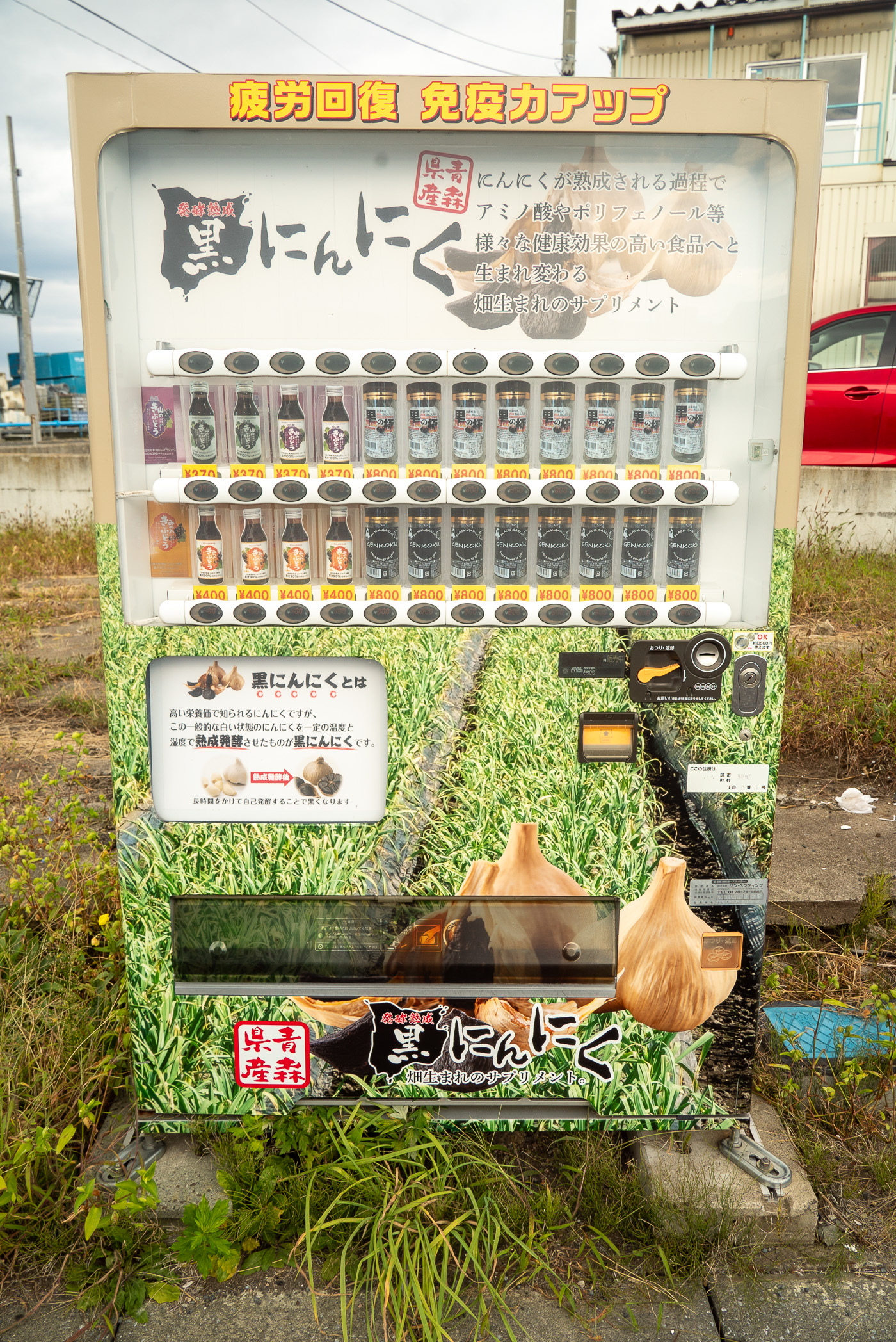
This vending machine sells garlic juice.
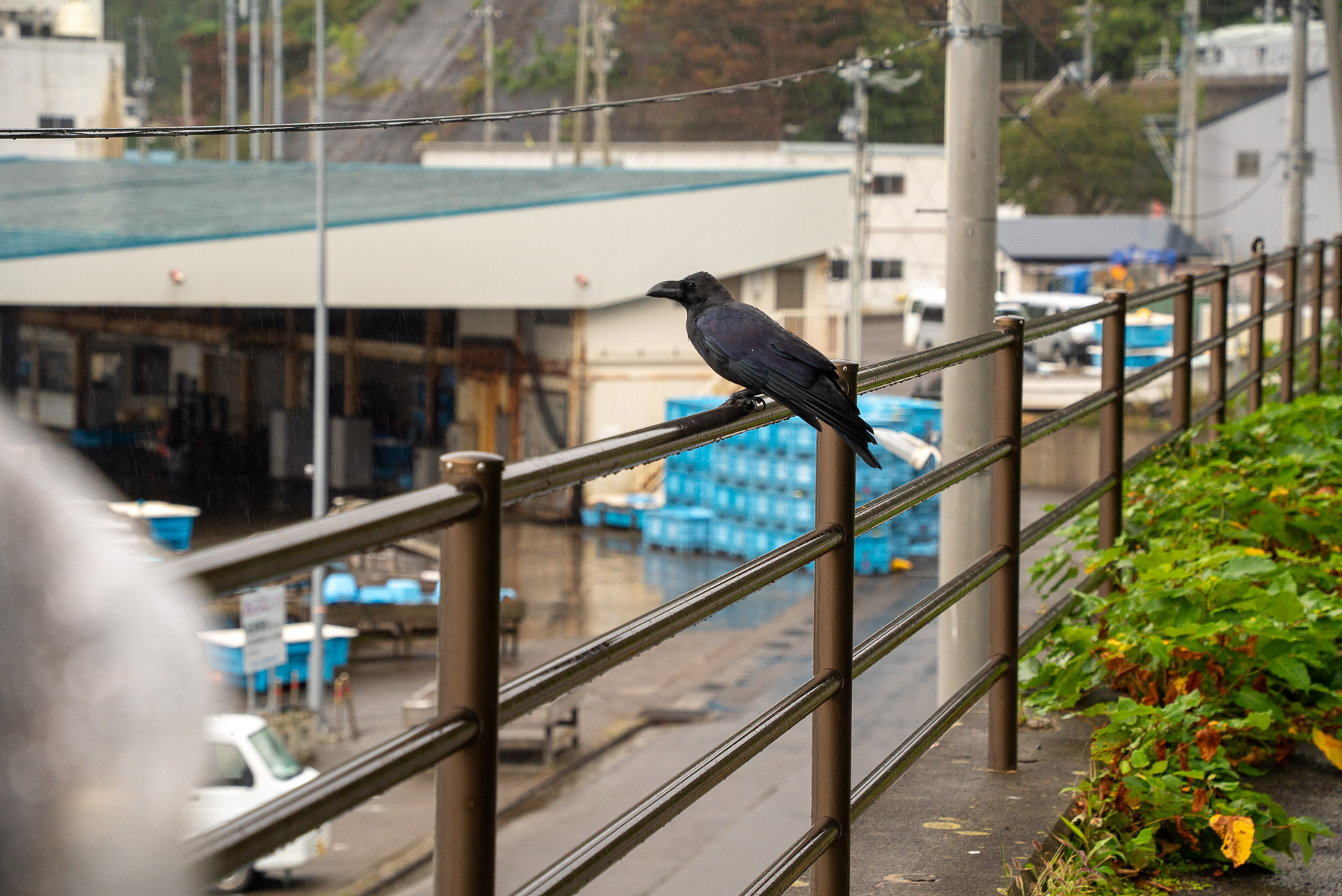
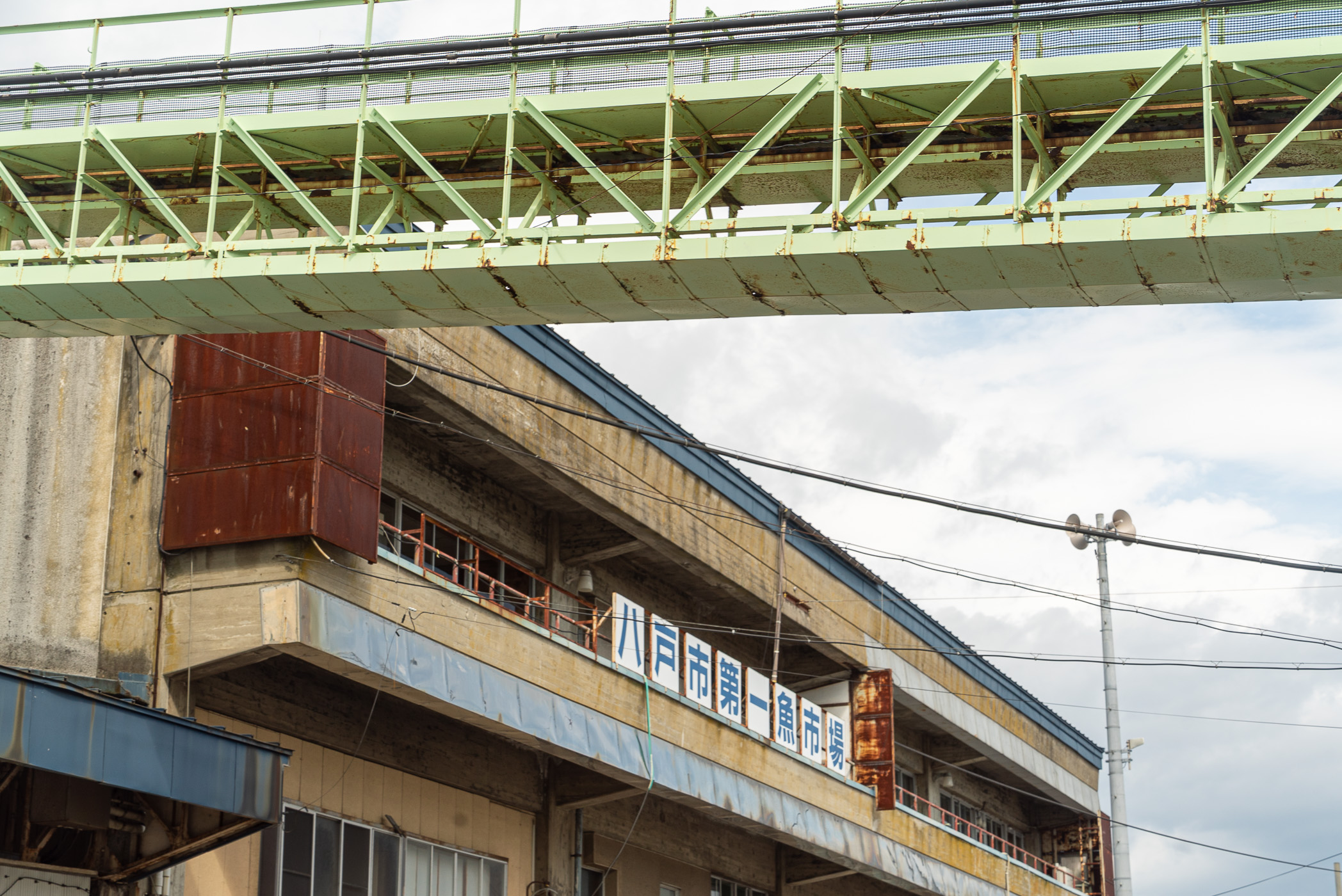
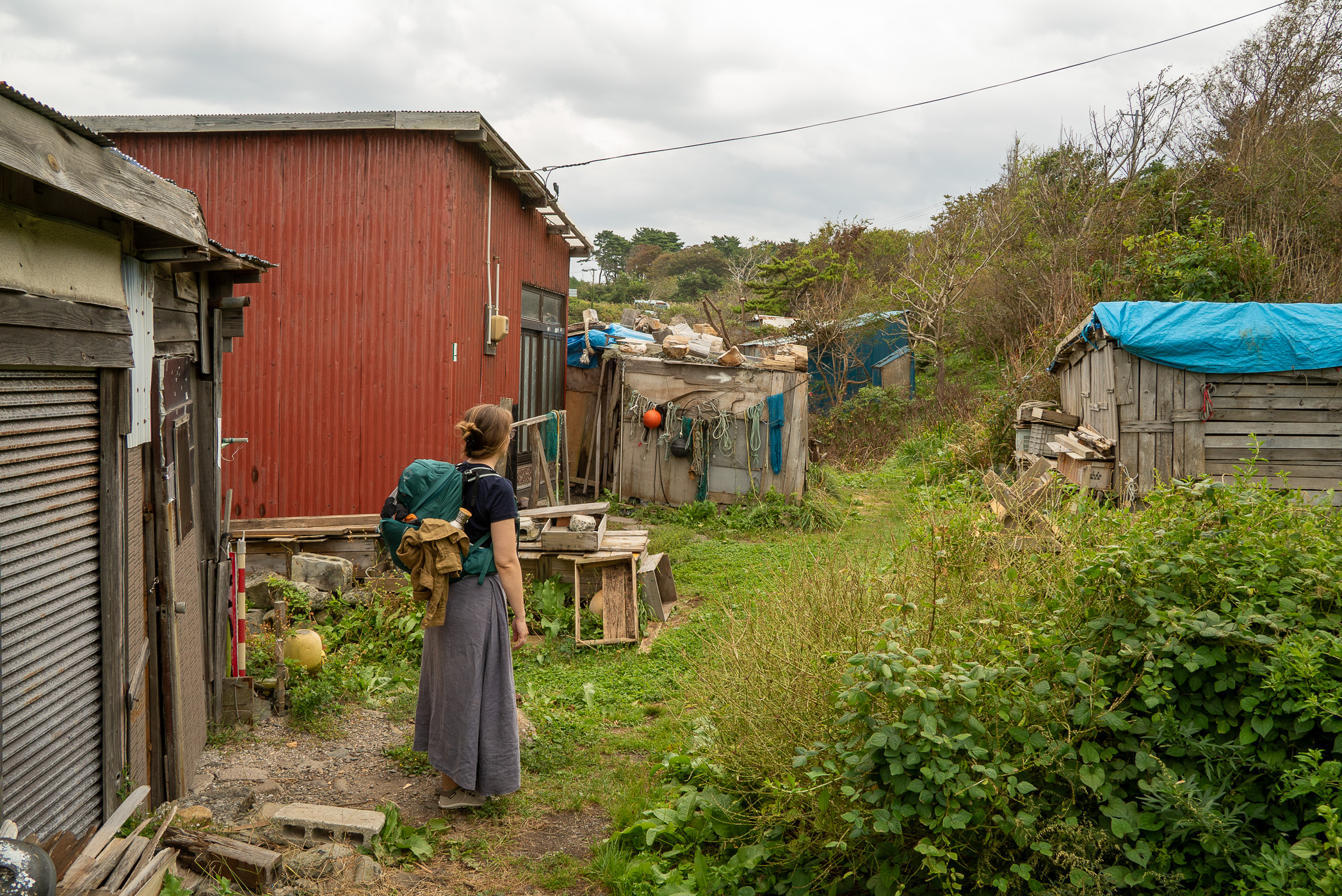
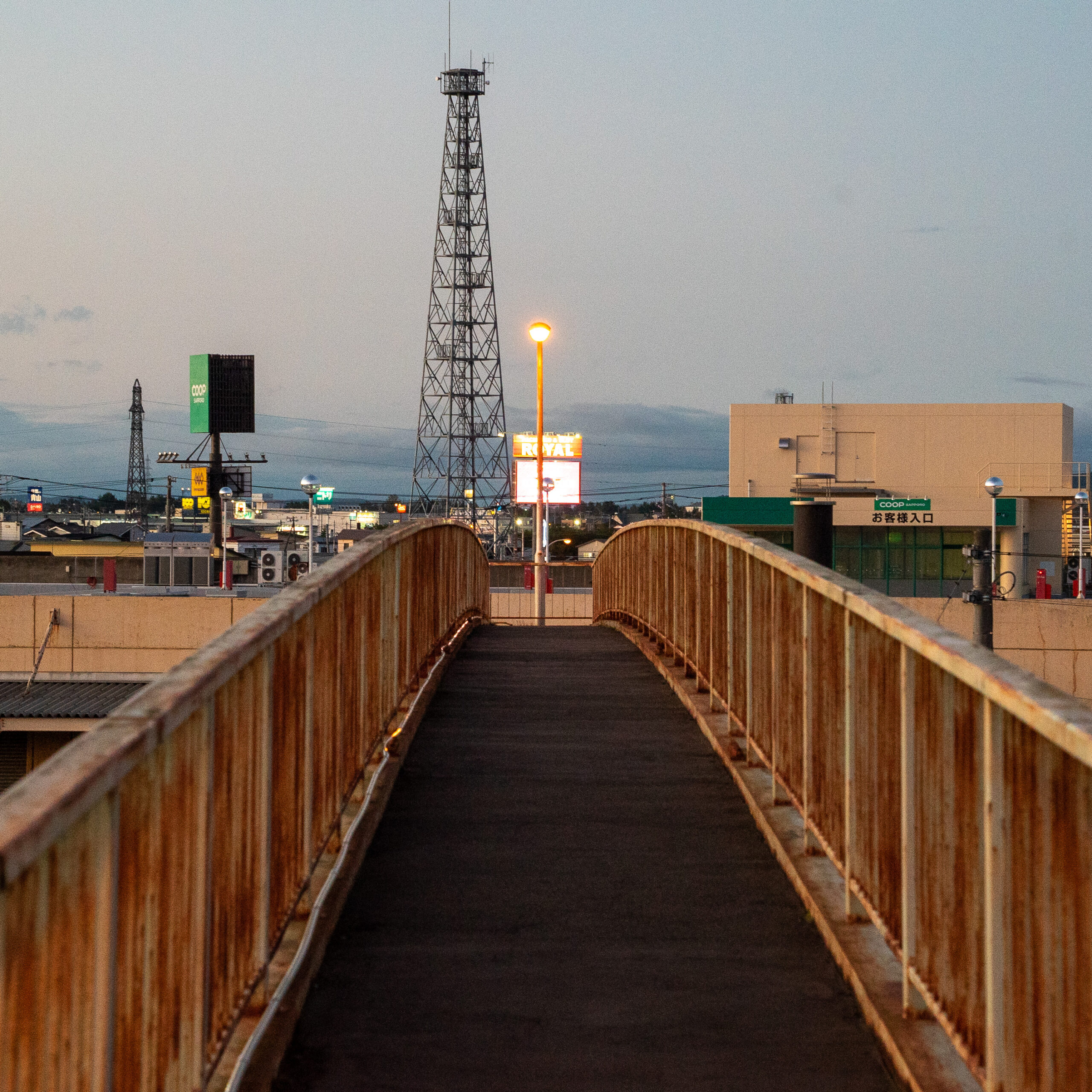
On the way to our startingpoint we saw this very rusty industrial building. These remnants of a bygone era are sadly rather common in Japan.
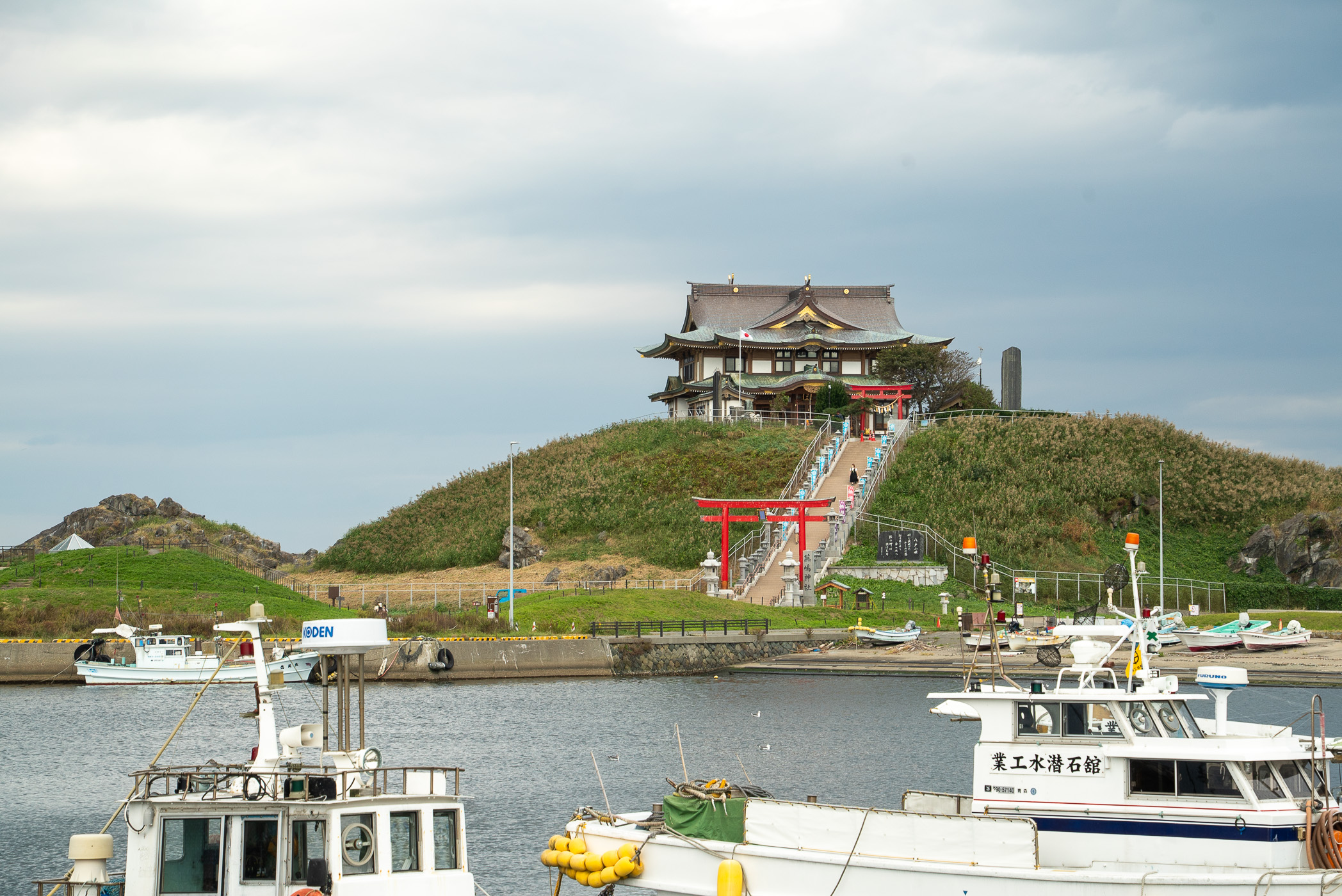
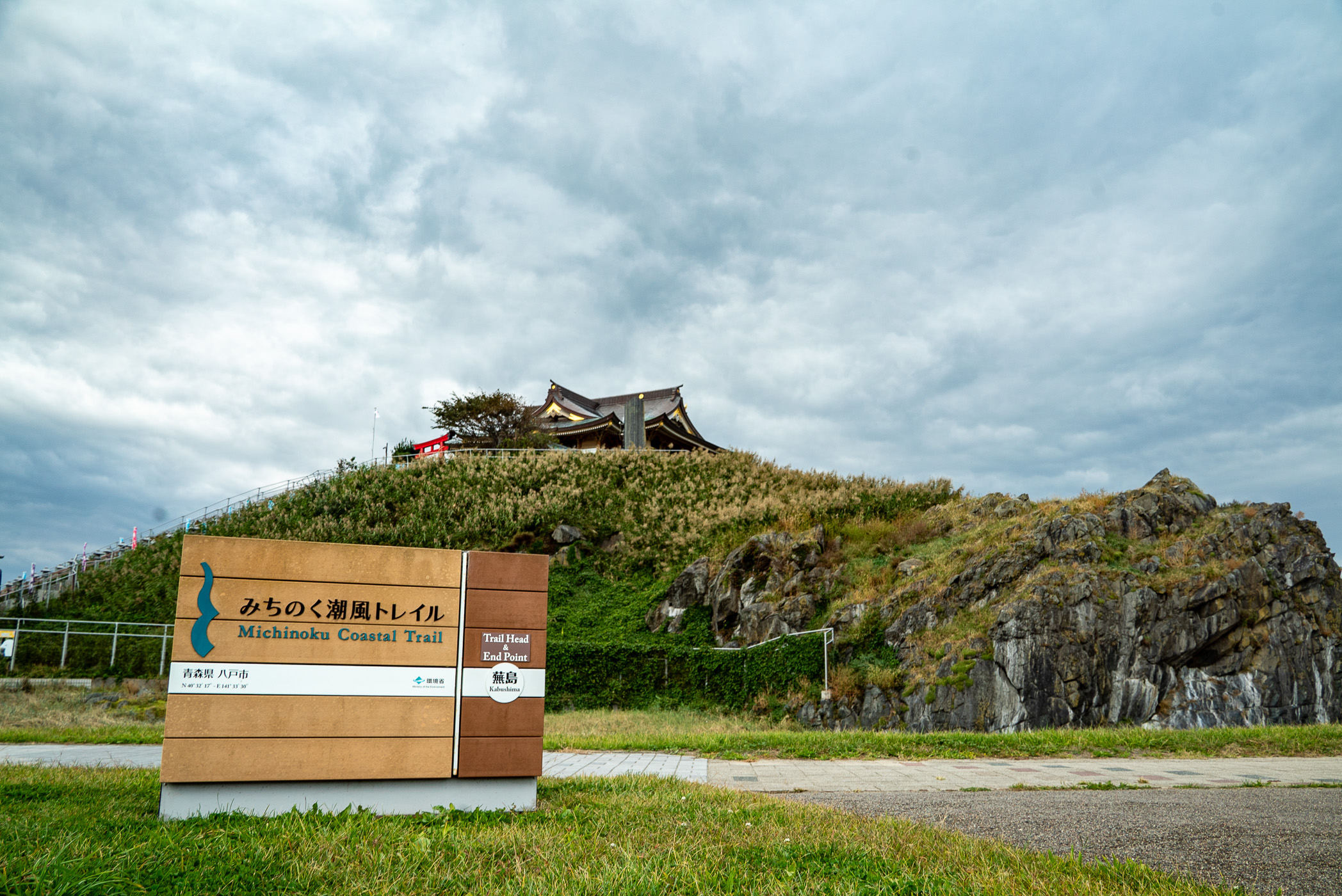
From our hotel we first hiked to Kabushima shrine, which is the start- and endpoint of the whole trail. Because we knew that our way to Okuki station wouldn’t take too long to complete, we took our time to perform the magic and go around the shrine three times before ringing the bell. Additionally we bought a cute seagull charm and thus started our hike in high spirits.
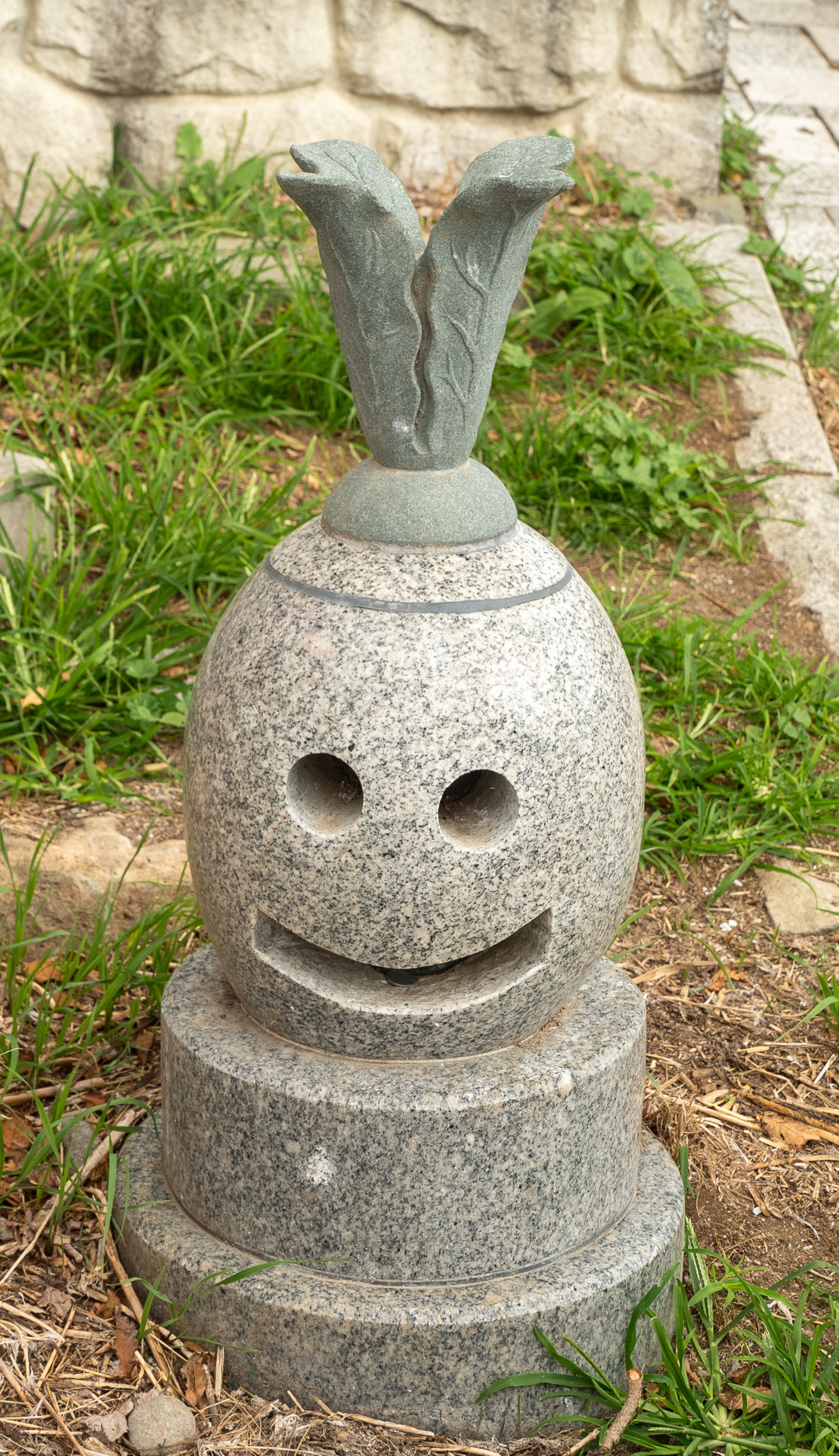
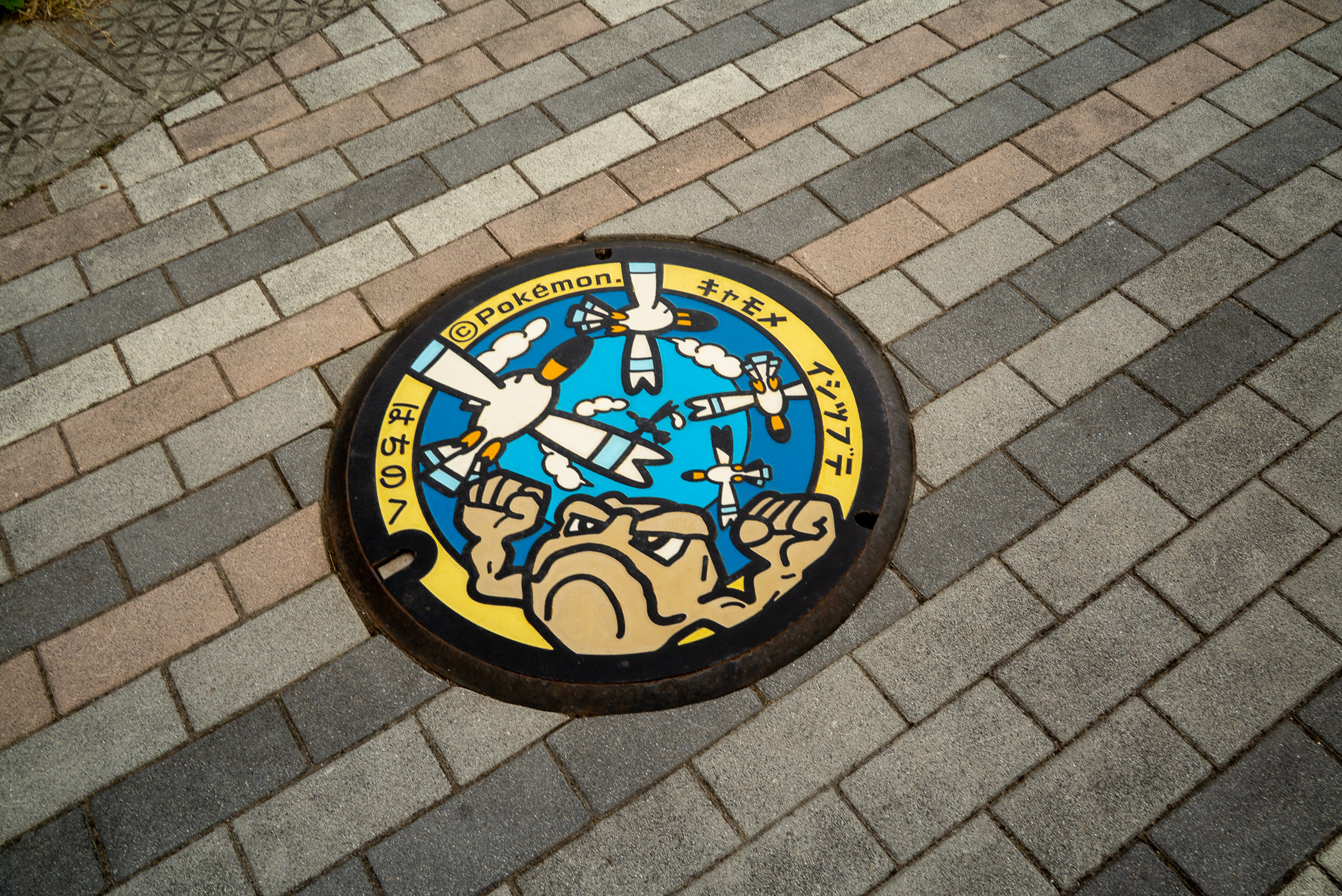
As always, we enjoy the playful sides of Japan
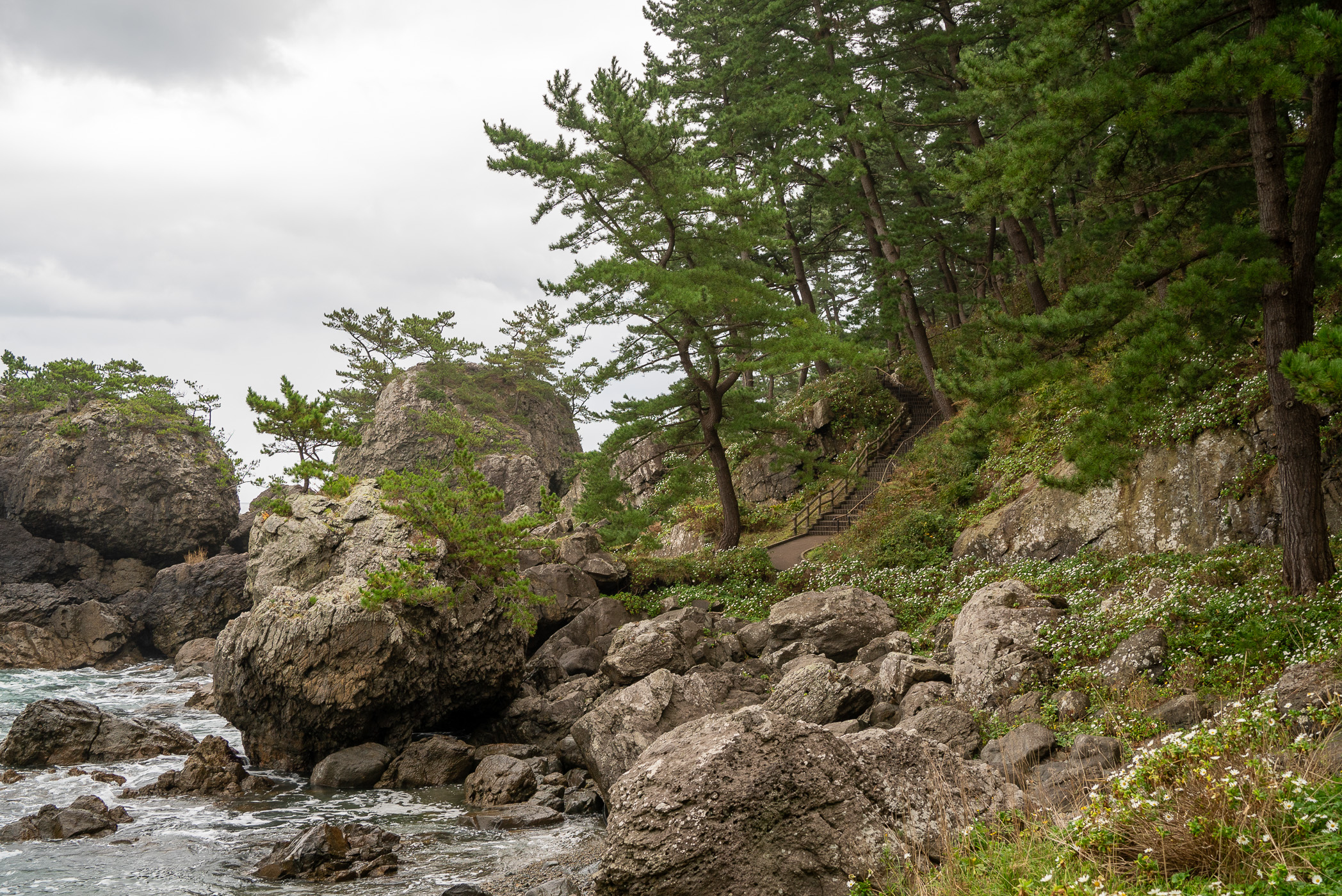
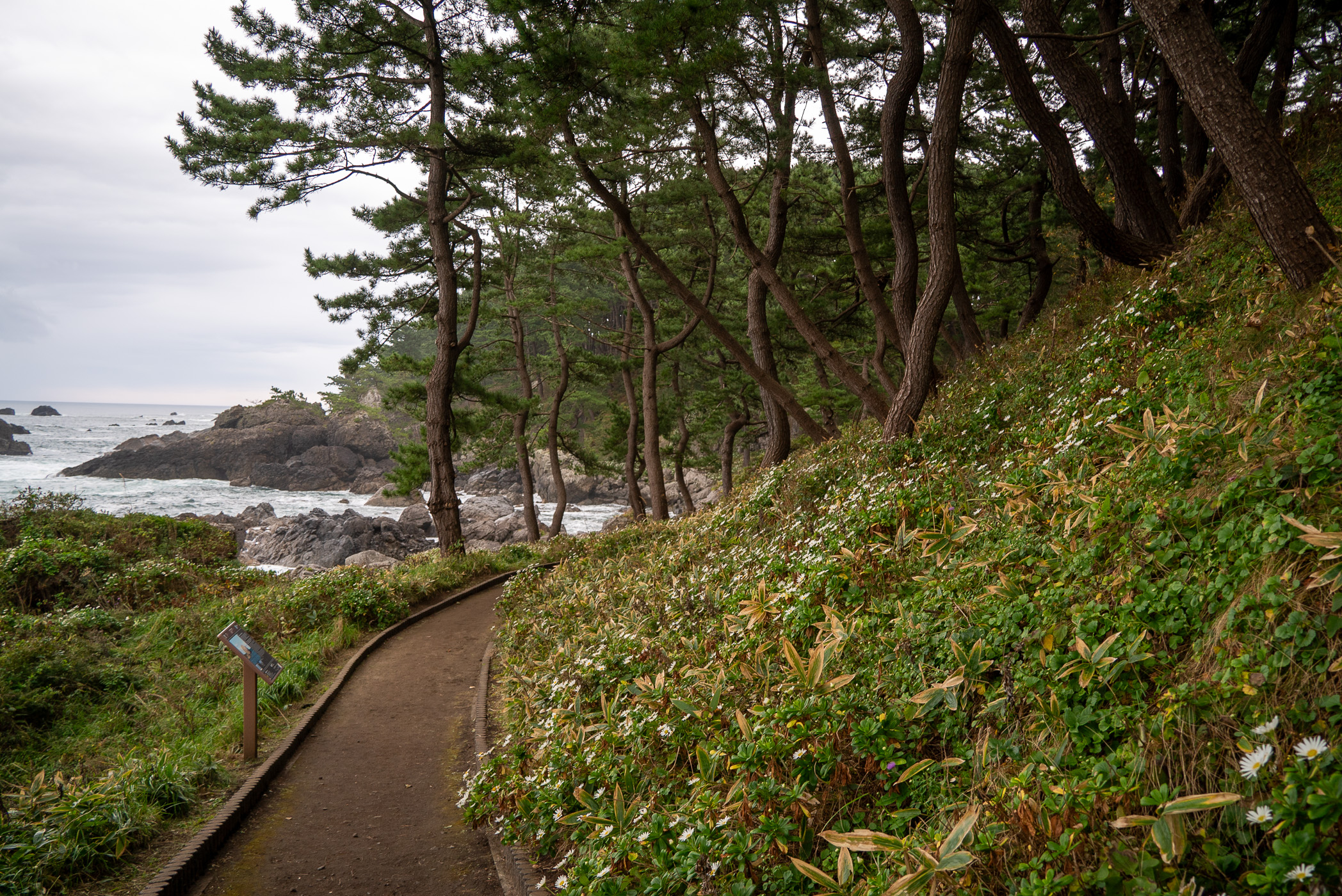
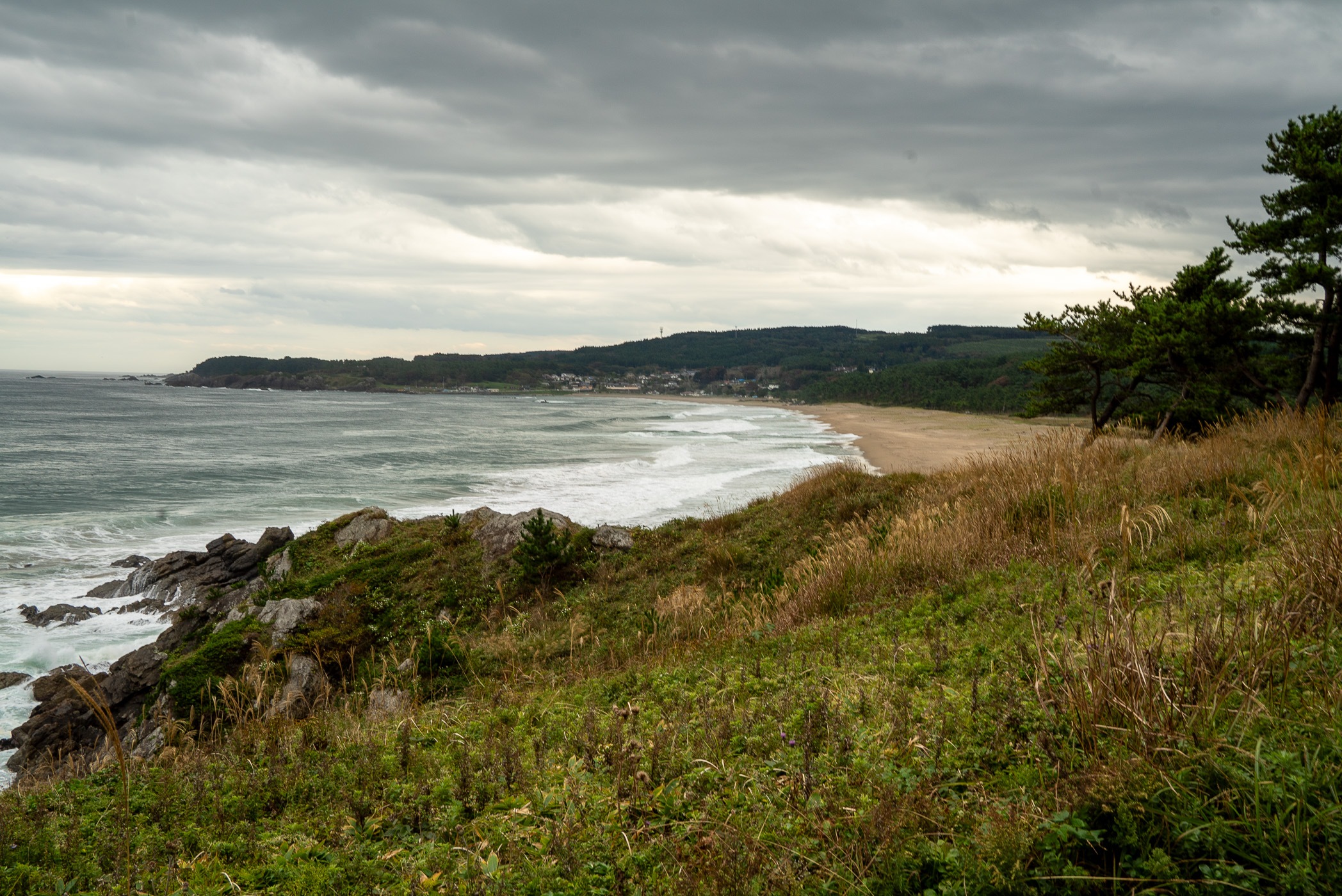
The paths are, for the most part, very well built and we only had to cross the beach a few times. It’s easy to avoid getting lost, because you’ll frequently find little wooden poles that signify you being on the right track. This part of the trail is definitely suitable for beginners and has amazing views of the Pacific Ocean.
Here was one of the few parts of the trail that wasn’t quite clear and seemed like it crossed public property.
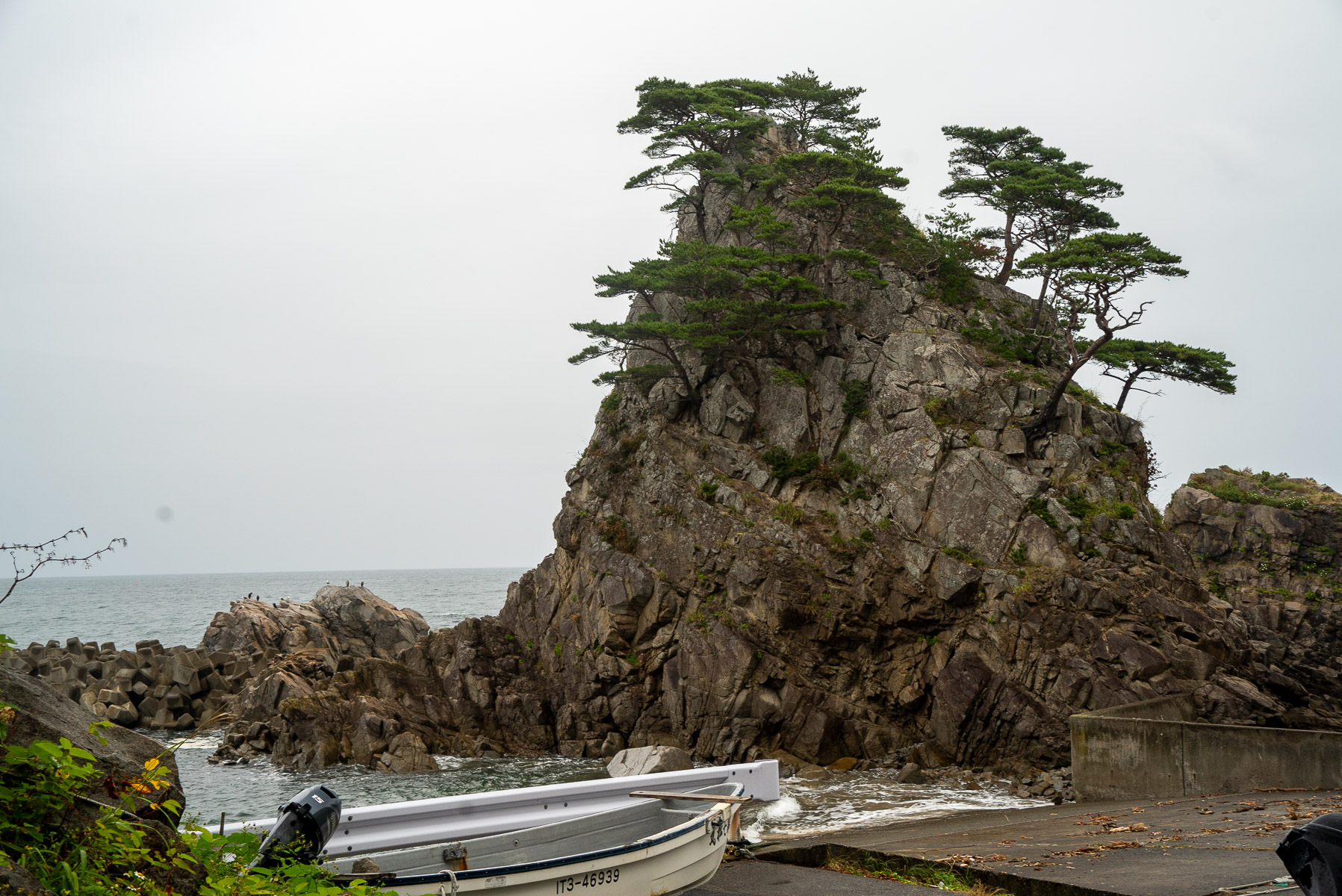
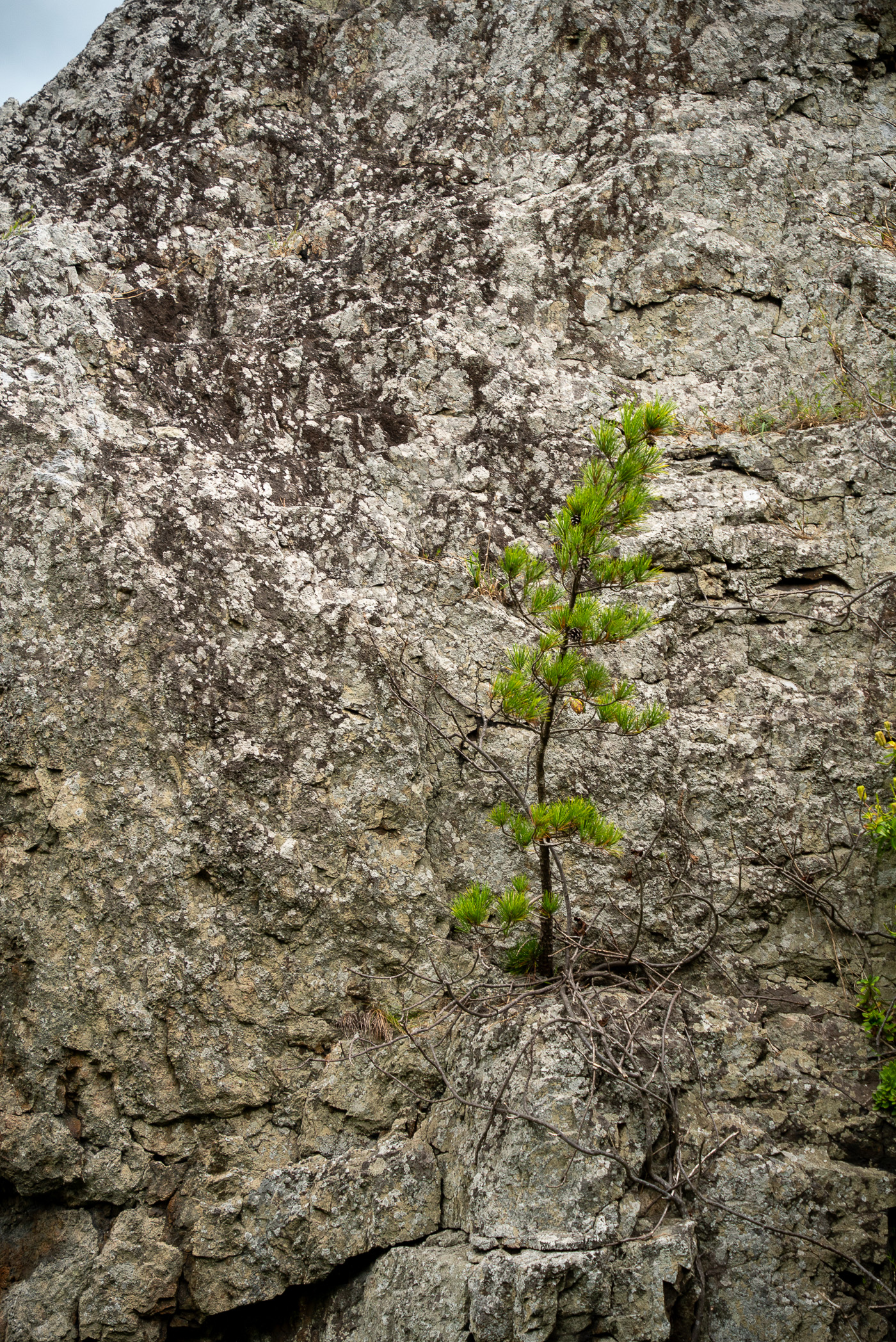
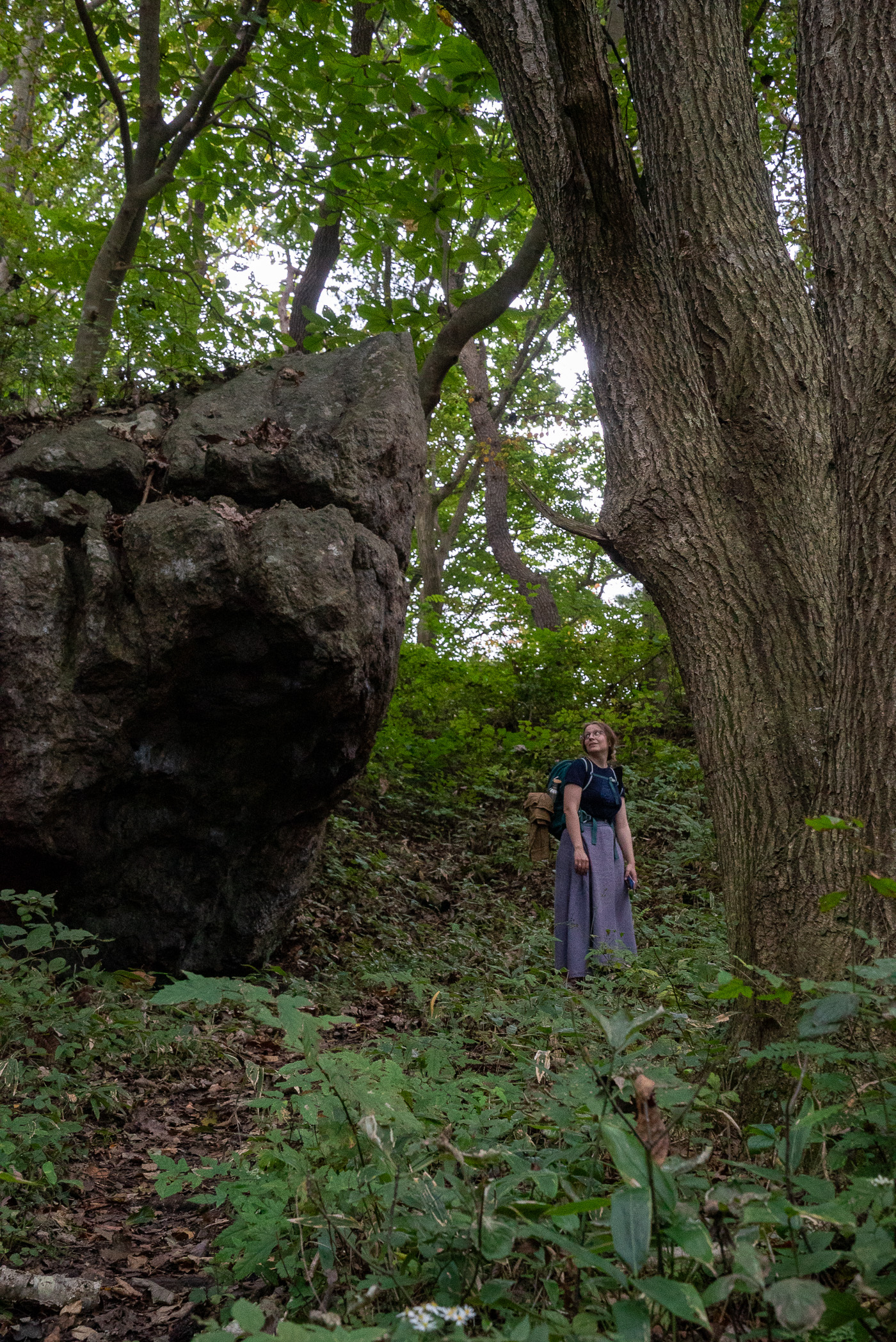
A small pine tree grows right there in the boulder
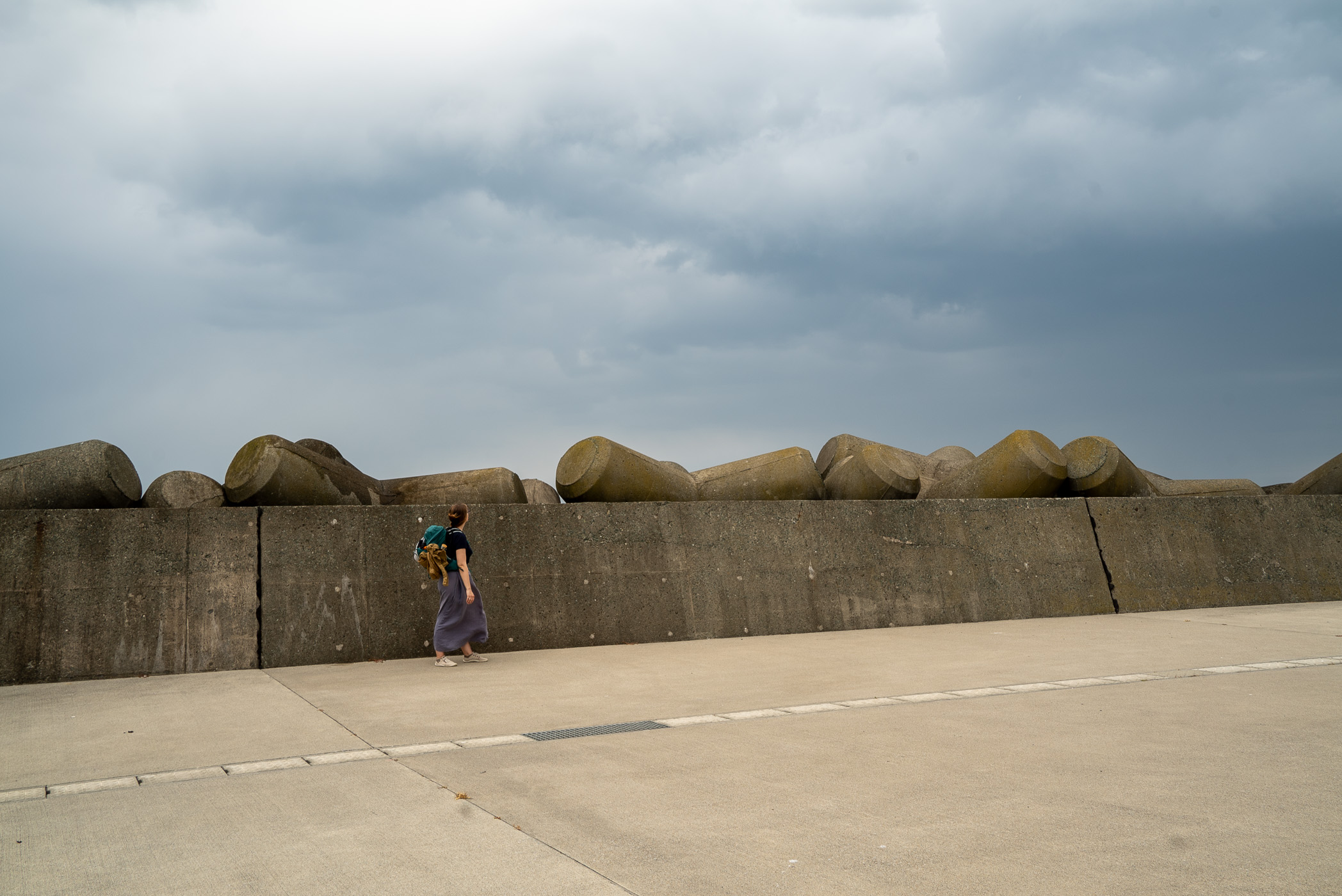
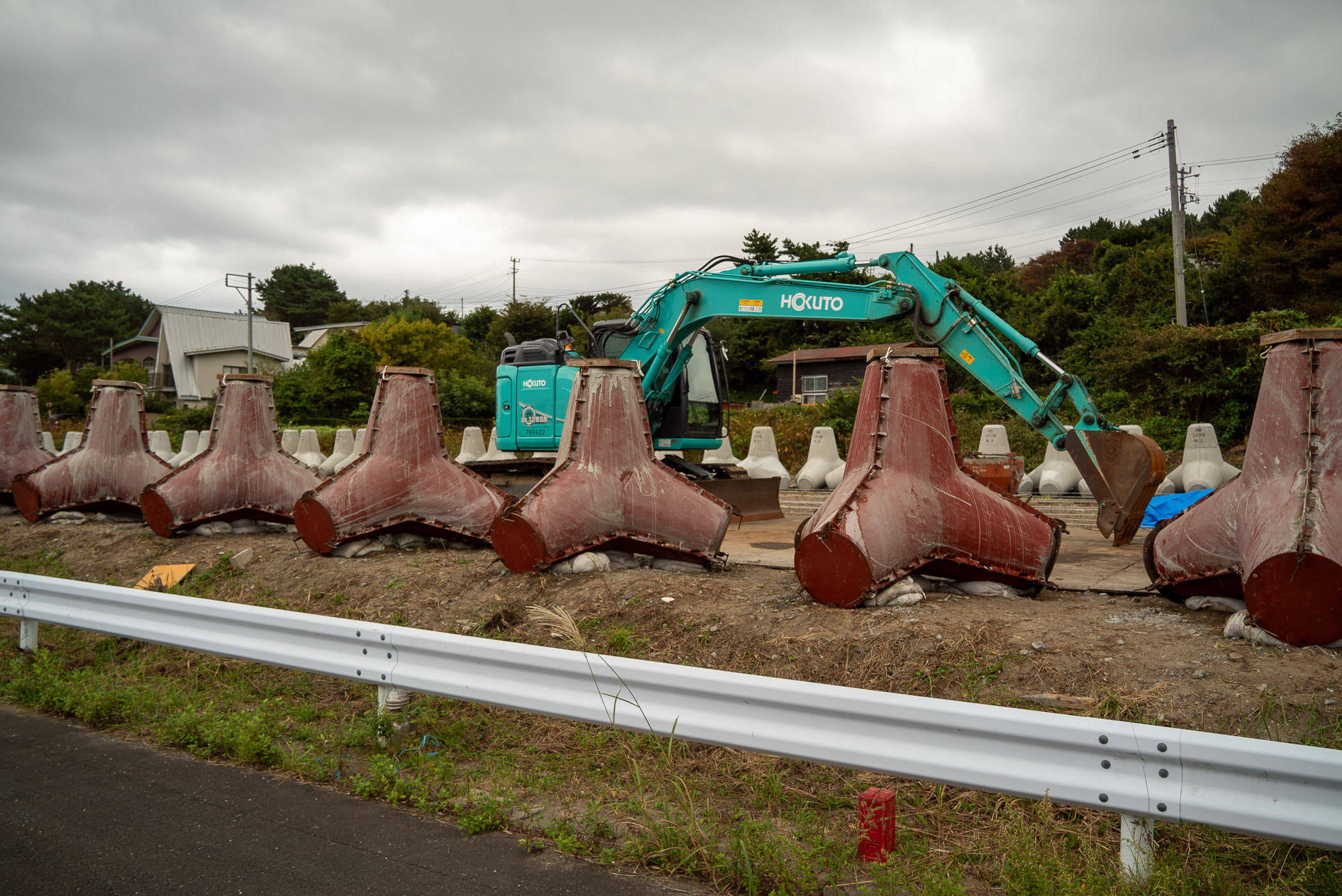
Here concrete is poured into moulds to create the sometimes gigantic tetrapods that protect the coast.
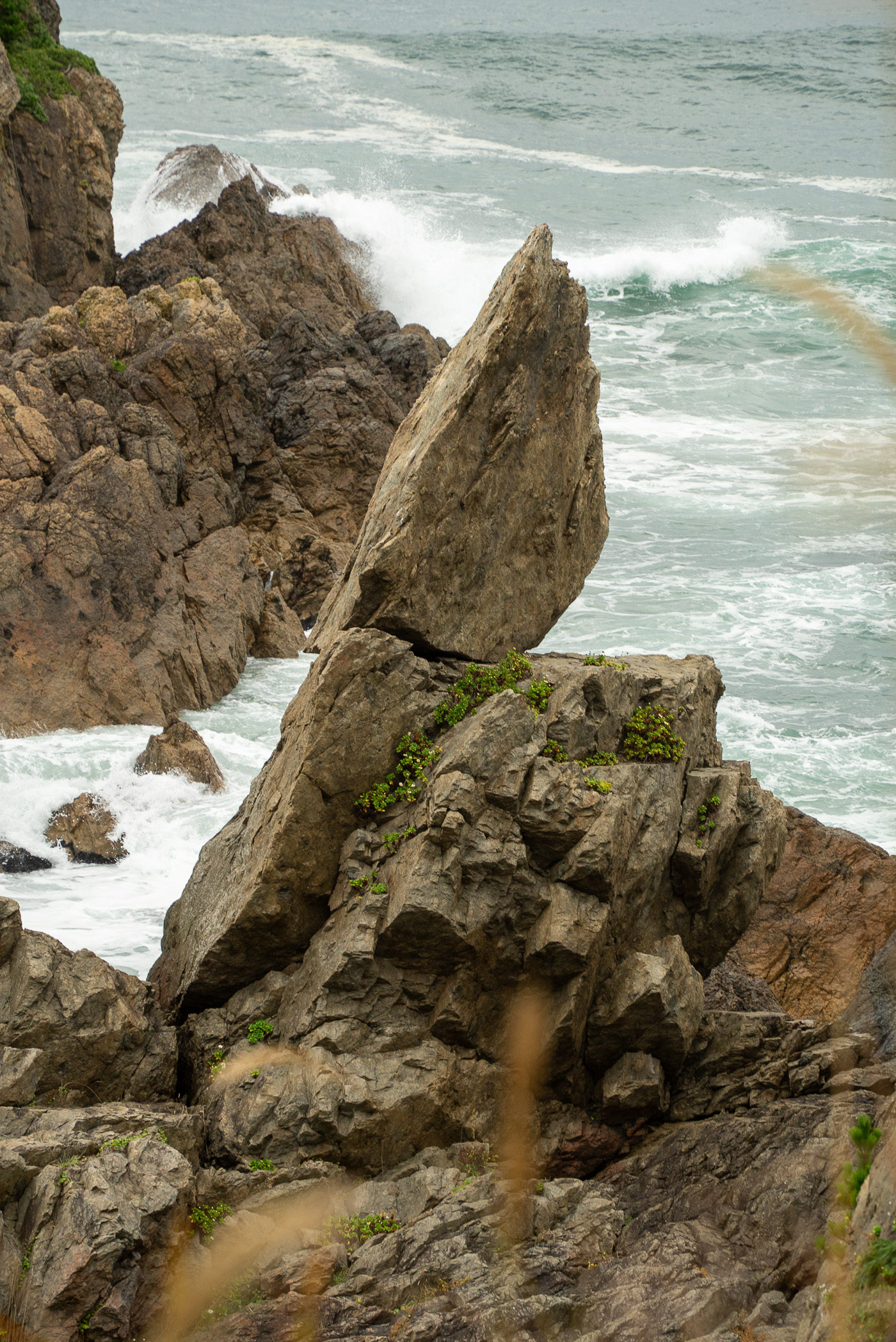
This boulder almost looks like masonry.
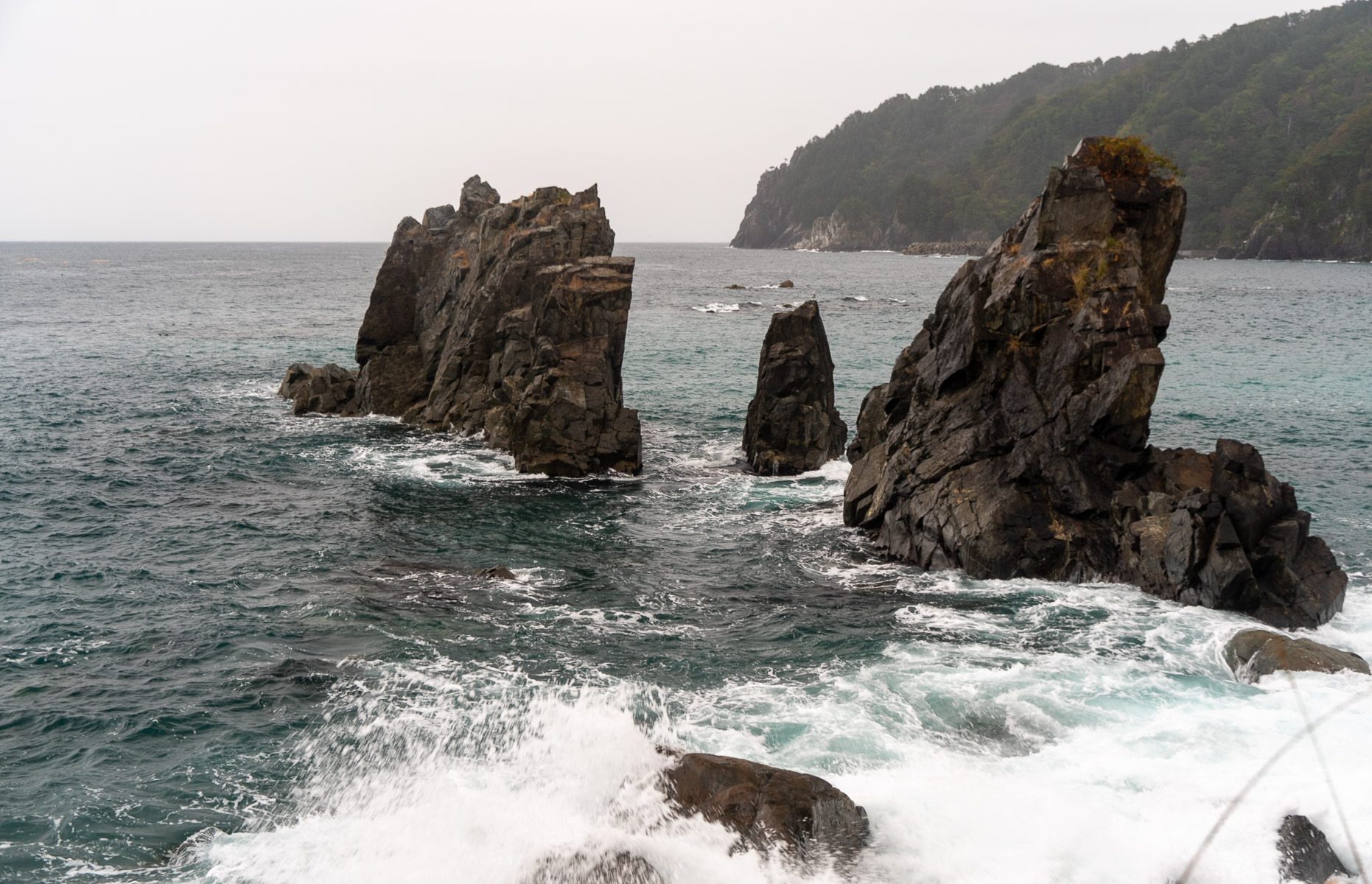
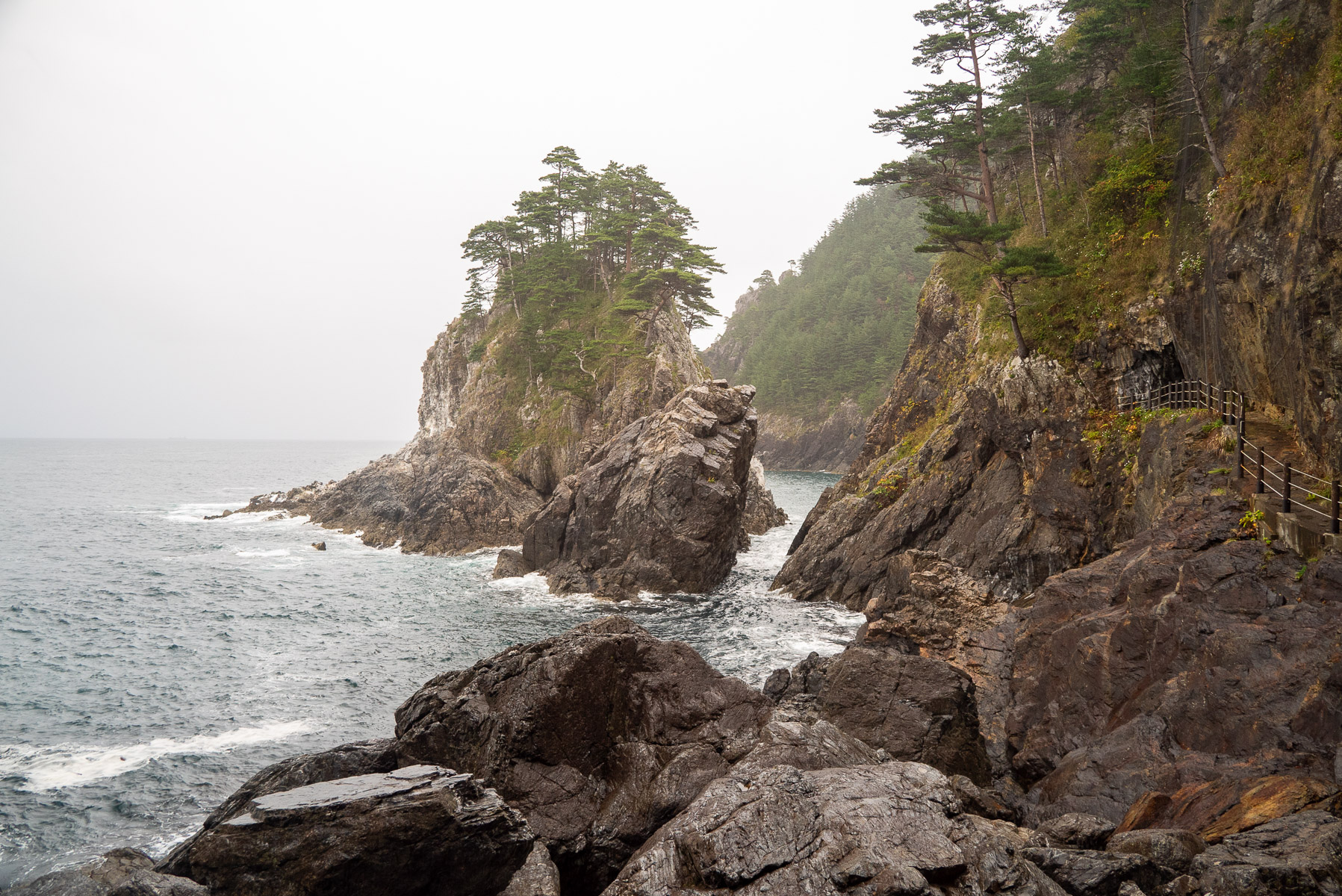
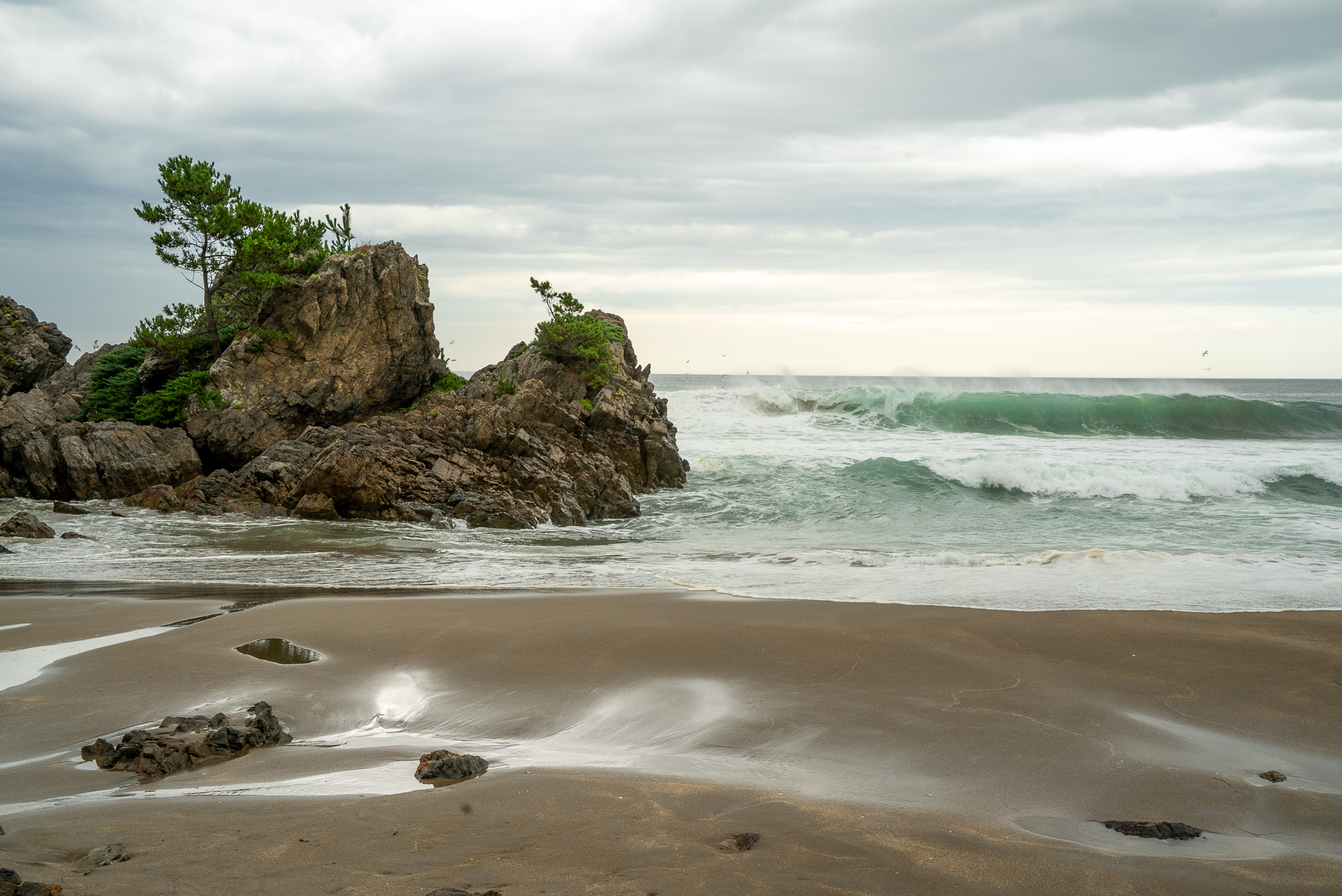
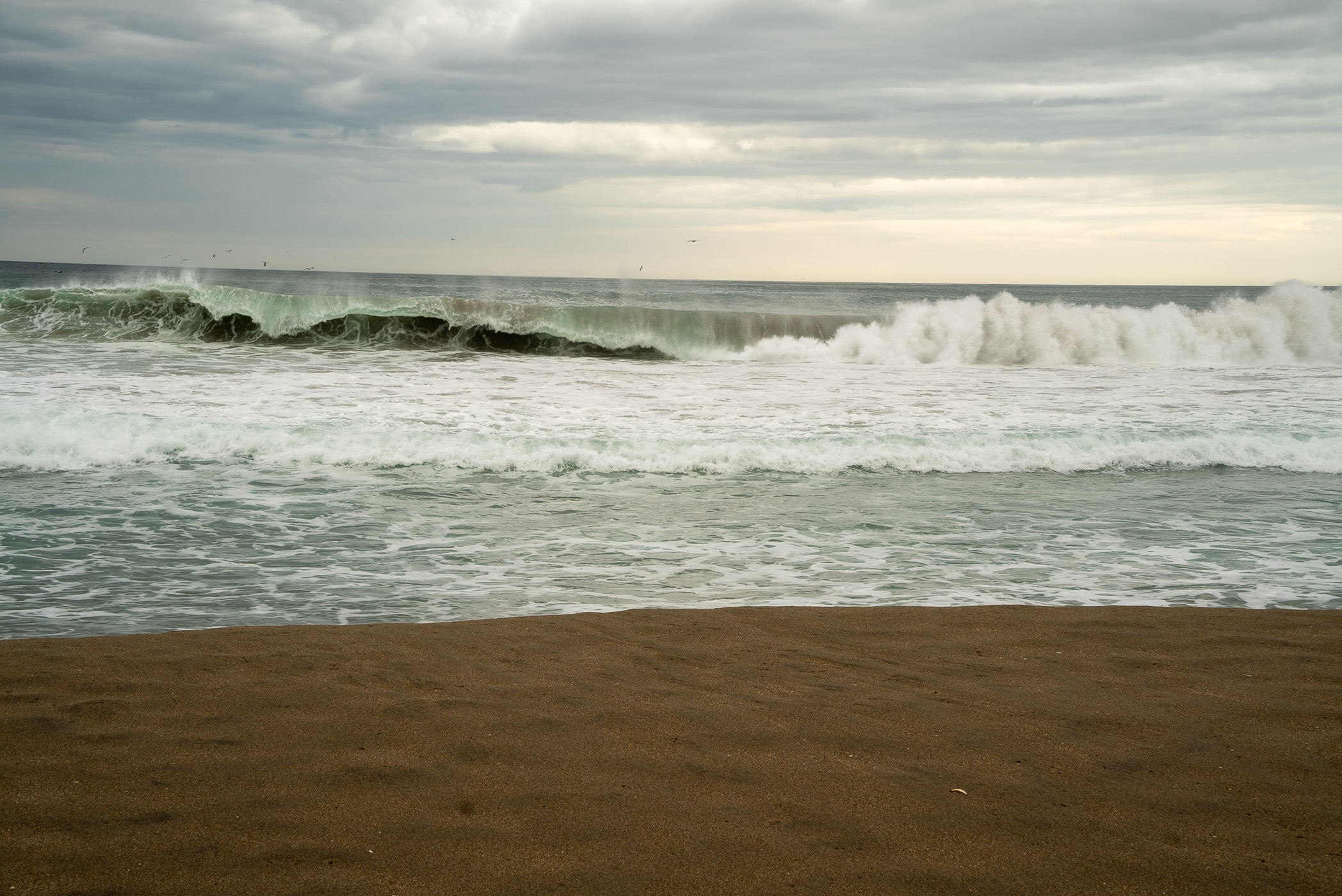
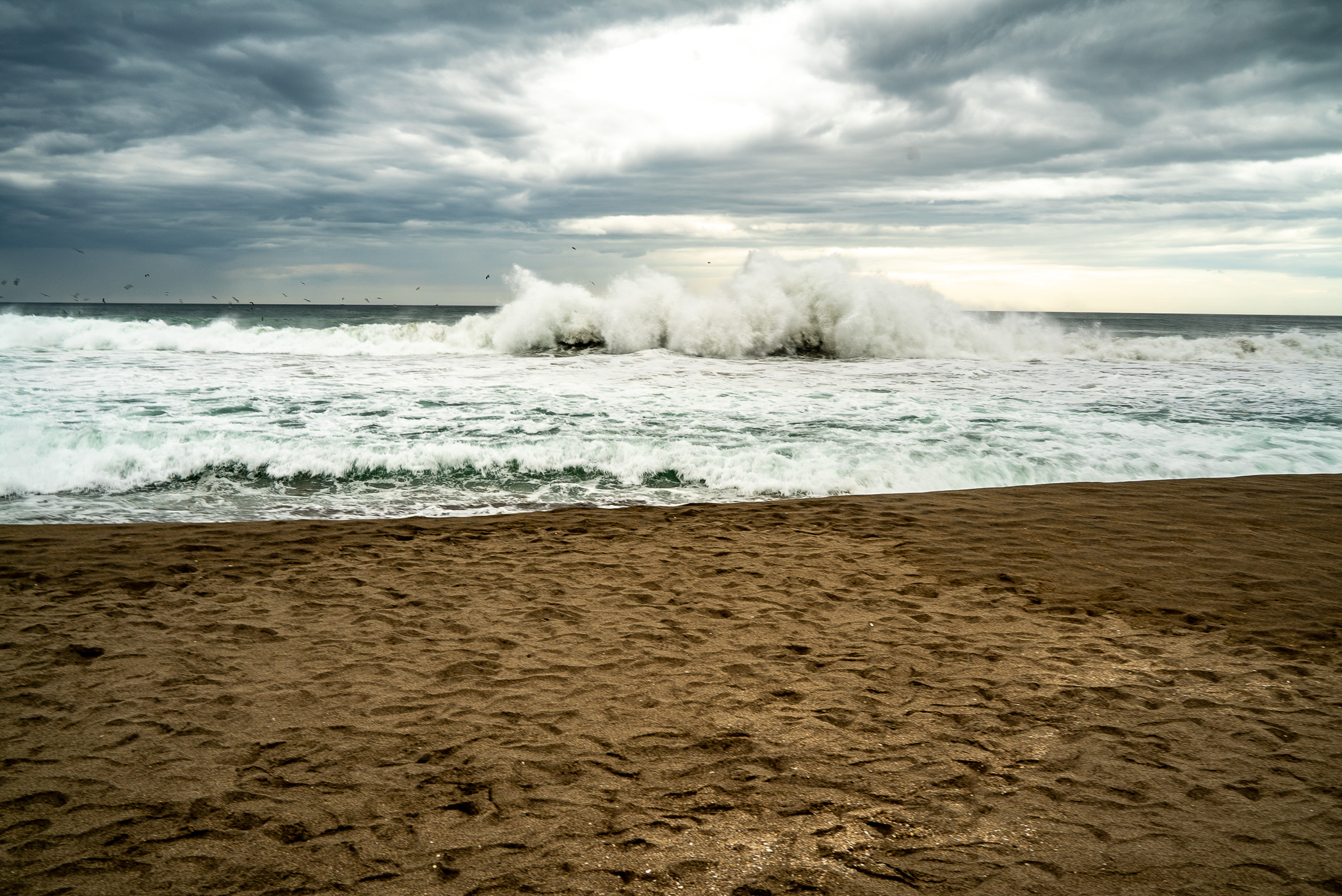
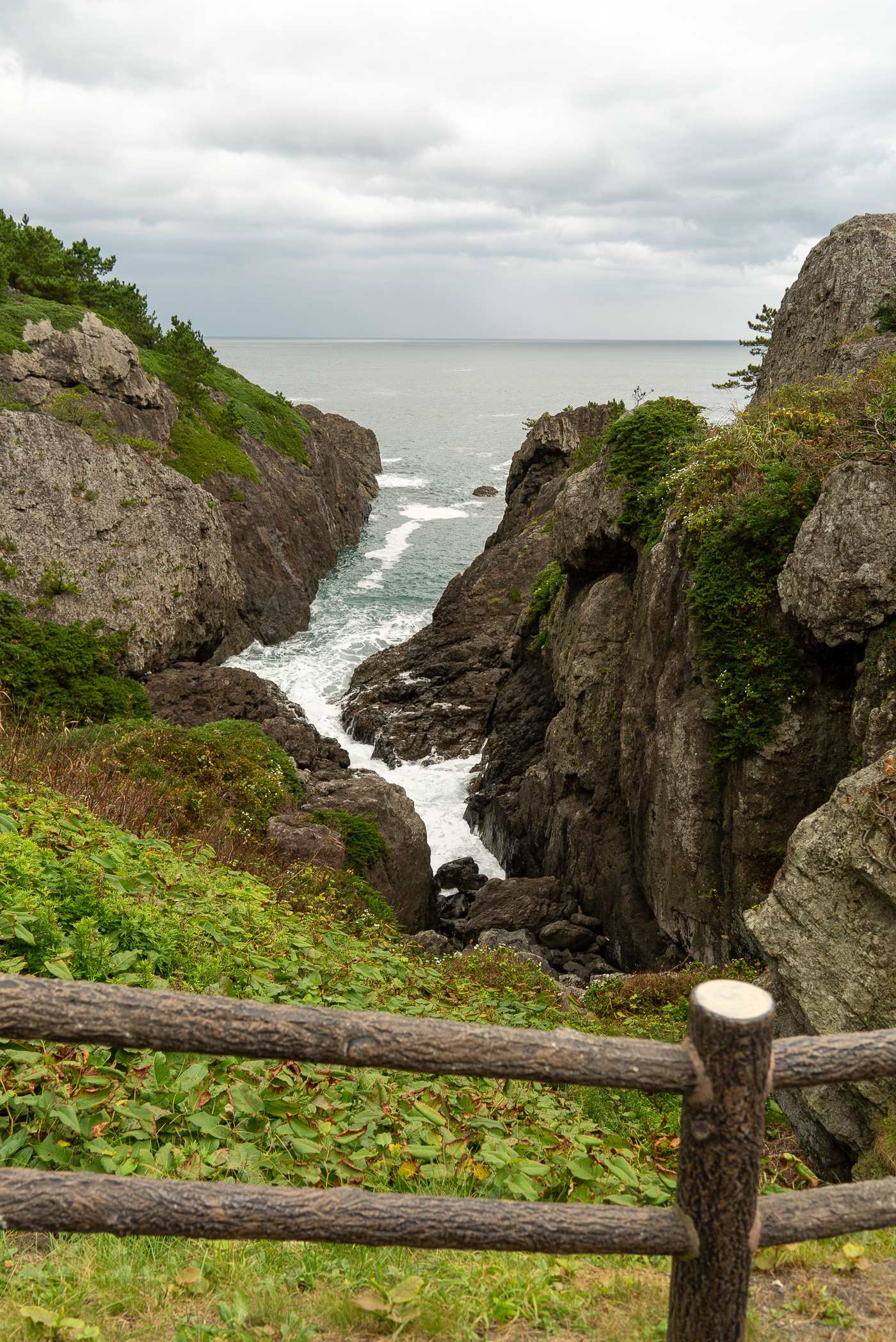
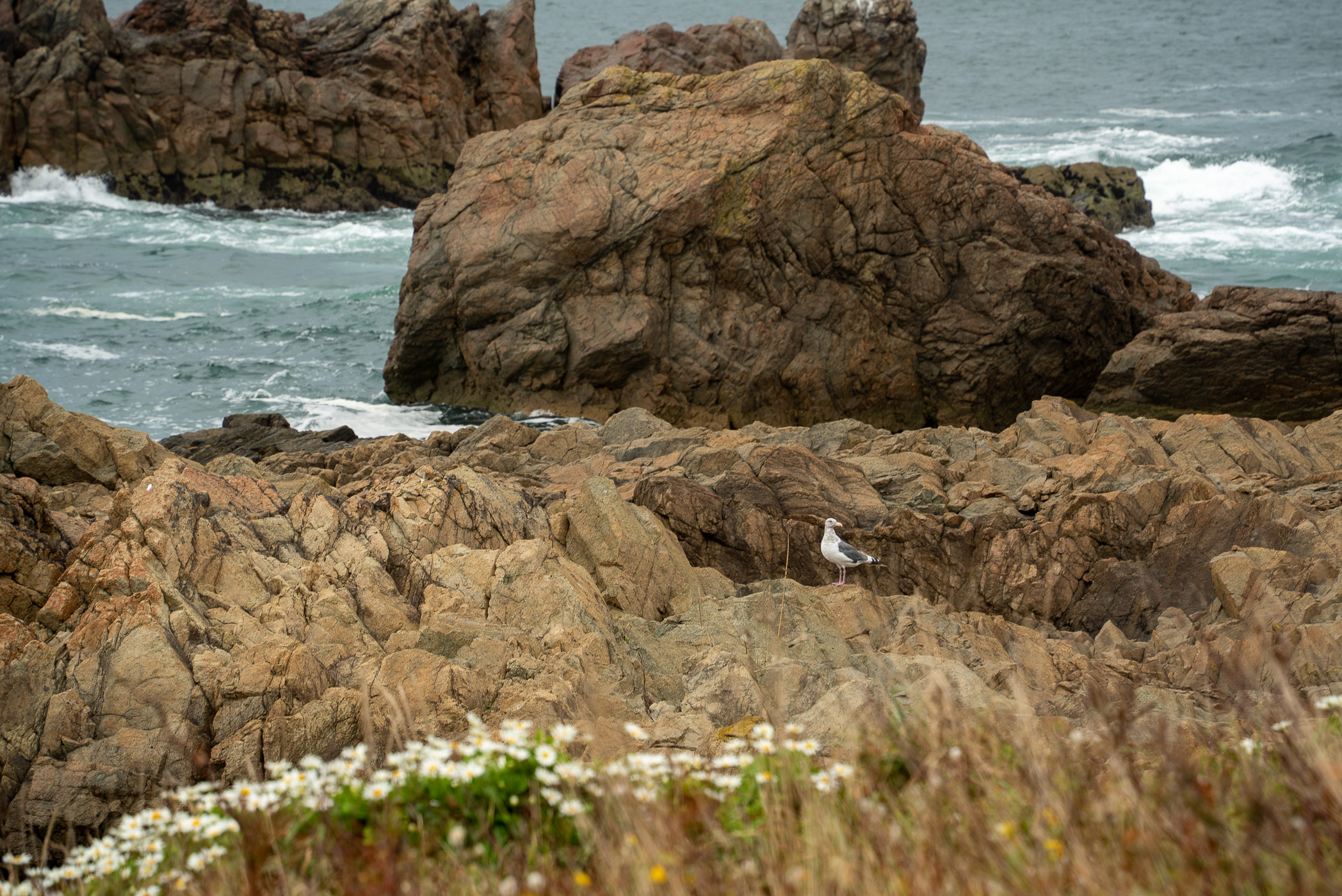
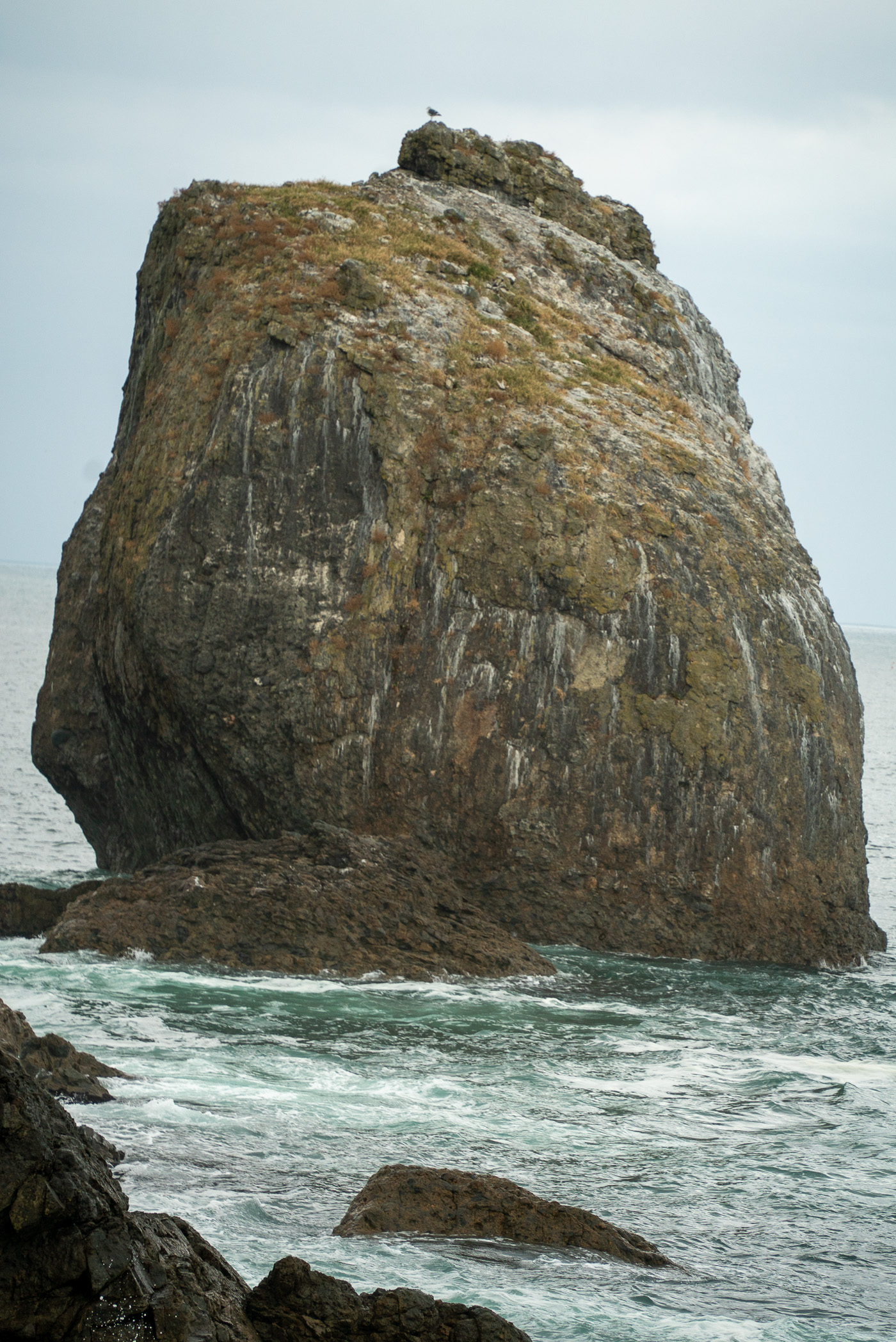
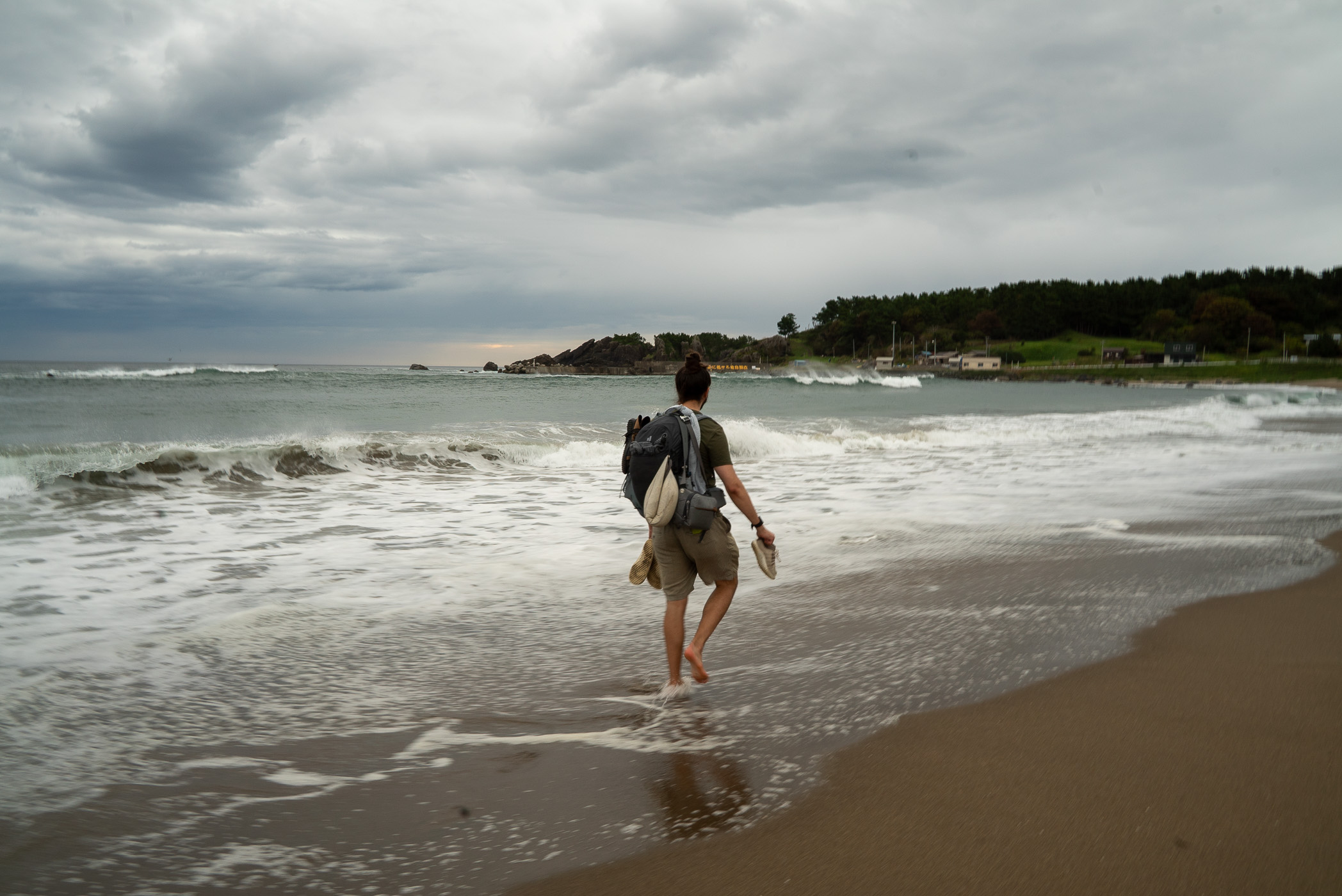
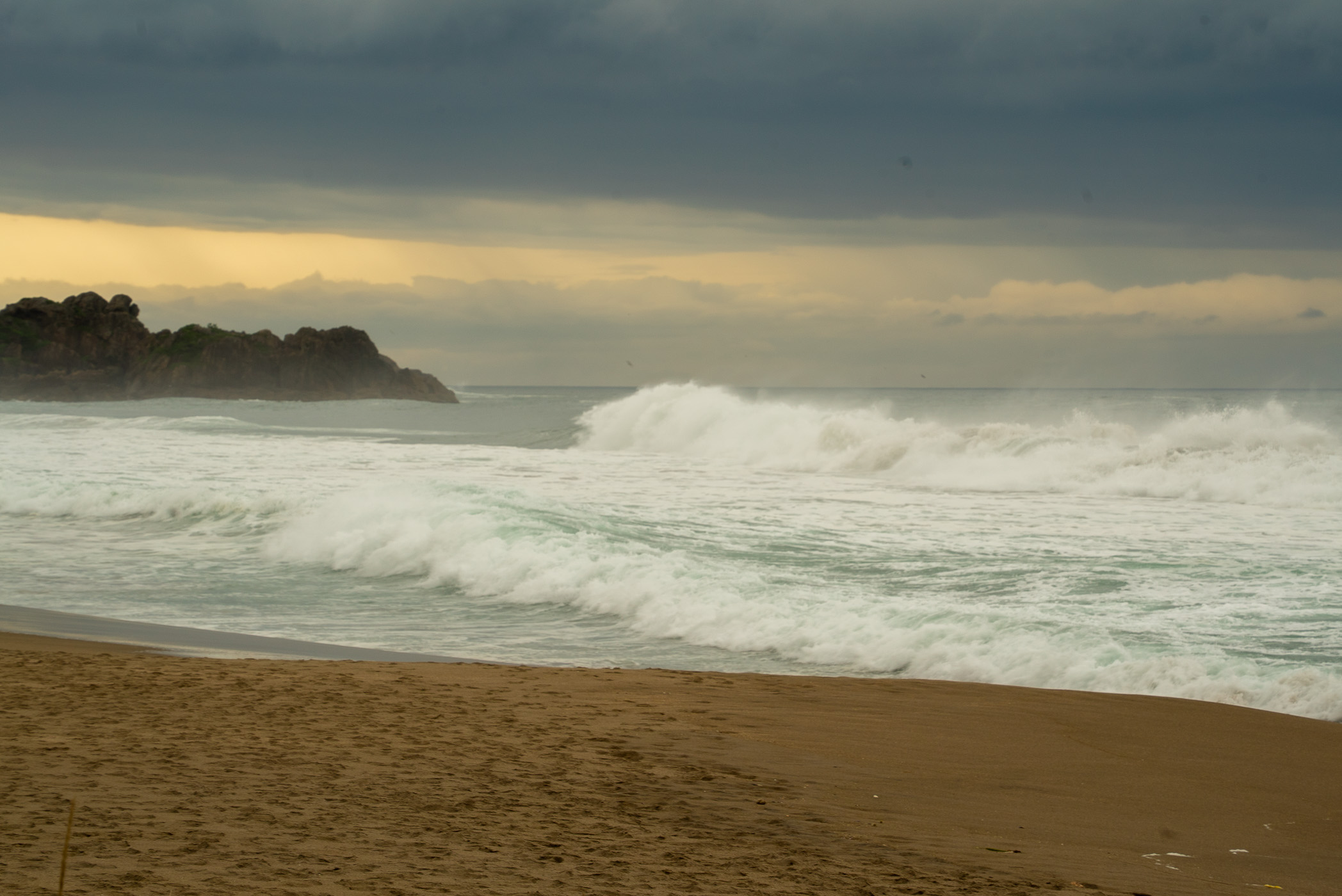
Throughout our hike it was a bit cloudy, but it only started to rain 50 meters before we reached our destination train station. The dark clouds fit really well with the Ocean and the ragged rocks.
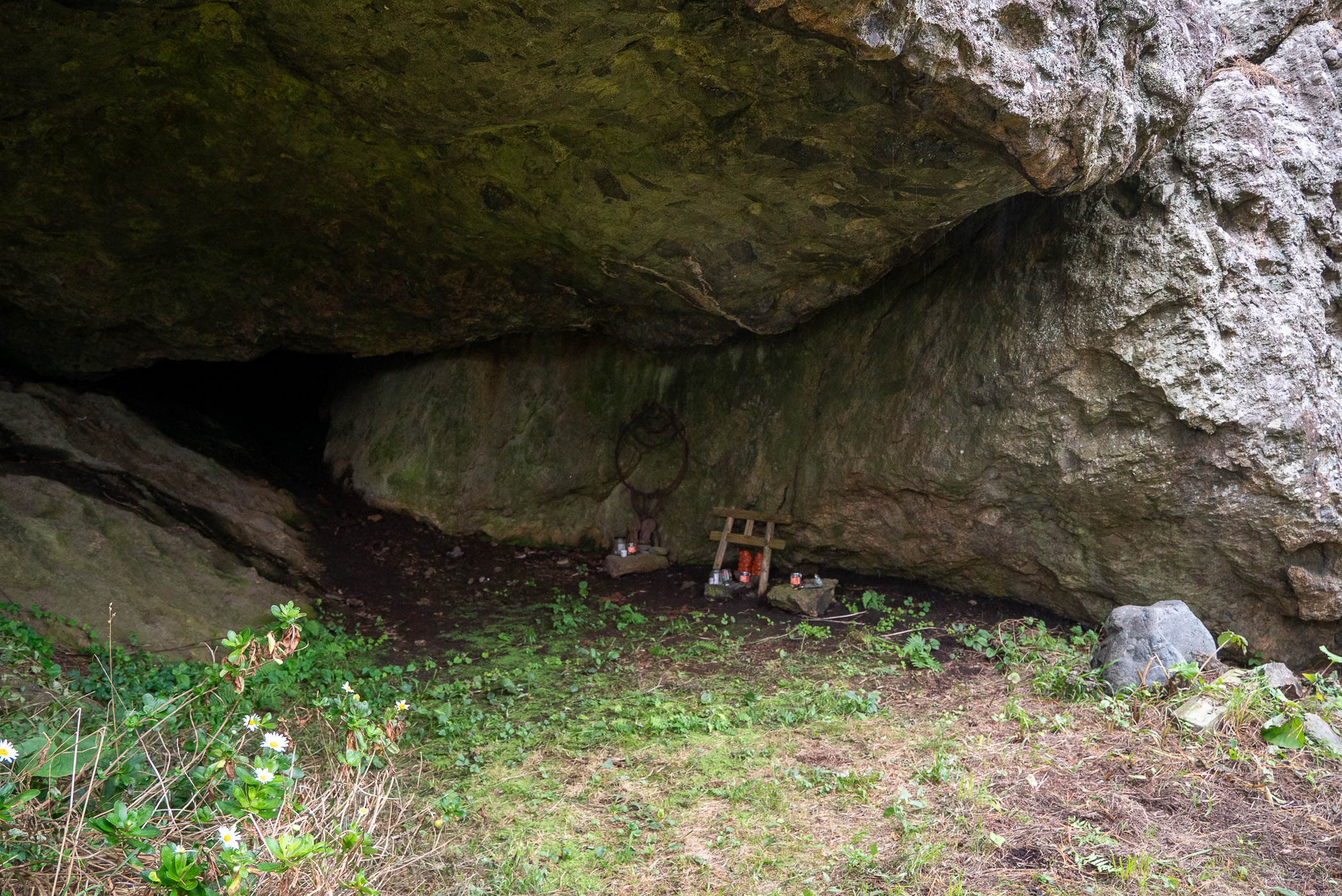
A little off the actual path (but marked with signs) there is a hermit cave that was once used for meditation…
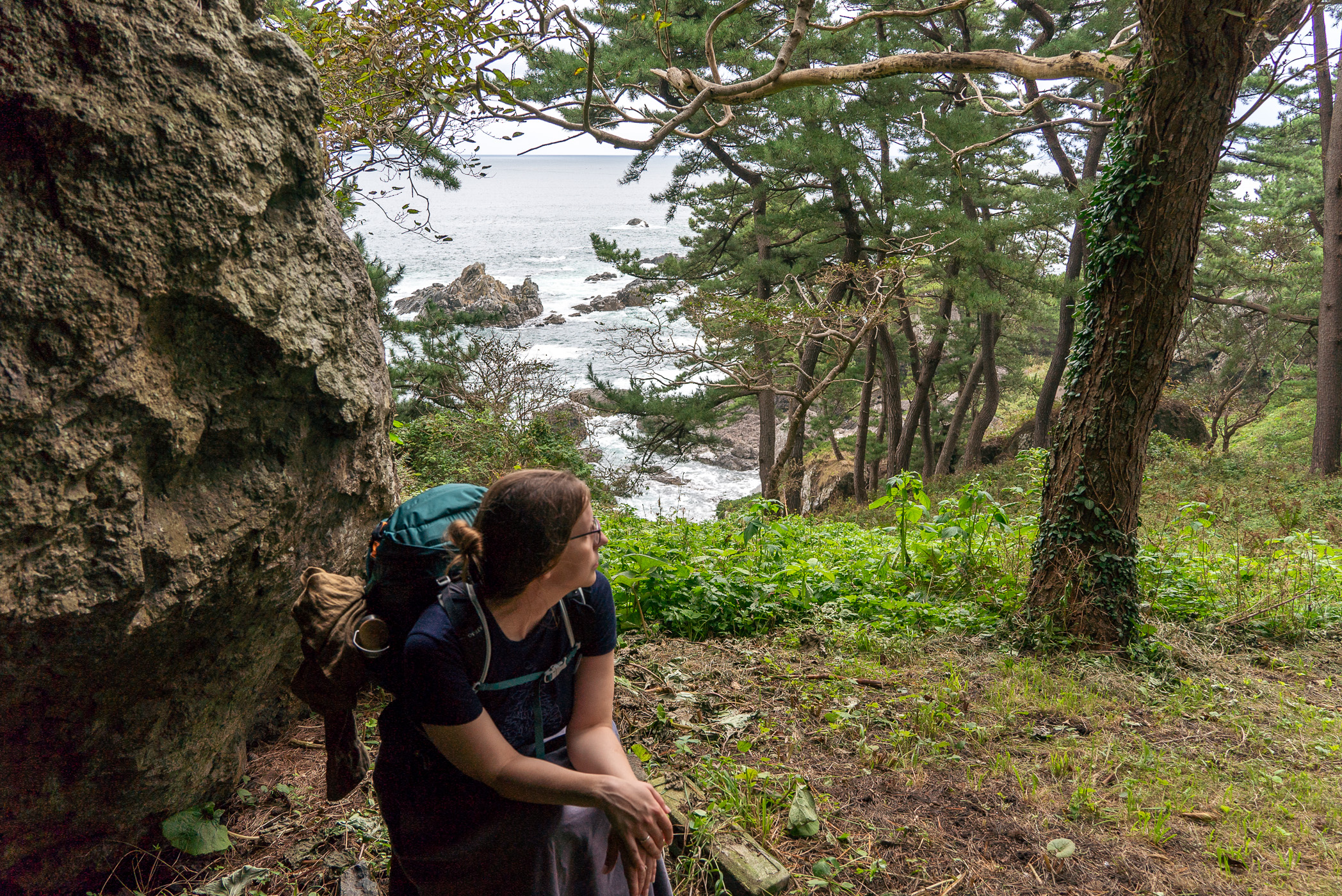
…the view is superb!
Along the path we hit upon a viewpoint where we could by some fries (sadly not the vegetable curry, because that contains meat – of course. Upon asking whether it could be vegetarian, the lady in the kithcen rolled her eyes at us…) and see some other humans for once. The rest of the path was almost completely devoid of people! Walking this trail can make you feel like you have the whole of Japan to yourself. However, if you really are on by yourself, it’d probably be a good idea to tell someone that you’re hiking the path and that they should call for help if they don’t hear from you in x hours. If something were to happen to you on the trail it seems quite possible that it could take one or two days before anyone would pass by and find you.
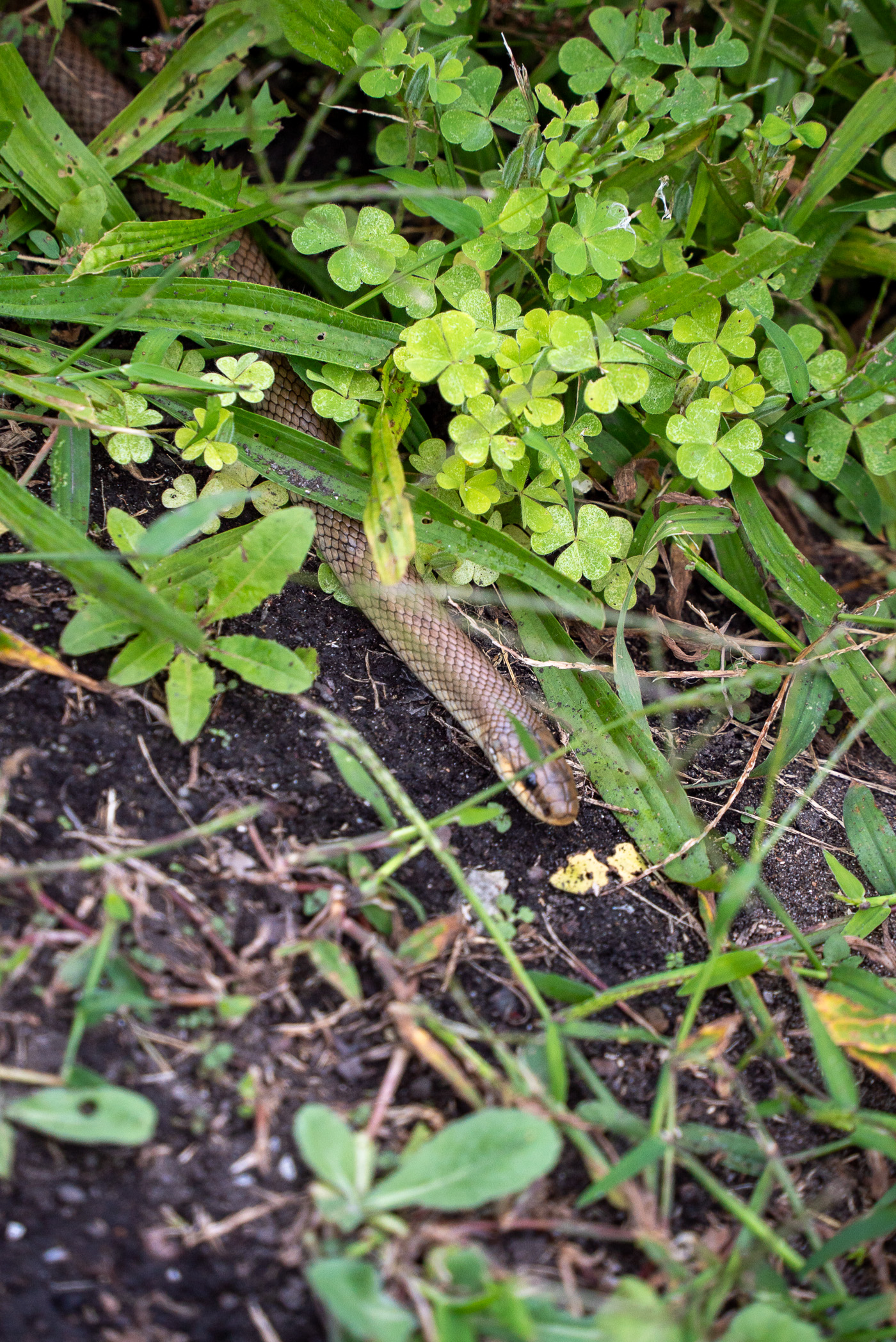
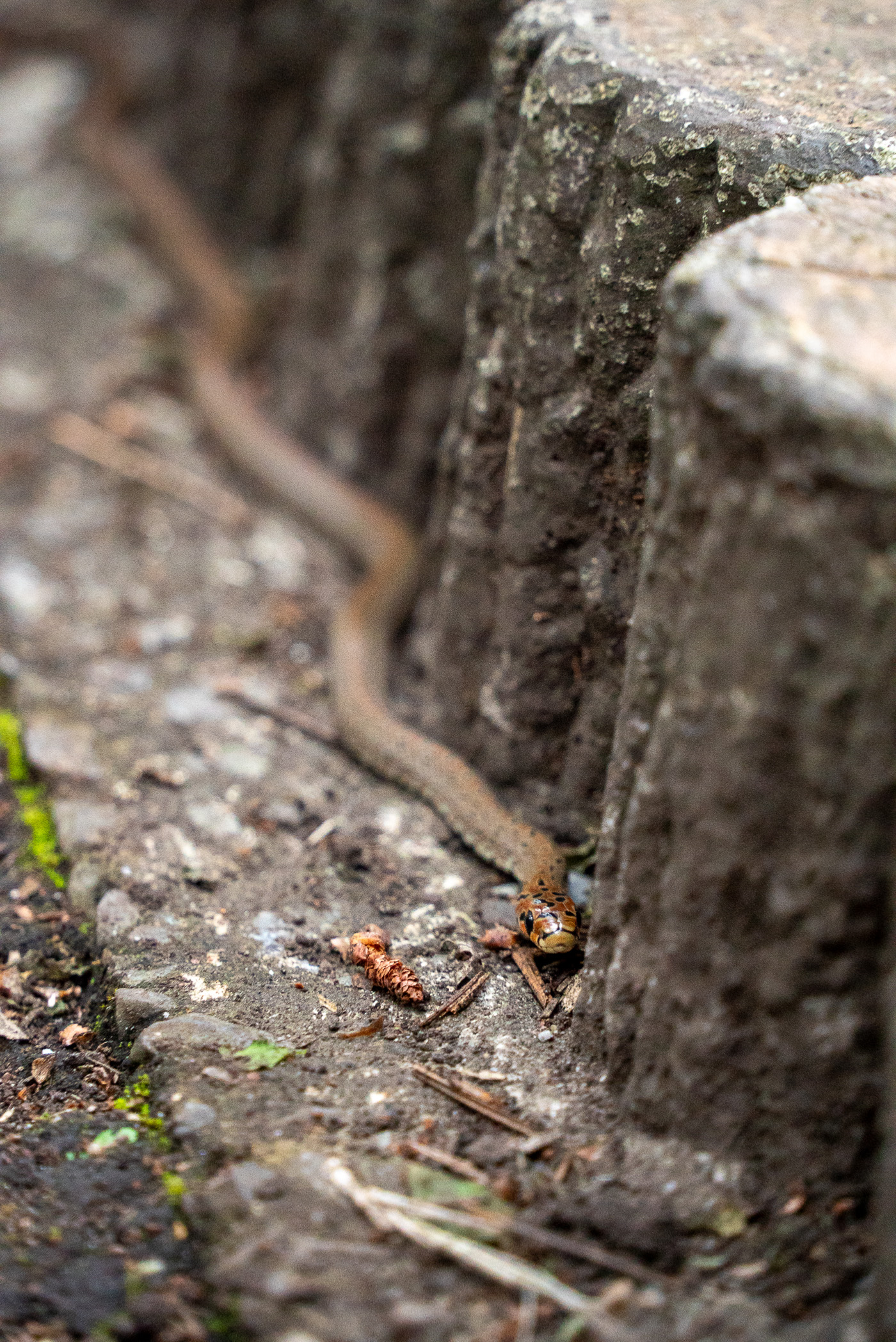
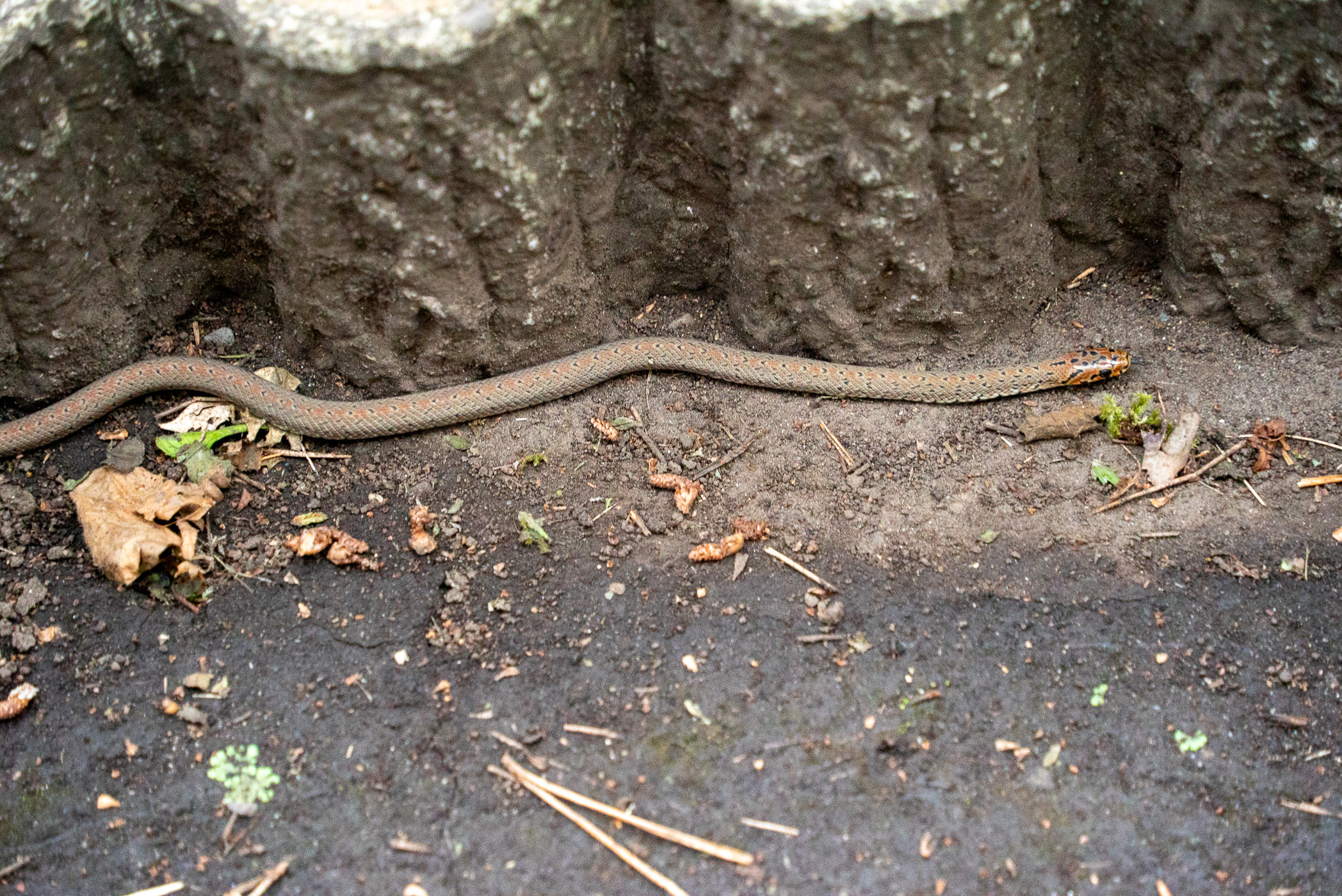
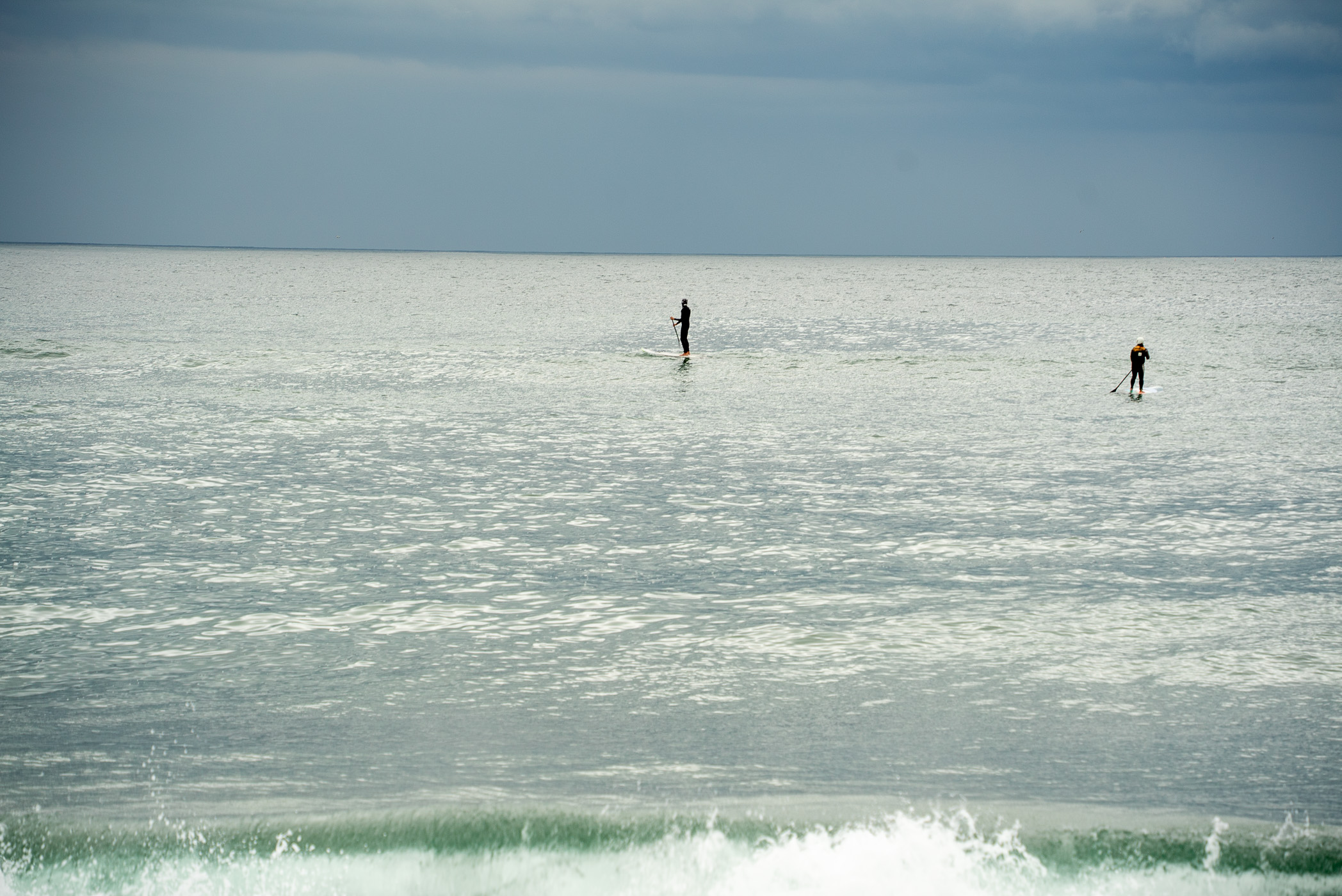
However, cute snakes do frequently cross your path here : )the only two people we saw inside the ocean (addmittedly, the weather was pretty stromy, as you can see)
We are vegetarians and so it was quite a challenge to find food in Japan, if you’re outside of the larger metropolitan areas. For all the omnivors we can probably recommend everything, there’s mainly fish and different dishes containg bacon and we are certain that all of it tastes amazing, but for everyone who is in our position we have collected a few tips for the areas we visited. Get an accomodation in which you can prepare fresh vegetables yourself. Almost everything else contains animals and/or animal products.
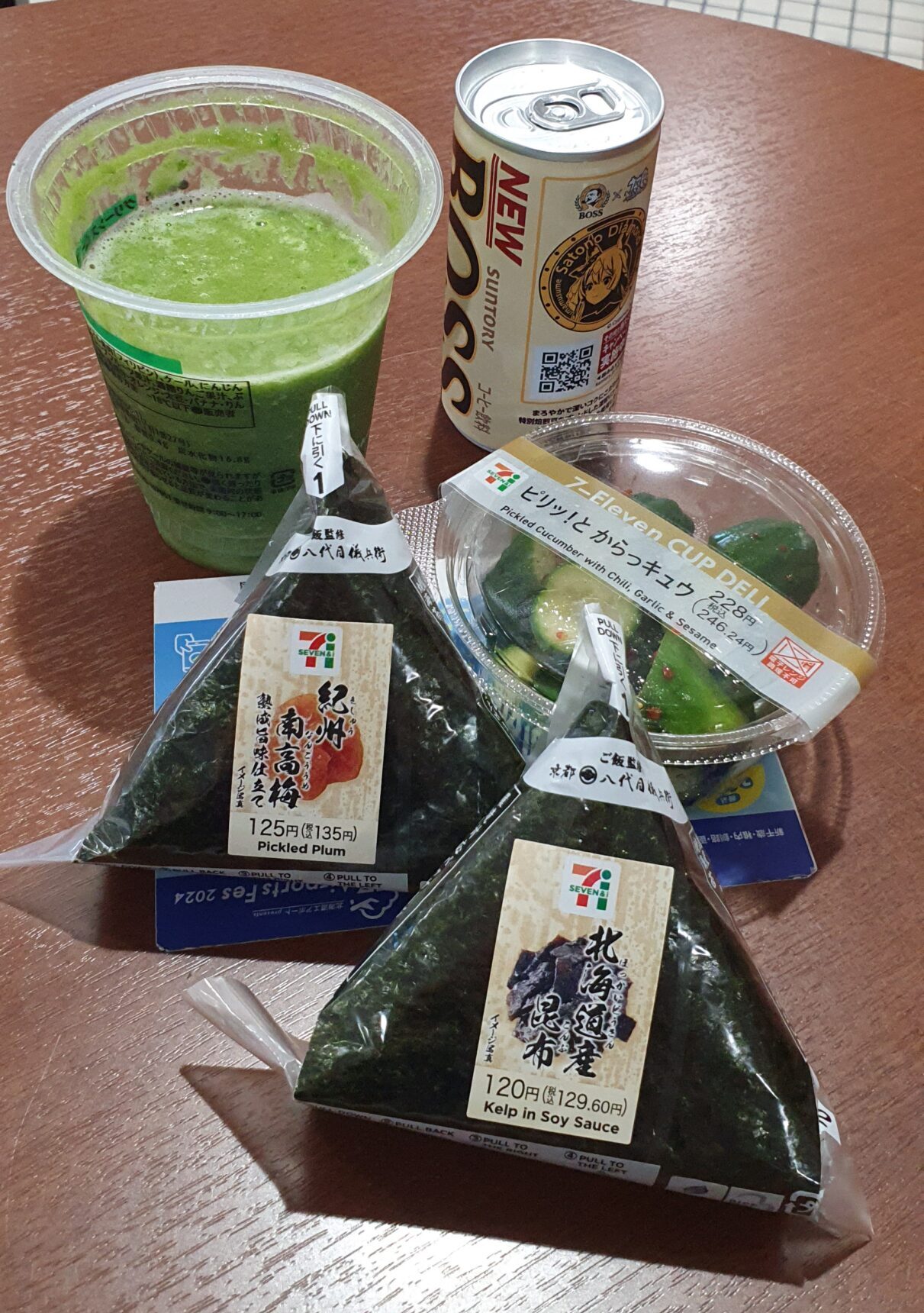
By the way, there is also a green smoothie in the picture. This beverage is sold as frozen ingrediens in a cup and you mix it yourself at a special machine in the konbini. It is one of the few drinks in Japan that Charlie doesn’t consider to be too sweet.
Don’t be deceived by clearly vegetarian looking foods! In most products there will be chicken stock, bacon, bonito flakes, beef extract and gelatin, even if you don’t see it at first. Here for example we bought some pickled cucumbers in a hurry. As we hadn’t eaten in a while and didn’t have a lot of time, we didn’t pay enough attention – obviously the dressing contains bonito flakes (katsuobushi).
We also saw a Sakuramochi (a desert) that contained fish protein. Often, the non-vegetarian ingredients feel completely pointless. We checked a package of instant noodles and they contained gelatin. What for? Vegans have even less chances of buying something ready-made. We bought a baguette that had the consistency of untoasted toast, but otherwise tasted like a normal German supermarket baguette. In Germany that would be made from flour and water, maybe a little yeast, raising agents, emulsifiers and conservatives. In Japan it additionally contains egg and milk. As though it was a cake.
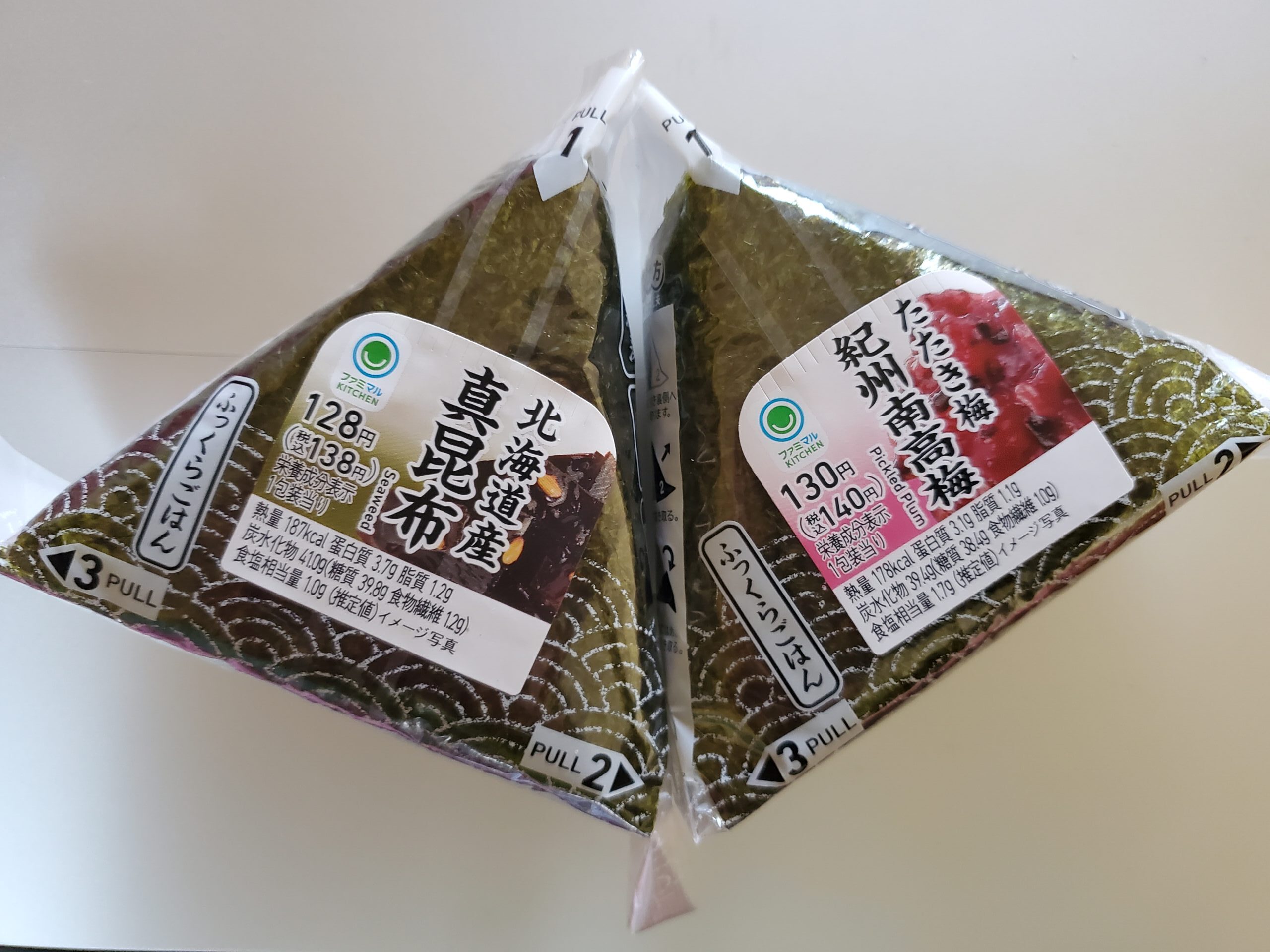
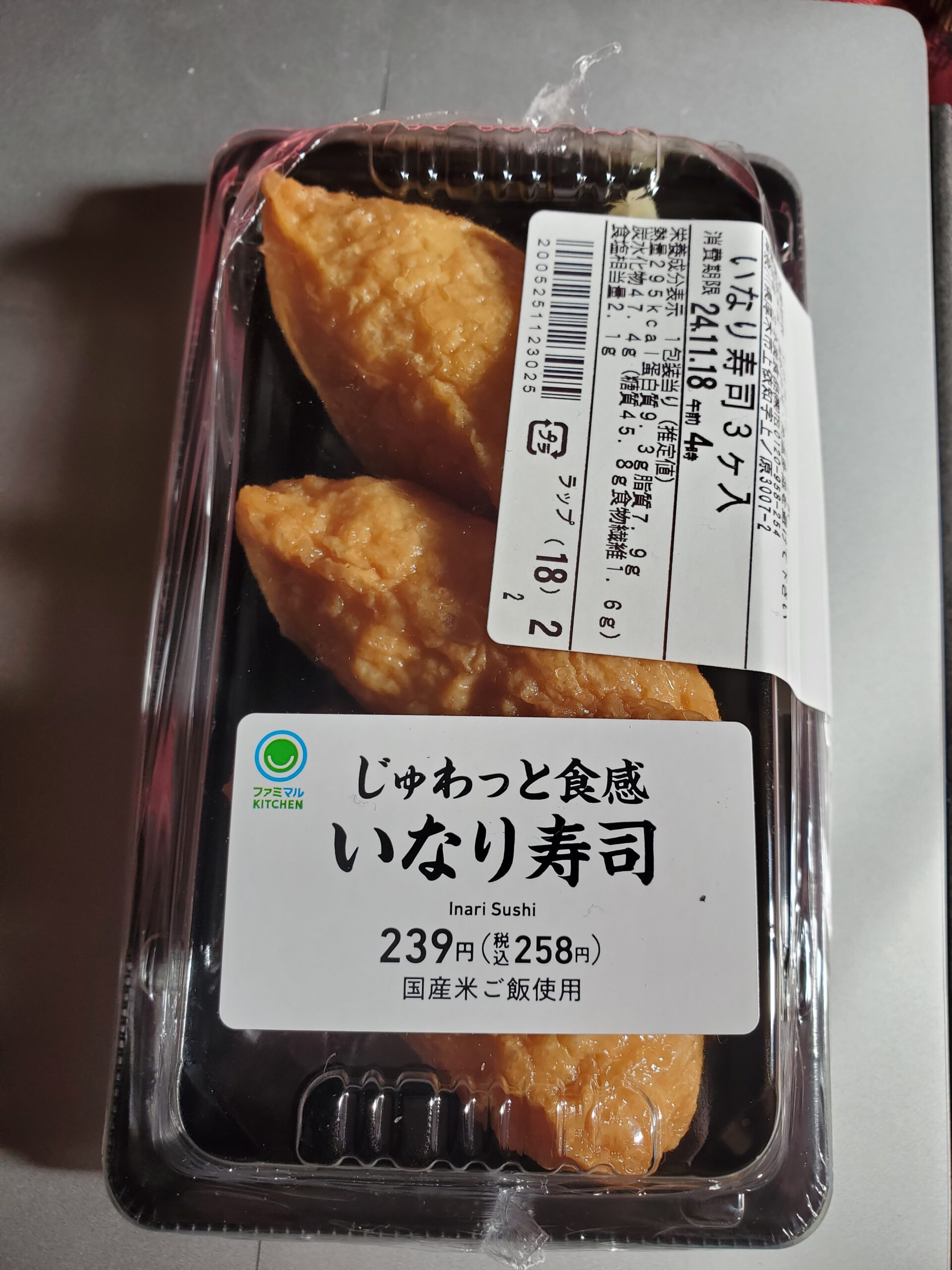
7eleven sells nominally vegetarian (even vegan) products: Onigiri with pickled plum and algae. Neither could we find any non-vegetarian ingredients in the Inari-Sushi. But then we looked online and learned, that all of these are of course seasoned with katsuobushi, only that it doesn’t need to be delcared as the amount is so small. A fantastic piece of information… Before not being able to eat anything on the way, we decided to buy them anyways.
List of vegetarian products in konbini:
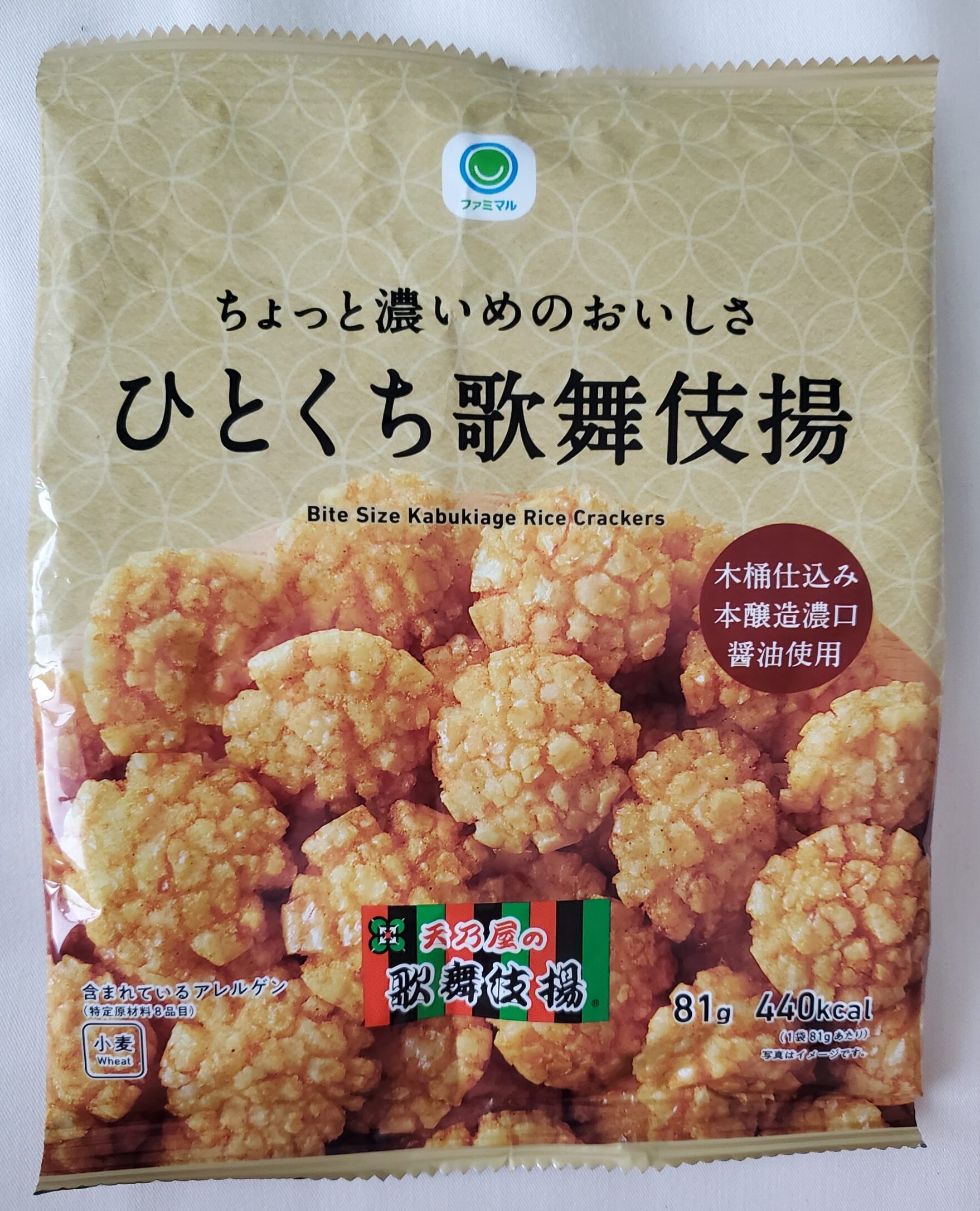
The Japanese style snacks (in which we don’t include potato chips and the likes) are rarely vegetarian, but the kabuki-cracker seem to always be (the single-packed bigger ones as well). You can easily spot them when looking for the Kabuki curtain (with red, black and green stripes) that will be printed somewhere on the package – here: lower middle.
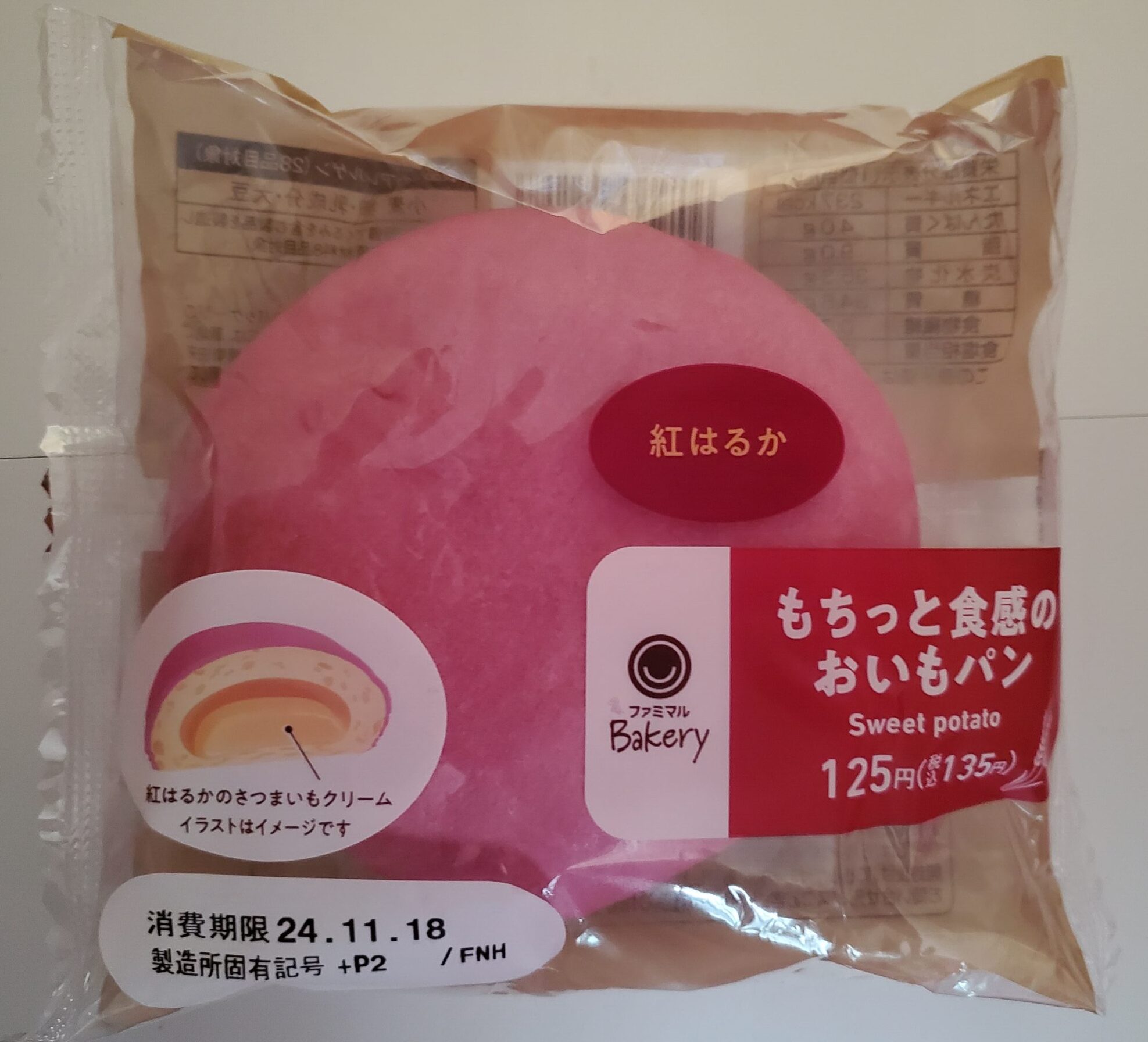
In all of the big konbini chains (7eleven, Family Mart and Lawson) they usually have onigiri of the types plum and kombu, inari-sushi. Among the snacks there’s kabuikage (rice crackers) that are vegetarian and at the register you can find a yellow-orange “pizza”-bun (“Pizaman” – the FamiMa one is the best) and the hash browns (hashutopoteto). There’s also a margarita pizza-pocket that’s actually vegetarian (careful! the same product at Lawson contains fish!). Of course there’s all kinds of cake-like stuff, just have a look. We really like the “oimopan” (sweet potato bun) from FamiMa. The sweet potato sweets are generally surprisingly delicious and whenever we see something new in a sweet potato variant, we give it a try and are rarely disappointed.
Relevant symbols are 魚 (sakana, fish) and 肉 (niku, meat). They’re usually found in a compound with other kanji, but if they’re on there you should expect the product to be non-vegetarian. If you find something that clearly doesn’t contain meat but still includes a 肉 in the ingredient list, it’s probably fruit pulp 果肉 or cinnamon 肉桂 – so there’s no need to worry ; ) If you can read kana it’s quite helpful that the remaining non-vegetarian ingredients are often written in kana. Common offenders are チキン (chicken) ハム (ham) ベーコン (bacon) ビーフ (beef) ポーク (pork) くつお (katsuo) and of course ゼラチン (gelatin). Sometimes the products show a list of “allergens”, but beef and fish aren’t always included in that.
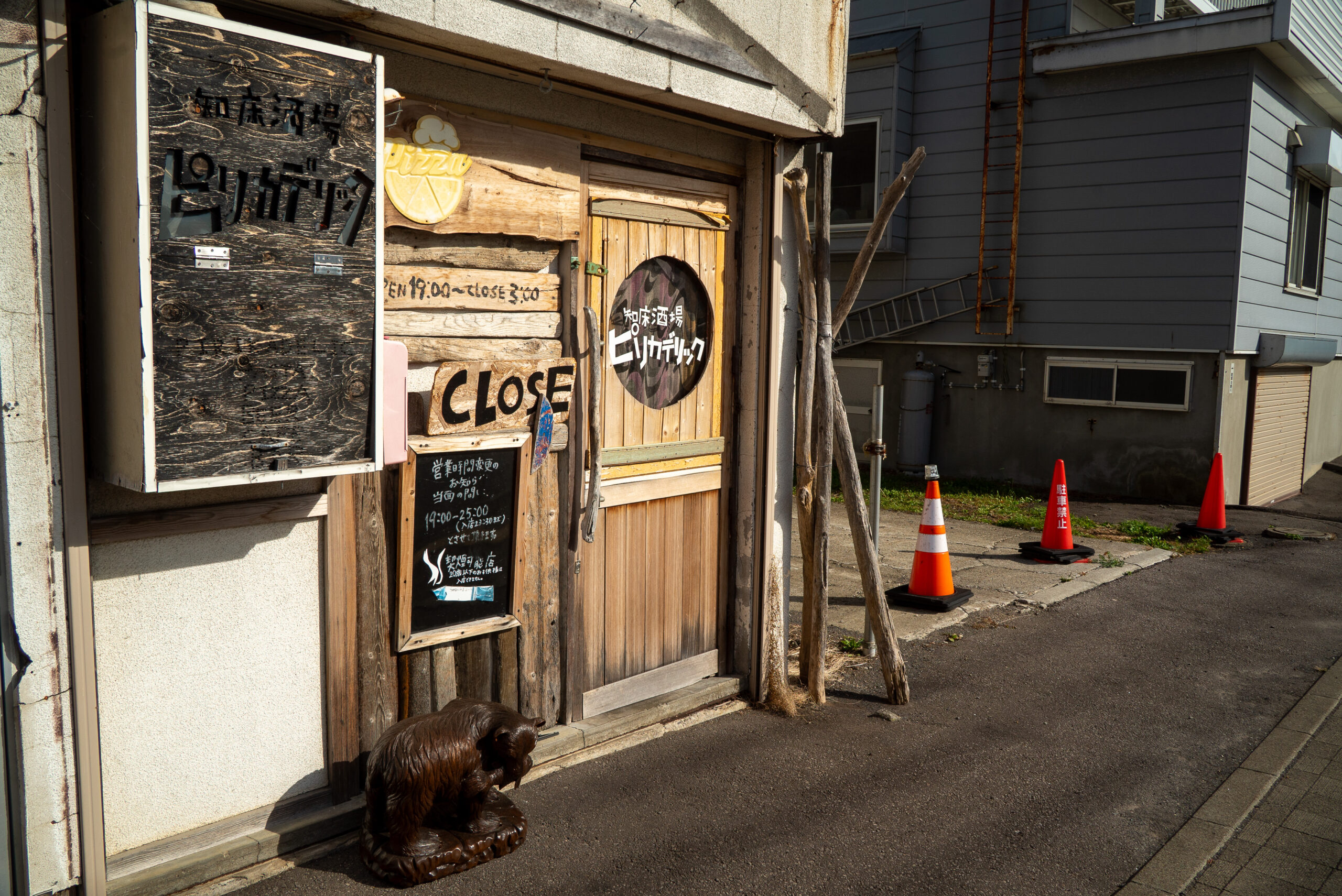
Sometimes you can get lucky with restaurants, too. Here our personal list of places where we could buy food in Hokkaido. In Utoro we found something in 2 restaurants. Just vegetarian, though, not vegan. At Pirikaderikku we ate a pizza margherita and mushroom pasta. That might sound a bit boring, but it was not really comparable to the same dishes in Germany. It was delicious and the owner of the small shop was very friendly. We also tried a portion of potato salad, and that was actually quite similar to some german potato salads – delicious, at any rate.
the Pirikaderikku in Utoro
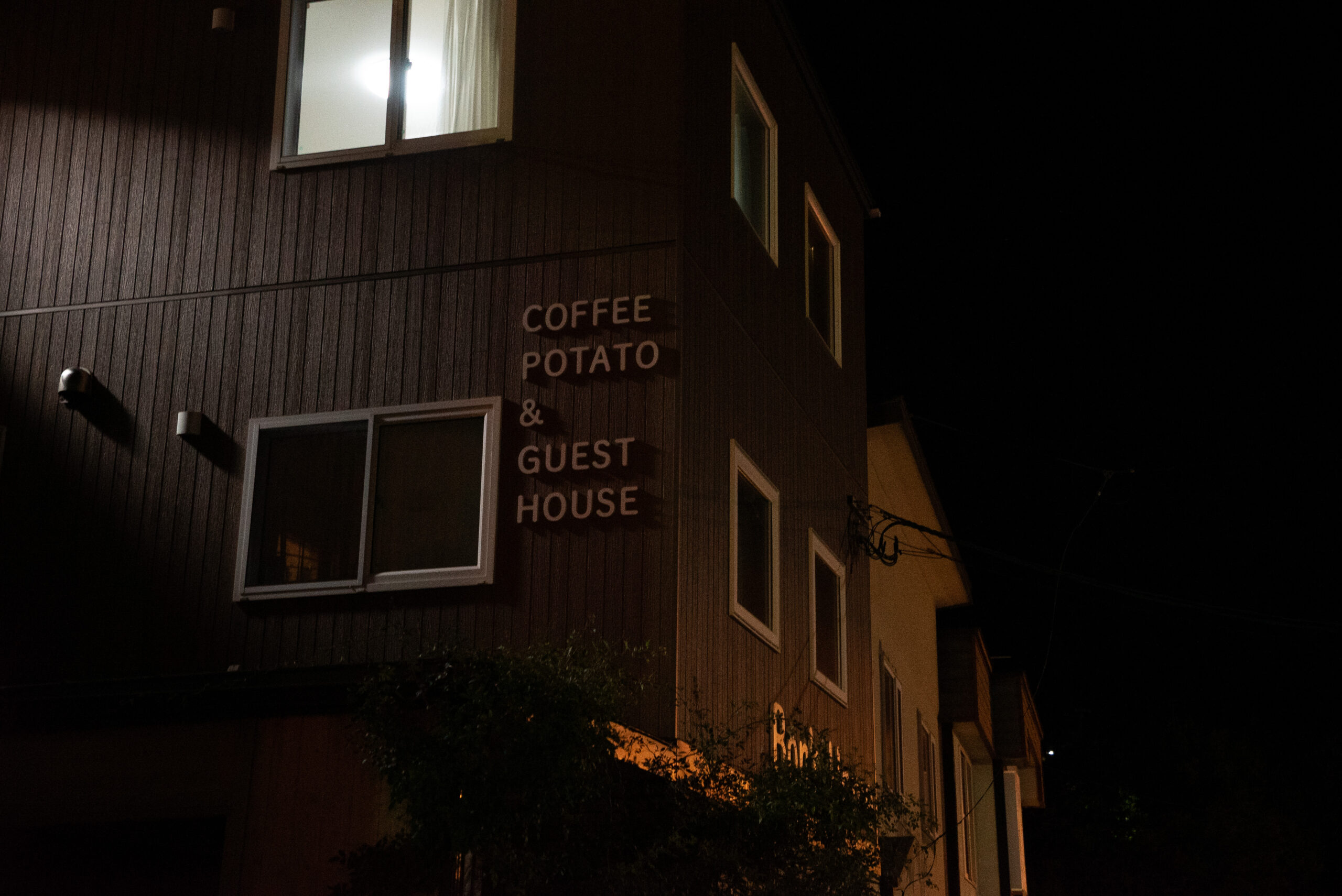
The next day we went to Bon’s Home: Coffee Potato & Guest House for lunch. We ate a portion of potatoes with butter and a potato casserole. The casserole usually contains bacon but it was no problem to get it without. The casserole was fine, the potatoes with butter delicious. A bit unusual in their consistency and also quite different from the varieties you get in a German supermarket. We can definitely recommend it, but know that you’ll only get three small potatoes, so if you’re really hungry, order two portions ; )
On our first day in Kushiro we ate at Hamashishi. That’s a sushi chain that serves the sushi you order via touchscreen at your table to you using multiple conveyor belts. As soon as you choose a dish on the screen it’s already on its way to you. We were still in the middle of ordering when we were quite surprised by the first little plate already arriving at our table. The vegetarian options aren’t that easy to find, but you can switch the menu to english and look at the details for every item, where they display all the “allergens” in the dish. Because Japanese people seem completely oblivious to the concept of “vegetarian”, you can’t use the actual filter function, because if you mark all meat and fish as “allergens”, no dish remains (maybe edamame). The filter knows no difference between “ingredients” and “may contain”. Because all products may contain traces of fish etc. due to the production methods (especially with the fried foods that’s understandable), all those dishes are marked with an exclamation mark. Once you know this, you can still quickly check whether it’s just traces or actual ingredients: ingredients have blue allergen icons and traces green.The only odd thing was that they had 3 kinds of fries (excellently fried, by the way, evene after standing around a bit they were super crispy), one with butter and soy sauce (making it the most interesting). For some reason that one contained gelatin and beef.. On the second day we wanted to go to a vegetarian/vegan café that also sells curry, but after the trail on that day being closed off it wasn’t much of a shock to find that the café (that we had went out of or way to walk to), was also closed for the day, because the owner was on a farmer’s market the next village over. The café looked nice from the outside. So it was instant noodles in the AirBnB for us.
On Sunday everything we wanted to try in Biratori was closed, but we found two vegetarian microwave dishes at Lawson and so we heated them up at our hostel and ate them there. As we got talking to the others in the community room, one woman was eating a pizza and we found out what had made the pizza dough at the Pikaderikku so different: Japanese people add milk and eggs to it! We’re not even sure whether it contains yeast at all. Since the topppings are also very different, a Japanese pizza and an Italian pizza share mostly optic similarities.
In Noboribetsu we asked the people ate our hostel’s reception for any recommendations for potentially vegetarian food options and were directed towards a close-by Yakitori-shop. Armed with this recommendation we made our way there and explained to the waiter that someone else already vouched for them being able to serve us vegetarian food by frying up vegetables and that we would like to have those. Whereupon we were shown the vegetable section in the menu. We are not certain if it would have worked if we had simply asked whether they had vegetarian options, because Japanese people seem to generally have no concept of vegetarianism and will rather be safe by saying “no, that’s not possible”. We tried all kinds of vegetable-yaki and meatless tempura and were fully satisfied. Everyone was really friendly and we only had bonito shavings on one dish ; ) We now told them that this isn’t vegetarian and if now and then someone comes by and orders vegetarian food, they will surely not forget. We are learning a lot in Japan and hope that some people will also learn a little from us.
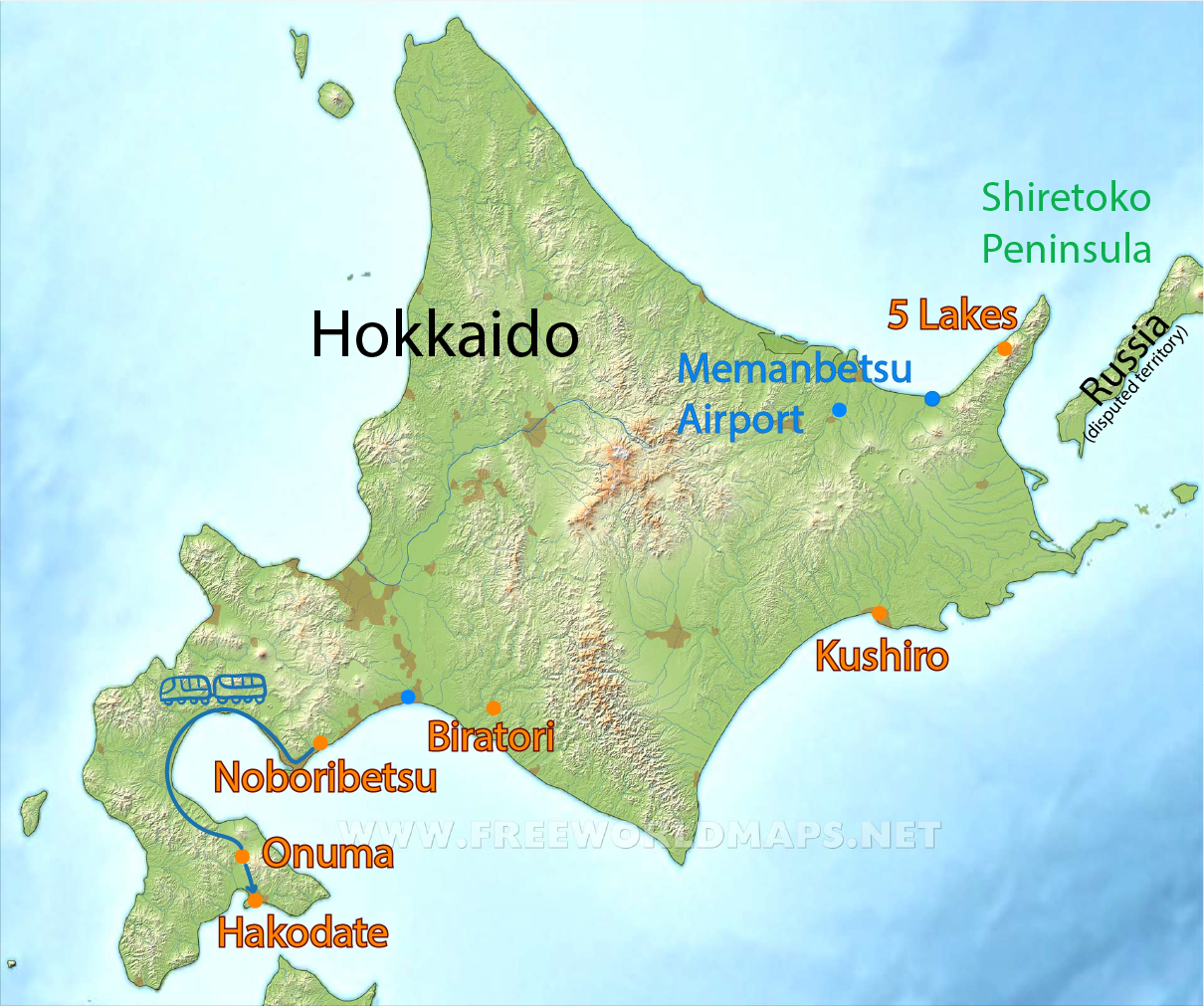
In Onumakoen we ate 3 kinds of potato. It’s a bit crazy to order “Jagabataa” (“potaButter”) and to then eat a small cut open potato with a tiny piece of butter with chop sticks, but it tasts good and we are happy that no animals were harmed. 😀 We also had “Bataajaga” (butterPota), which is the same and “Imodango” (“tatoLump), which is quite unremarkable. In Hakodate itself we didn’t eat anything since we were going to Hachinohe later in the evening and planned to try out the restaurant that was listed as “having a vegetarian option of a local dish” in the Michinoku Coastal Trail blog. Spoiler alert: the restaurant doesn’t exist.
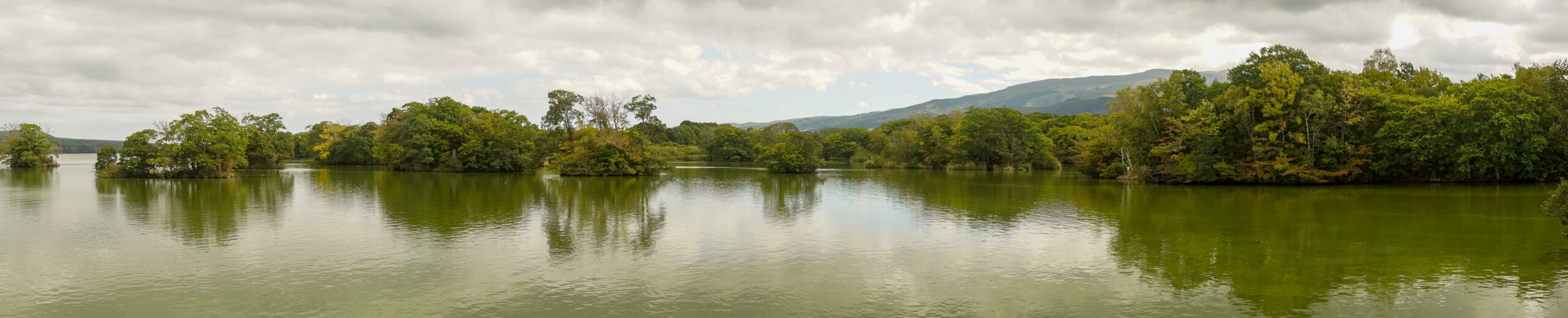
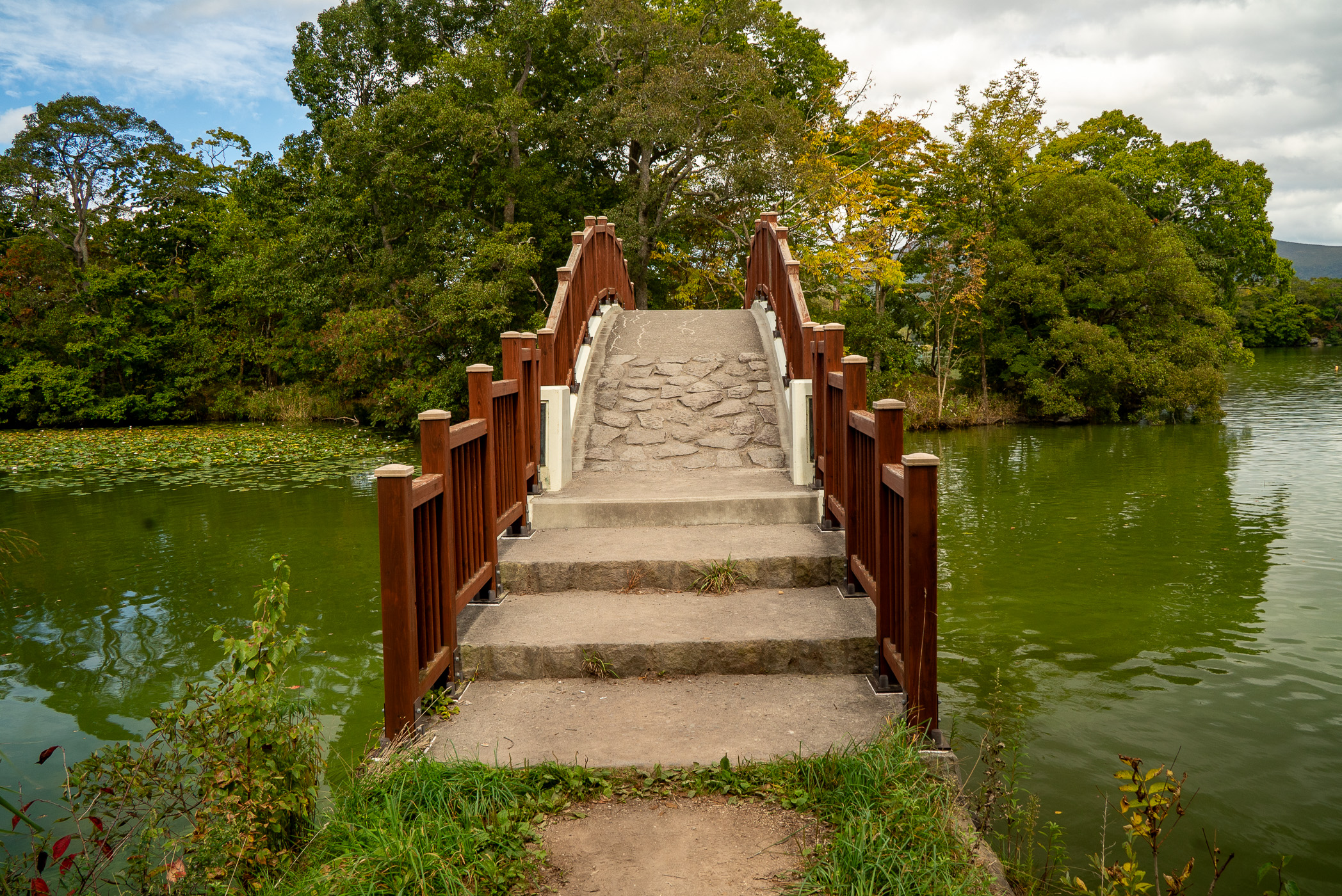
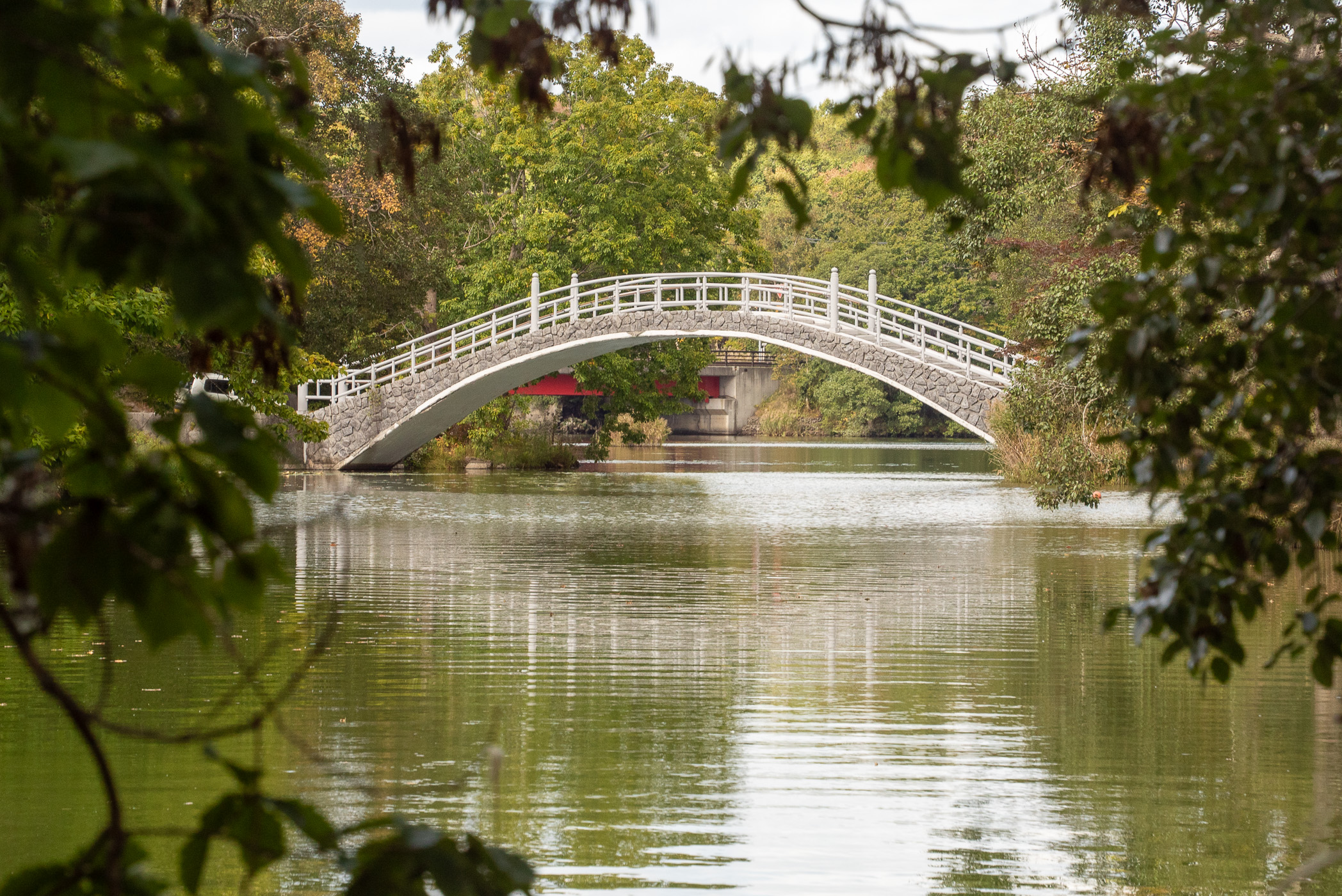
On October 1st we went to Onumakoen first, which is a quasi-national park north of Hakodate. Here you can walk along a path that leads you through the various islands conntected by small bridges. You can reach this park comfortably with a train and we would definitely recommend it, even when you’re only briefly visiting Hakodate.
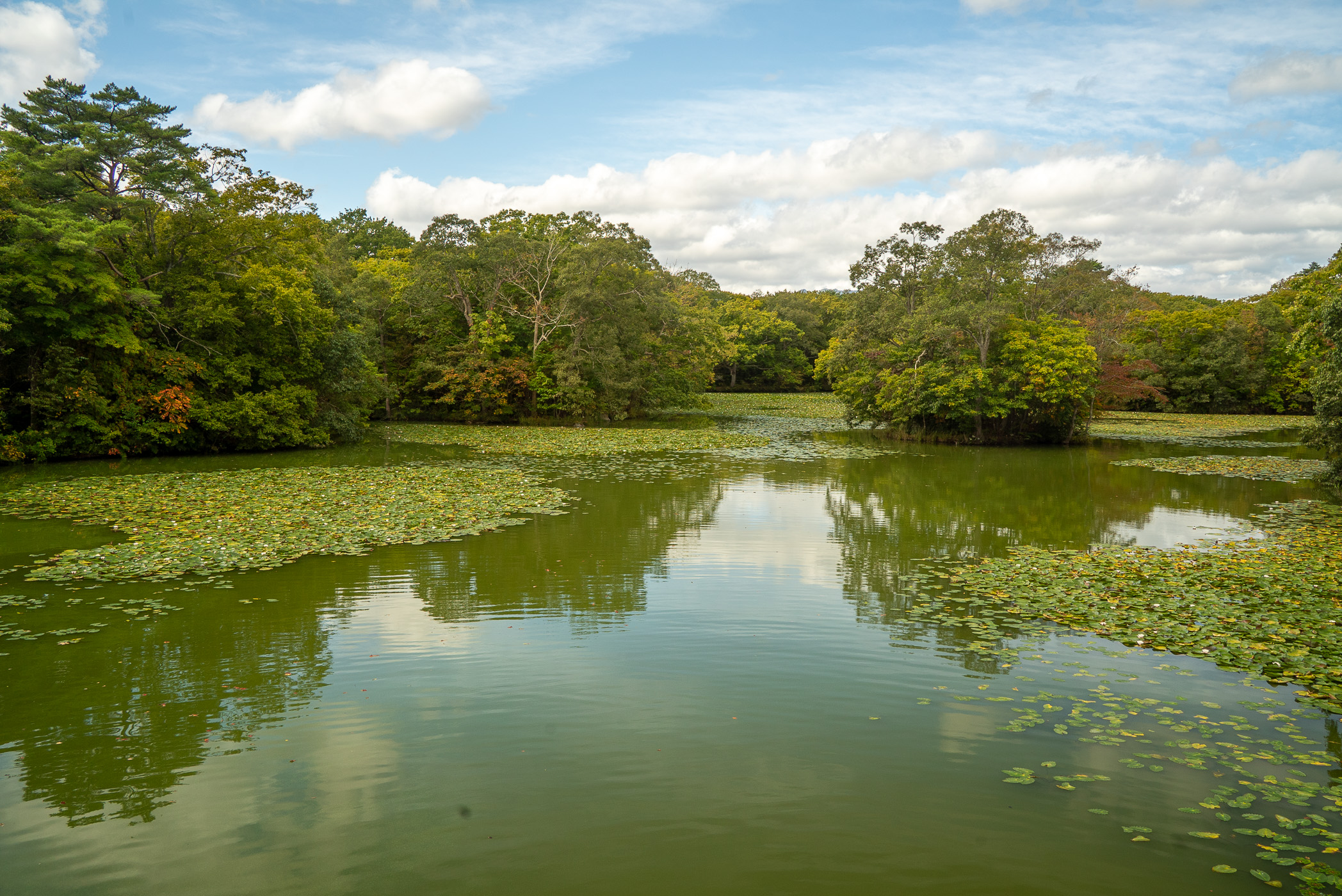
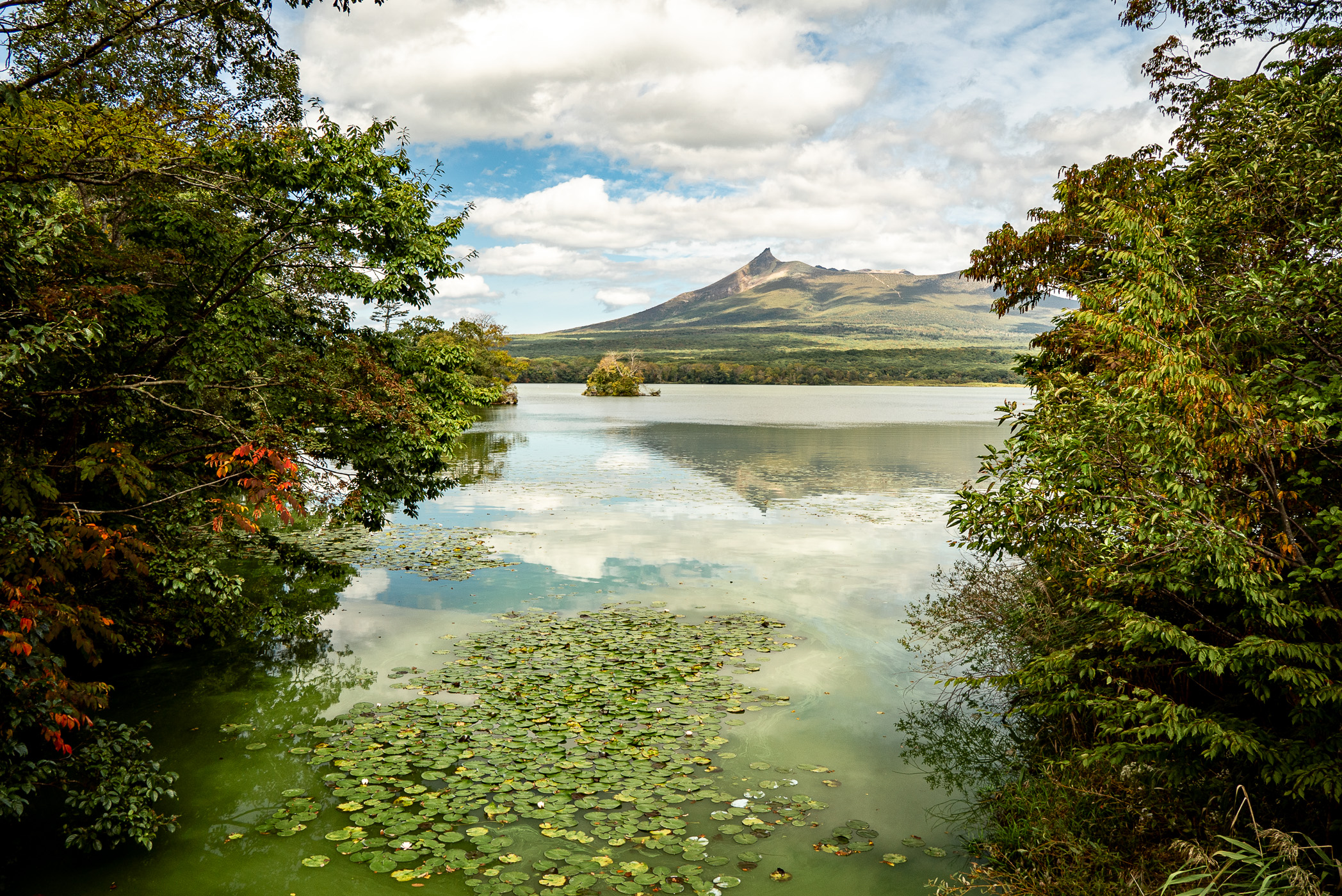
Islands in various sizes are scattered throughout the whole lake. Not all of them are connected via the bridges, some can only be explored from the outside (for those who like even a bit closer from within on of the swanshaped pedal boats).
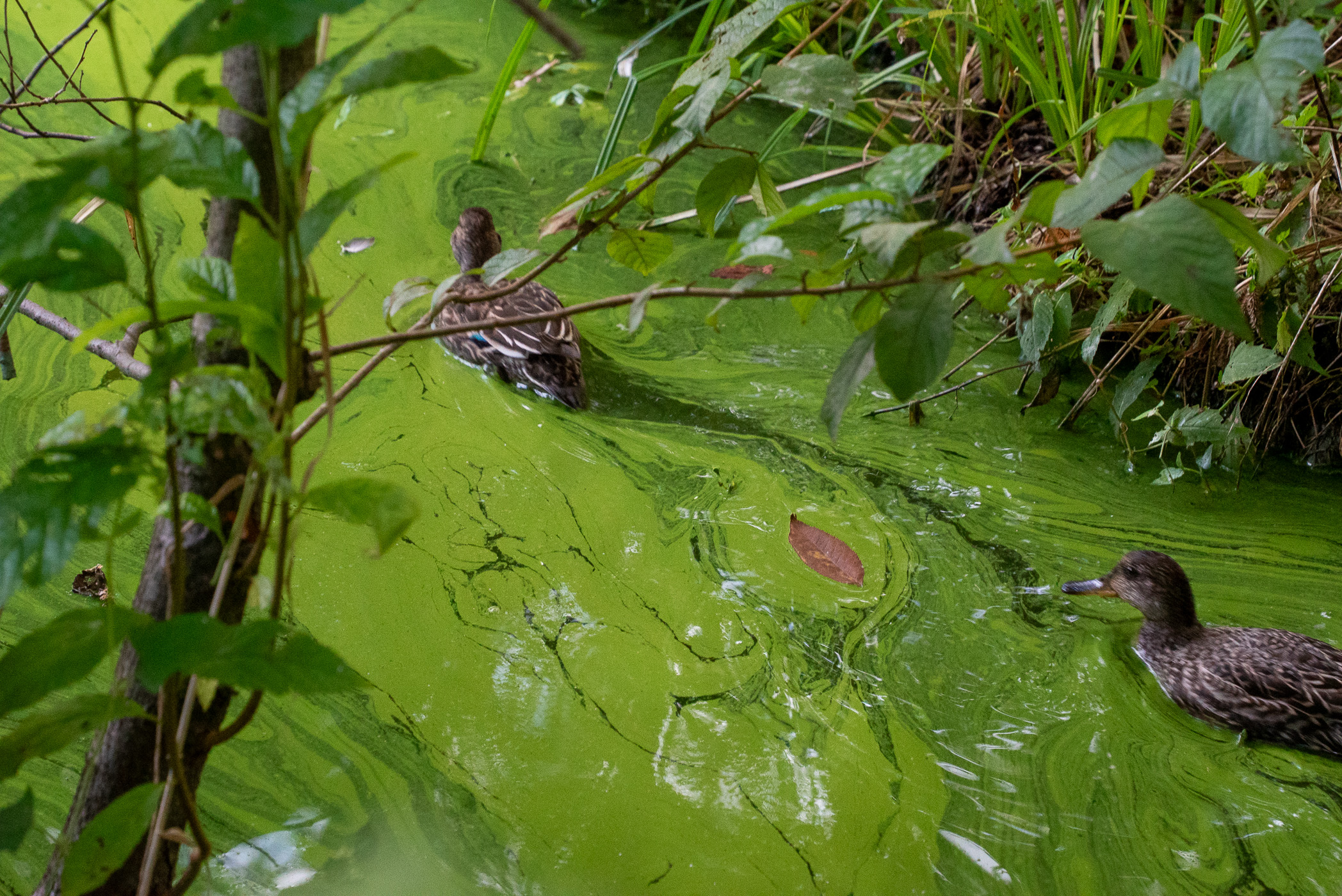
“If we upload the picture the way that it looked in reality, noone is going to believe us” – but it really was that green.
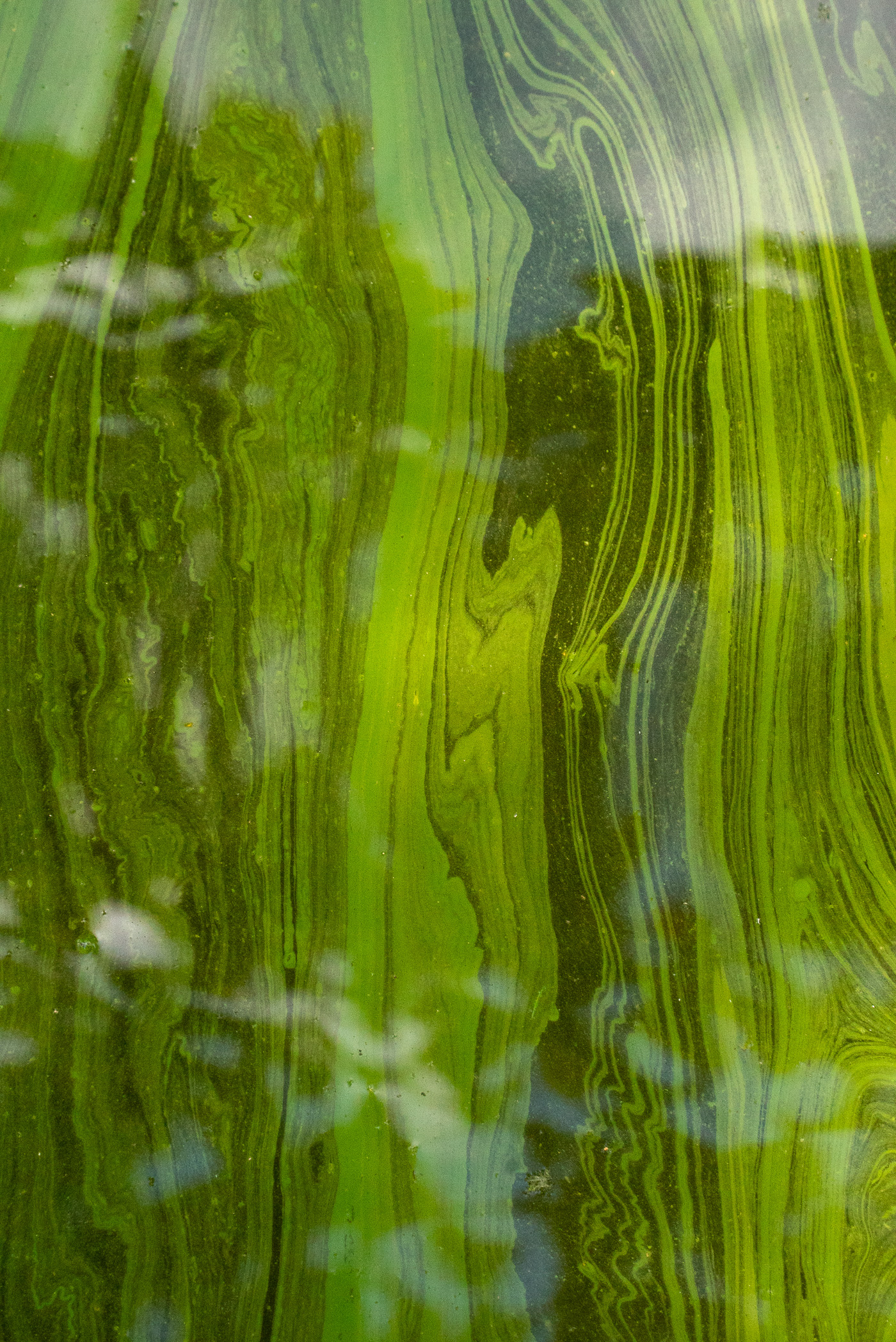
The whole lake was also green, some algae caused a pretty marble effect (on of the few bodies of water we saw in Japan that wasn’t perfectly clear)
the starshaped layout
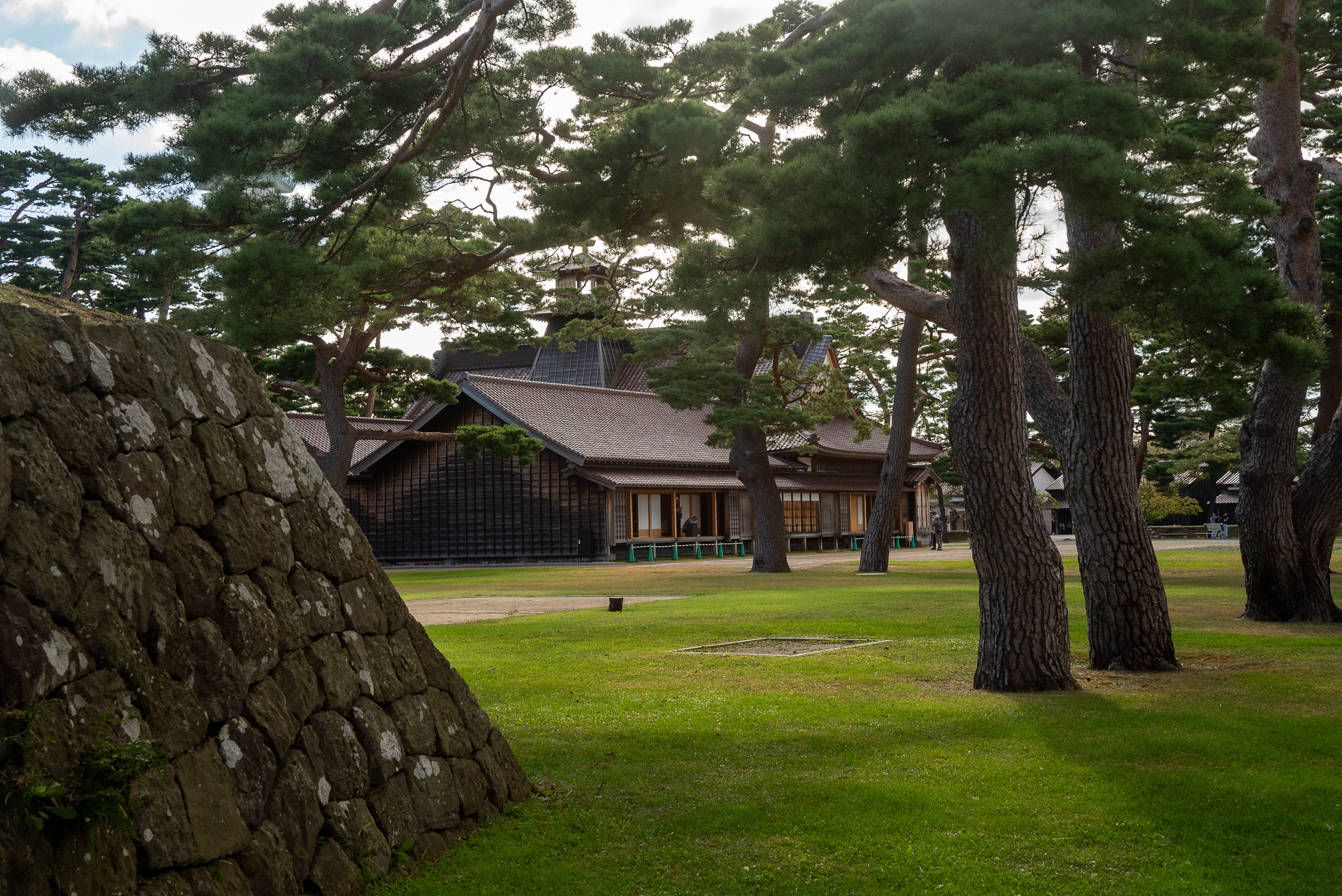
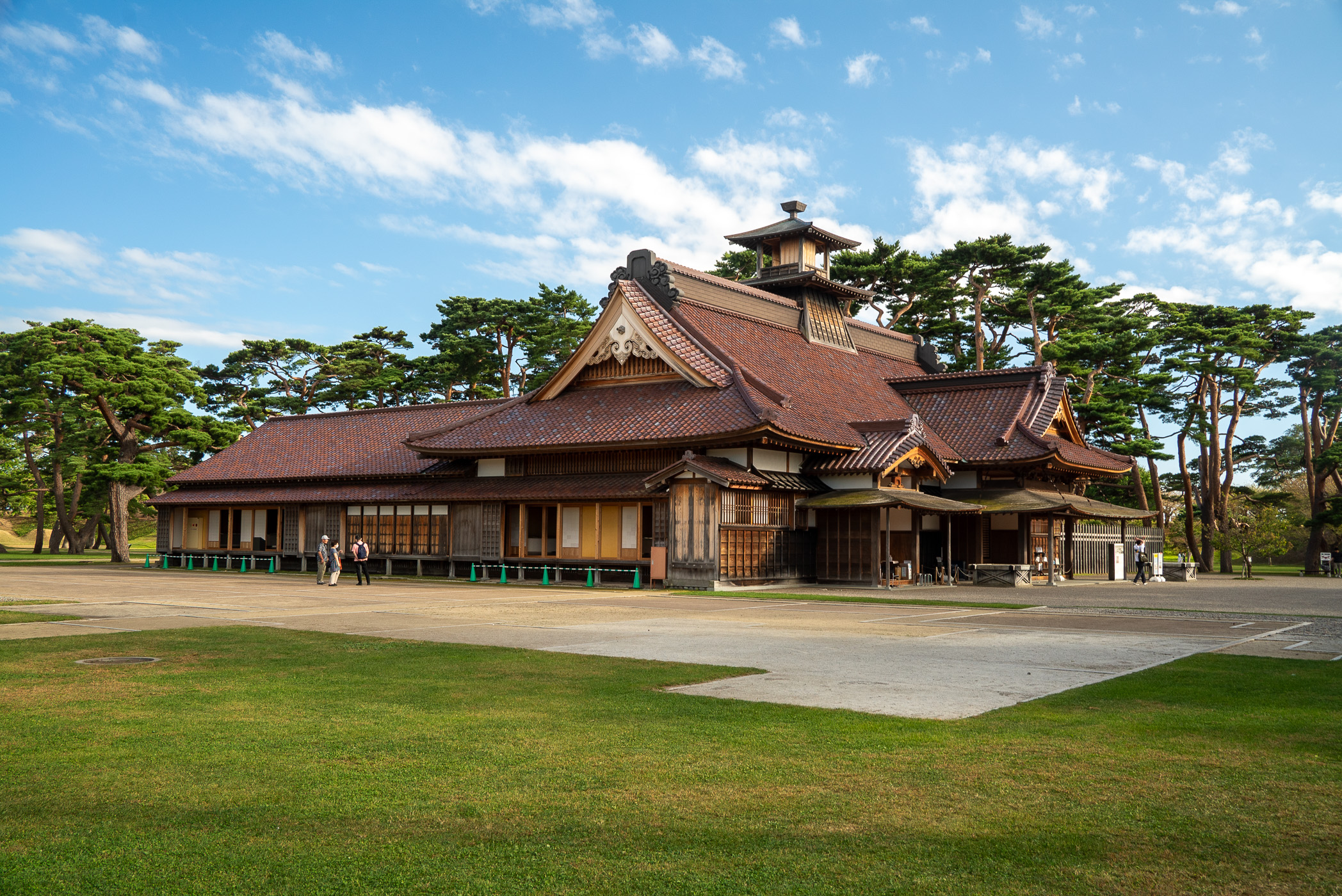
Afterwards we took a look at Goryokaku park inside the city. Formerly, the seat of the magistrate, the main building is located between lots of ancient pine trees lending additional gravitas to the already impressive site. The layout of the fortess containing the whole park is in the shape of a five pointed star, explaining the name: Goryokaku means five-corner-fort.
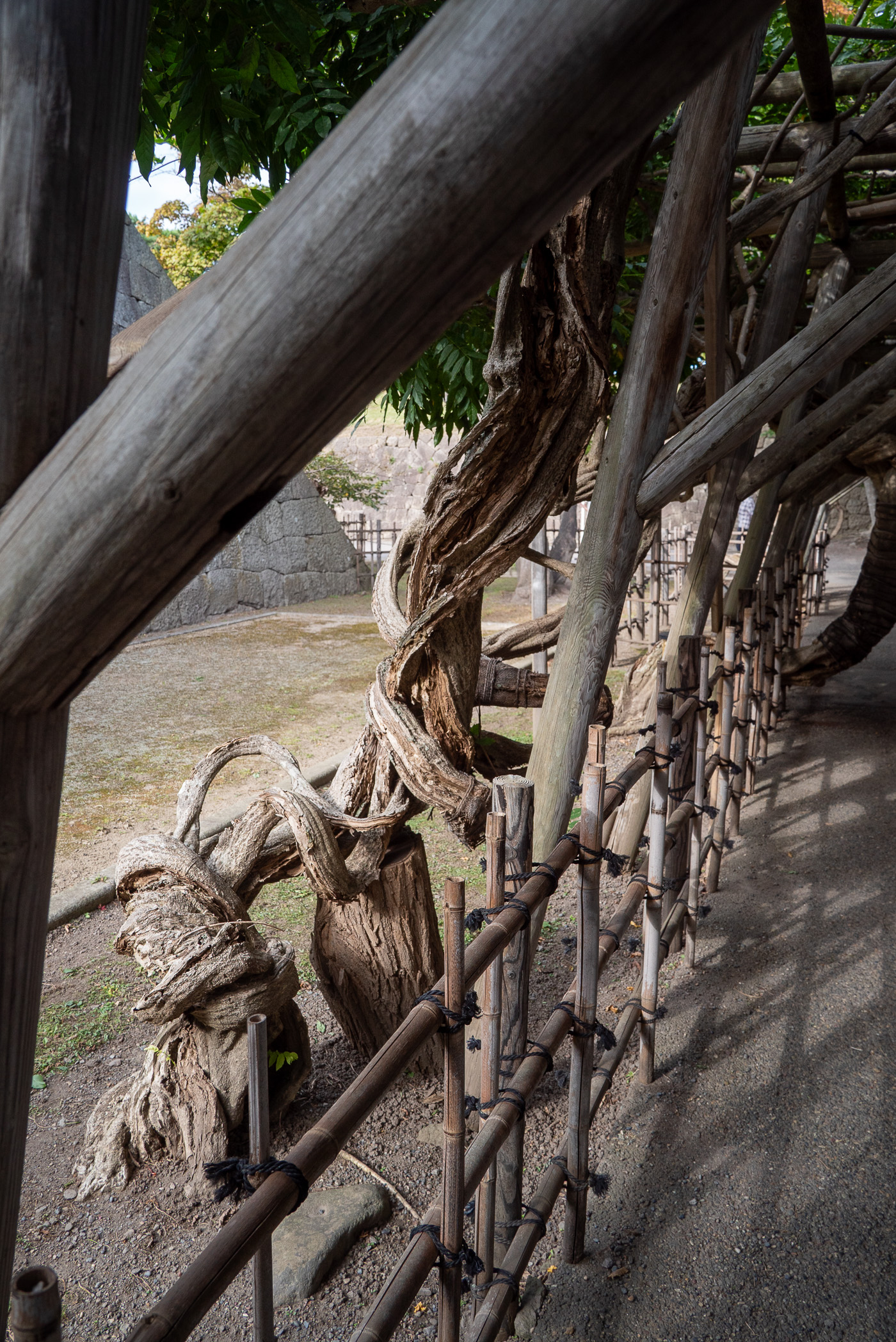
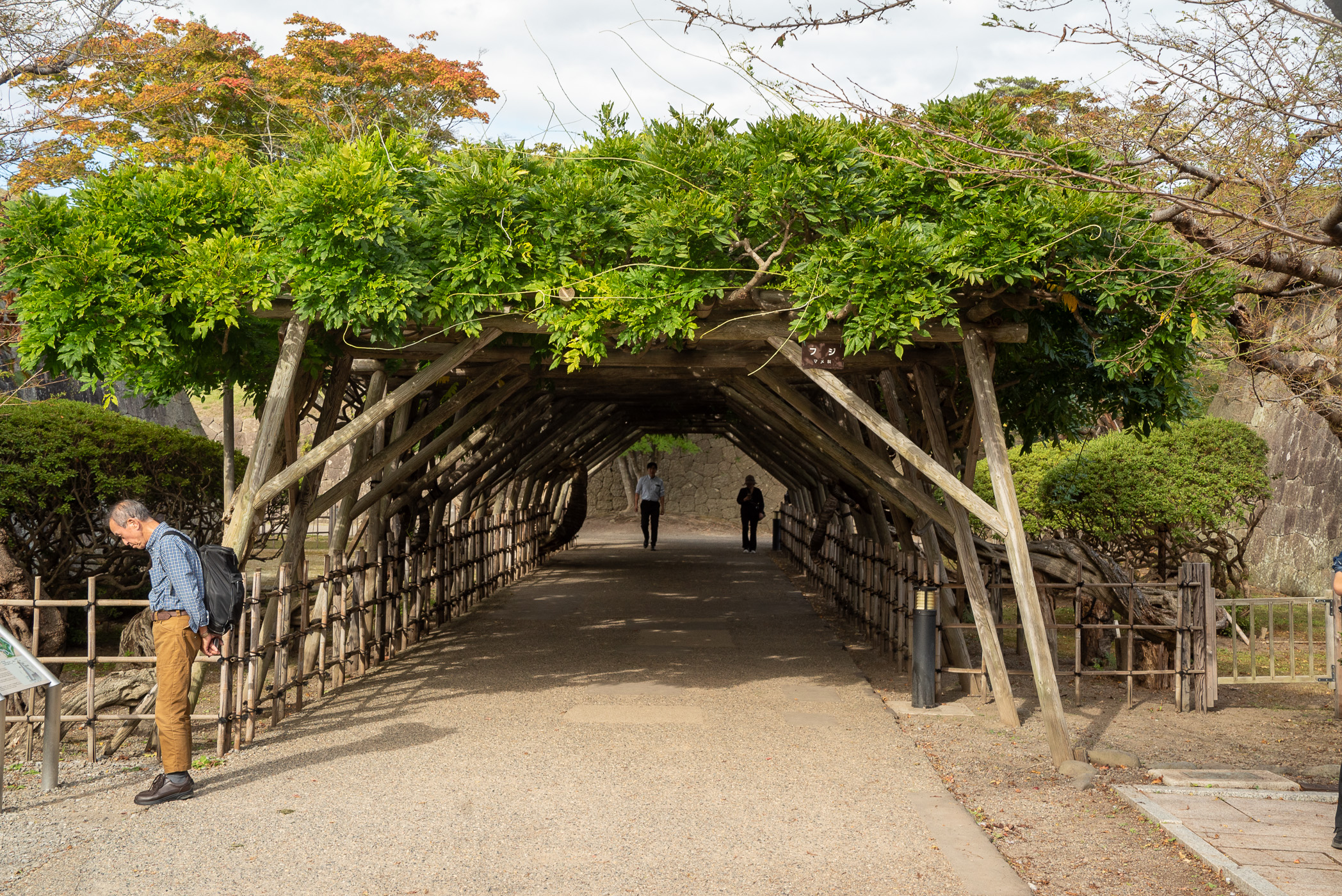
really old wisteria (had we come in May, everthing would surely have been purple)
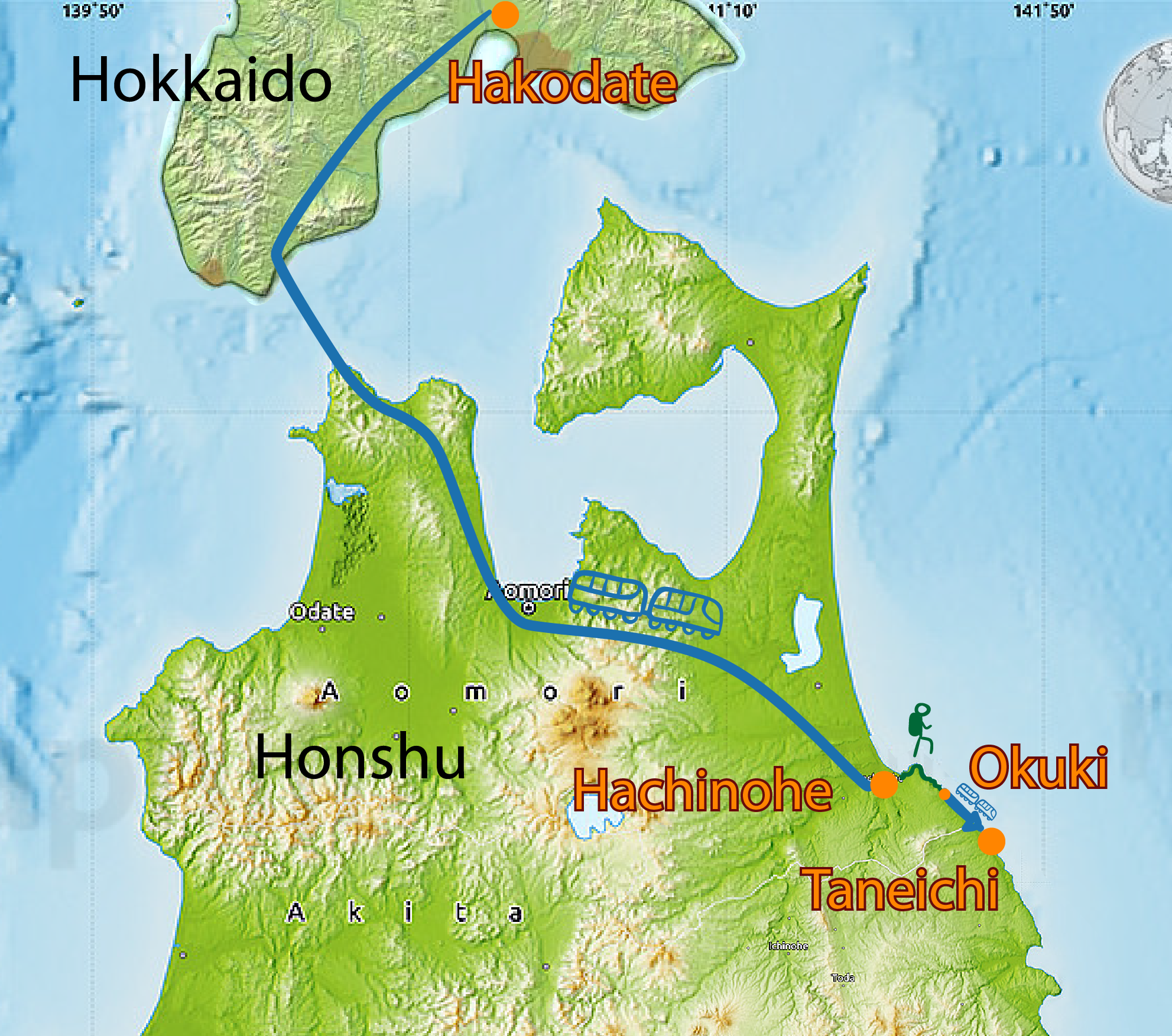
We could have looked at the magistrate building from the inside, but we wanted to be on time for our Shinkansen to Honshu (the main island of Japan) and so we rather headed to the trainstation a bit early. The trainride went expectedly smooth and we reached Hachinohe in time: The first station of the Michinoku Coastal Trail!
Japanese cities often have these sensibly wide flood zones – if you’re lucky, they will also be gorgeously overgrown.
It did get a little bit exciting in the end, though: We noticed that we (Jörg) had left the folder containing our detailed plans for the trip as well as the translation of the driver’s license at the counter in Hokkaido where we had bought our tickets. Luckily we could communicate our problem to the helpful people of the train company (JR) and organize for our folder to be sent to a future accomodation.
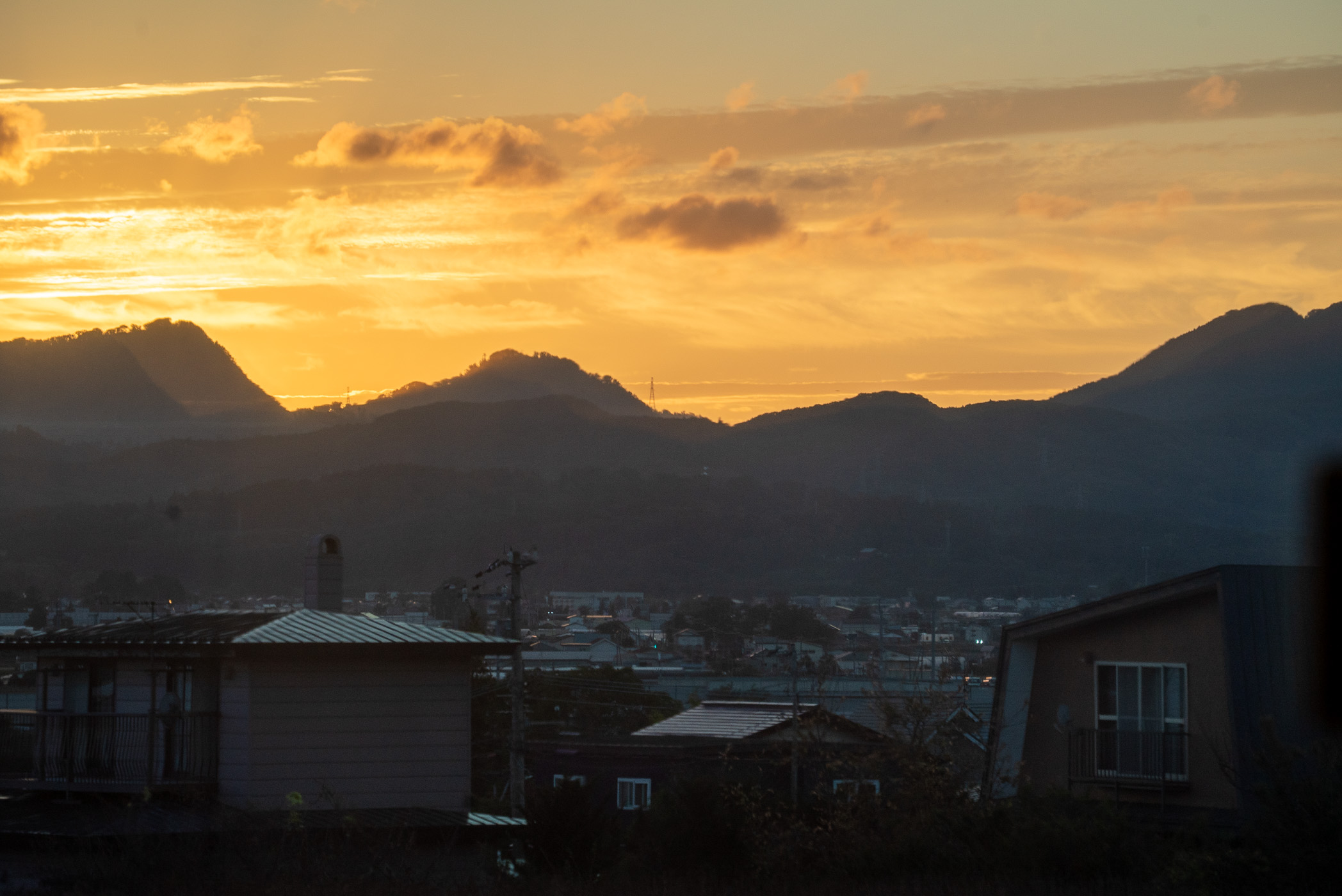
There is no twilight here. It’s day until 04:55 pm, then it’s night. Sunset is trying extra hard to make up for it.
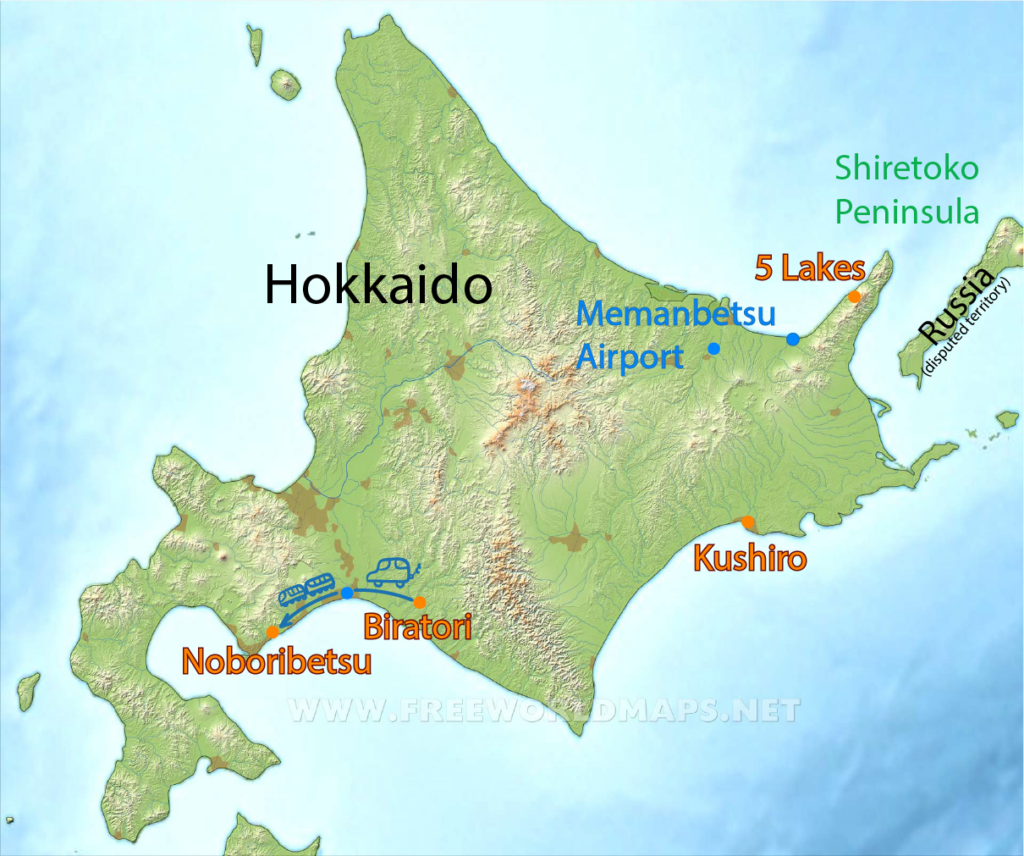
The next day (September 30) we returned the car at the next larger city (Tomakomai). Jörg was quite relieved that nothing happened and we could switch back to taking the train to get to Noboribetsu.
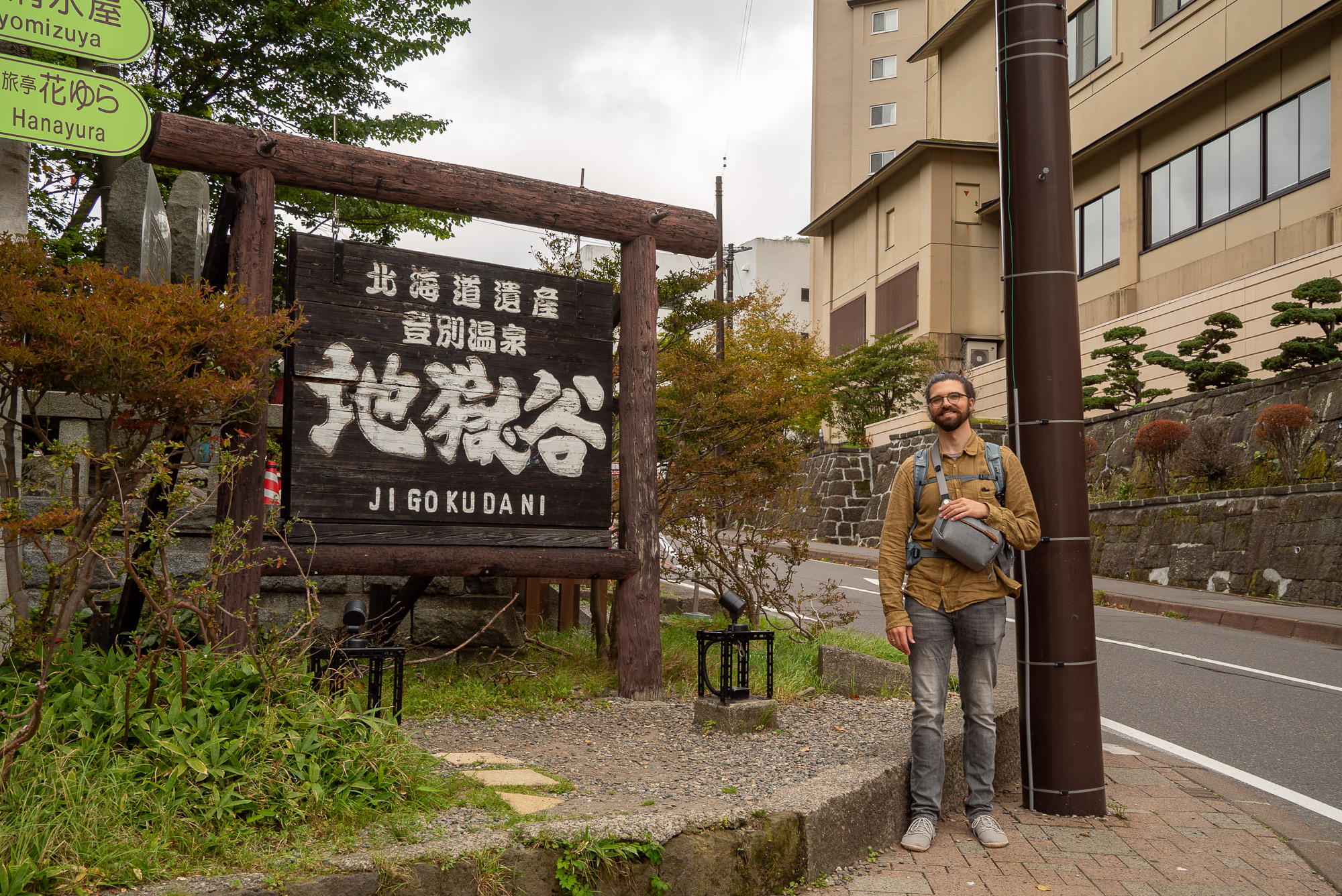
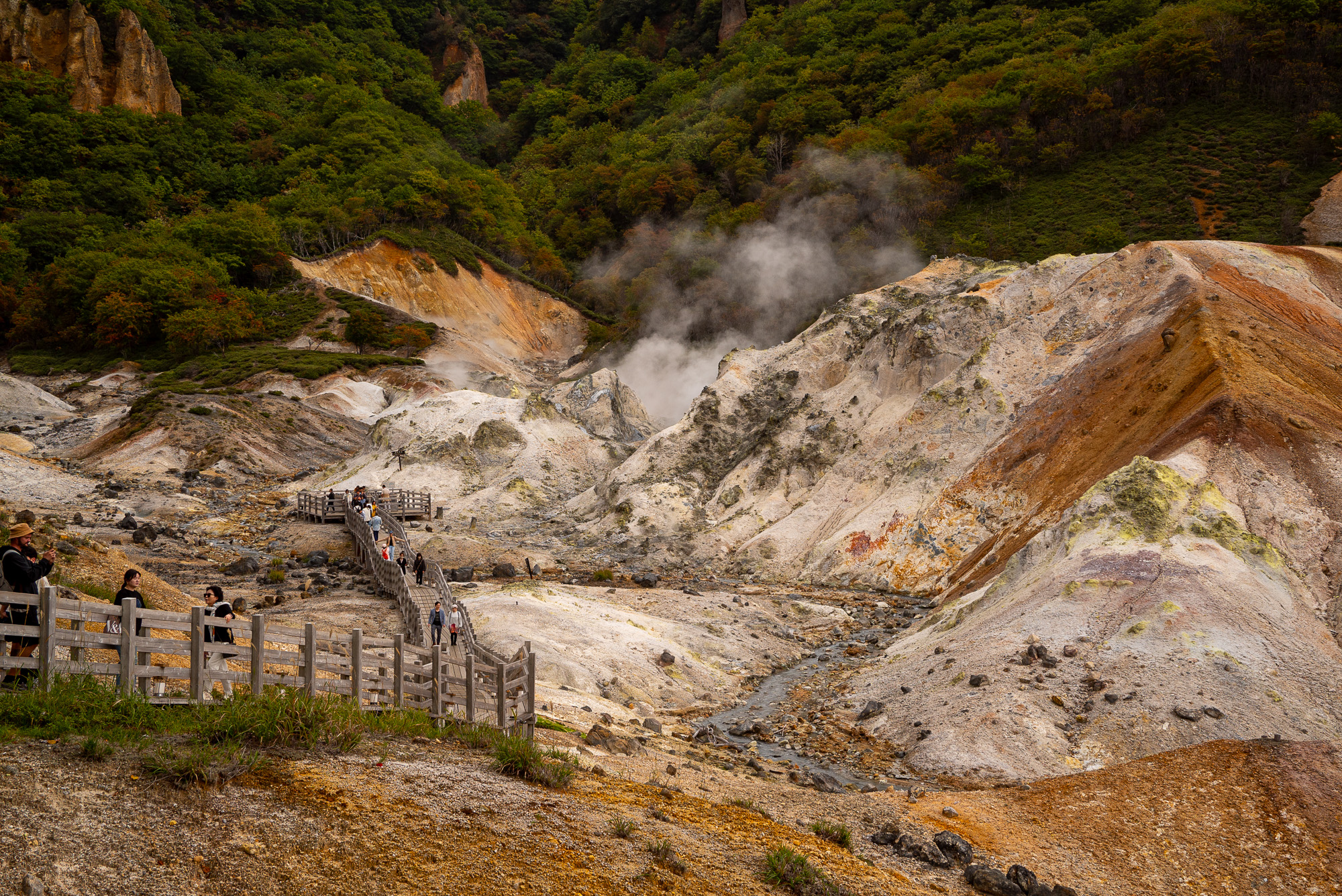
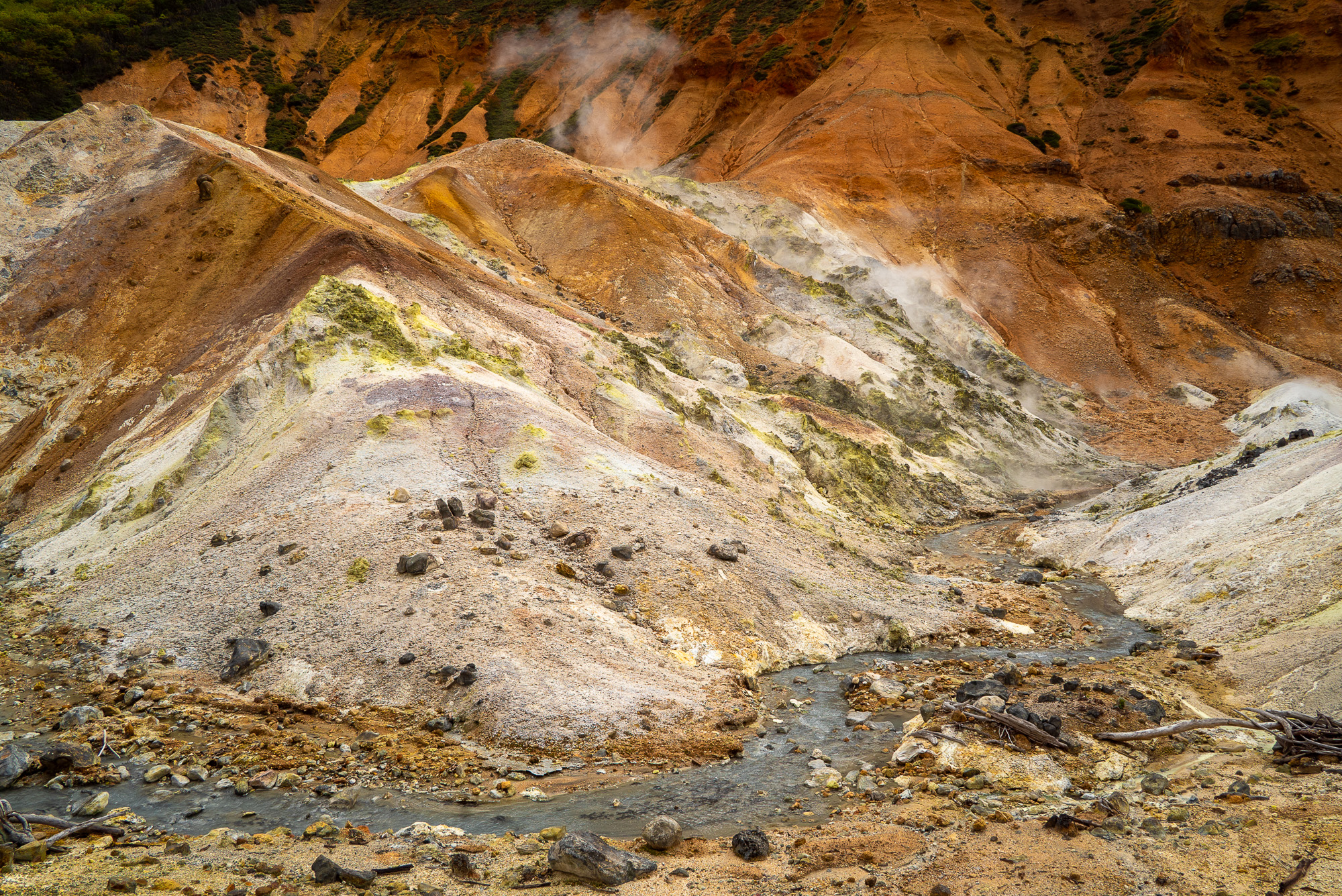
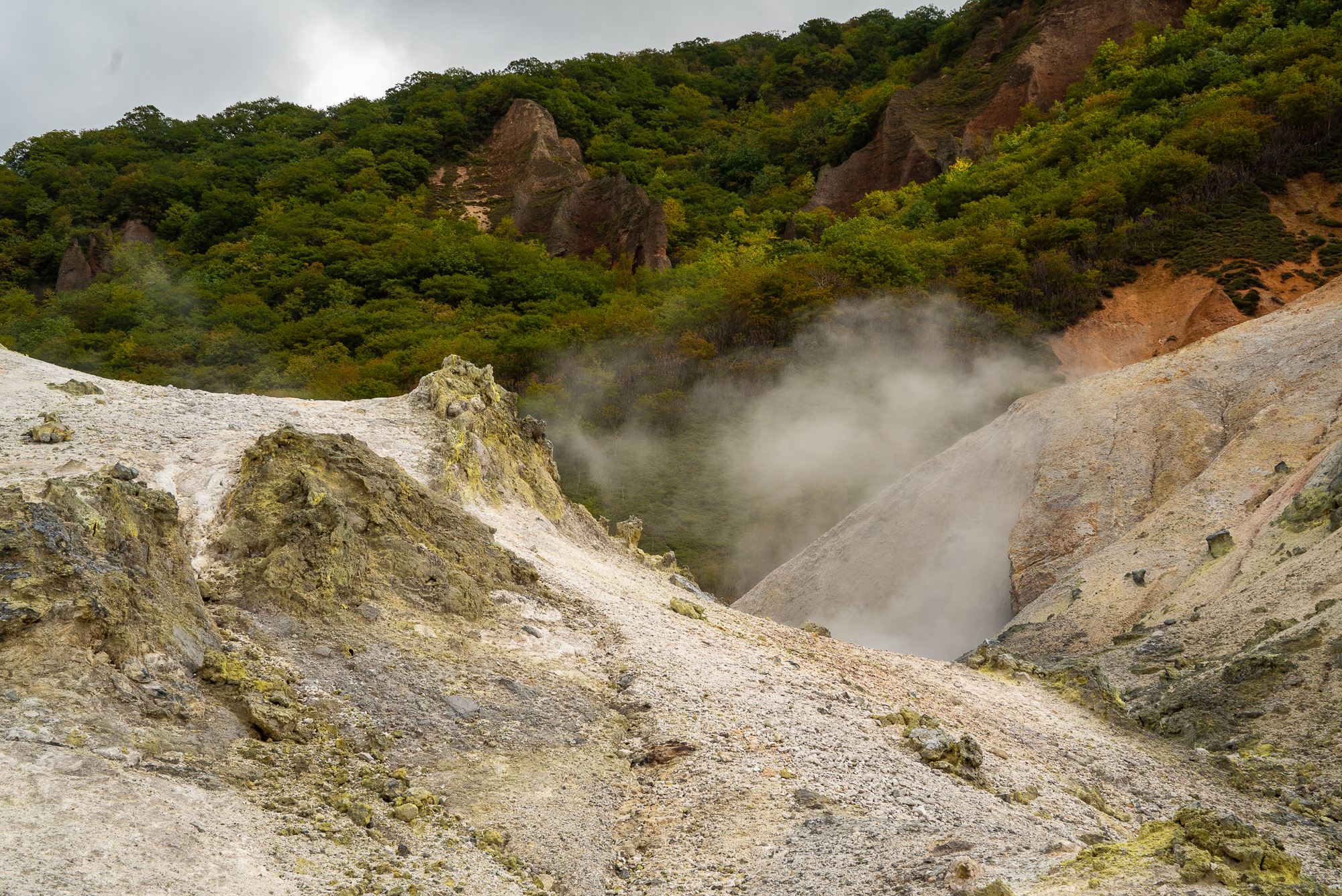
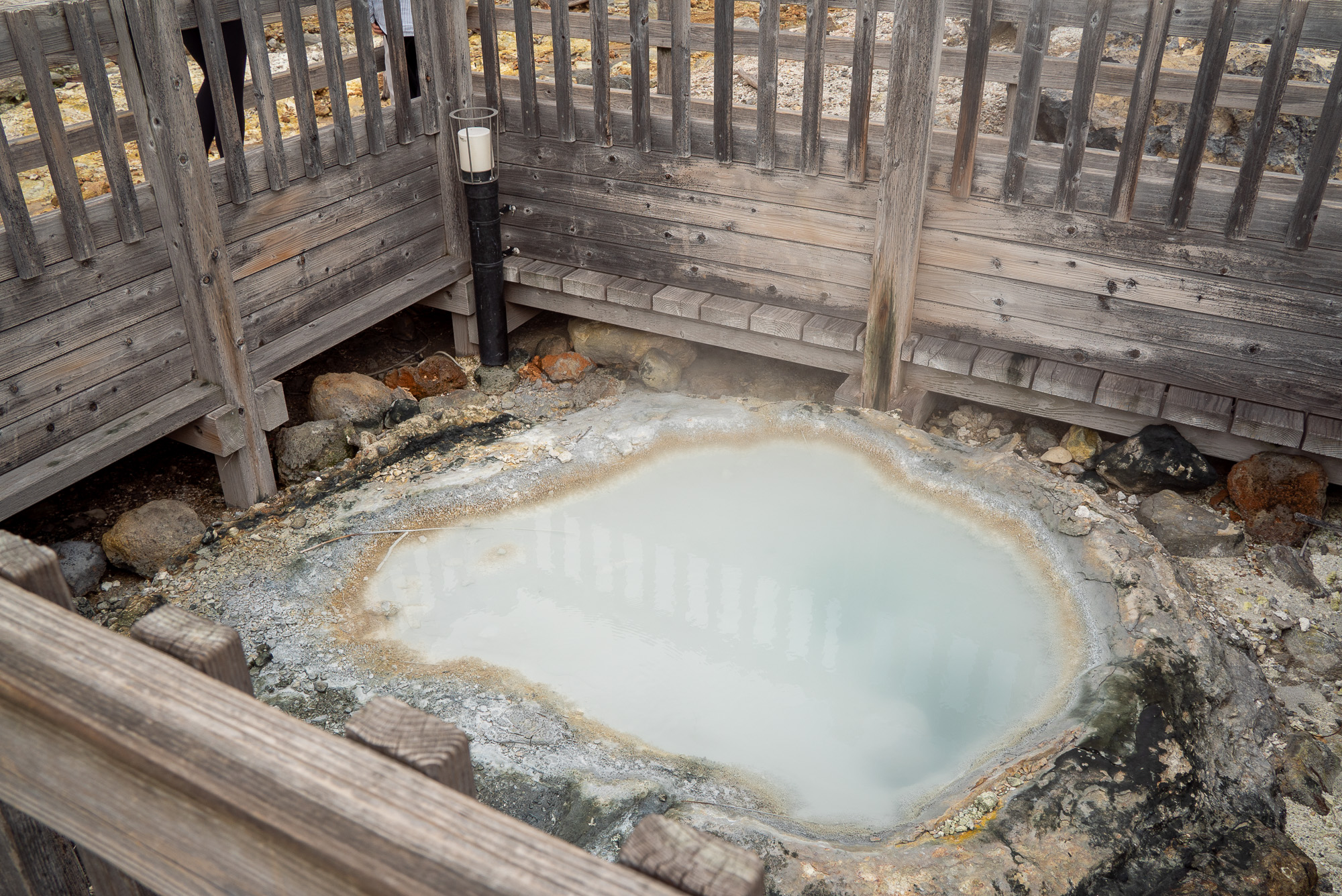
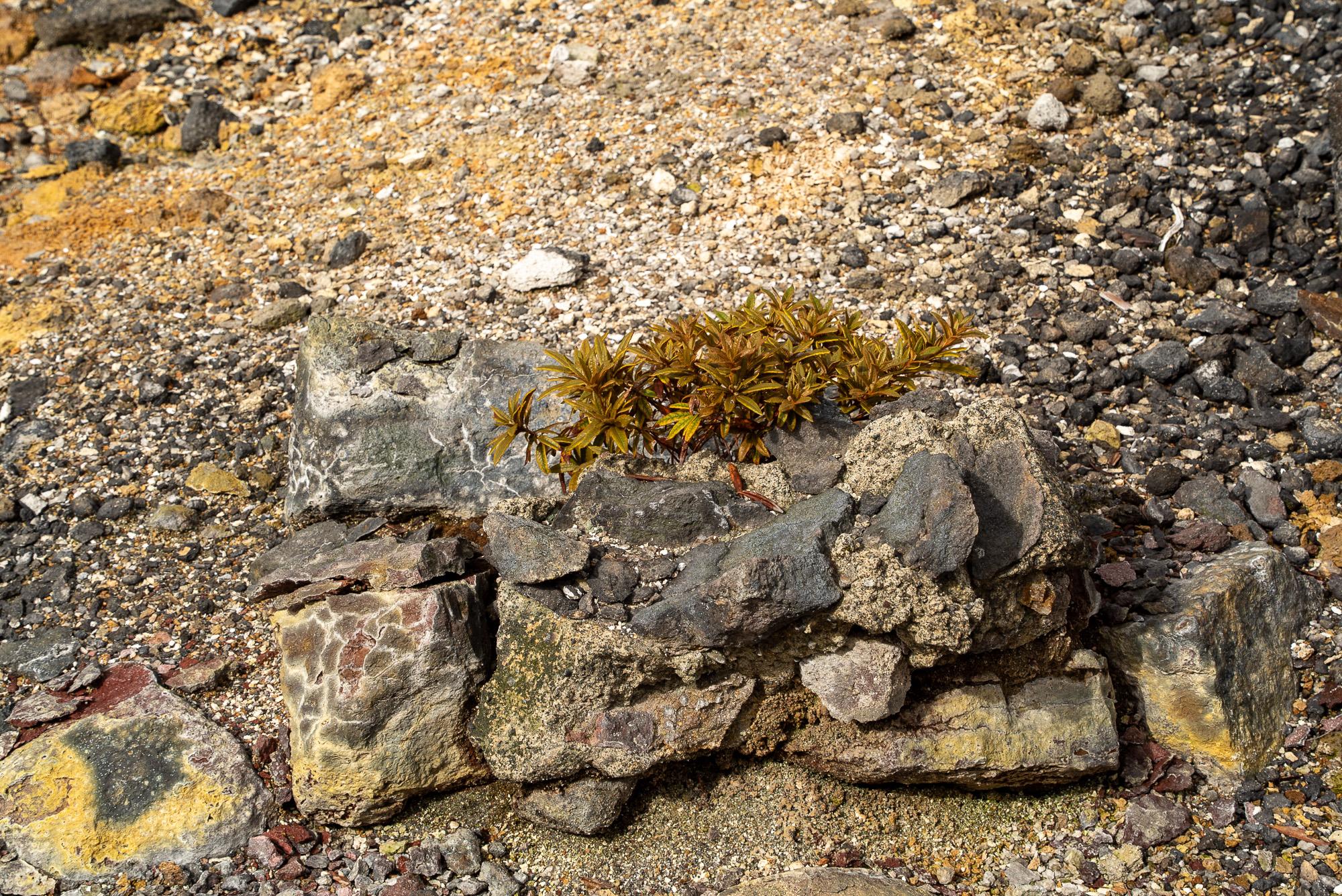
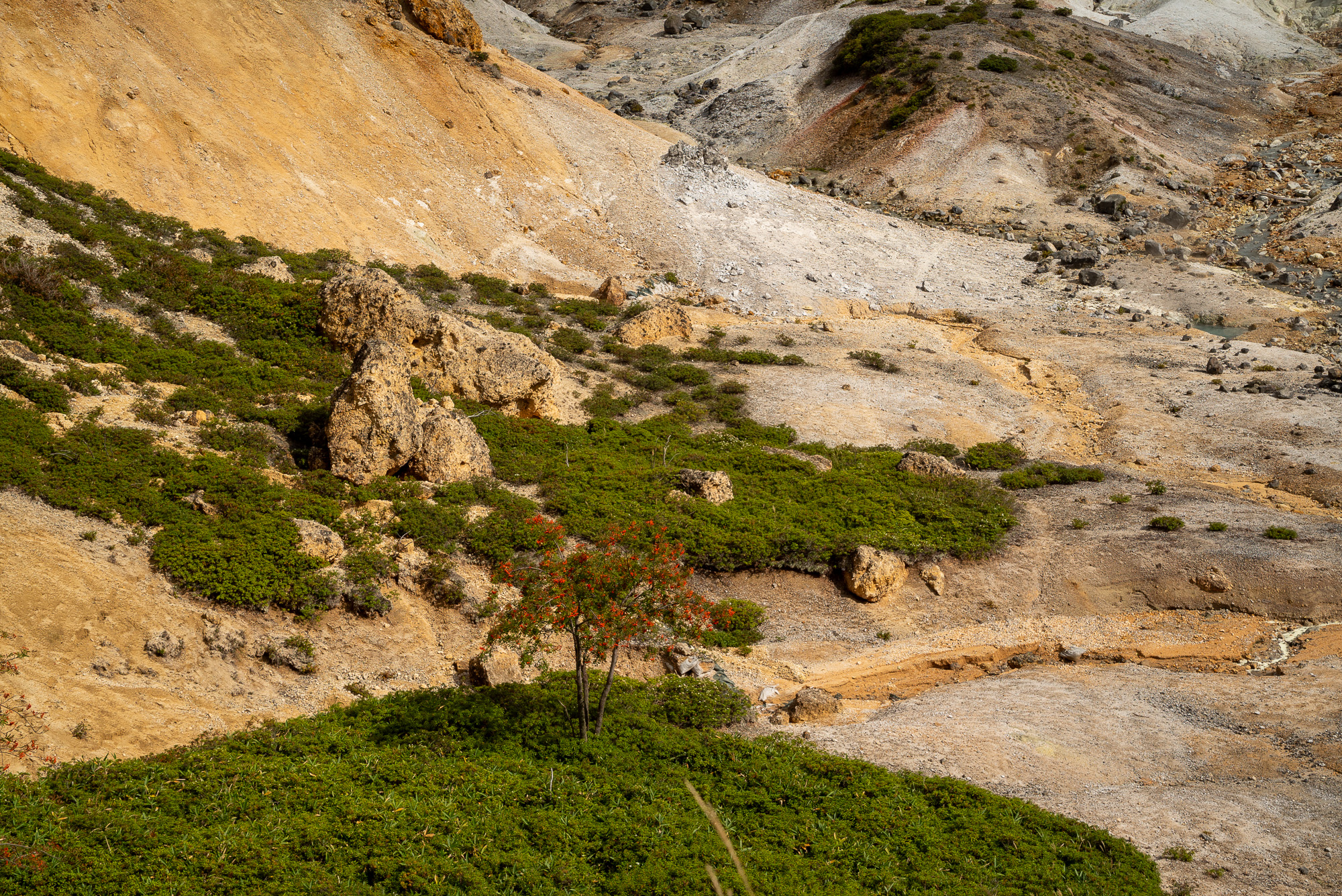
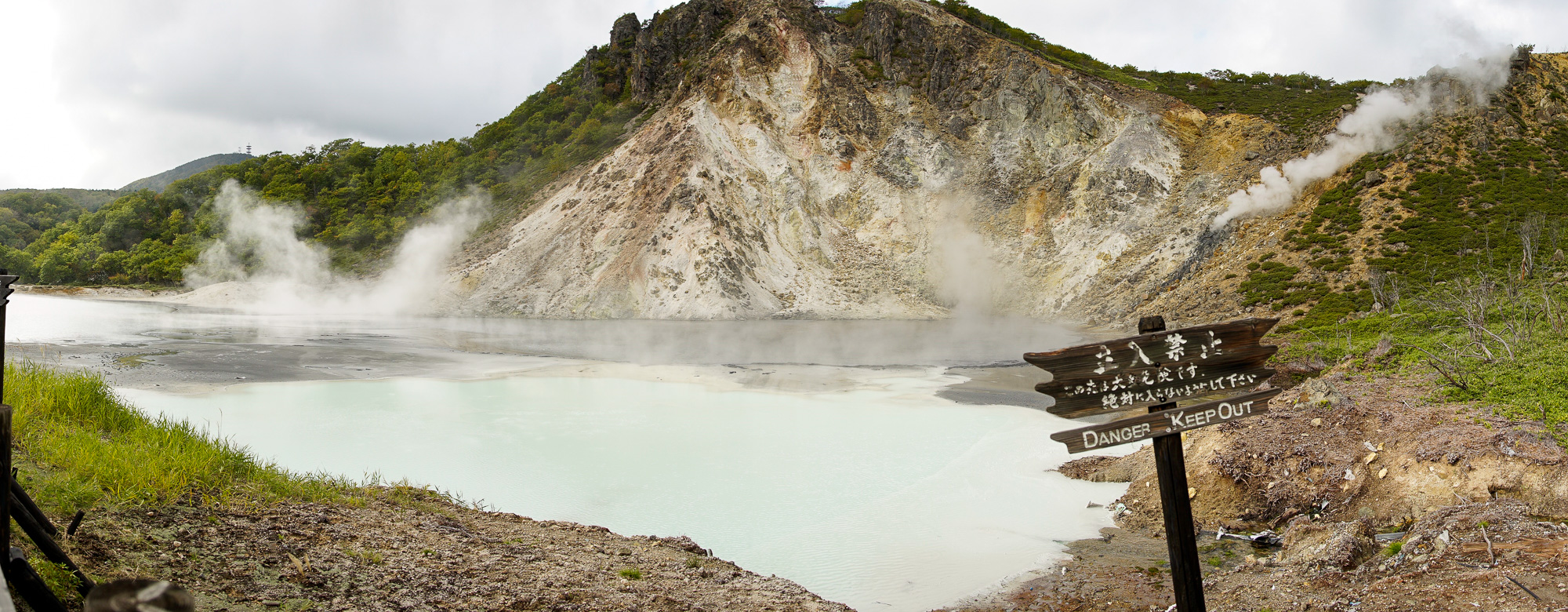
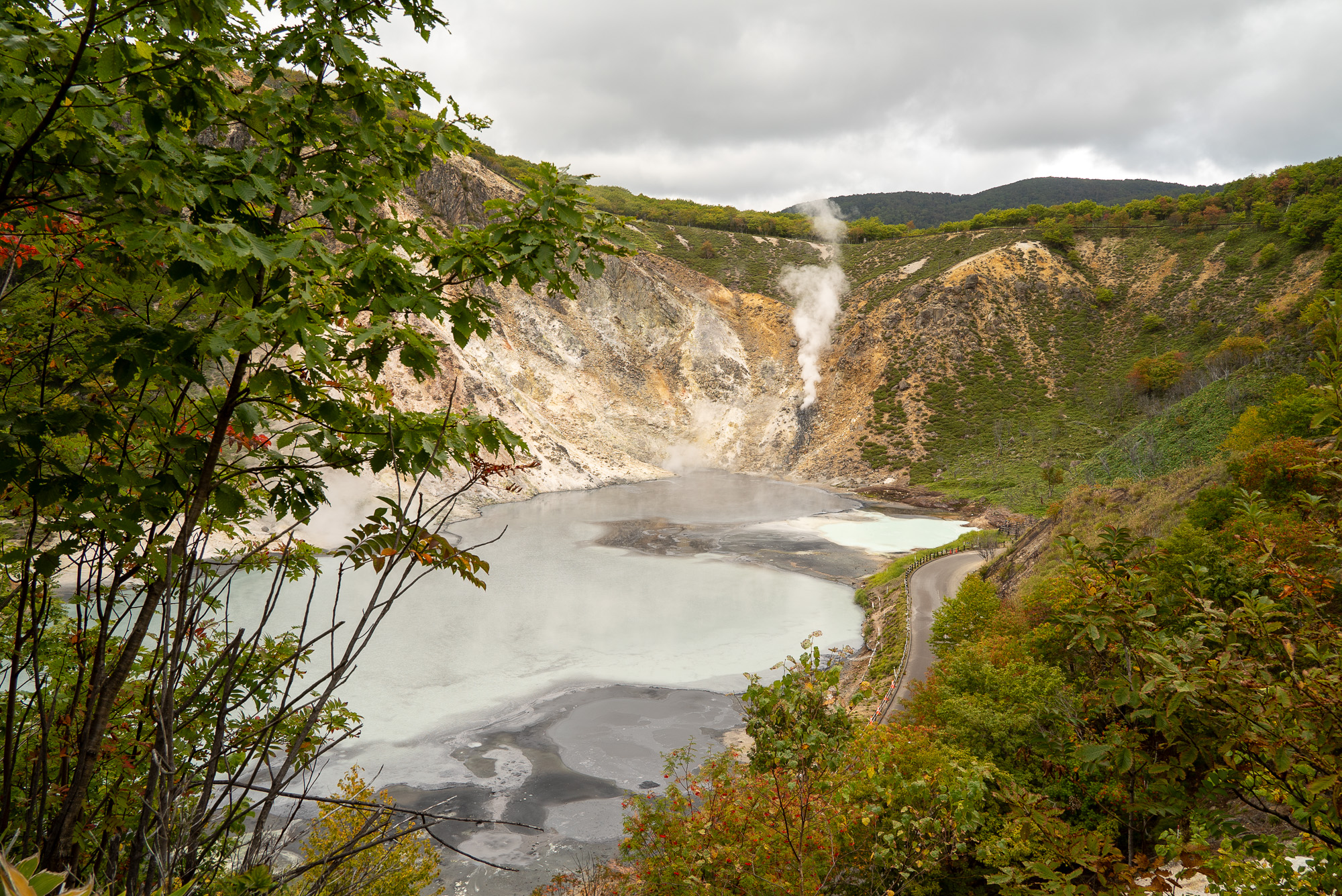
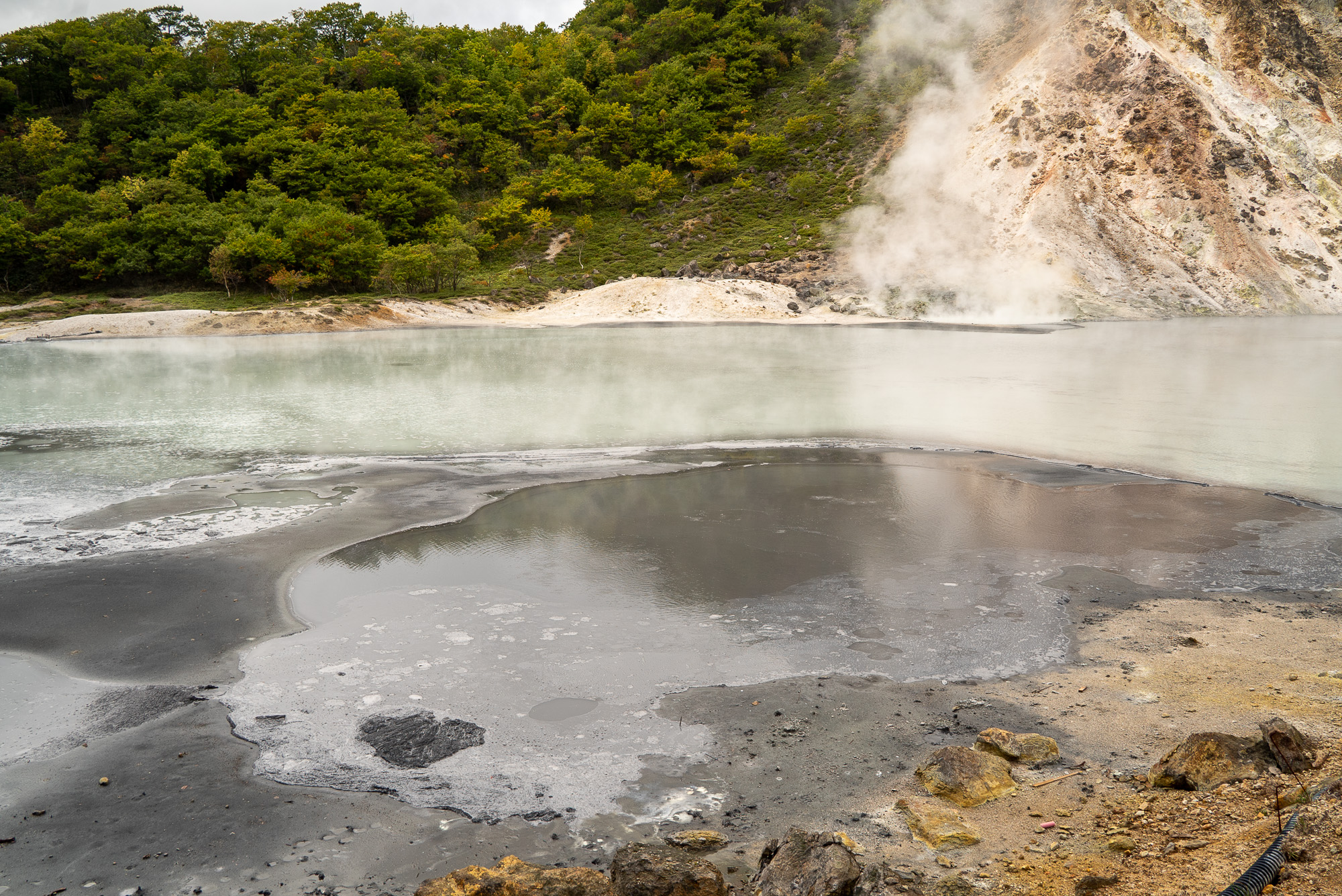
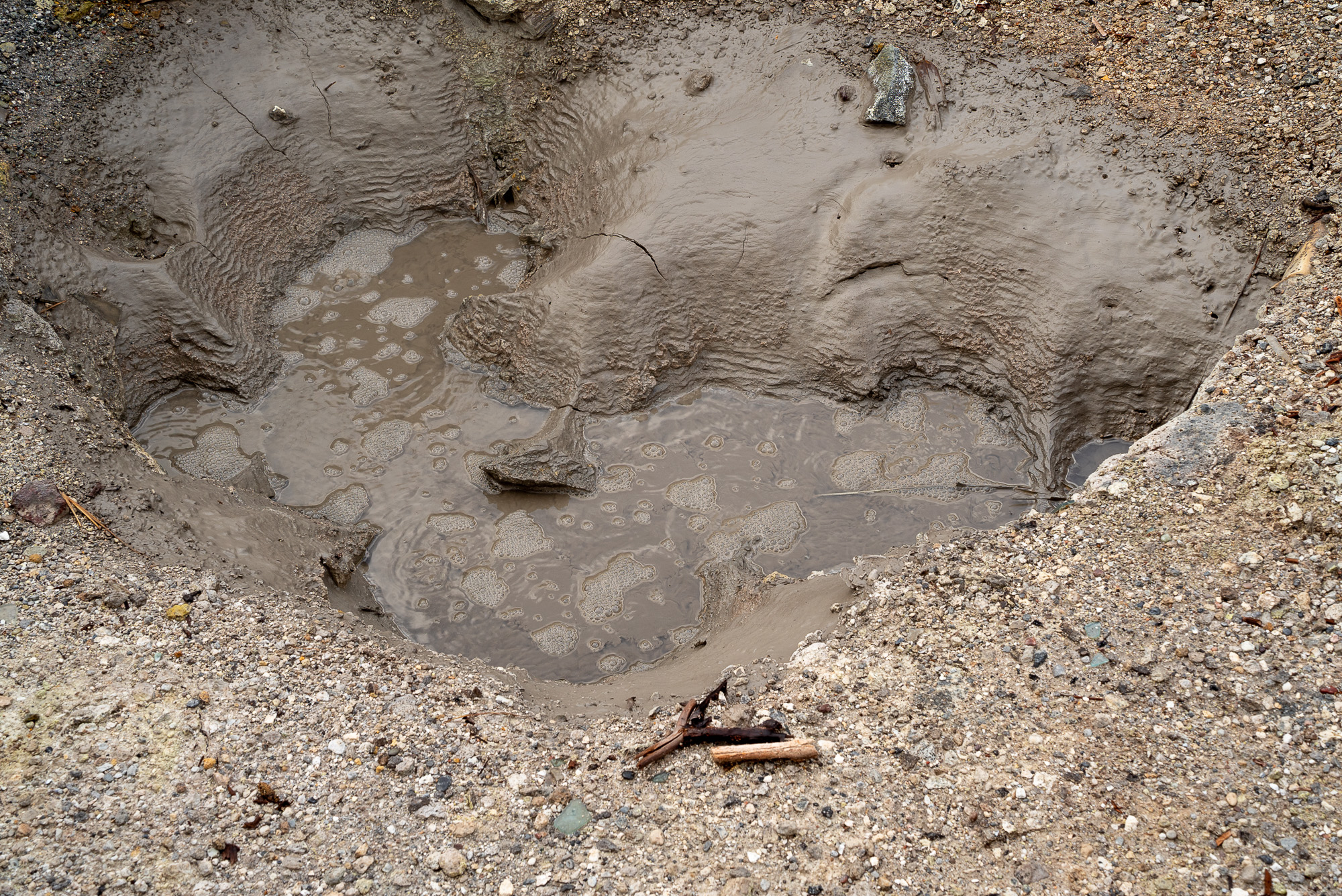
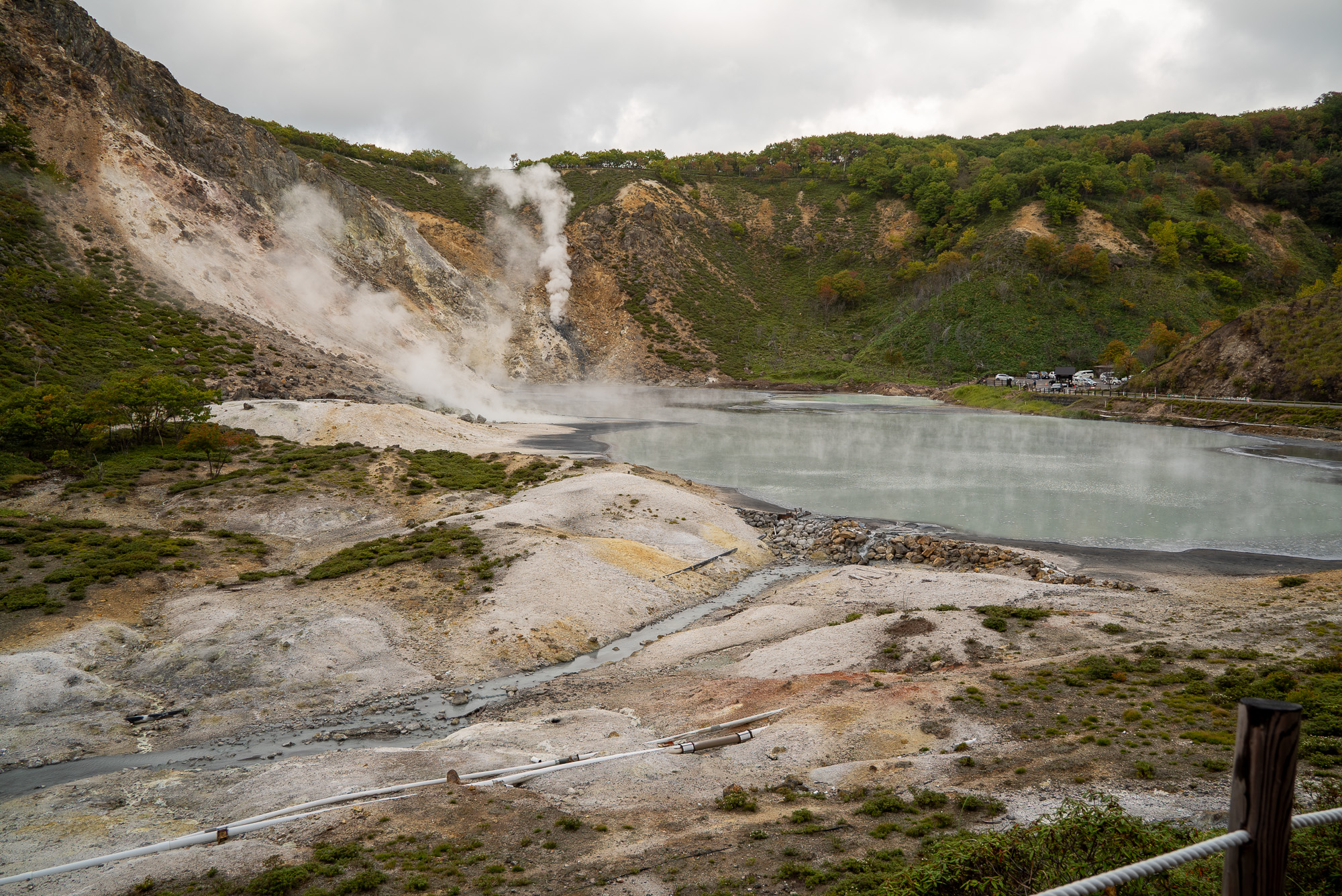
This town is famous for its hot springs and not without reason! In Jigokudani (“Hell Valley”) every nook and cranny is bubbeling and steaming. You get used to the slightly unpleasant smell of sulphor suprisingly quickly and you feel like being transported to a strange planet.
Tessenike (Iron Pond) – a Geyser that occasionally errupts, but not when we there. Also, the name remains unclear – it doesn’t look like the water contains iron and there was no further explanation.
The biggest volcanic lake here is 22 meters deep and features a bottom temperature of 130° C and a surface temperature of still impressive 50° C.
Notice the completely different colours of the water in the various ponds, one being a milky light blue, the other more or less coloured like regular water and one looking like liquid tar.
It’s said that the 377 meter tall active vulcano Mt. Hiyori forecasts the weather with its smoke – if you can see much smoke the weather will be bad.
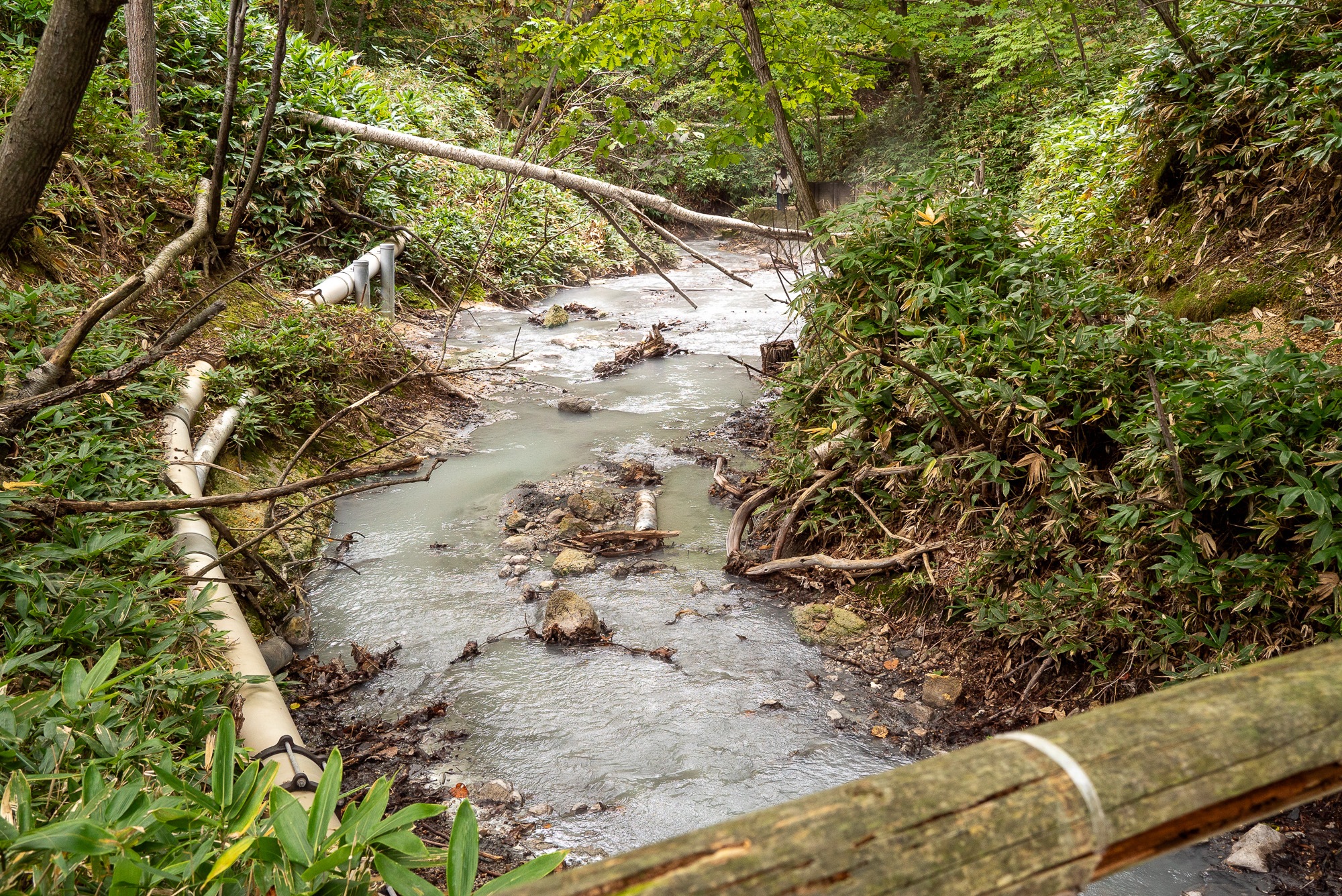
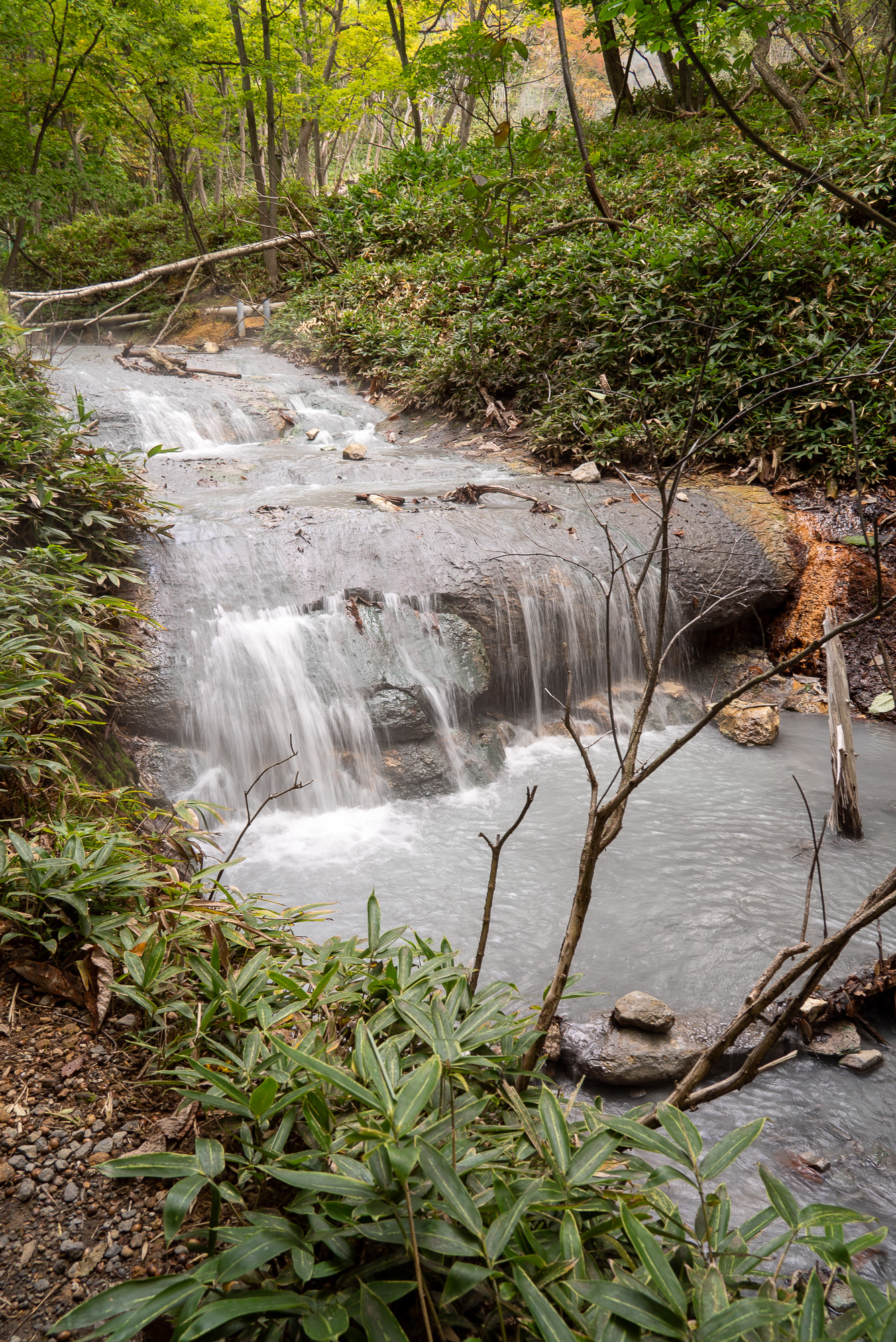
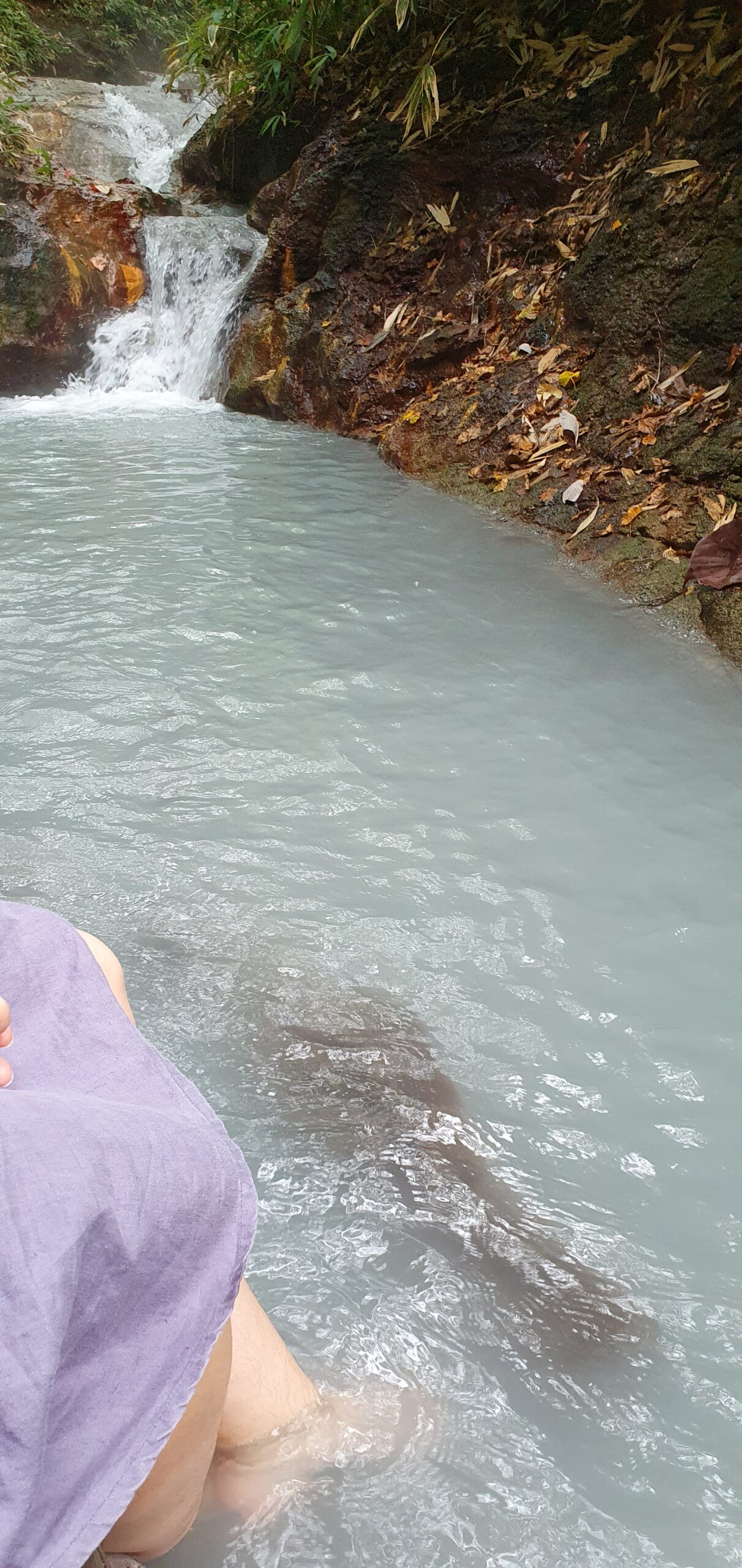
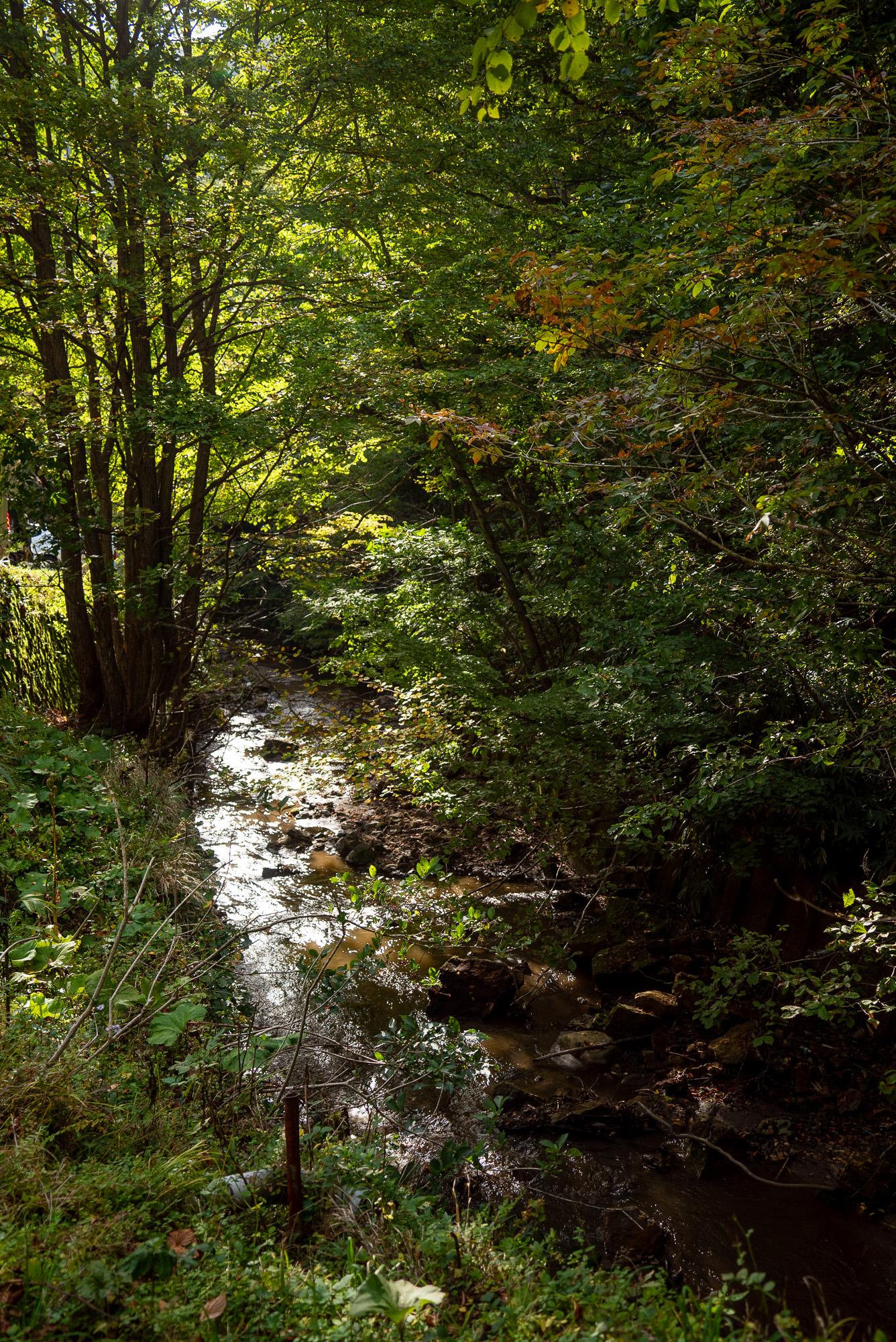
This river is warm!
You can also take a warm footbath in a river in the forest completely for free – the water here feels extremely soft and the view into the trees is very relaxing. After being on our feet for so long, the footbath was especially effective : )
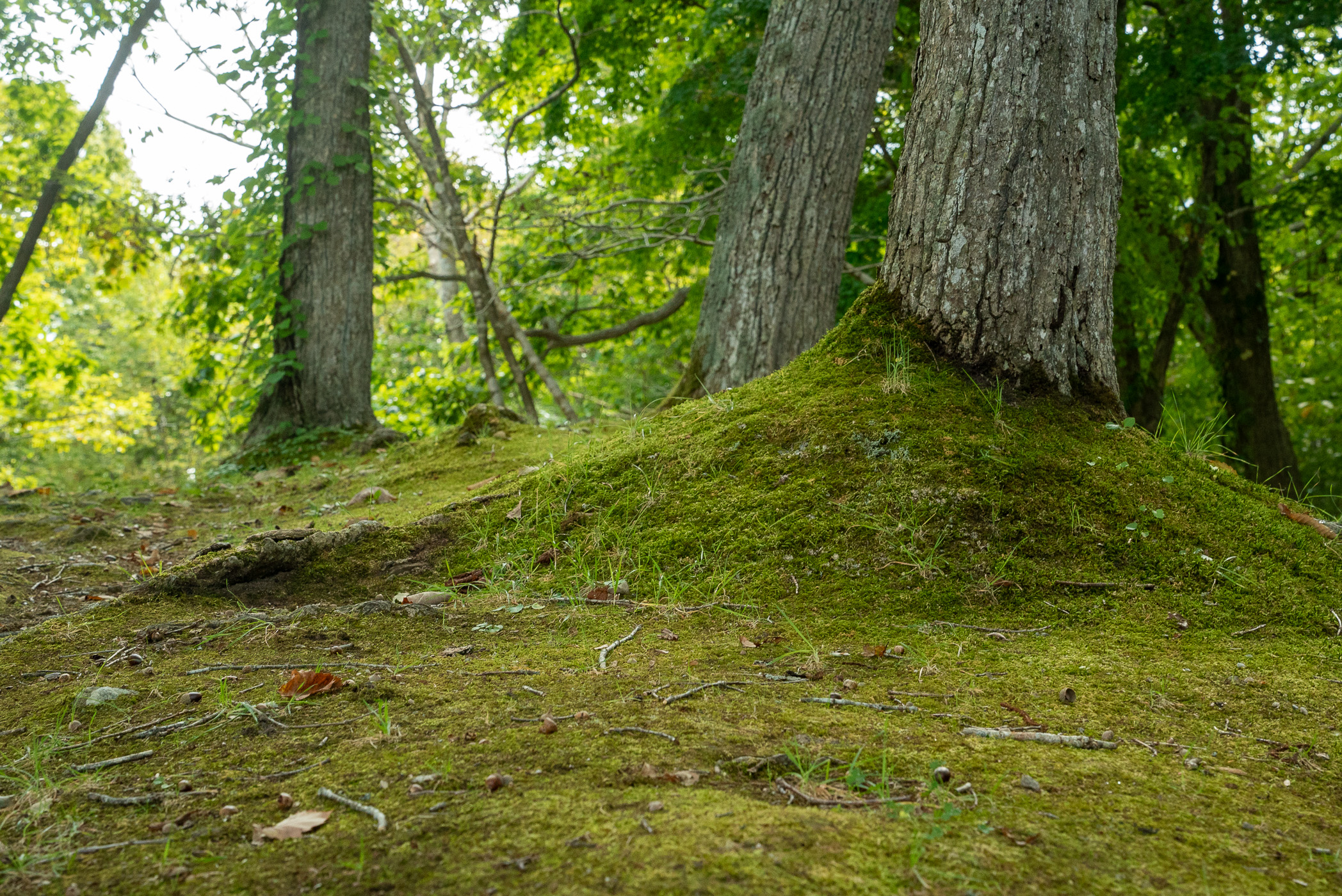
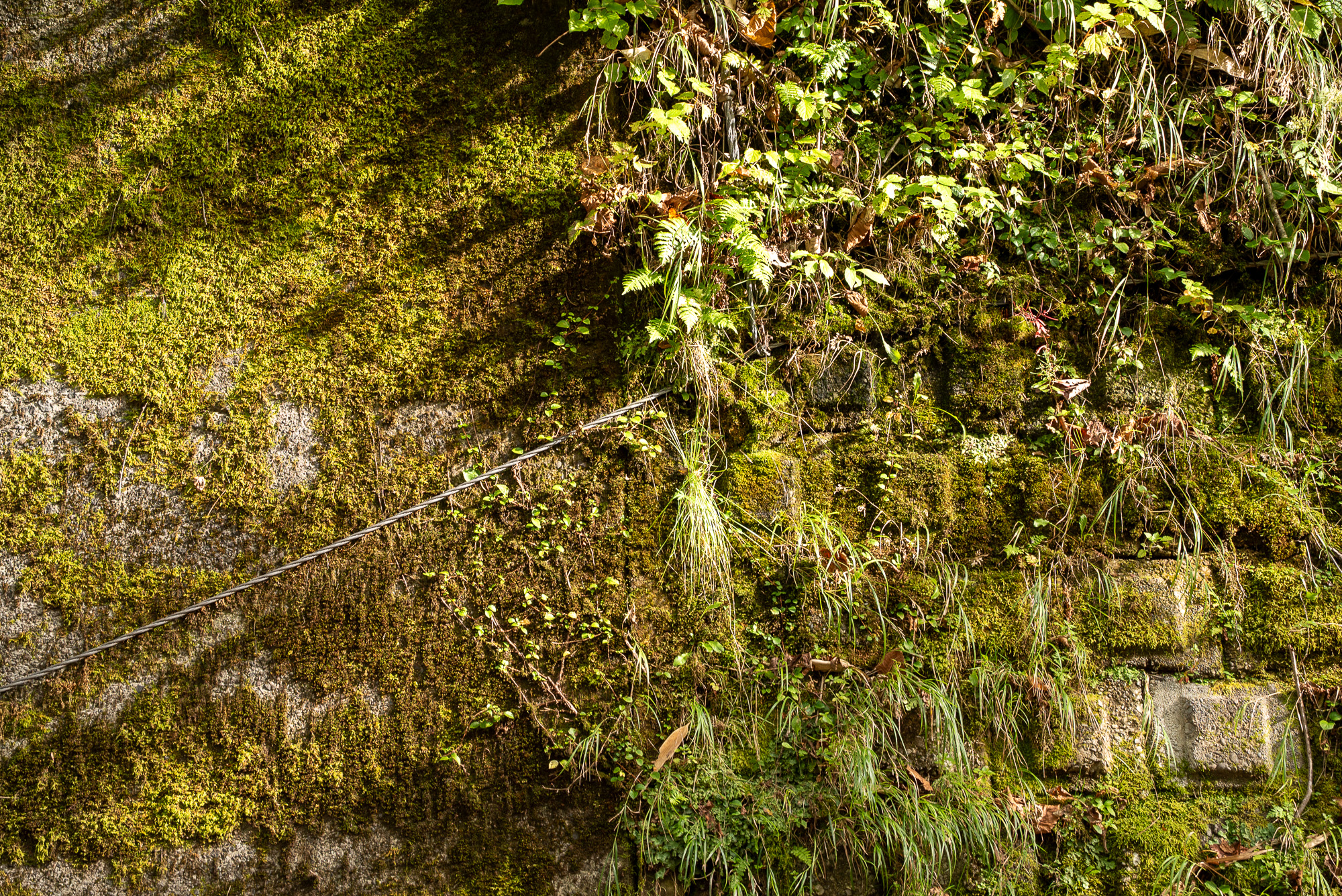
Many Japanese walls are gorgeously covered in moss.
On the way to Jigokudani we barely noticed this geyser, but in the way back it was in an especially active phase which you could already hear from a long way away.
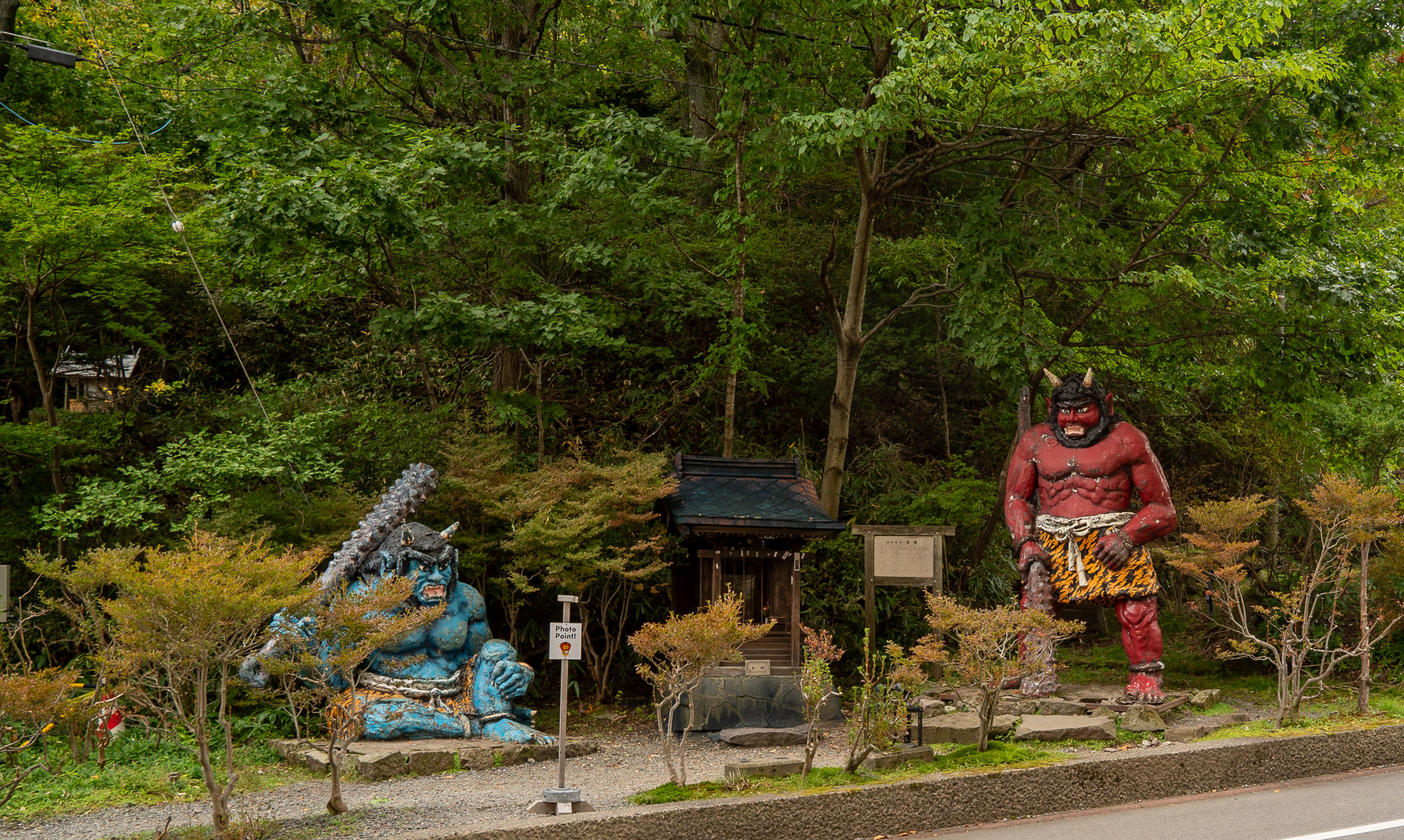
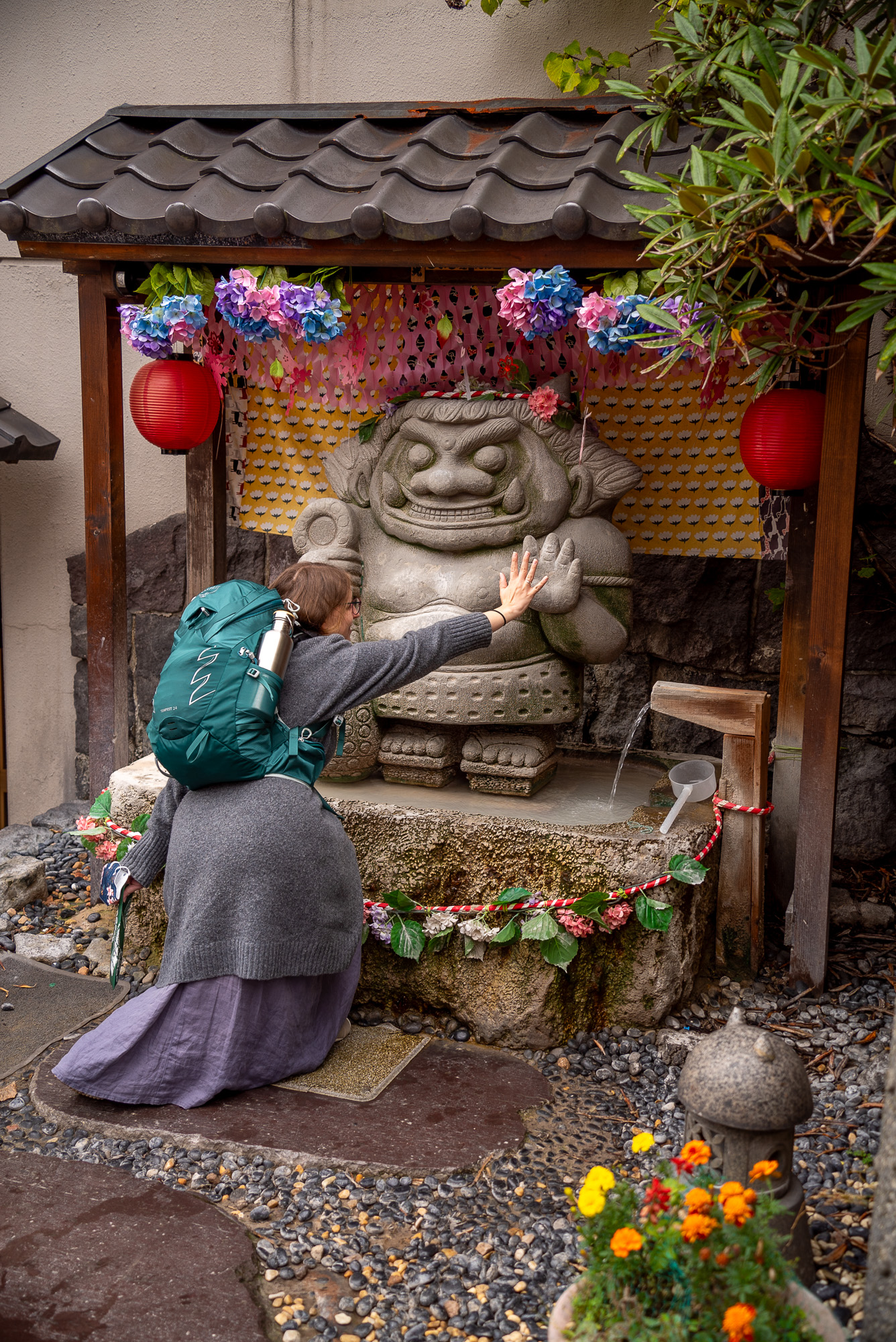
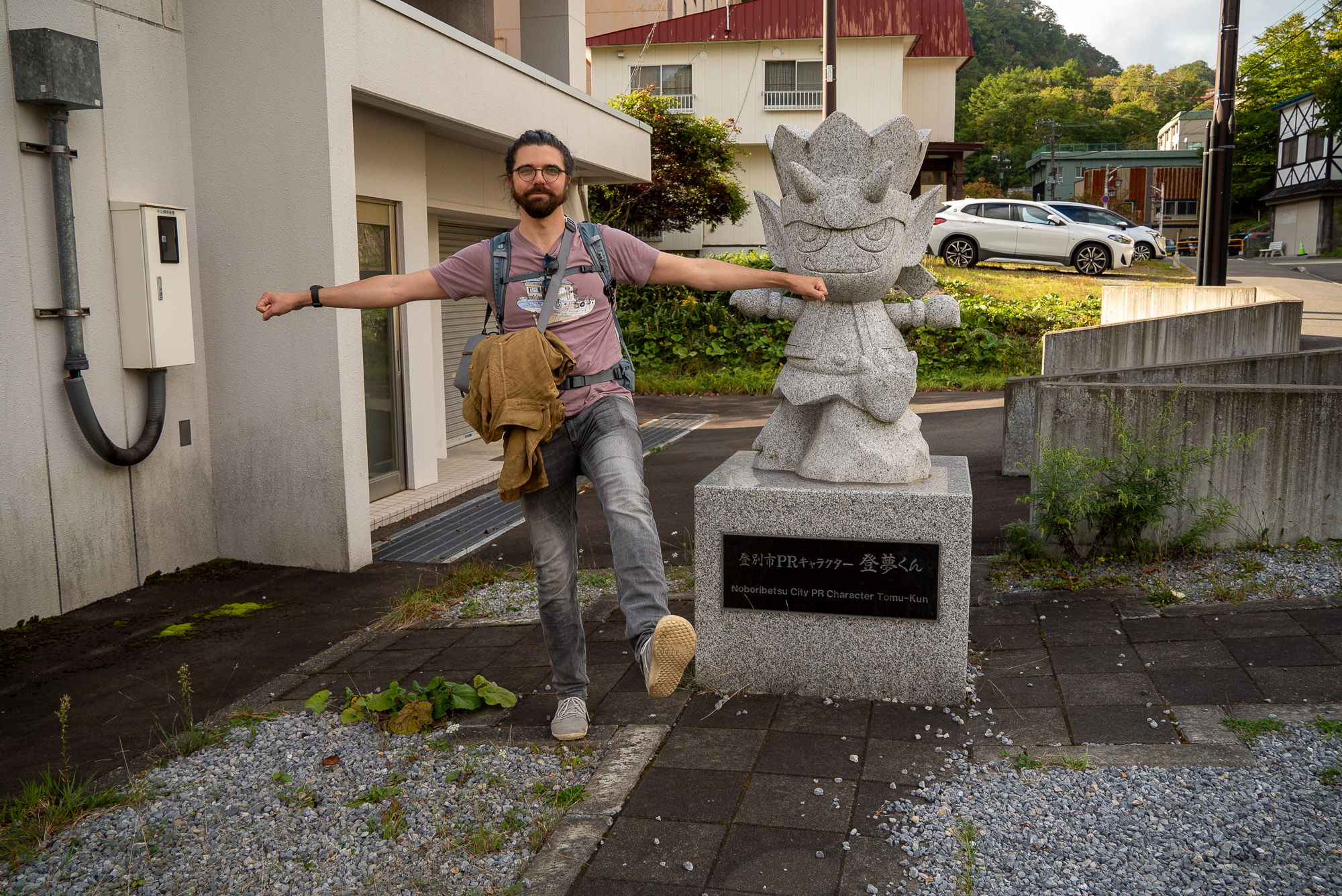
Because of the whole Hell Valley thing, Noboribetsu is filled with oni(devil)-statues. Typically, the oni come in pairs of a red (aka) and a blue (ao) oni, they are the mascot of the city. The guesthouse we stayed in also was called “Noboribetsu Guesthouse Aka & Ao”. Luckily the oni here appeared to be friendly and so we took quite some pictures of and with them!
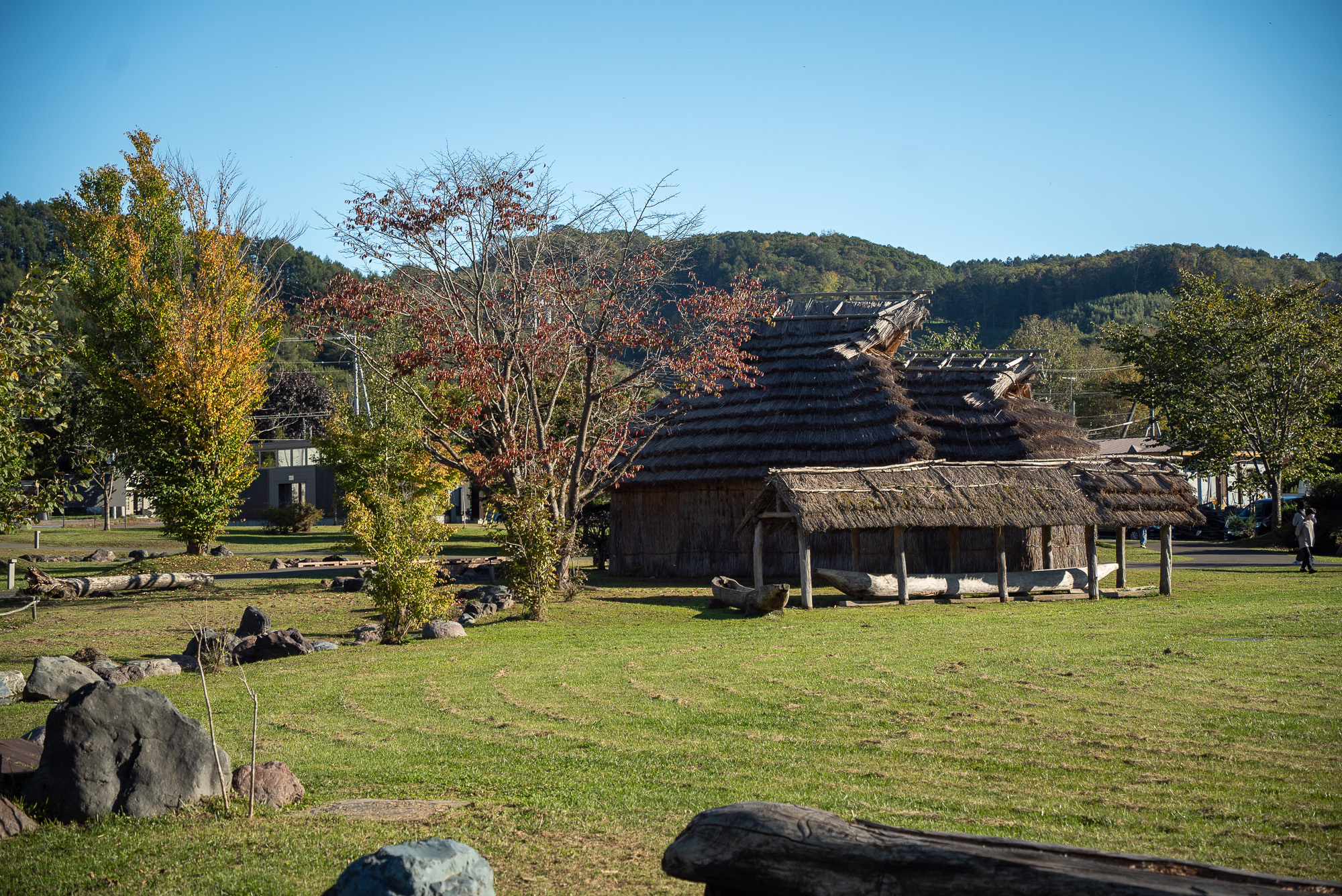
We arrived in Biratori in time to see the exhibitions. There is a sort of “show-village” of the indigenous people of Hokkaido. The Ainu were radically decimated and their culture and language suppressed by the Japanese colonisers. Today there are still Ainu on Hokkaido, but since the Island was annexed by Japan, they had to integrate into Japanese society. The Ainu themselves had no concept of landownership and so the Japanese found it easy to claim their territory for themselves and act as though no one lived there before – after all no one had laid claim to the land. And just like this, this good characteristic of the Ainu became their legal downfall.
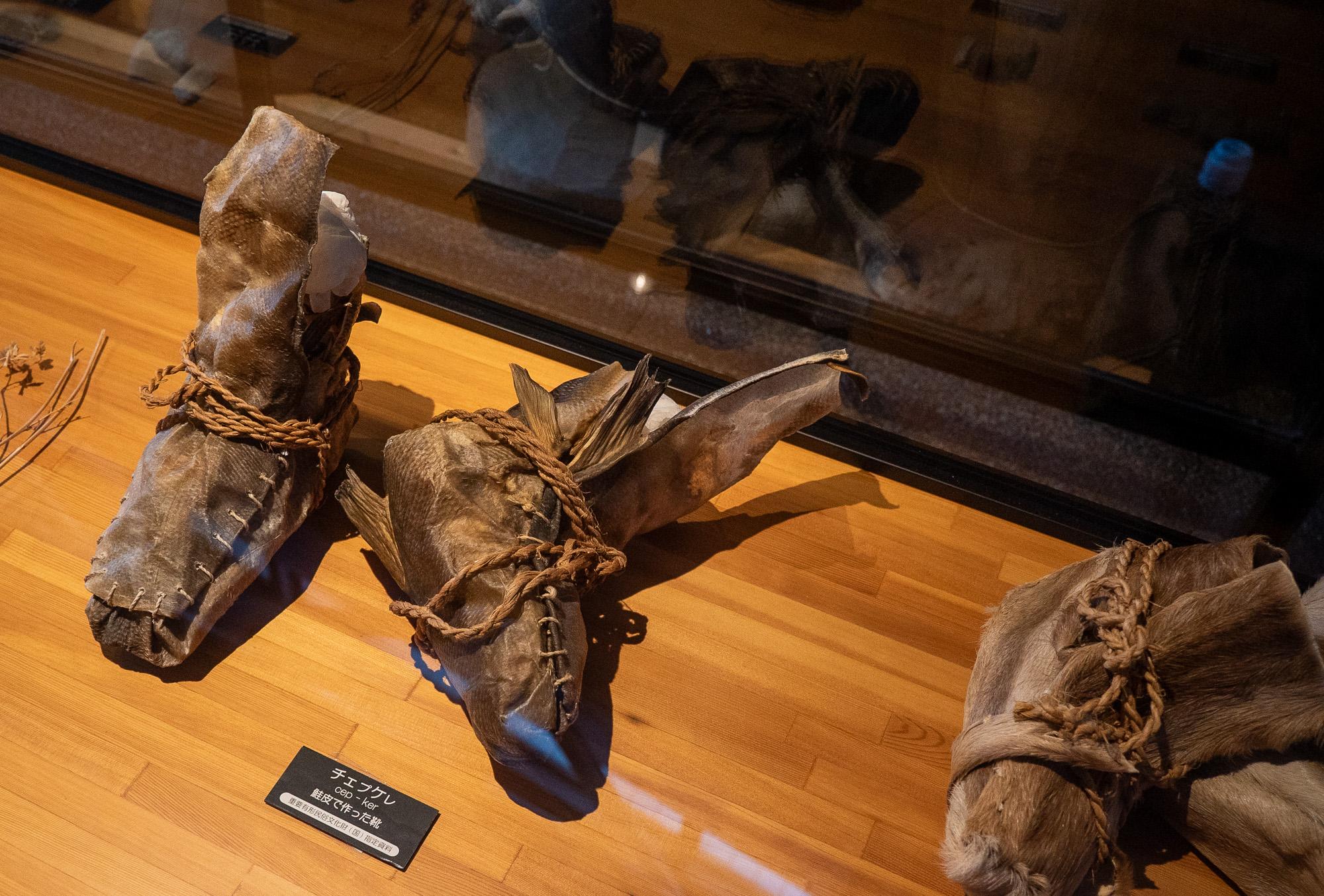
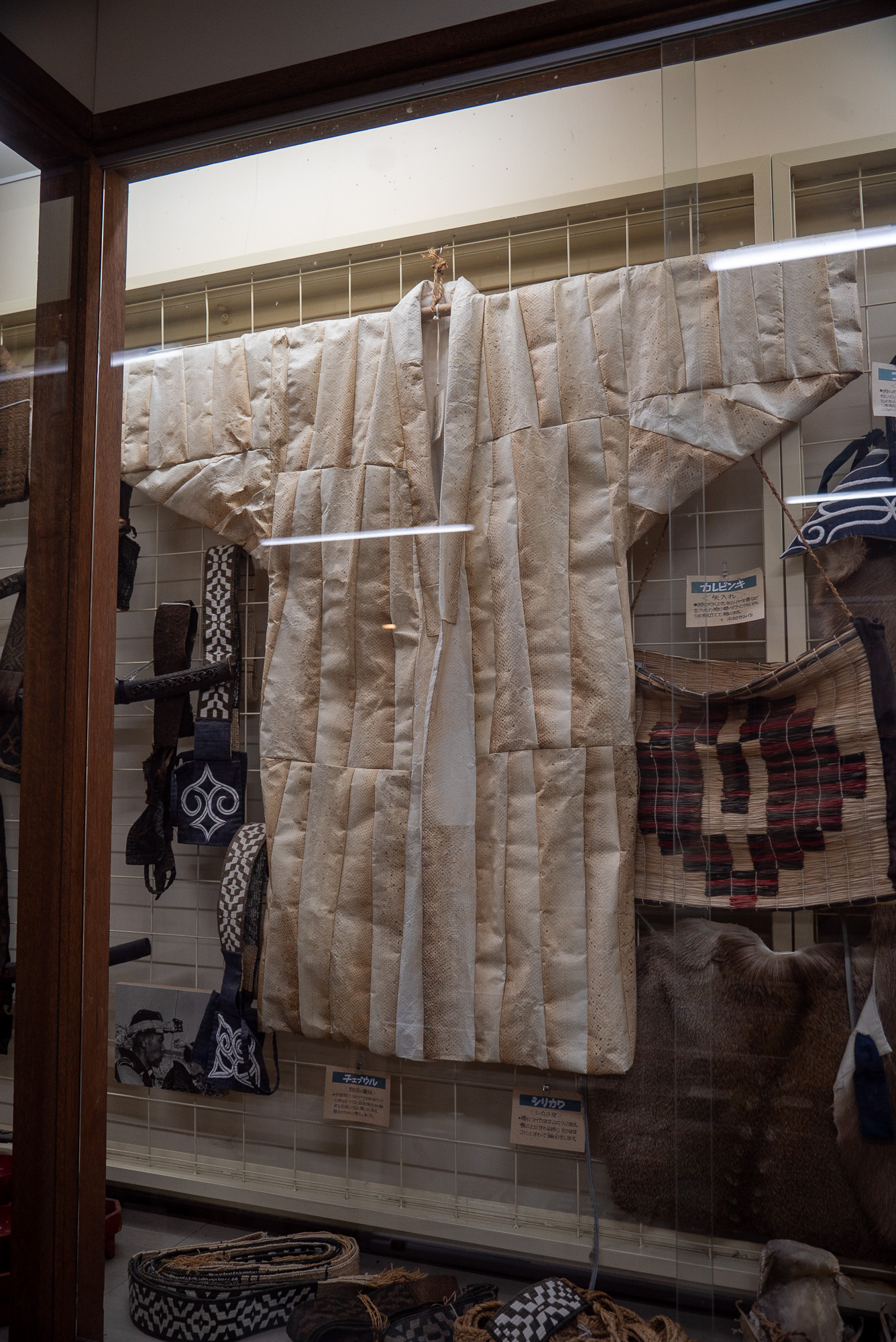
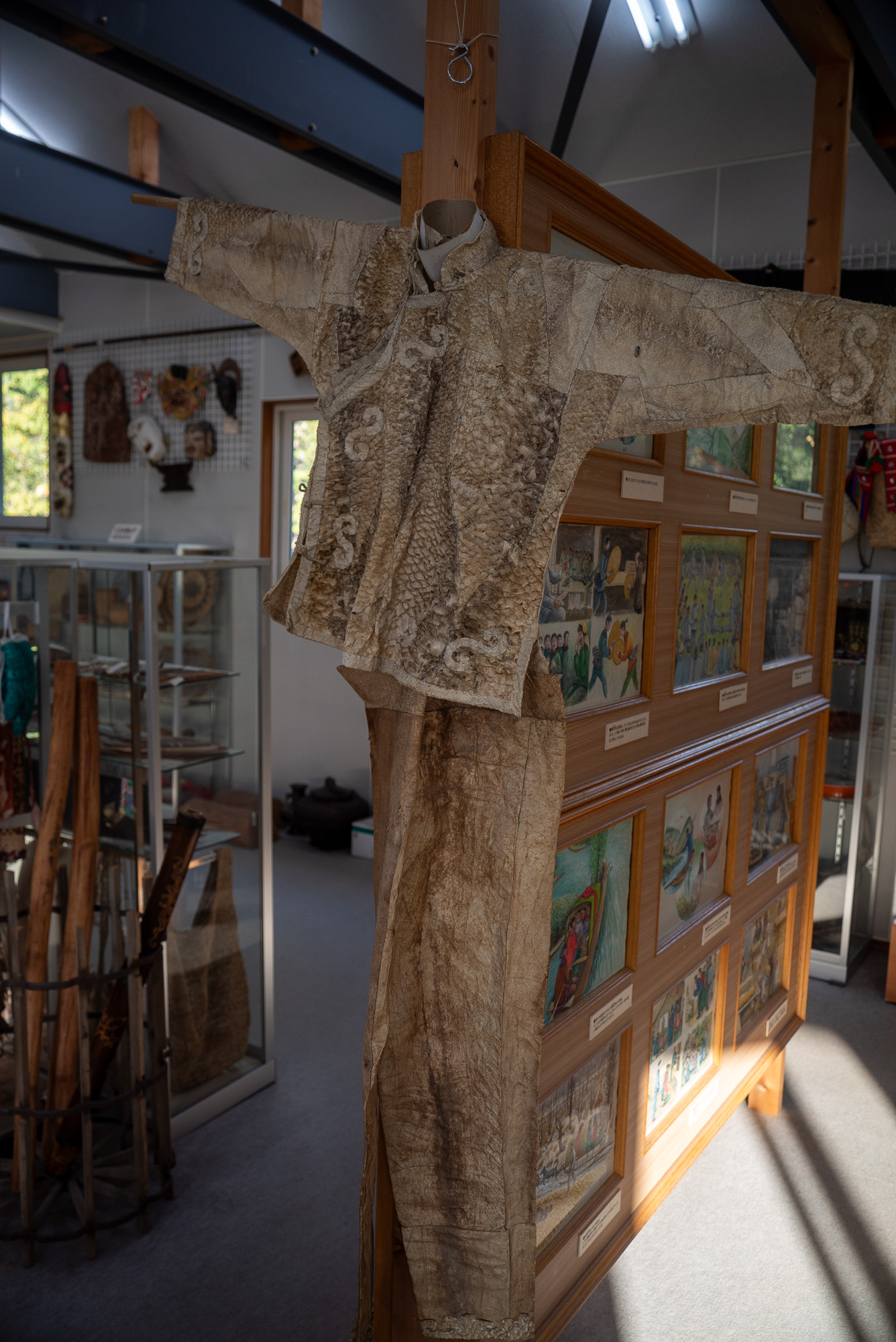
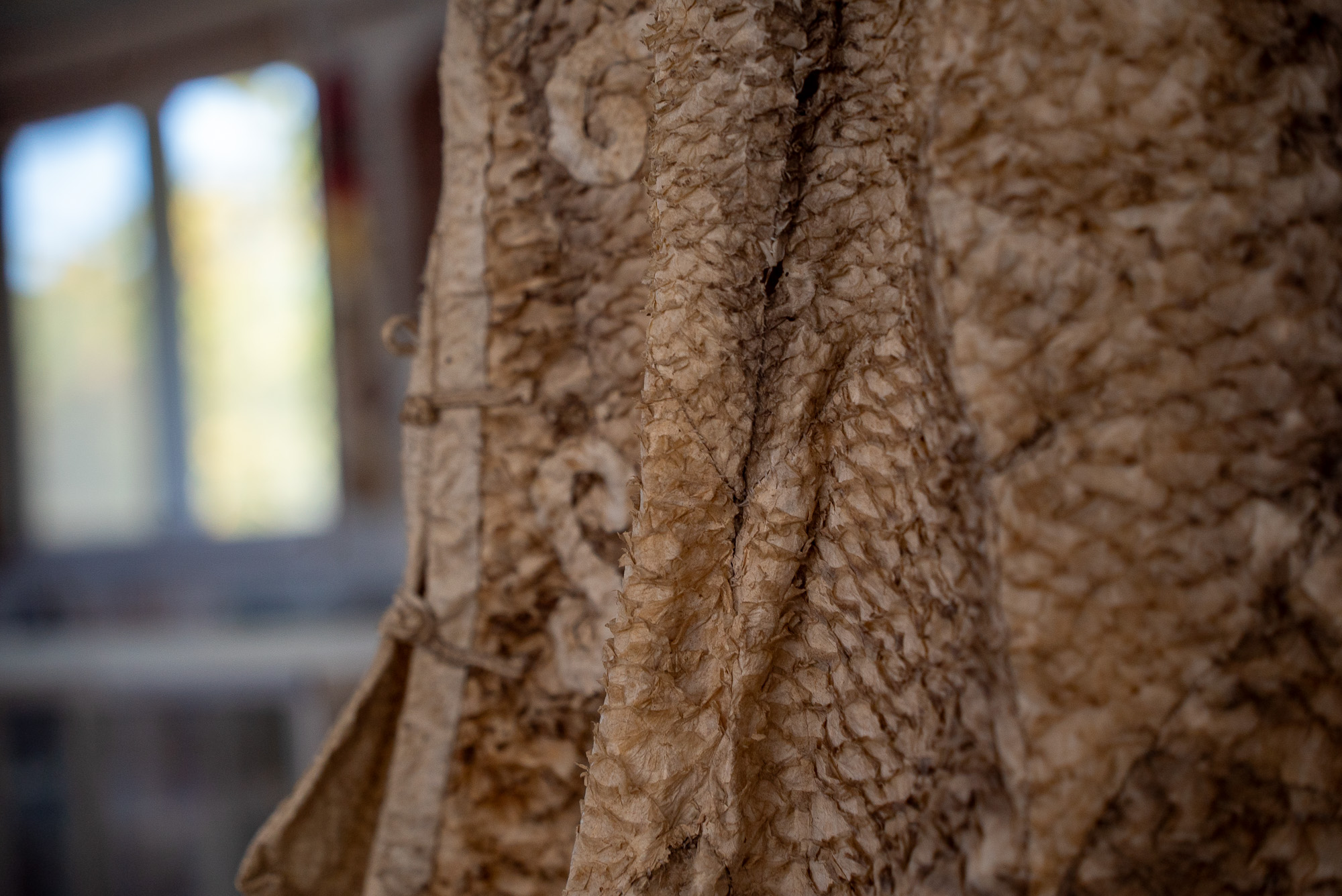
shoes made from fish skin – with stylish fins!an Ainu fish-skin-suit
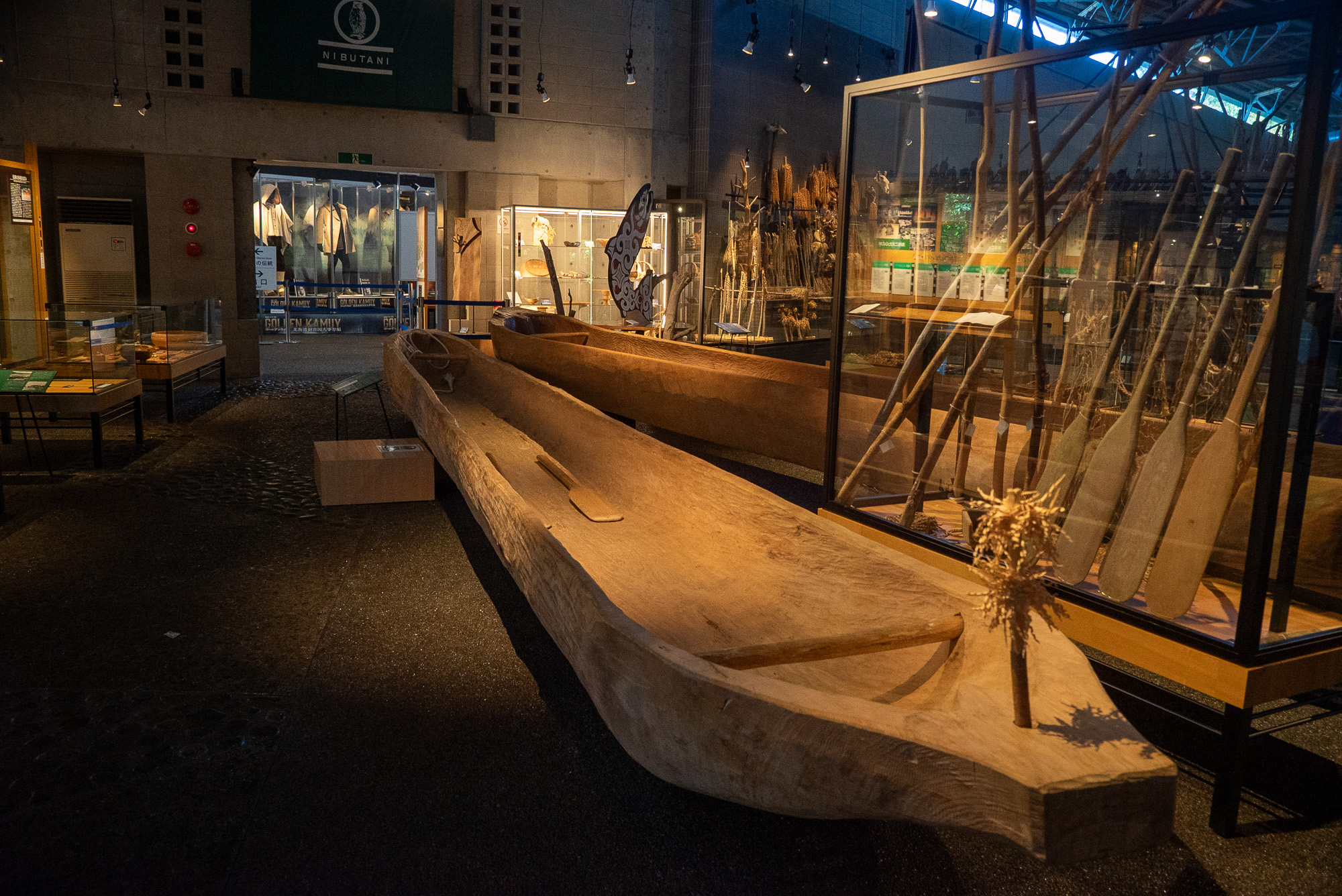
In Nibutani, a district of Biratori, they have the highest percentage of Ainu in the whole country, with 80% being made up of people with indigenous roots. There are several small museums/collections that display the craft and way of living of the fromer but also current Ainu population. The exhibition takes care to show that the Ainu are not just hung up in the past, but also go with the times without completely abandoning their traditions.
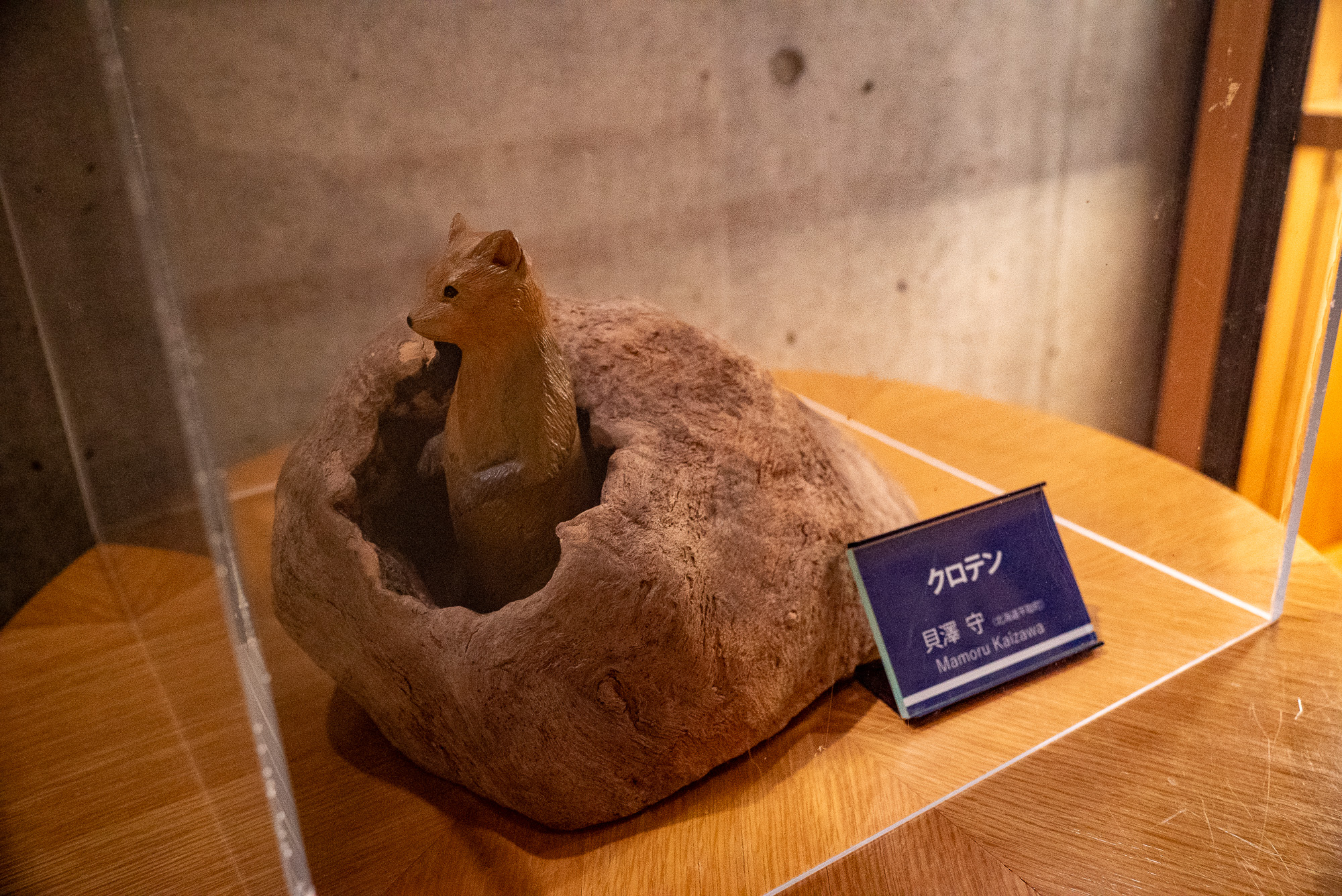
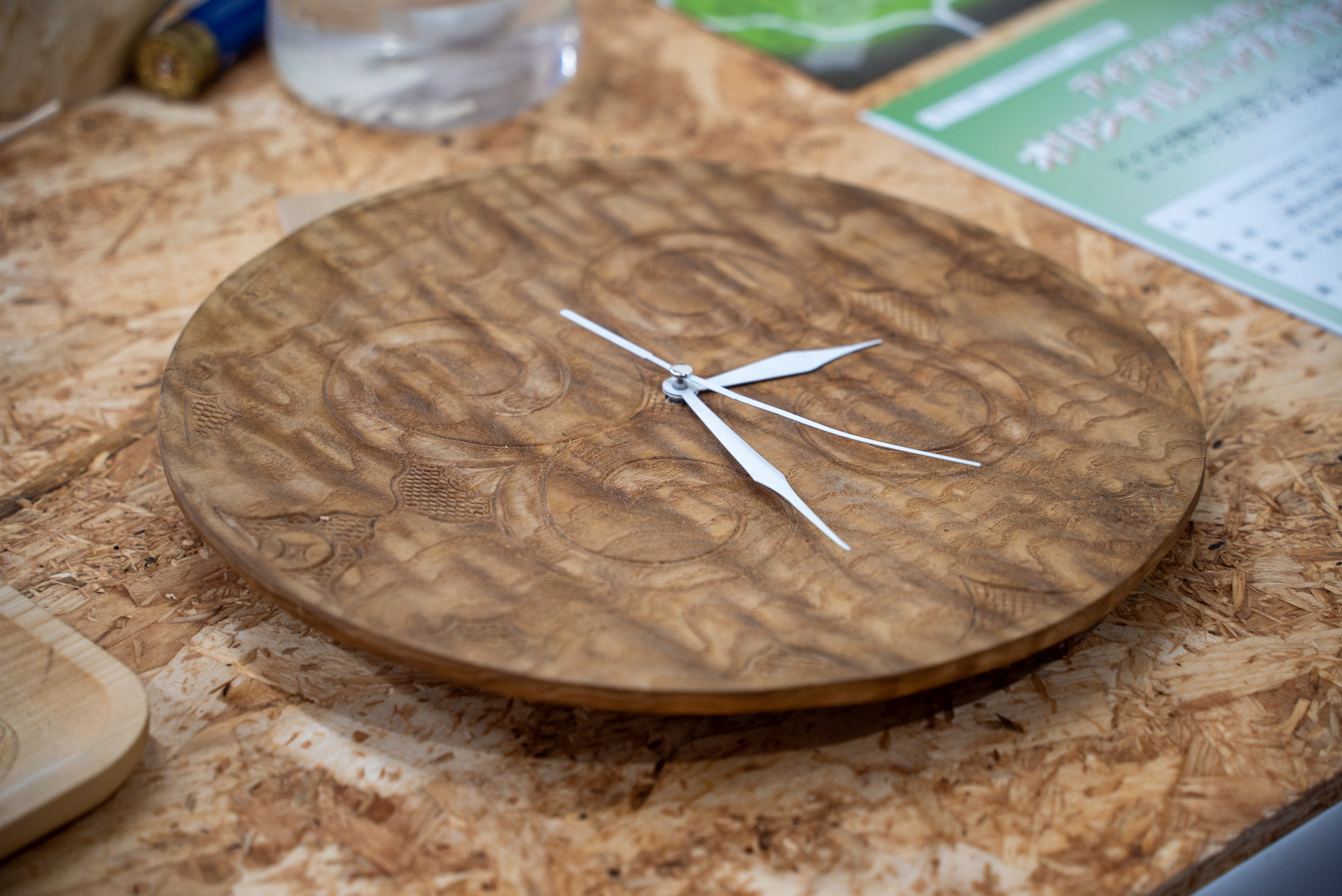
a more current Ainu carving
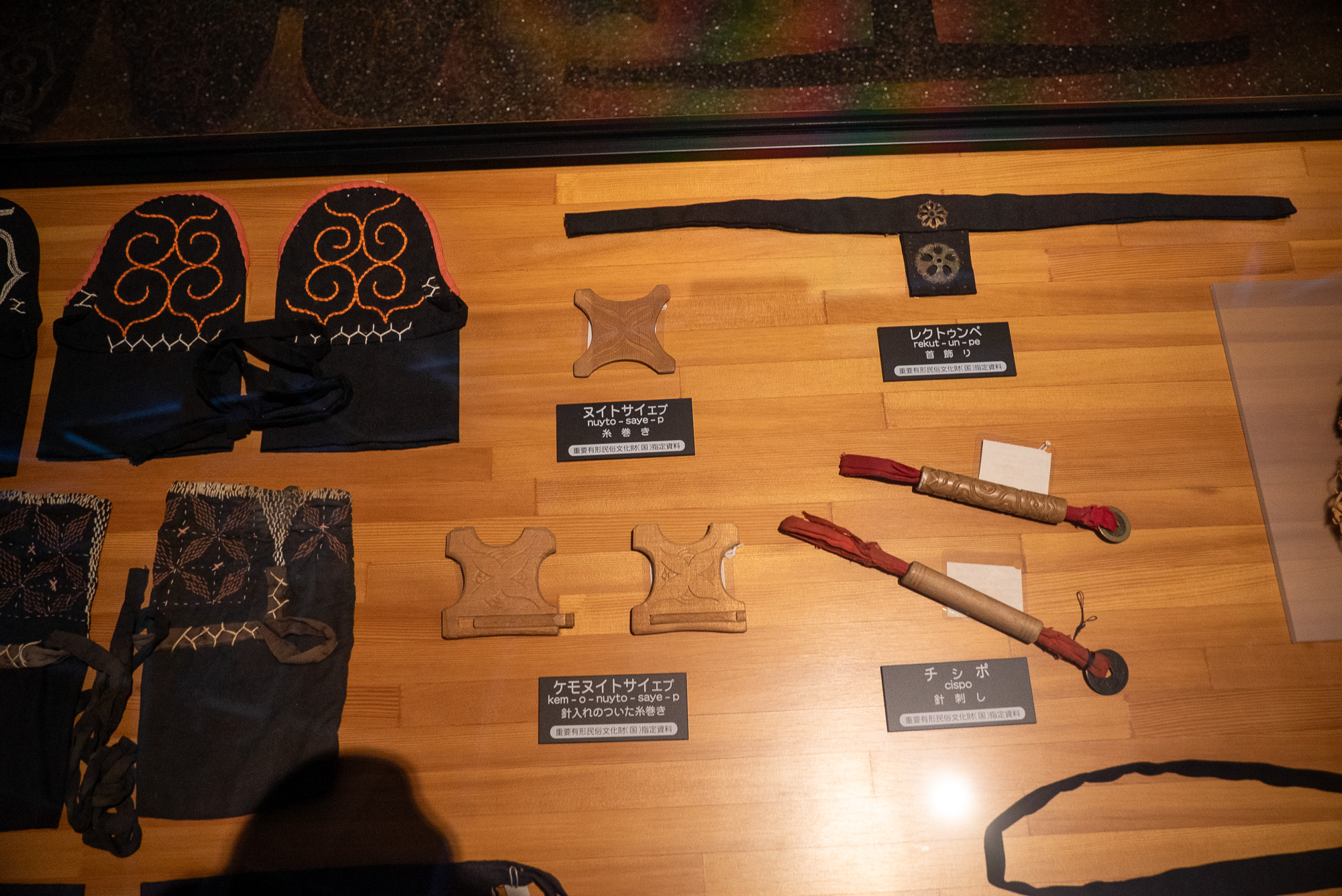
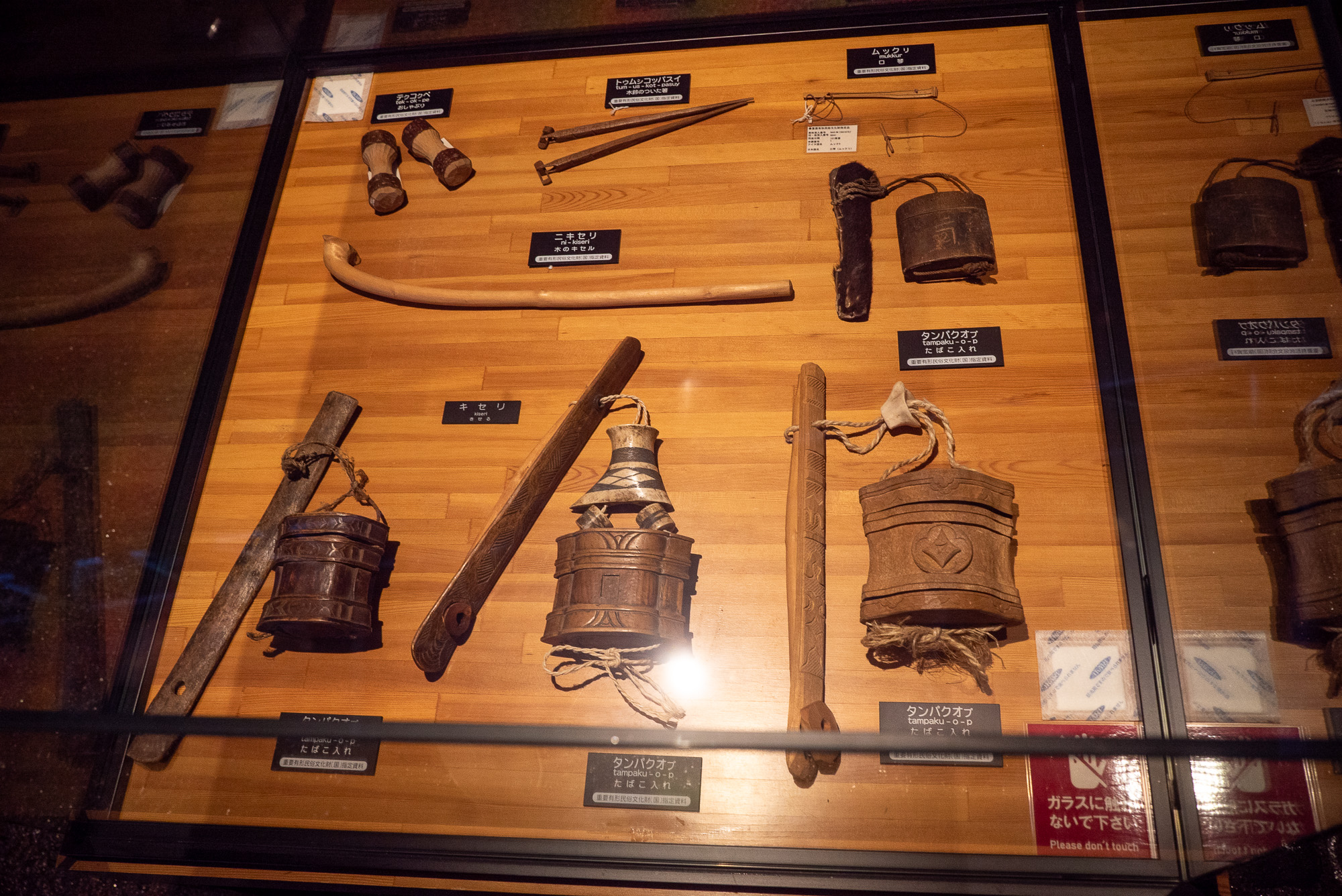
In the center we see thread spools with an integrated needle compartment.pipes with tobacco boxes
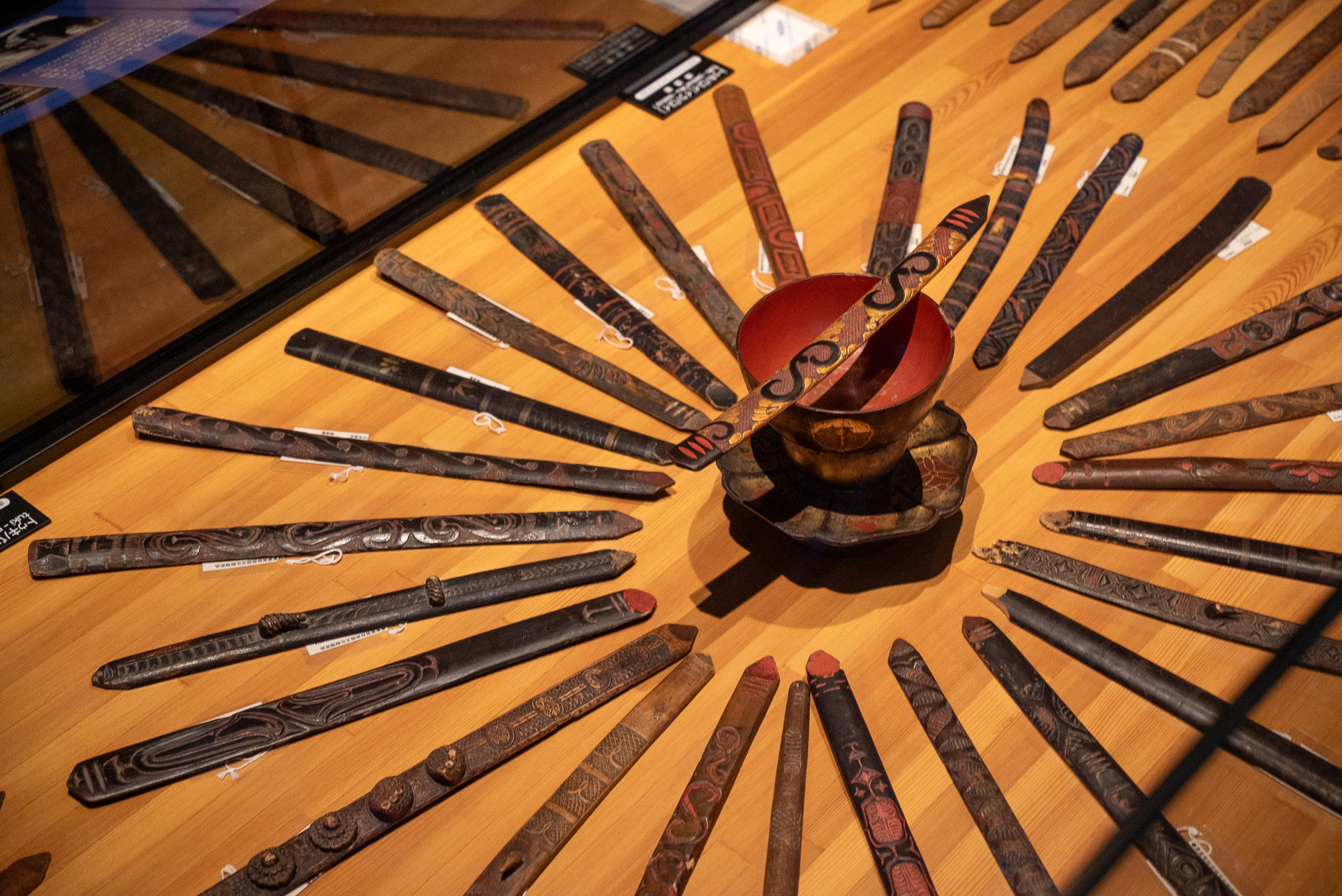
The flat wooden objects are Tukipasuy – they are used to communicate with the gods and will (as seen in the middle) be placed on a sake bowl for this purpose. They are said to possess a spirit and are very importend which becomes apparent from the diversity and intricate embellishments.
an every day object with a typical Ainu engraving
You can buy many pretty, handmade (but also laser-cut) wooden articles and fabric – everything adorned with traditional patterns. And stay in an Ainu-owned hostel (which we did). Unfortunately in the evening the counter wasn’t manned anymore and so we coudn’t ask for the pronounciation of Cip ta cikap kamuy.
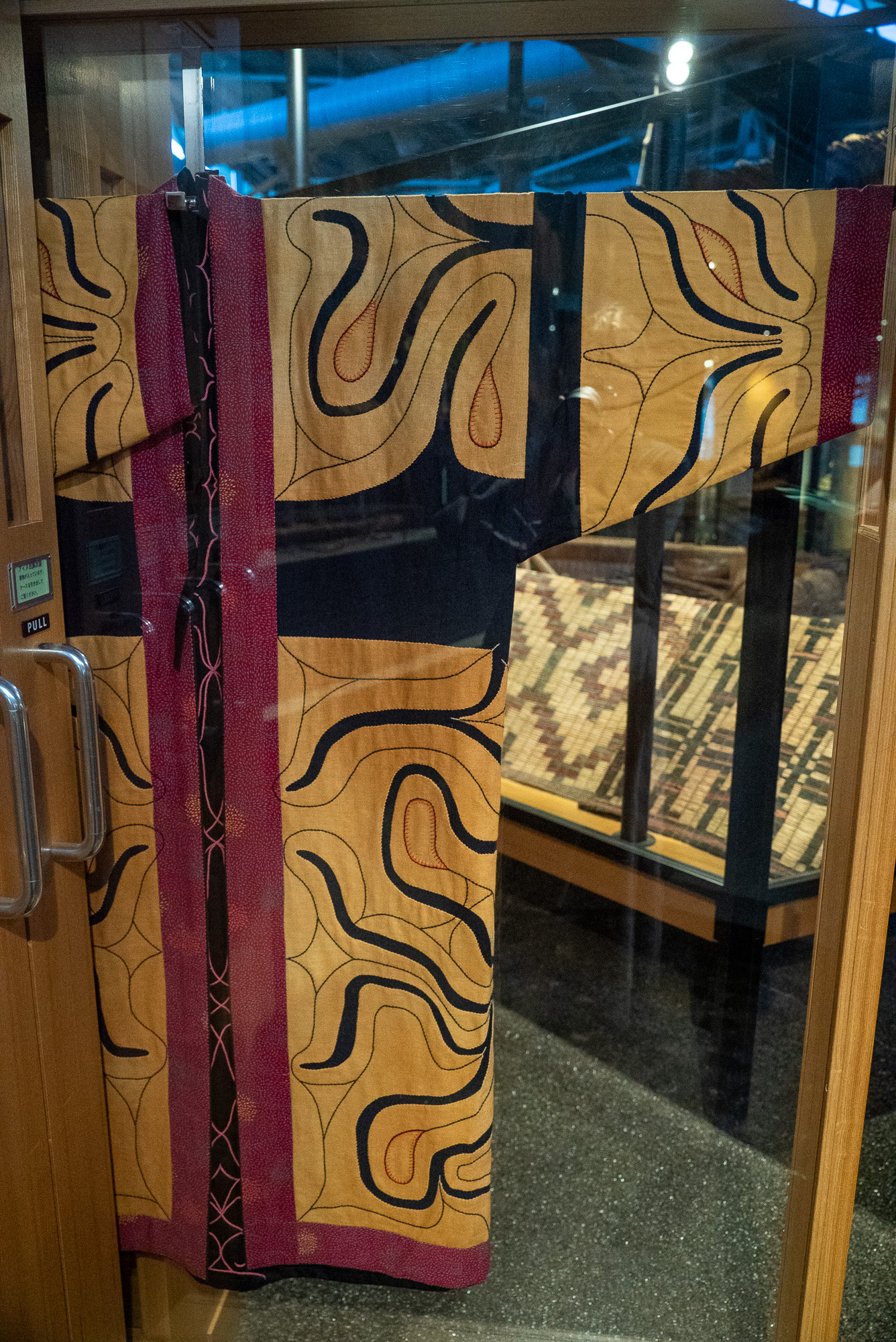
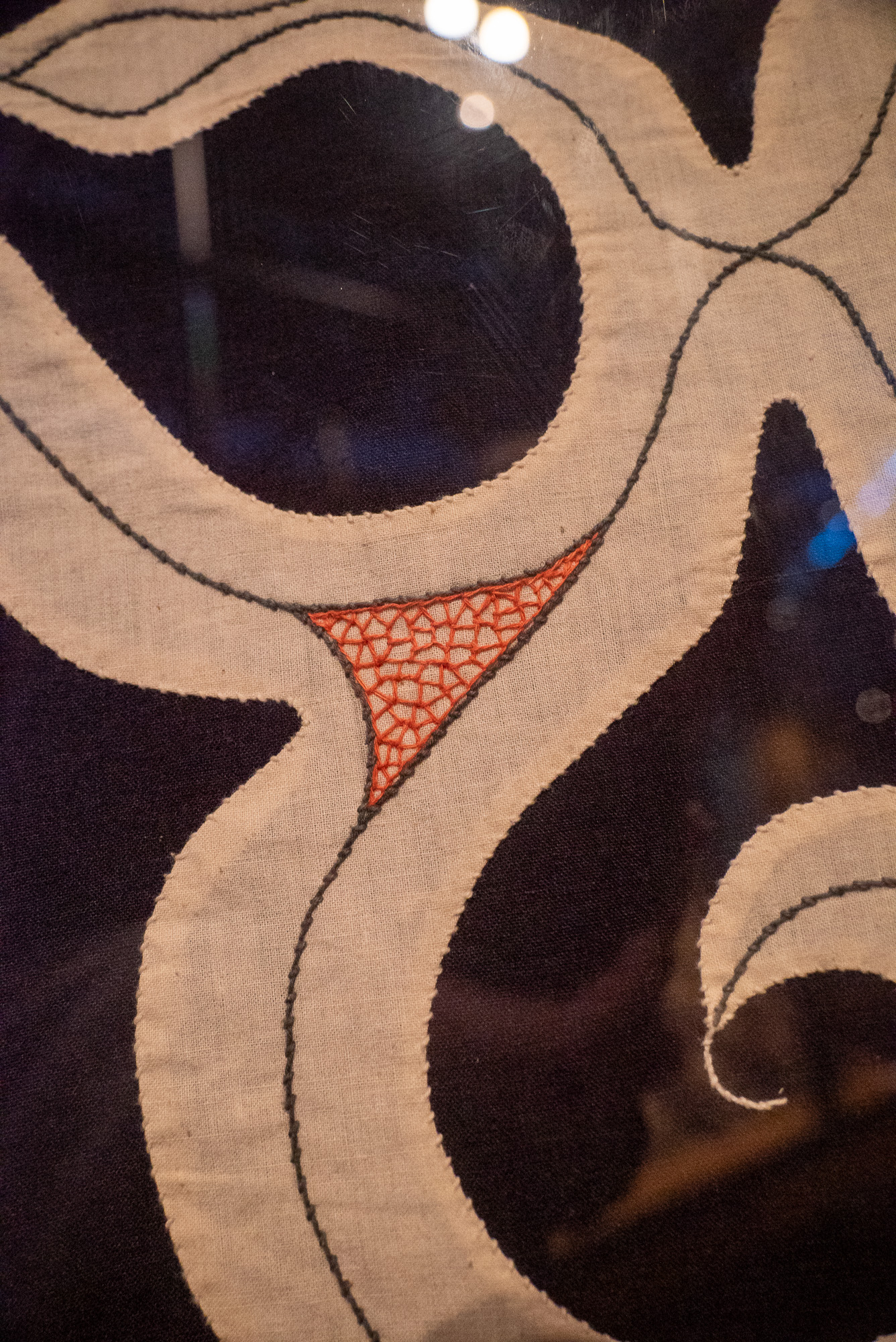
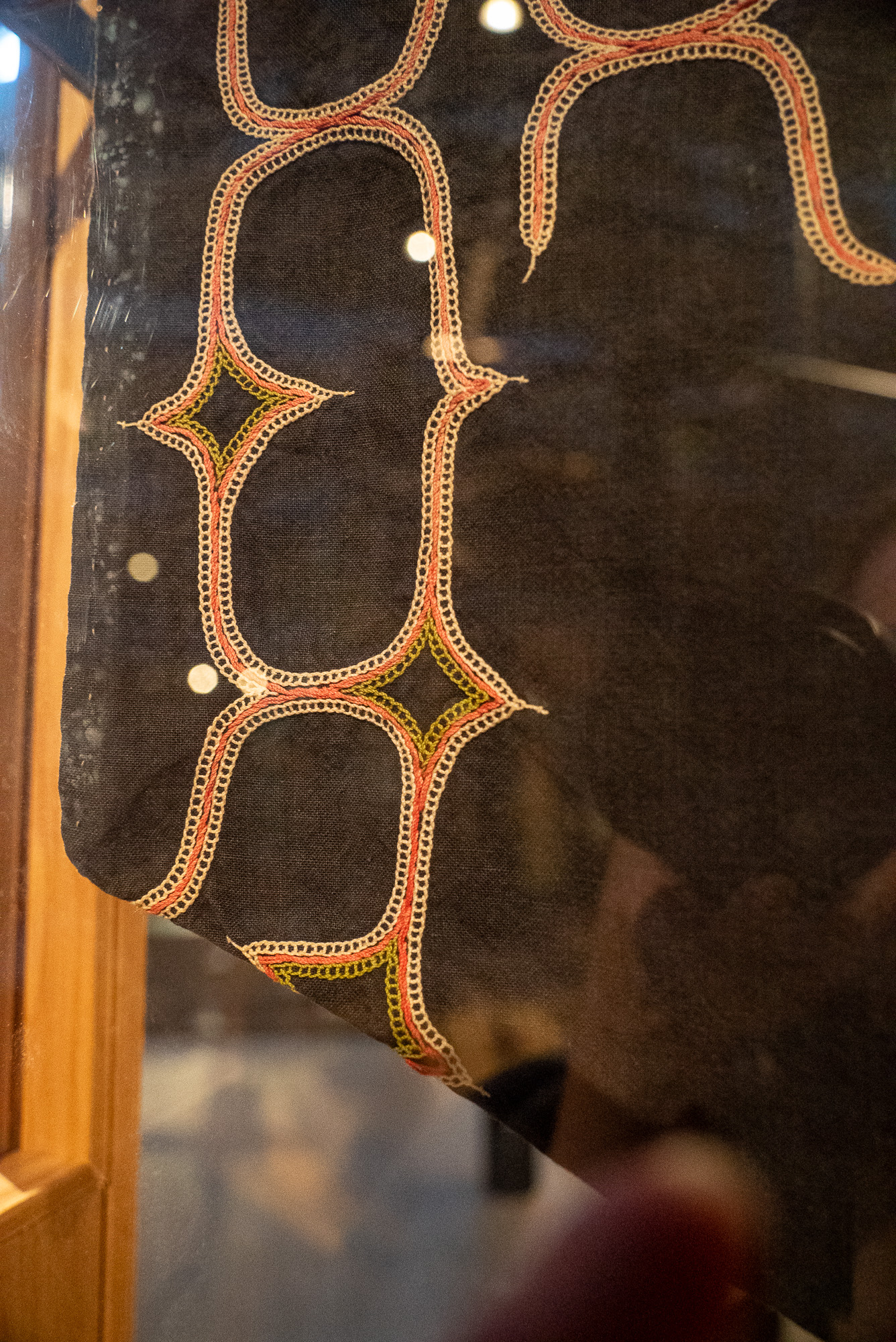
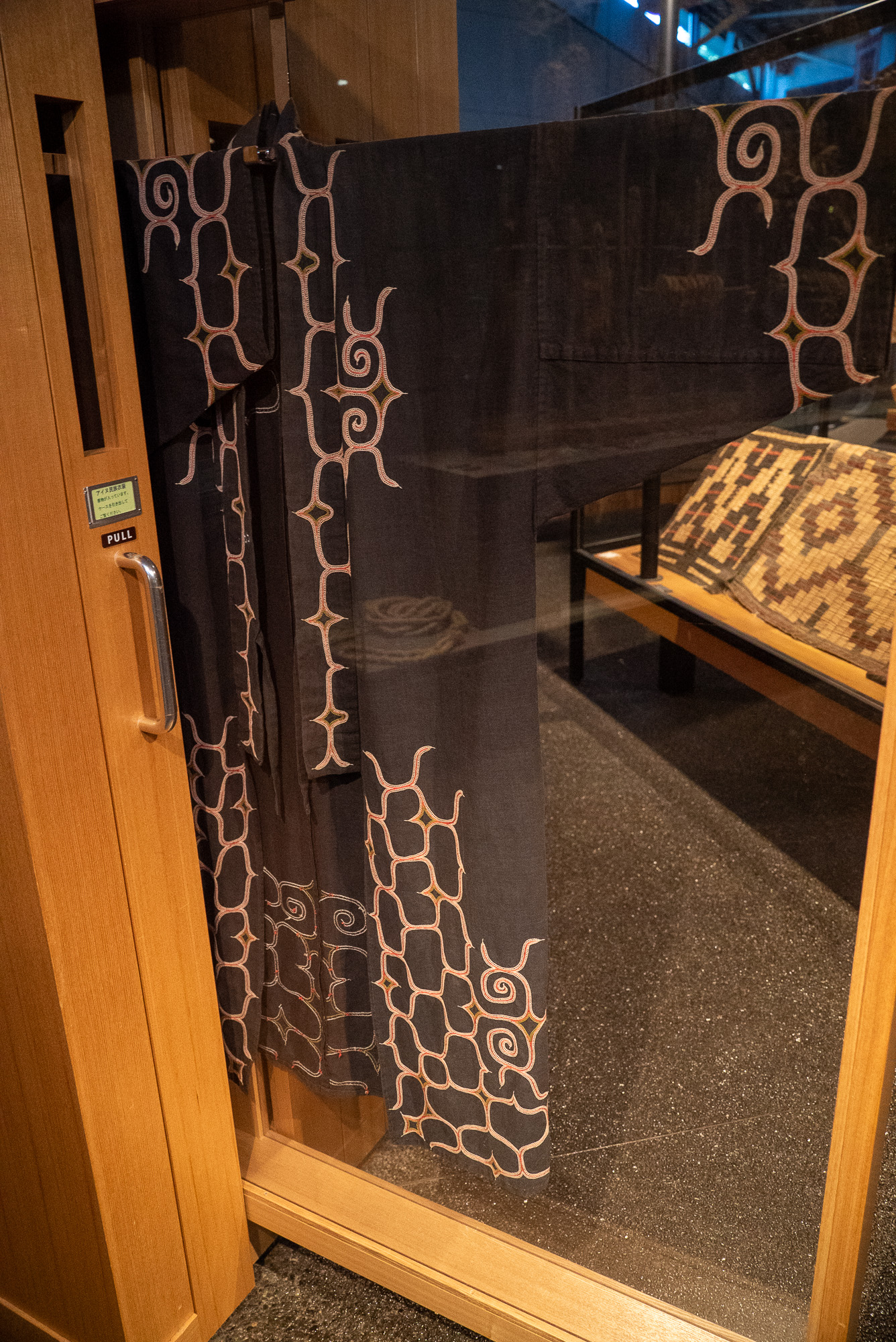
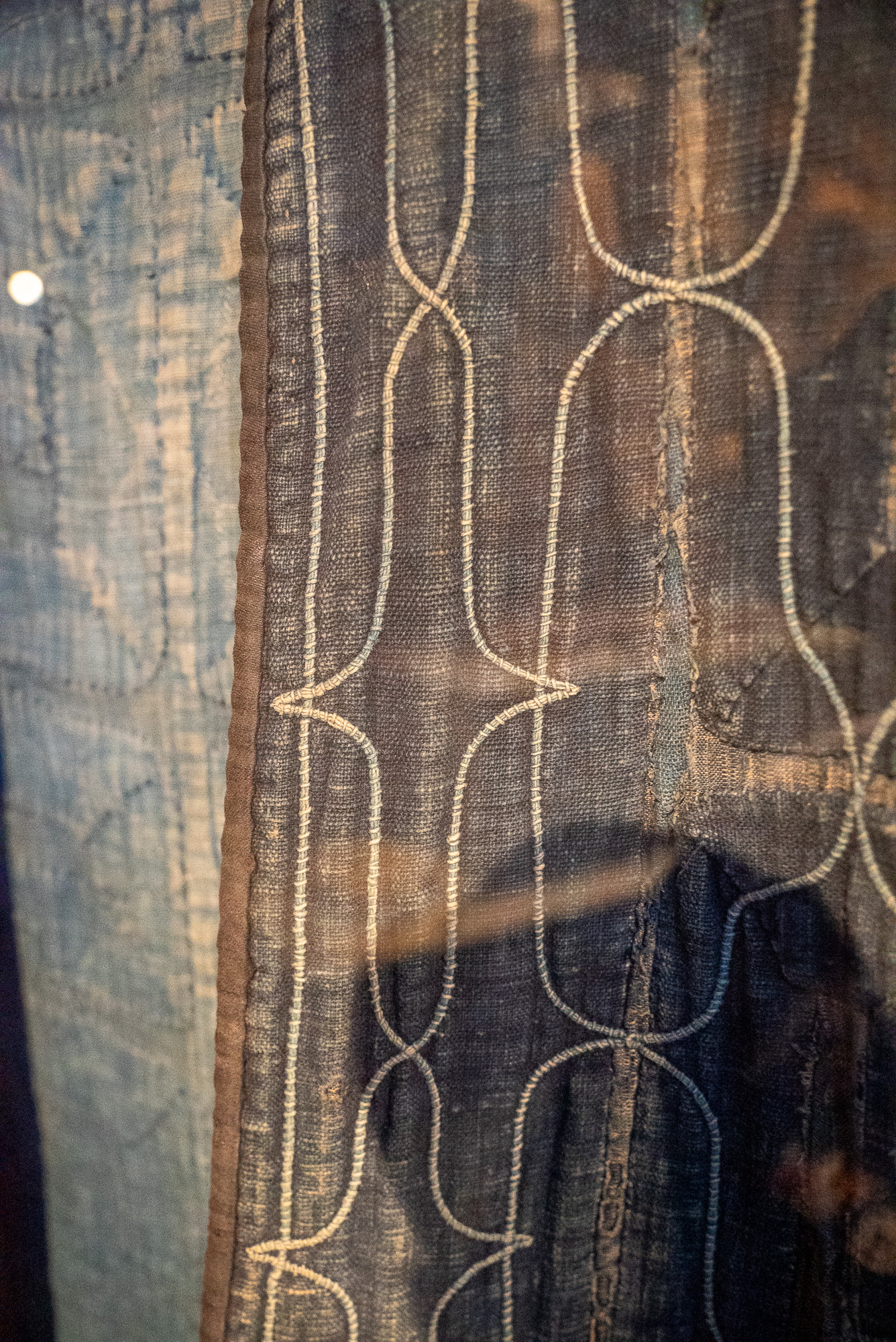
Traditional Ainu clothing is both embroidered and has fabric stiched on top of a base material. Here, the base is a dark blue and a white fabric is elaborately attached in a wavy pattern. Additionally, the garment is adorned with different styles of embroidery.
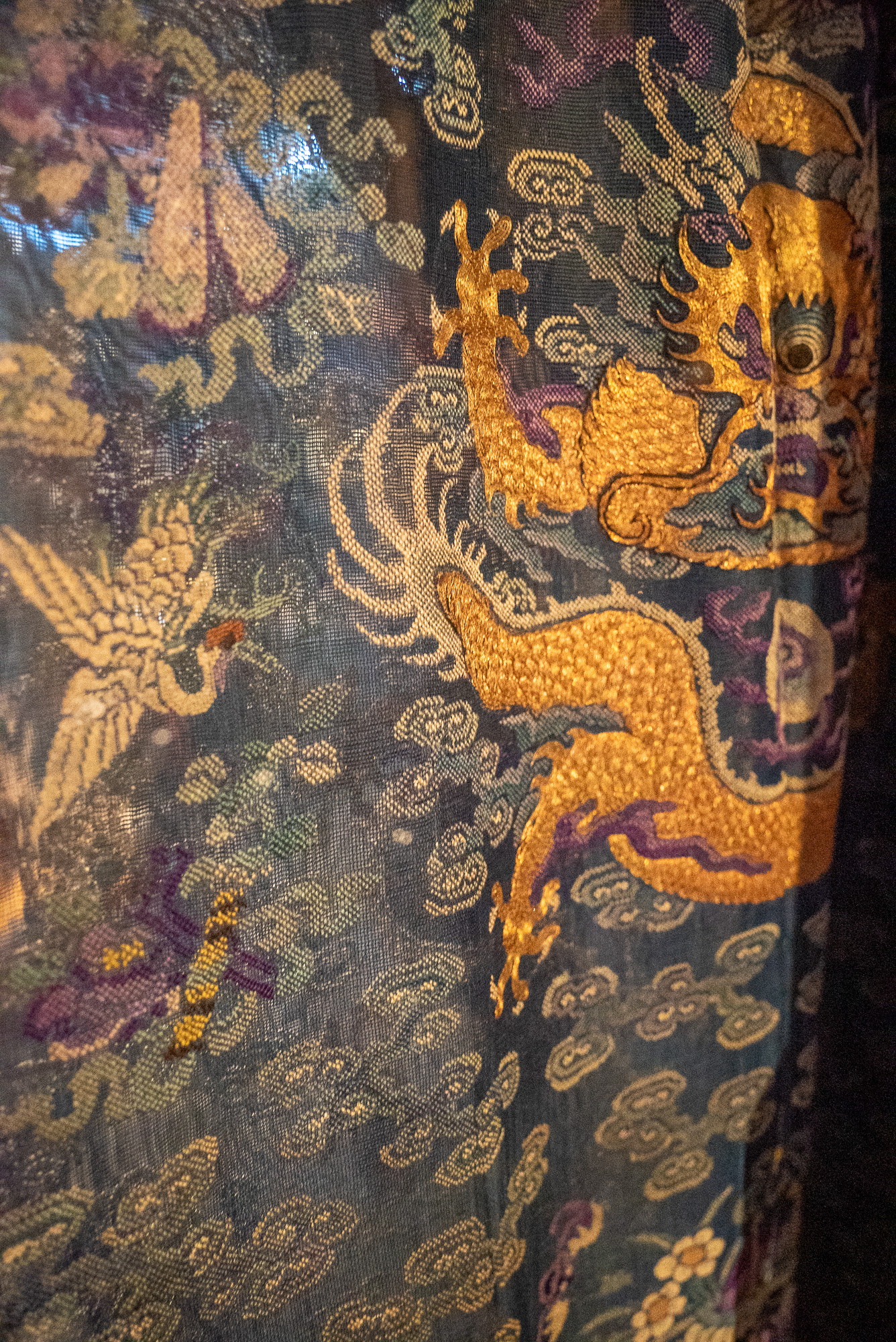
Proof of early trade: This piece of clothing was imported from China.
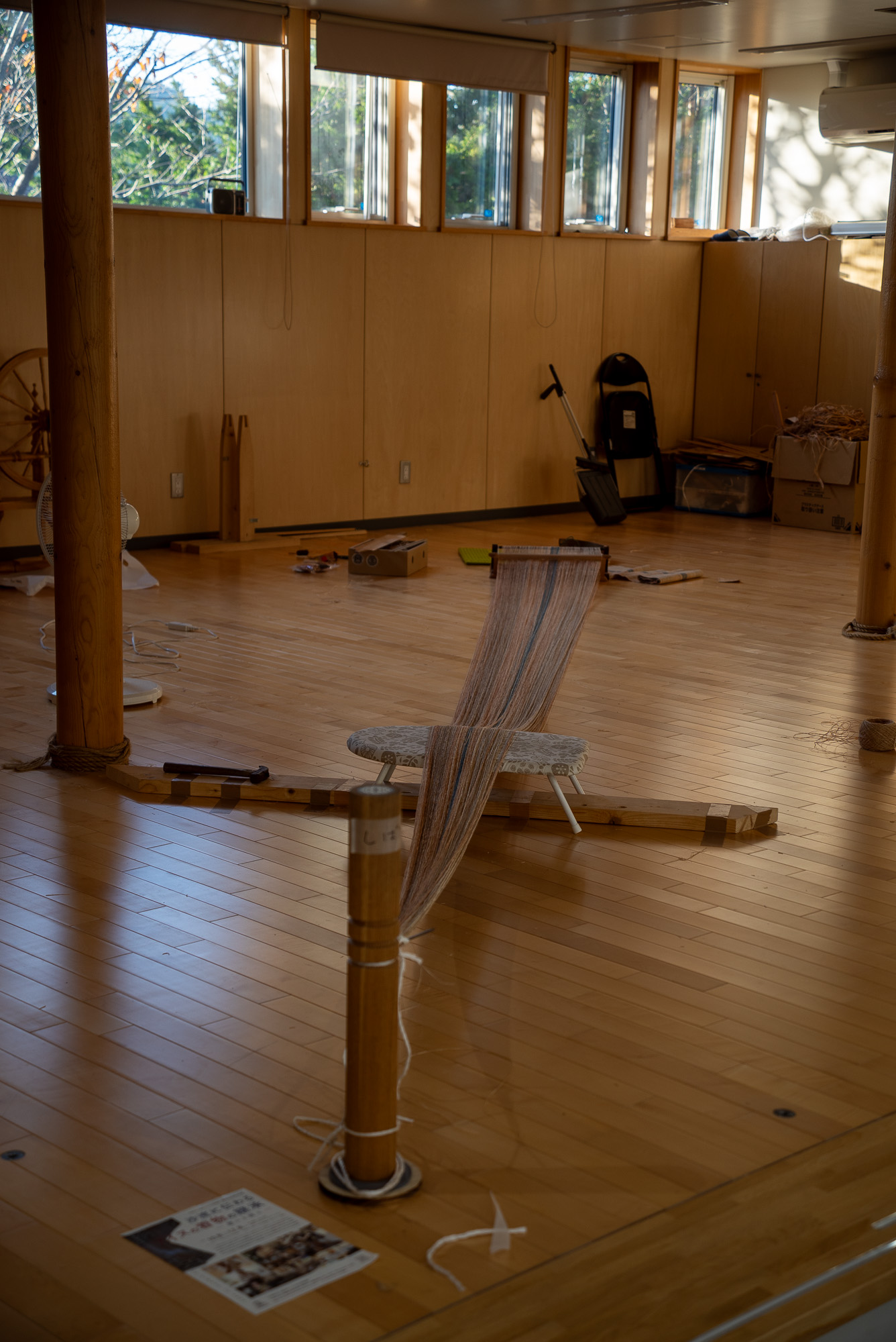
Attus is Fabric made from bark. The bark is boiled, the inner filaments are separated and twisted. In the step that’s shown here, the threads are being mounted and woven into fabric.
A more detailed explanation can be found here
Instead we met several other kind people, for example, Hajime Shinjo, an Okinawanese person (now living in Tokyo) who felt a kind of connection to the Ainu, since the Japanese acted similarly when annexing Okinawa as they did in Hokkaido. This was also very fitting with the goals of the “Kotan” (“village” in Ainu): There is an exhibition of the collection of Shigeru Kanyano that shows photographs and objects of other indigenous people, to create solidarity between these people who share a similar fate. Kanyano learned about Ainu language and traditions mostly through his grandmother and later fought fervently for the recognition and protection of Ainu culture.
a Nanai fish-skin-suit – It is assumed that the Nanai share some cultural elements with the Ainu.
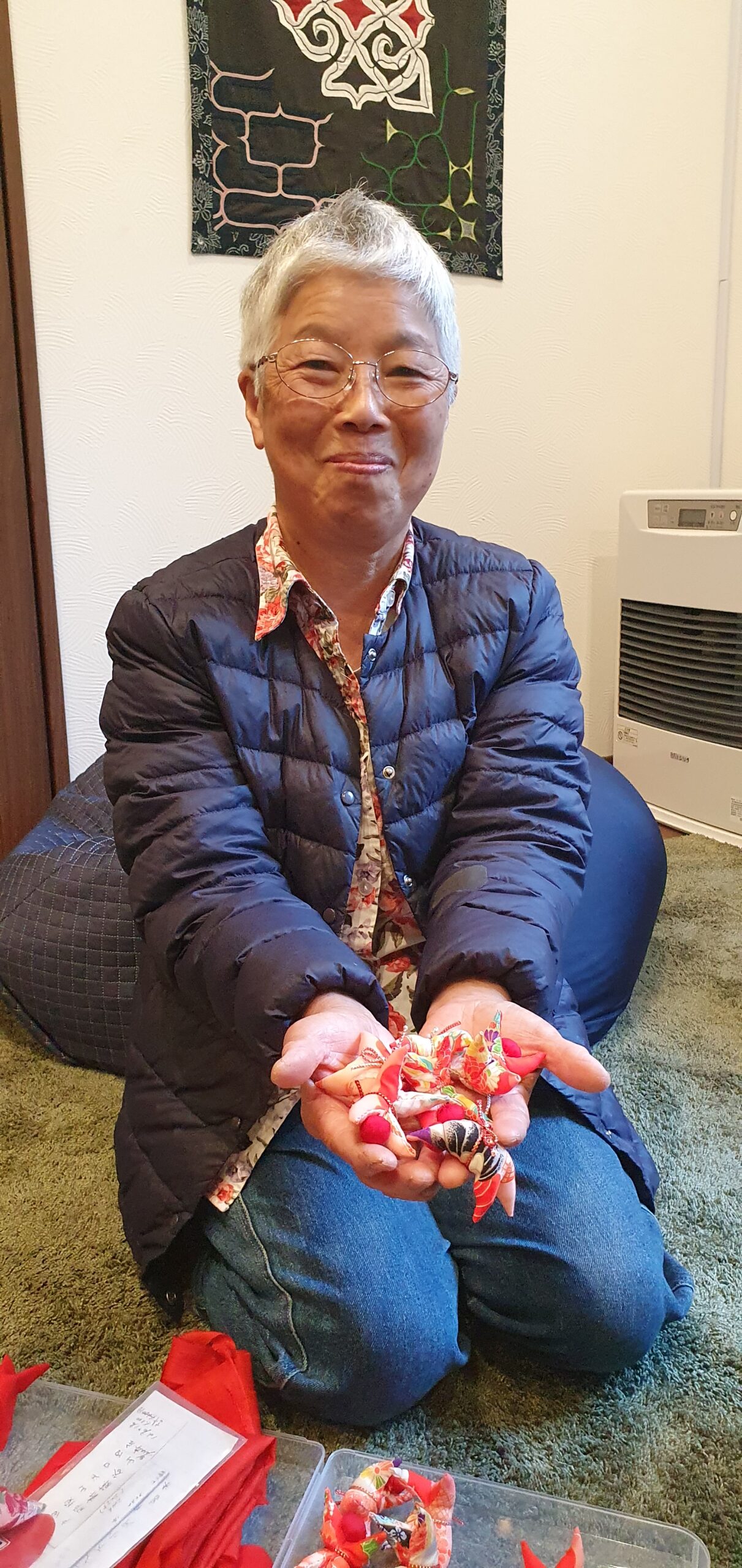
Yuriko Aoyagi with her Tsurushibina (“hanging dolls”) – when ready, they are hung on red strings, hence the name
We also met an elderly lady who came with her husband to volunteer. She’s actually a farmer and used to have a guesthouse on her farm, but today that’s too stressful since she is also teaching handicrafts: the sewing of Omamori! These are a kind of lucky charm, in this case small human-like figures made from fabric that get hung on red string. Long ago, these were attached to the shoulders of children’s clothes to protect them, but that’s not done anymore. When expressing interest, we were gifted a handsewn Omamori that will protect us on the rest of our journey. She also has been keeping a blog for 17 years and anyone who knows Japanese should check it out here!
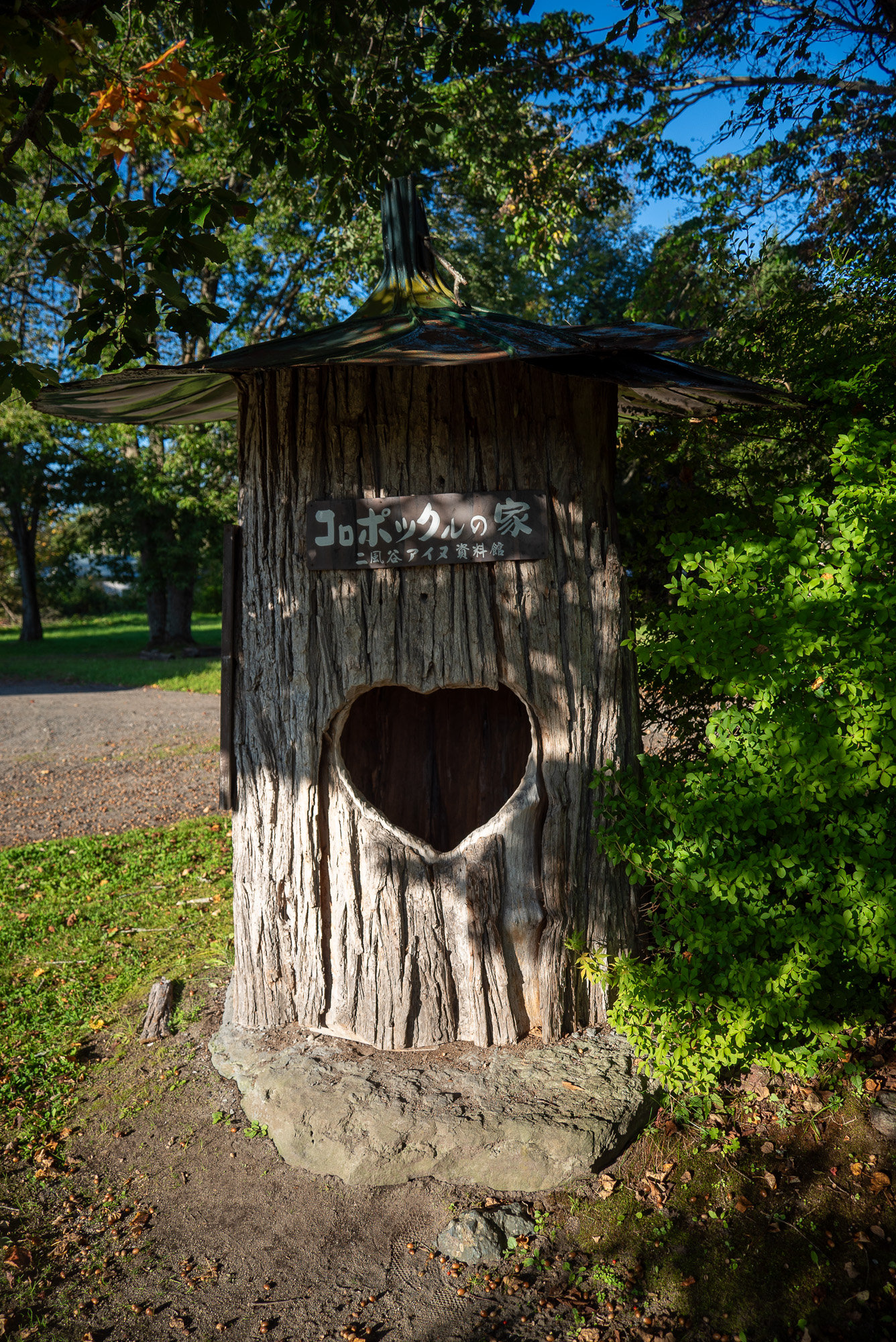
This is supposed to be a house for Korpokkur – little people that, according to Ainu legends, lived on Hokkaido before the Ainu. We’re wondering whether they’re related to the Koroks from Legend of Zelda.
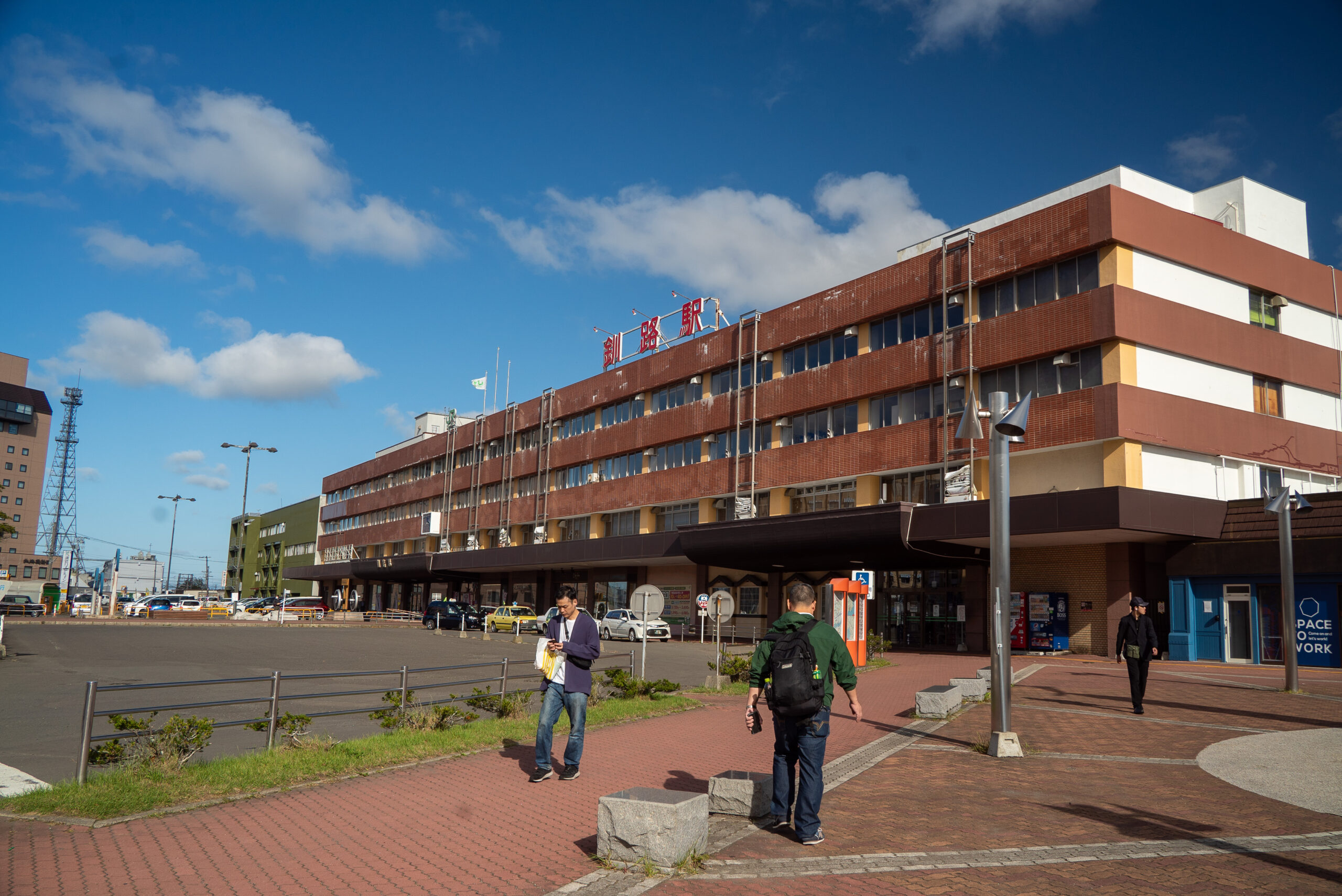
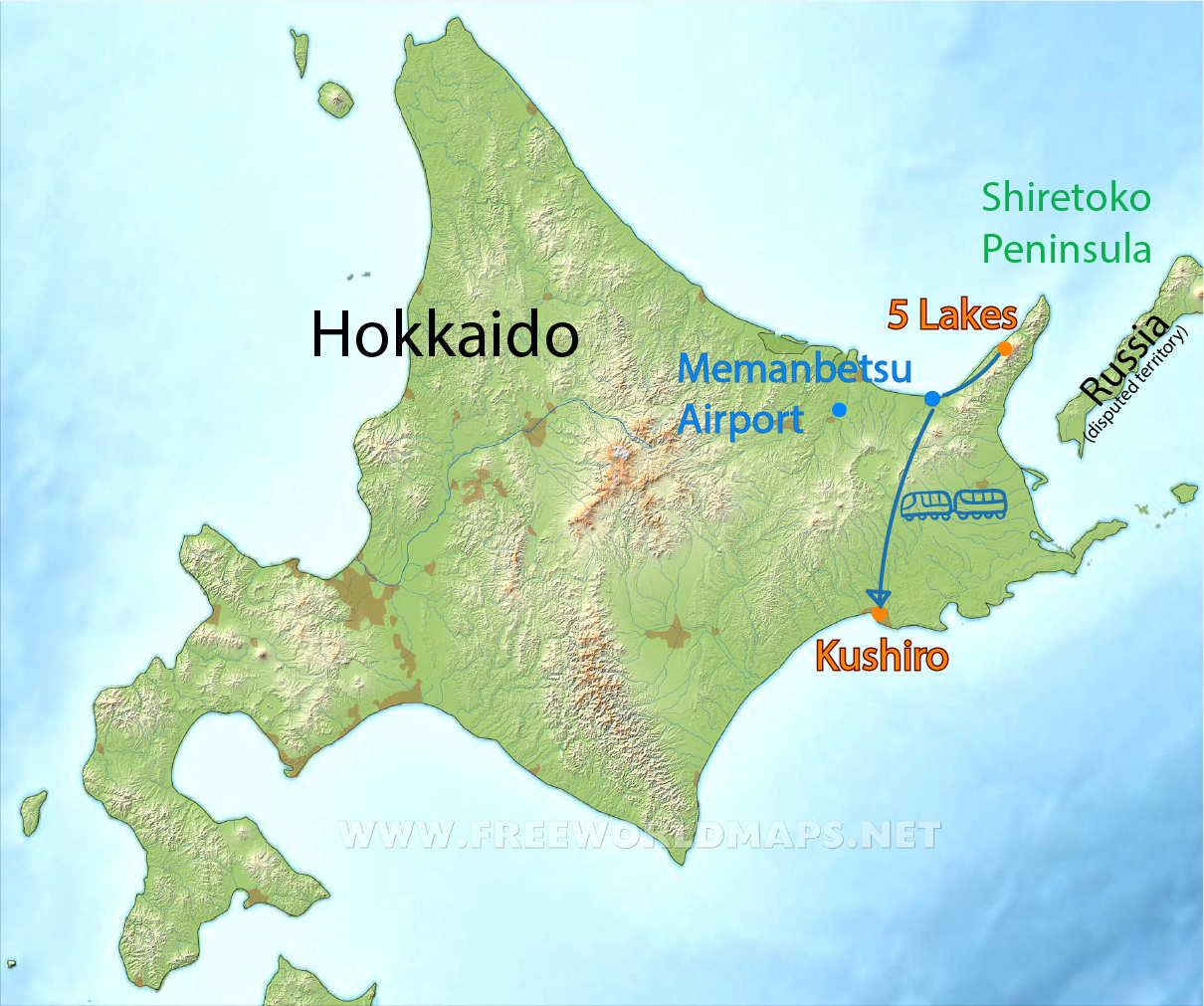
The next day (September 29th) we went to Kushiro Station to rent a car to go to Biratori: Jörg who had his driver’s license translated for 70 € was quite nervous. Left-hand traffic, indicators on the other side of the steering wheel and no clue about the Japanese driving etiquette.
We asked the guy from the rental service what the speed limit was and he advised us to just go with the flow and adjust to the speed of the car in front of us. That was important information!
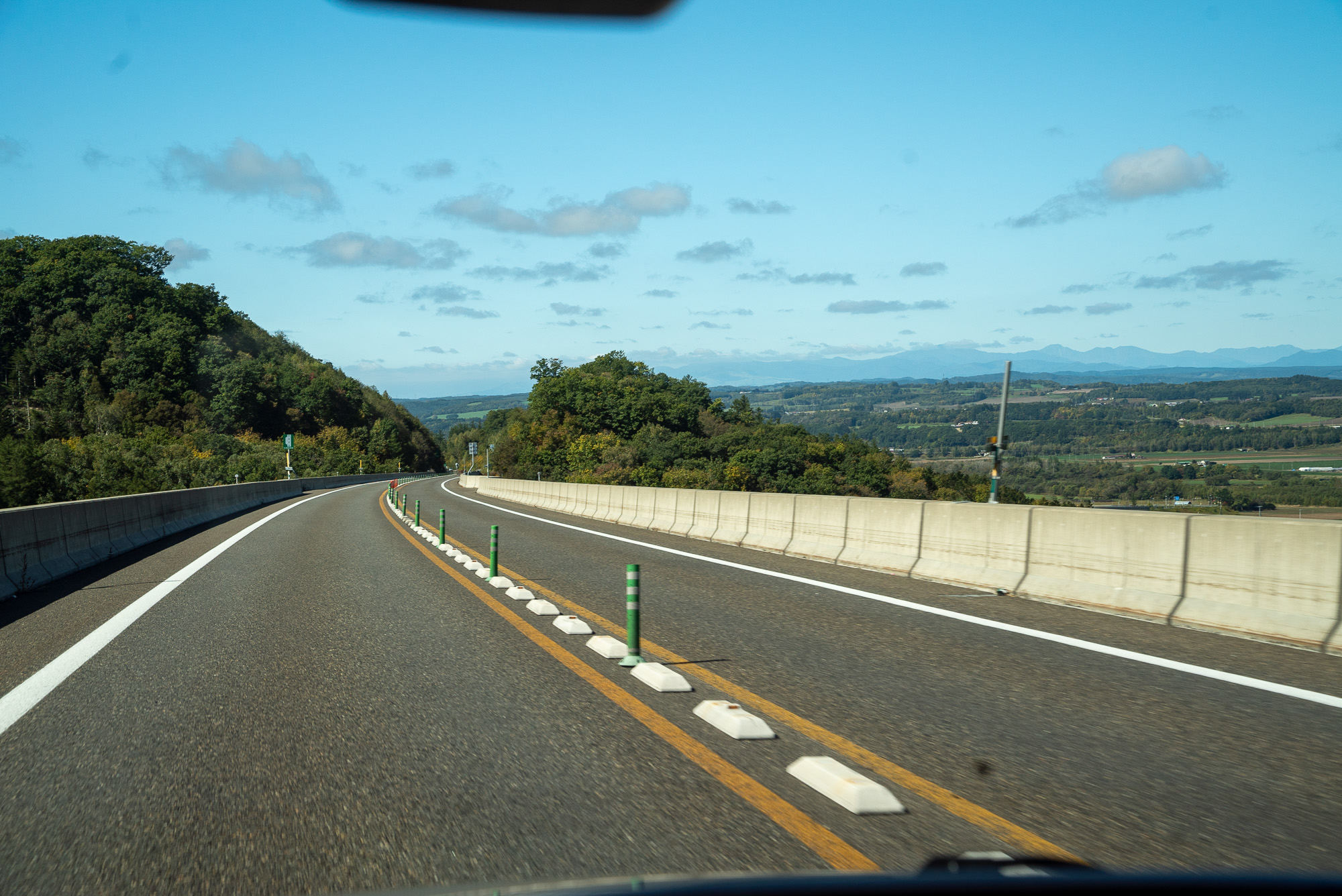
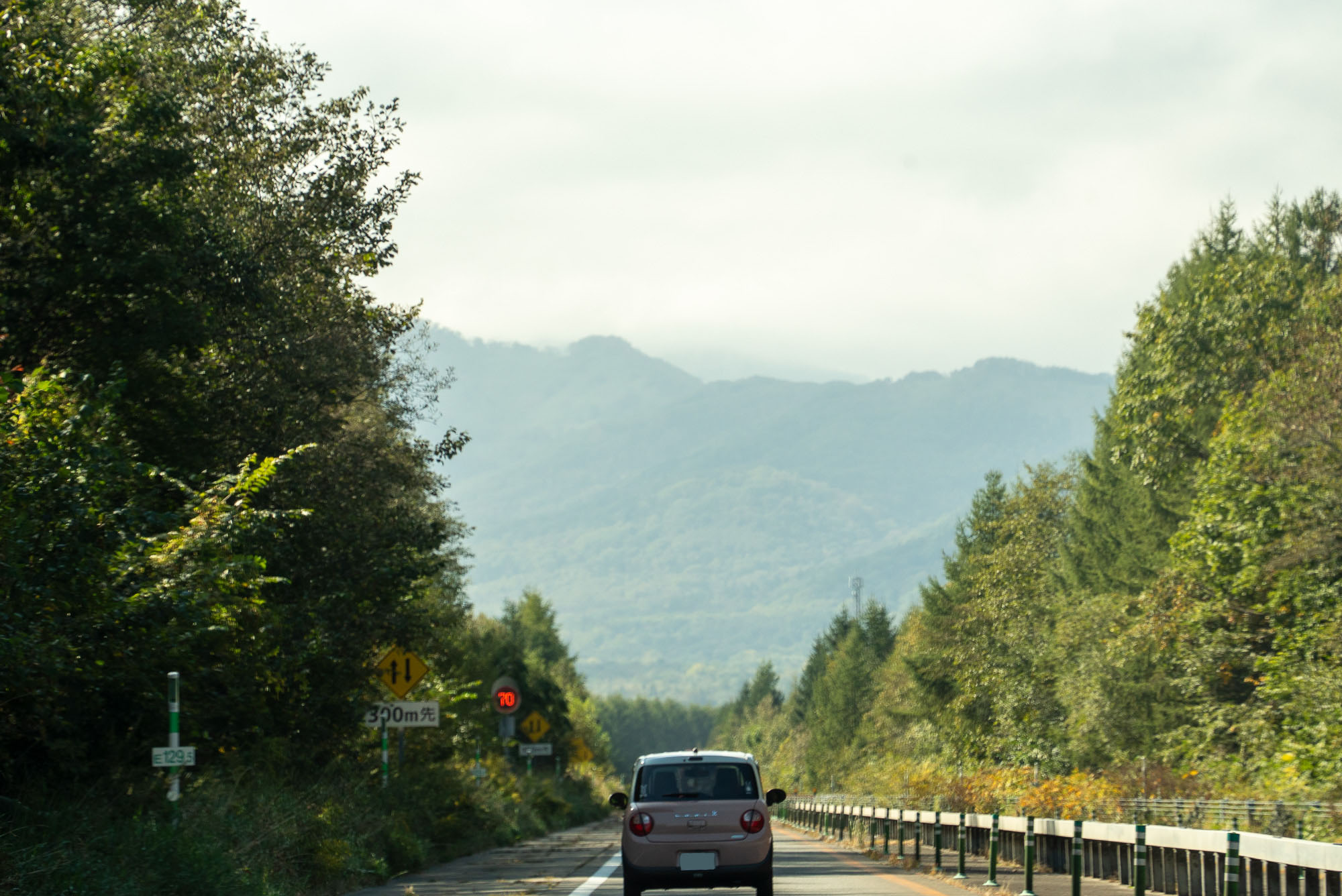
First we stayed very close to the speed limit (usually 70, sometimes 80 km/h), but since after the first 30 minutes every grandma and bus overtook us, Charlie checked the internet to see what’s going on. She found out that due to precedent from a case from the last century, you cannot take photos of Japanese people unless they are actually comitting a crime. Apparently, driving above the speed limit on highways is just some sort of misdemeanour (as long as you stay below 39 km/h of additional speed) for which they cannot take a photo. Which is why everyone without exception is driving 30 km/h above the given speed limit. (Do not take our blog as a legal reference when driving above the speed limit!)
speed limit on the paid for highway: 70 km/h – the small car in front of us is going 100
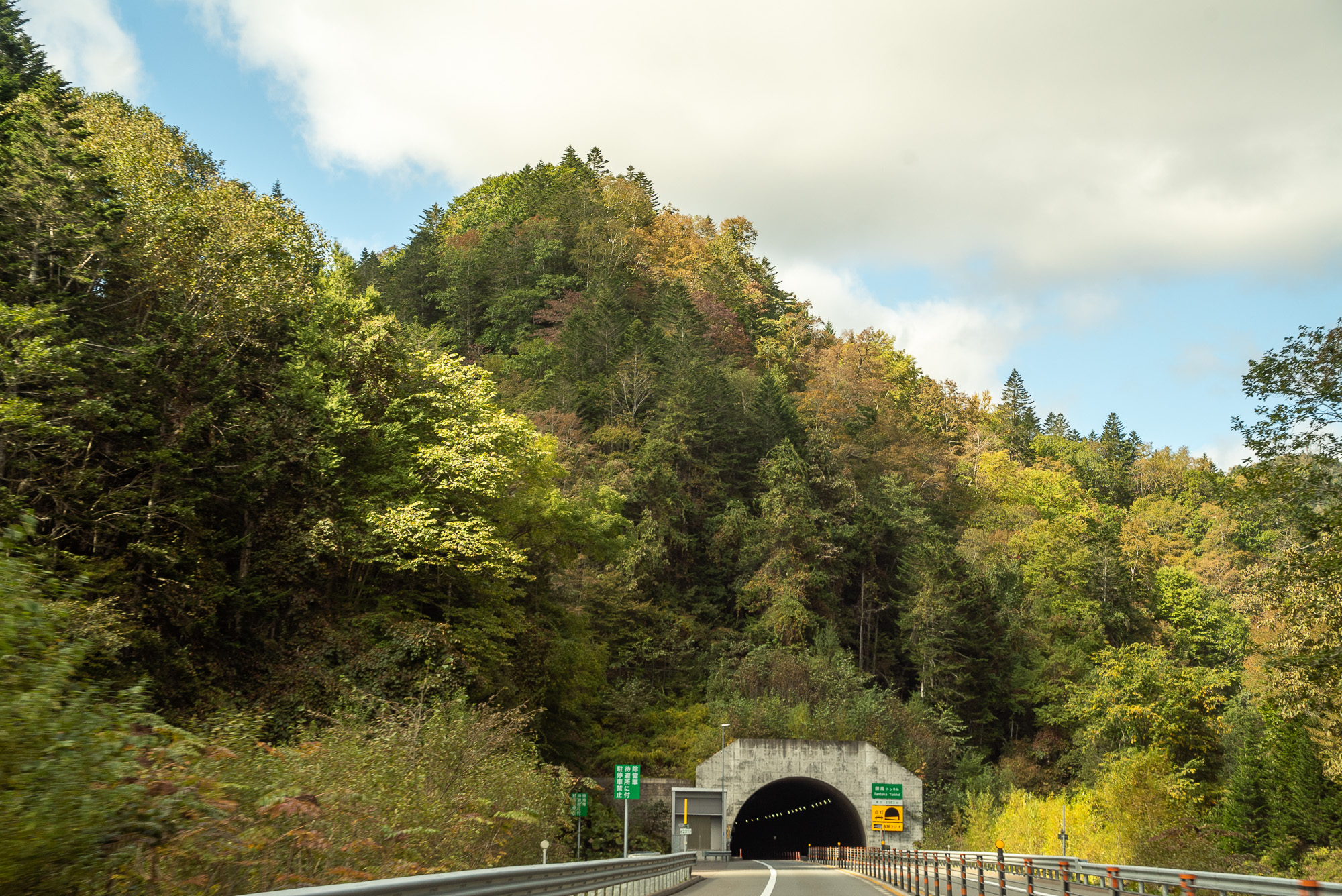
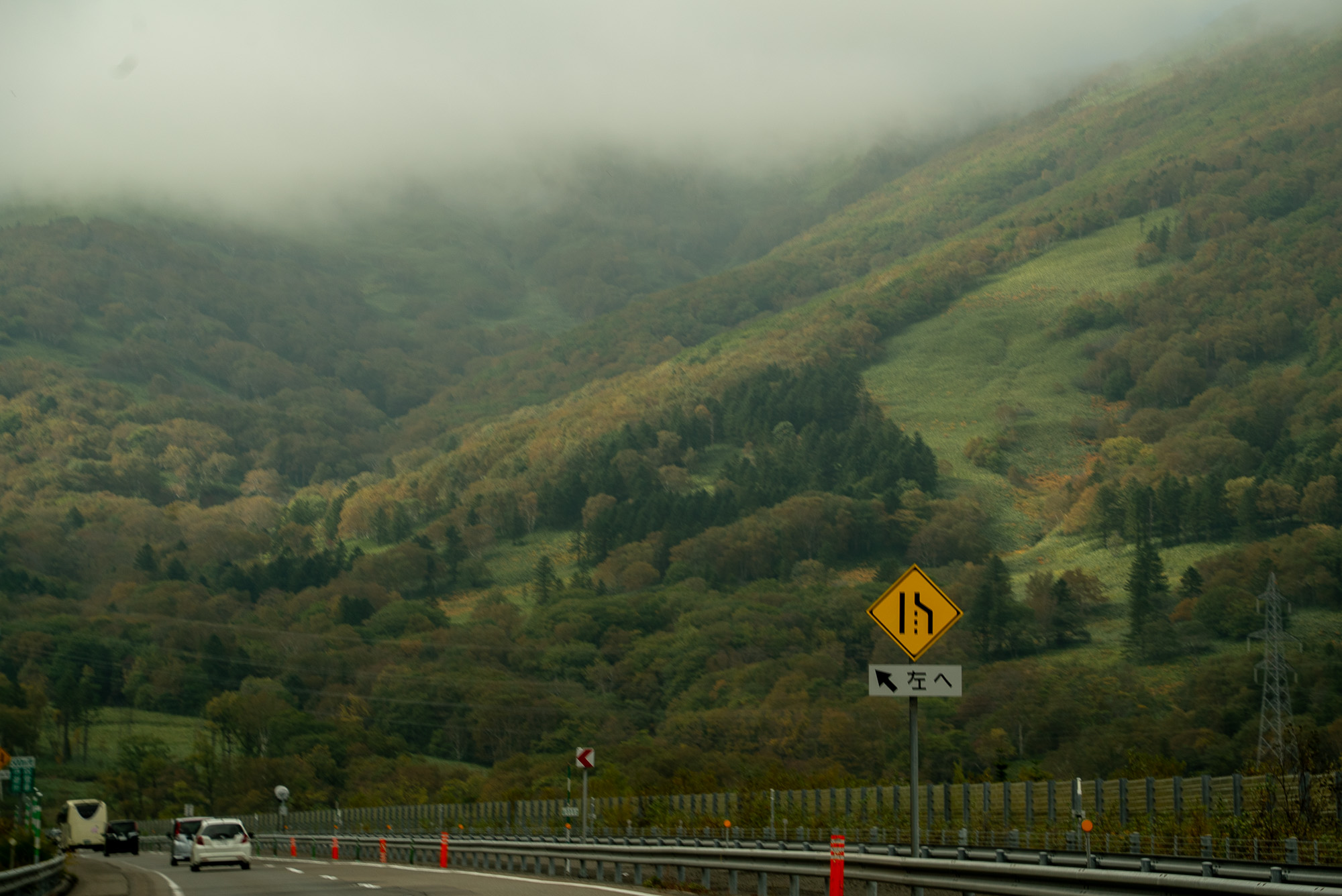
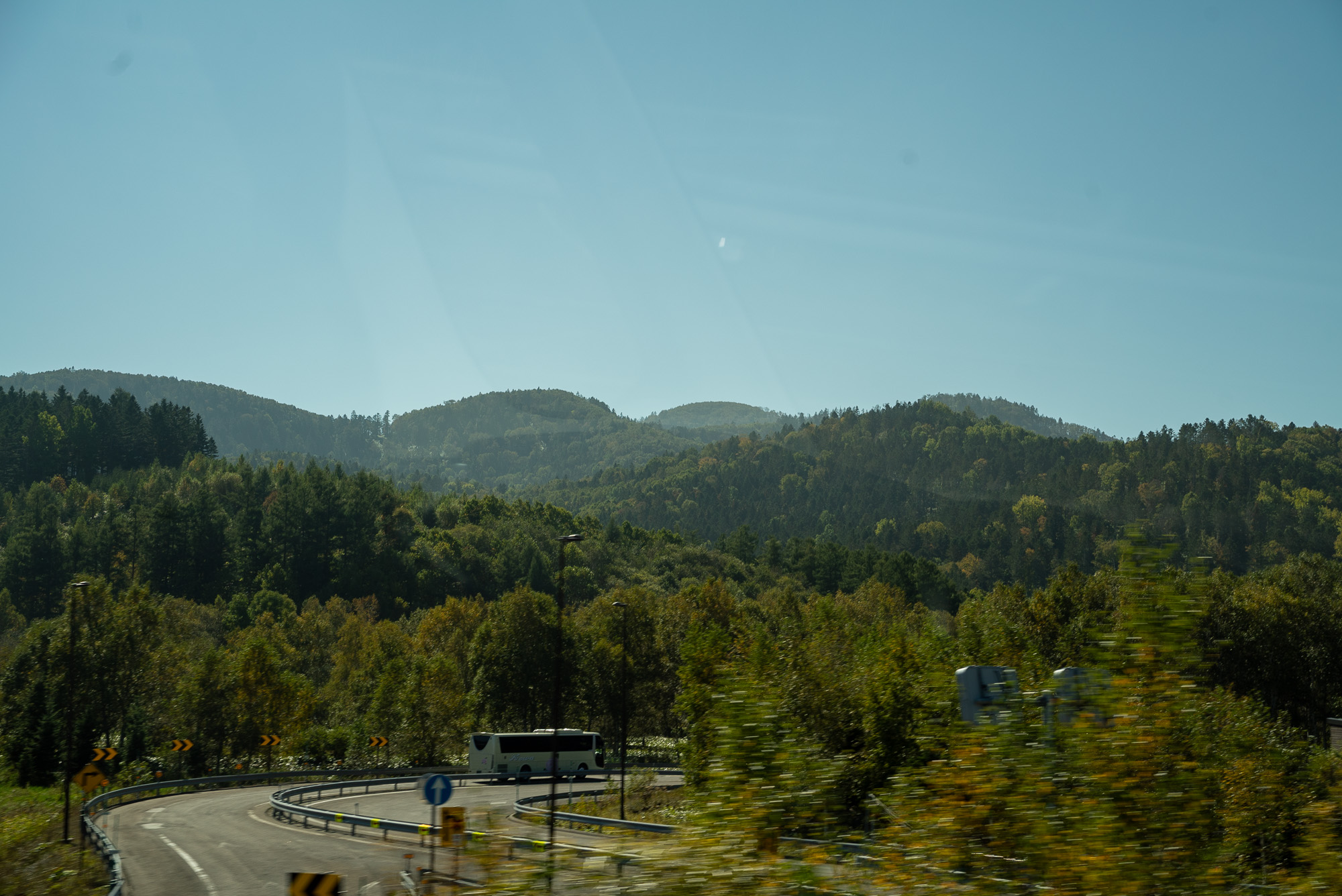
The drive went smoothly and on the way we got to enjoy some more of the beautiful Hokkaido landscape!
Here is another bridge that is equipped with the anti-owl-poles.
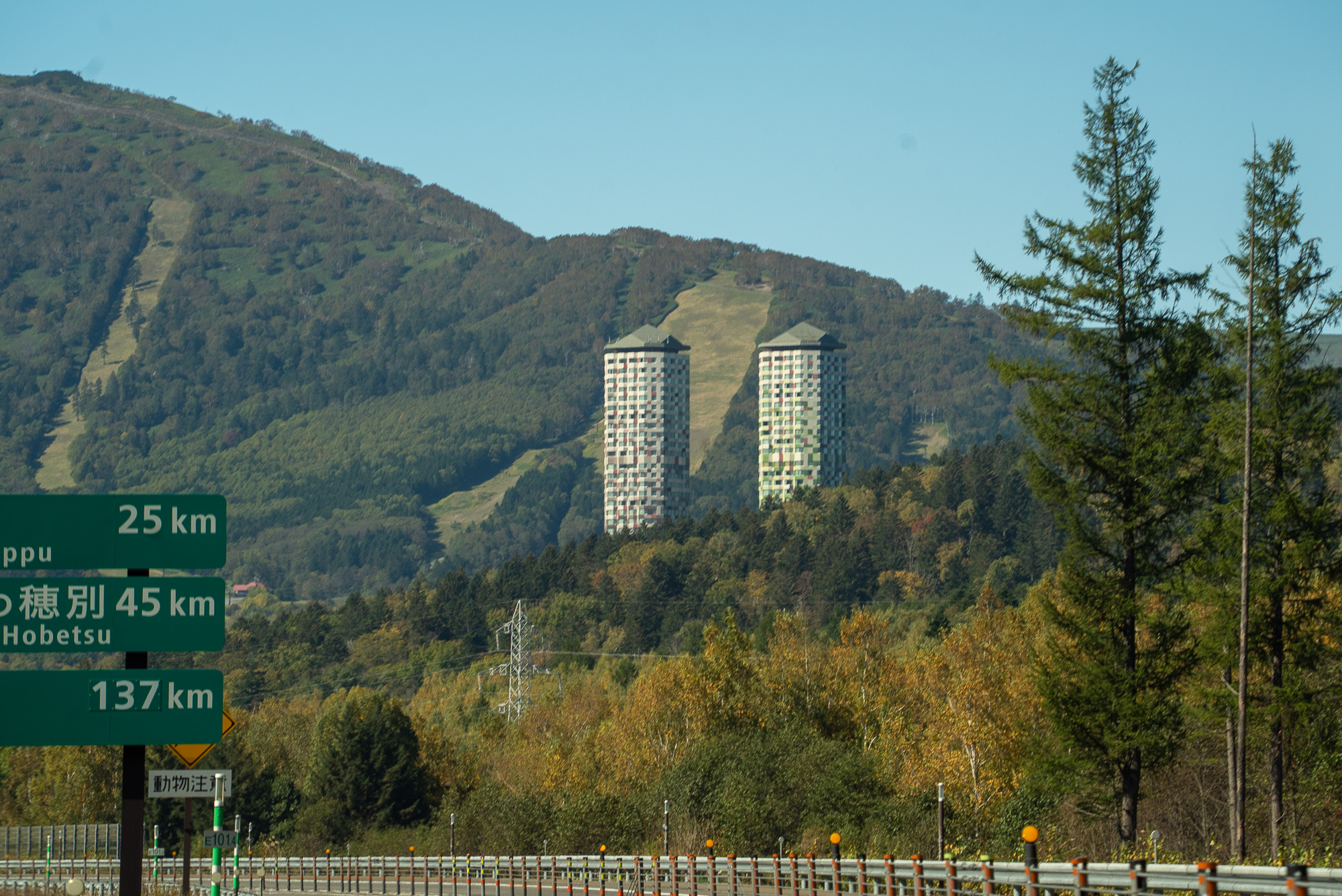
These are 2 of the 4 highrises of Tomamu. We actually wanted to go there (there are a bunch of touristy things to do, all cloud-themed), but we cut it for time.
At the end oft the day we were alone in the parking lot – we didn’t put the car so neatly in front of the rock on purpose!
Sorry for the long break! After Kushiro, we suddenly didn’t have any time!
Hopefully we can make up for it with more posts in the coming days!
On September 27th and 28th we were in Kushiro.
On the first day we relaxed a bit and went to a Japanese Supermarket for the first time, to buy some frsh ginger for Charlie (she was still a bit sick).
And the stereotypical Japan-story happened to us: We couldn’t find fresh ginger or personel that wasn’t occupied at the register, so we asked another customer who couldn’t find the ginger either. we thought we had settled on “生姜ないならしょうがない” (a pun: “when there’s no ginger, it can’t be helped” but it’s the same sound twice “shouga nai nara shouga nai” – Jörg was praised for his good Japanese) so we went our respective ways – or so we thought! 5 minutes later, the lady came running and told me that she found the ginger and that it only comes in huge portions though. She apparently found an employee and asked her and then she still had to find us again in this huge store, since we abandoned the thought of buying ginger that day 5 minutes ago. I guess anyone who stays in Japan for a week and interacts with the people a tiny bit probably has a story like this.
Additionally, our AirBnB host asked us what we were gonna do the next day and when we told him that we are going to take the bus to the marshlands he offered to drive us to the bus station since it is so far to walk and only 5 minutes with the car. Unfortunately we were a bit late the next day and it took more like 9 minutes with the car and so we endet up just so missing the bus, whereupon our host suggested just driving us to the marshlands himself. He didn’t even accept money for gas and the marshlands are rather outside the city!
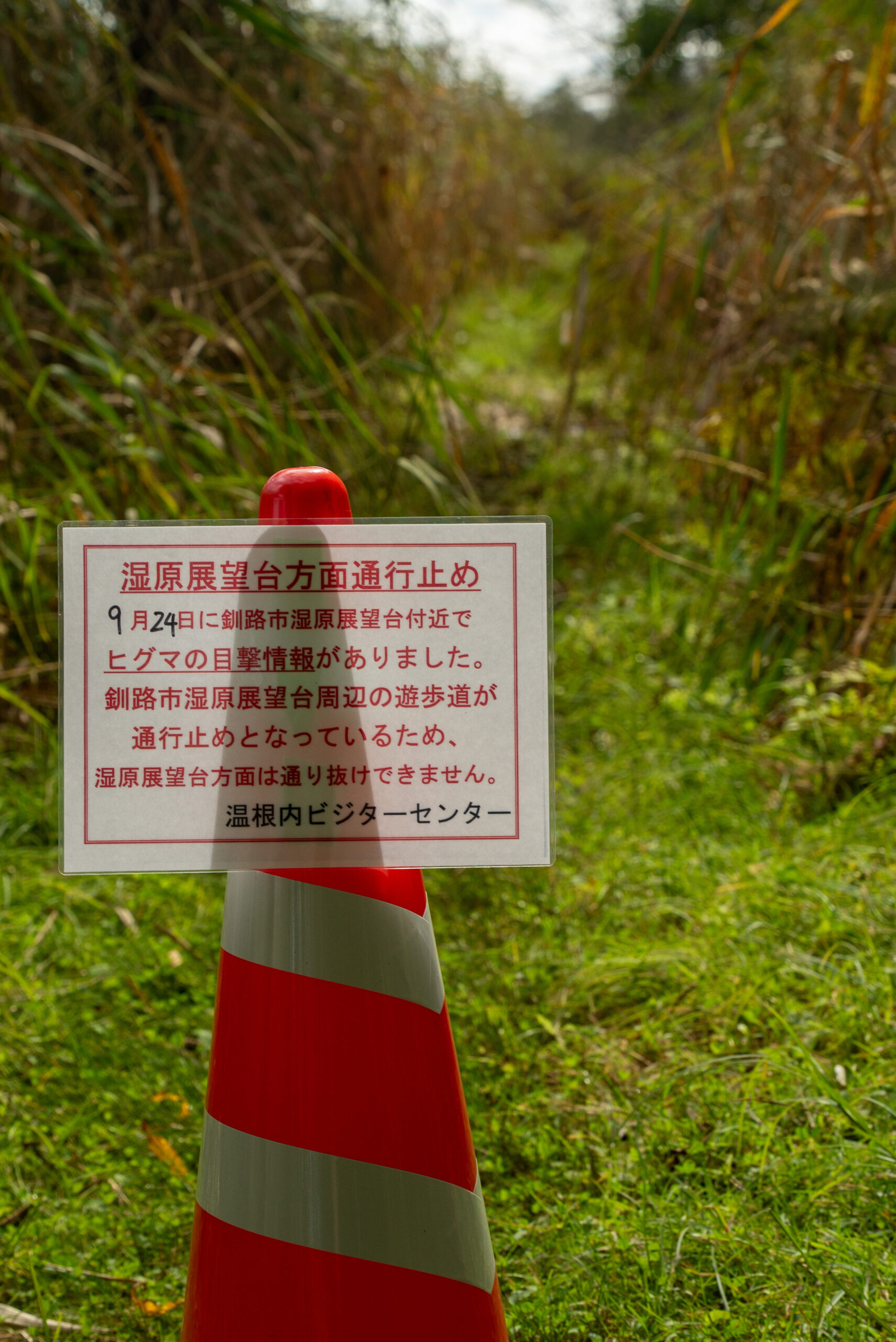
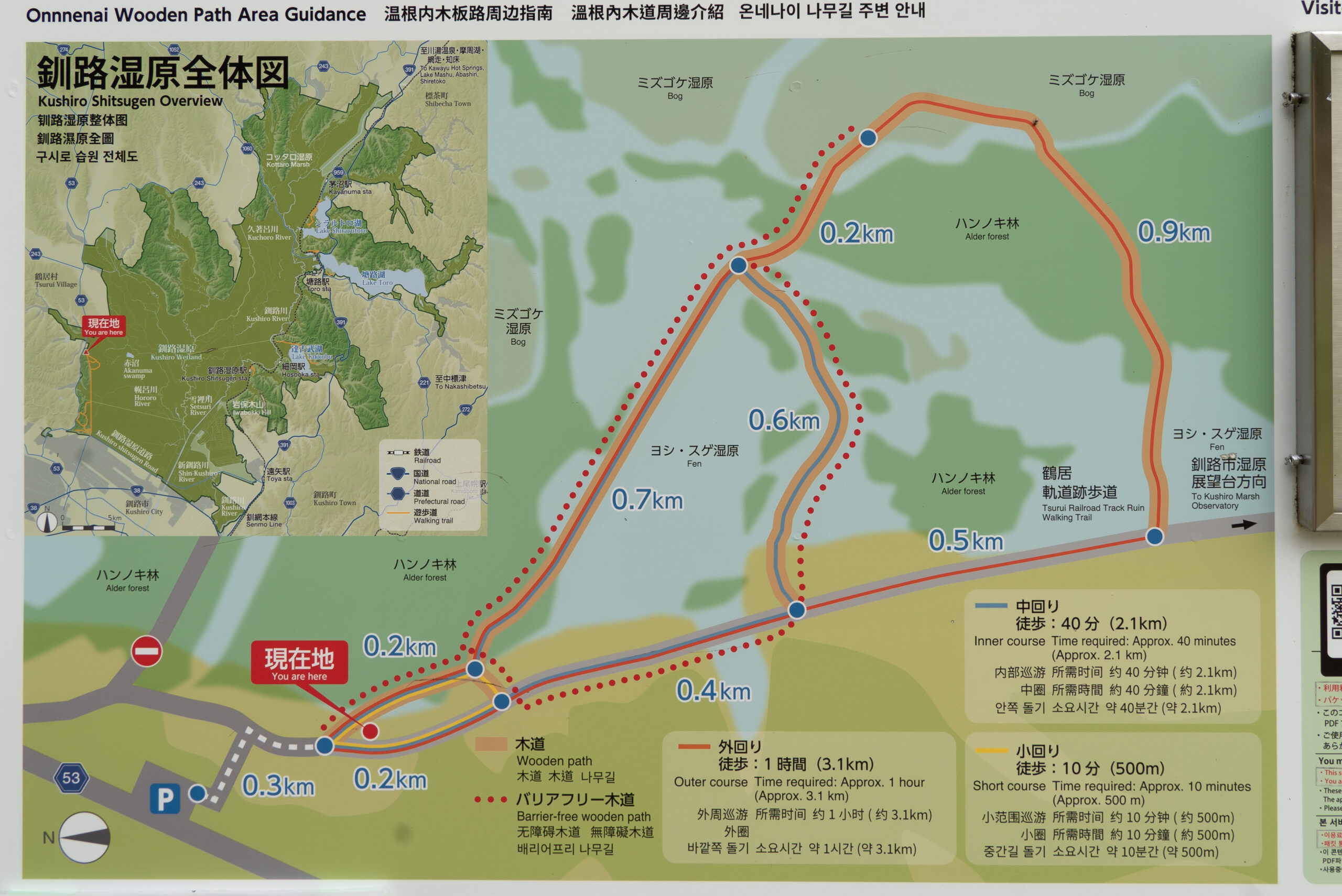
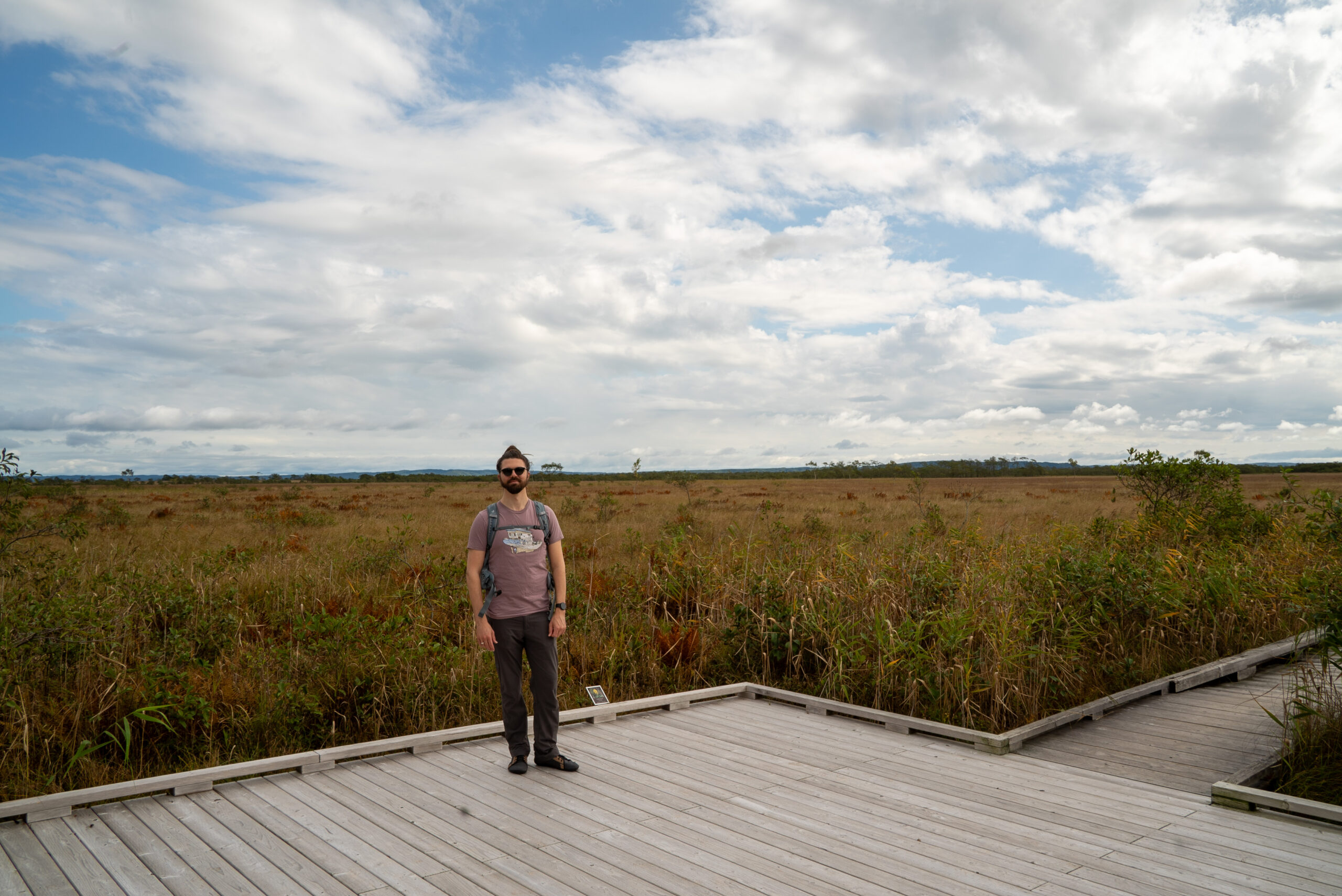
We got lucky missing the bus though since we would have taken the bus to the observatory which has a boardwalk through the forest and is connected to the Onnenai visitor center by old train tracks that have been repurposed as a hiking path. Our plan was to first walk around the boardwalk then hike to the visitor center, but our host accidentally drove us directly to the visitor center. No problem – we’ll just do the track the other way around! However, when we asked for the busplan in the center, we were told that a bear had been sighted last week and therefore the hiking path and the whole boardwalk around the observatory had been closed off.
This is the path we wanted to walk.
Our planned route is the one that leads off the map on the right, but we ended up just walking the big loop.
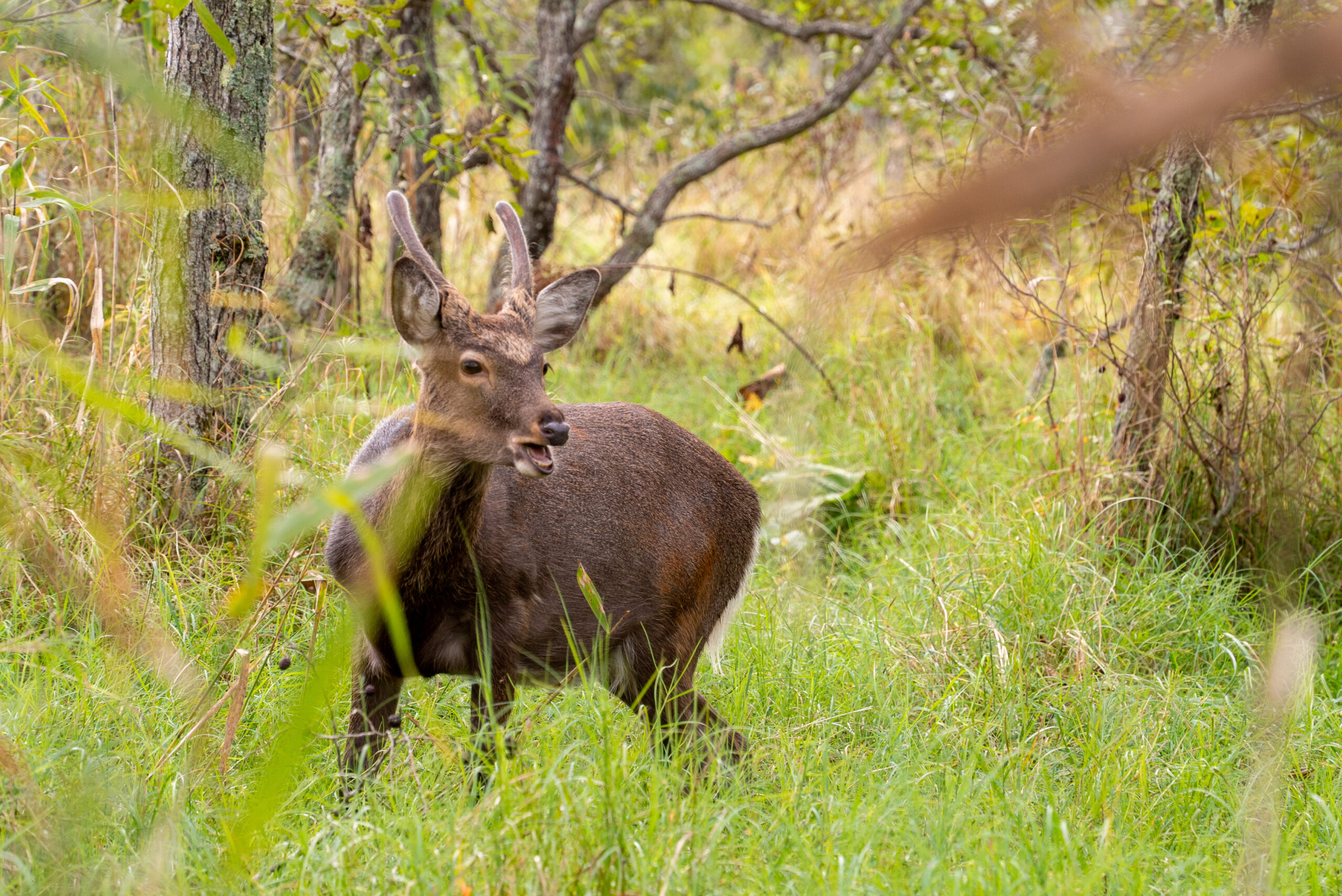
Originally, we would have gone to the observatory first, alighted the bus, noticed that everything is closed and would have been stuck there for 2 hours waiting for the bus to the visitor center. Luckly, like this we could just take a lot of time walking the boardwalk around the visitor center. It was interesting, but we were a bit annoyed because Charlie put so much effort into researching the trail between the two points. The trail seems to be less frequented and is barely mentioned on the internet. She had to really dig deep to find out that it actually exists. She planned a nice daytrip and now it was just closed off : ( But, as said, what we did see was nice and just at the end, someone special graced us with their presence! Right at the beginning we saw this beauty here that seem to be utterly undisturbed by the humans on the boardwalk.
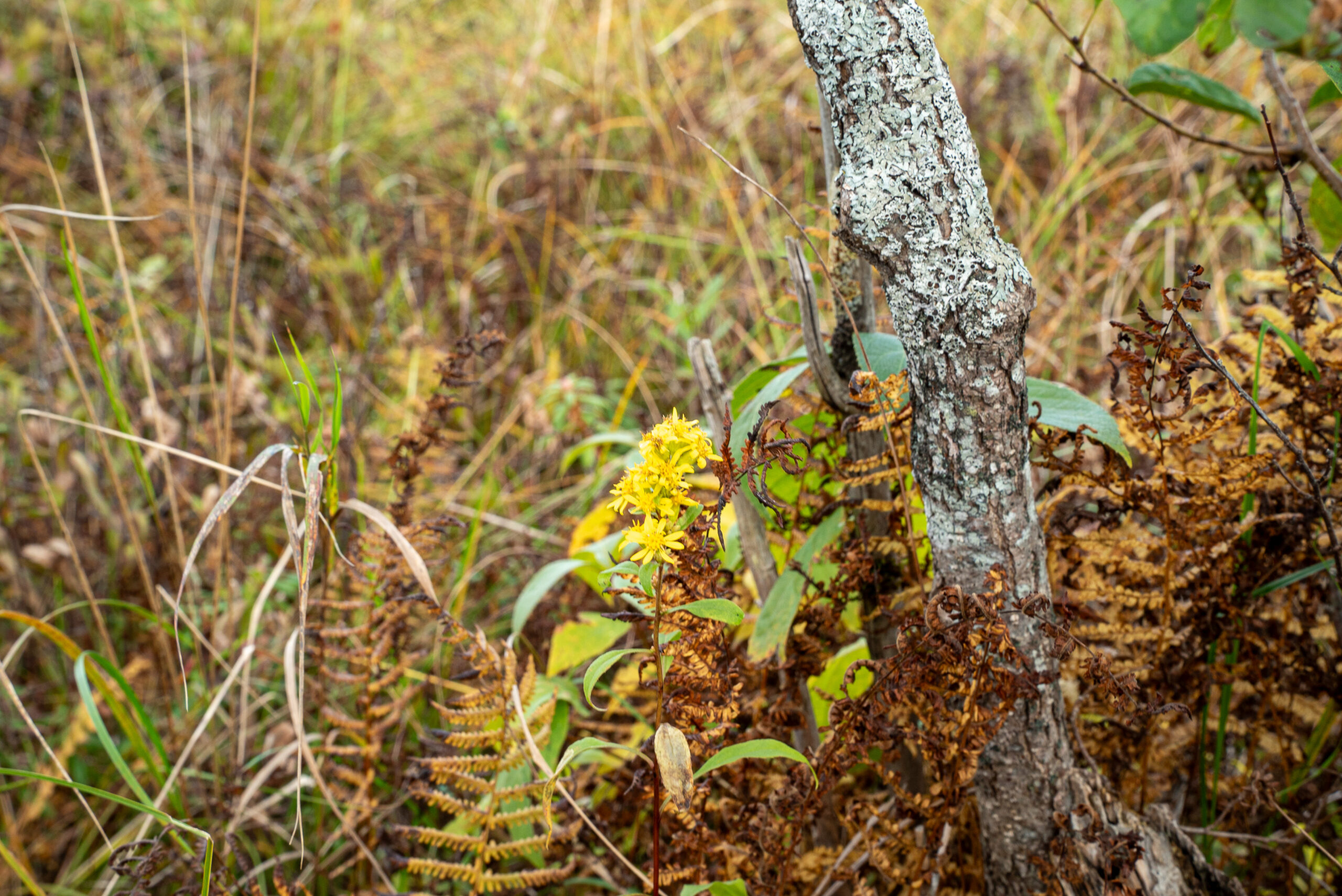
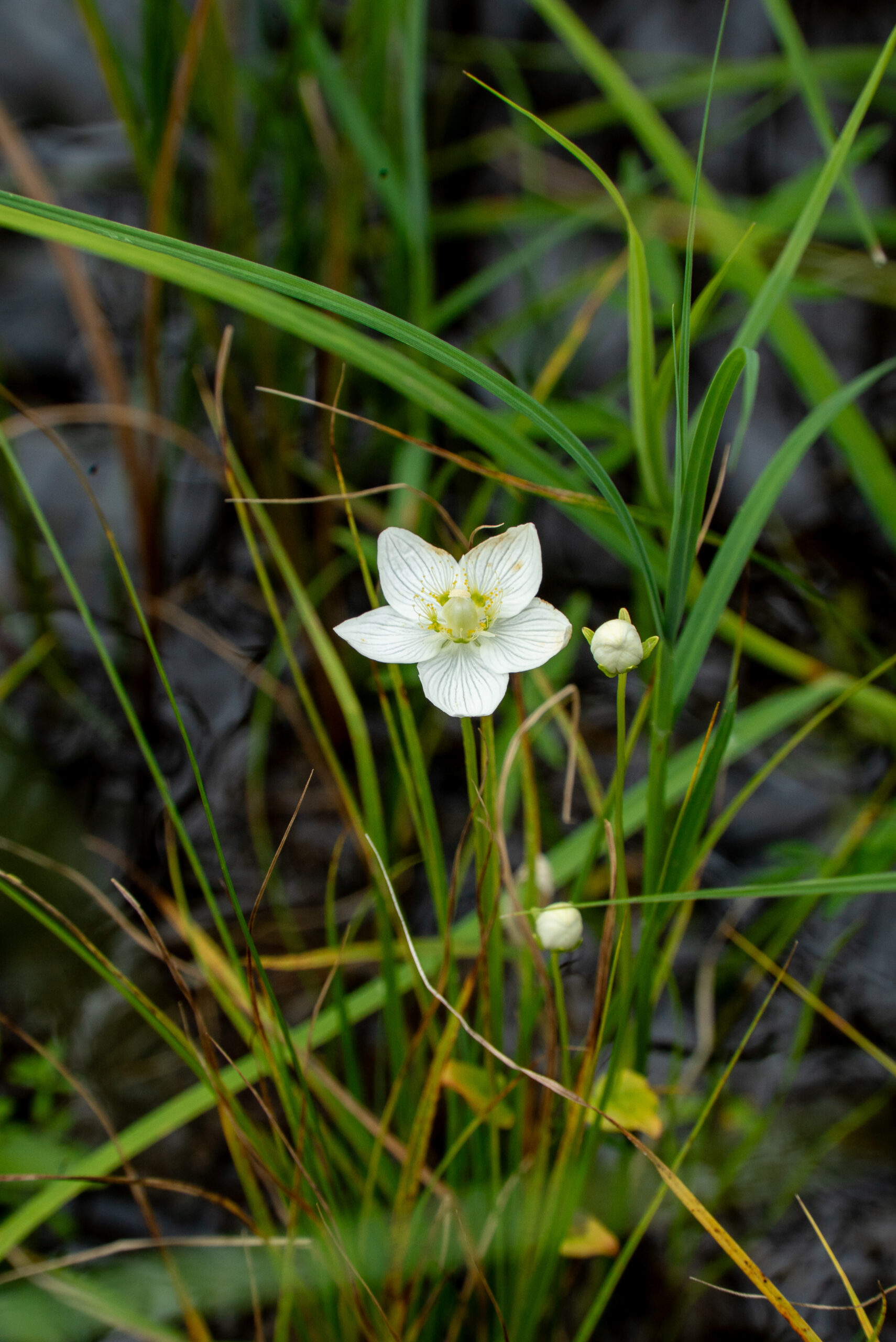
There weren’t many flowers left at this time, but we managed to spot a few.
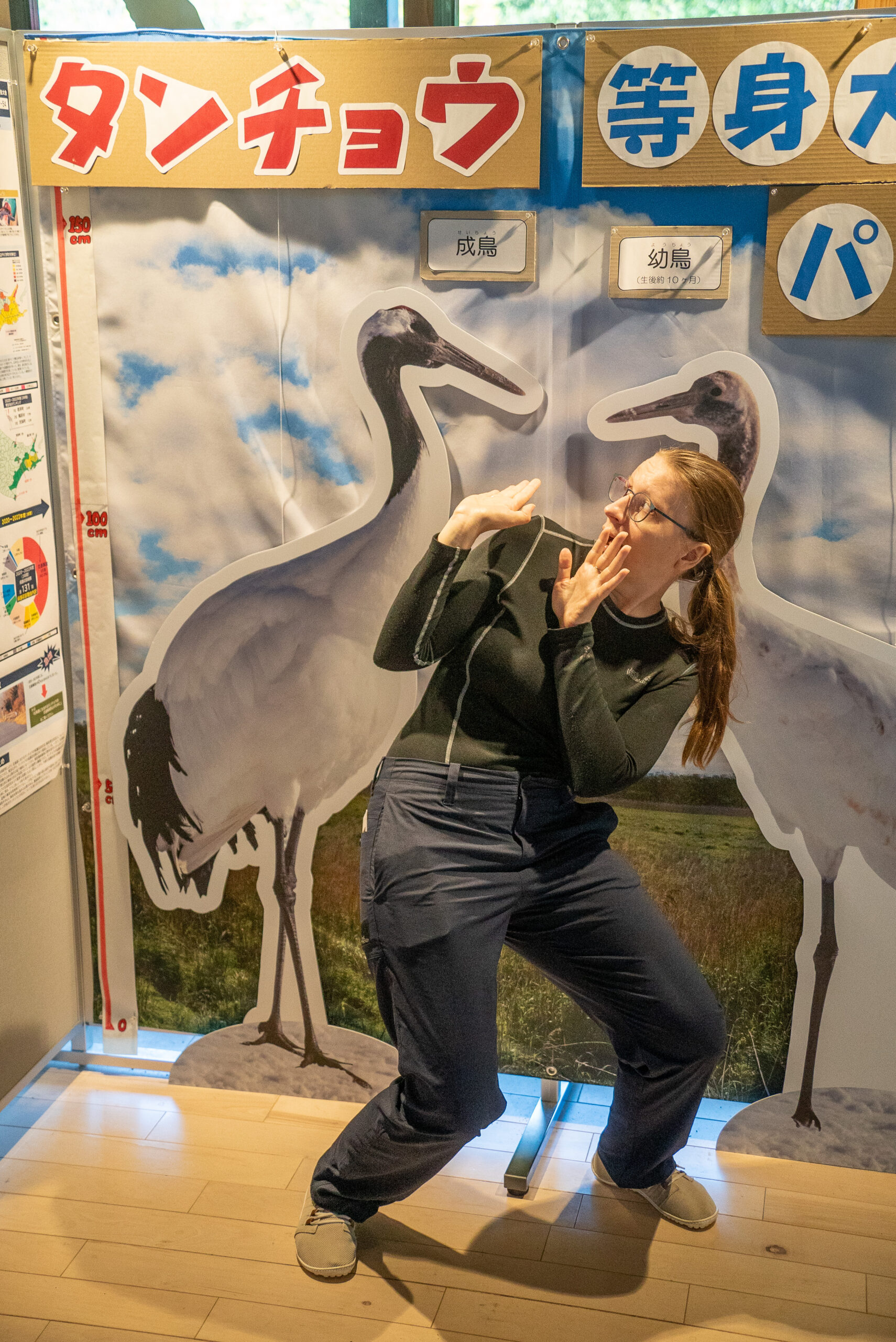
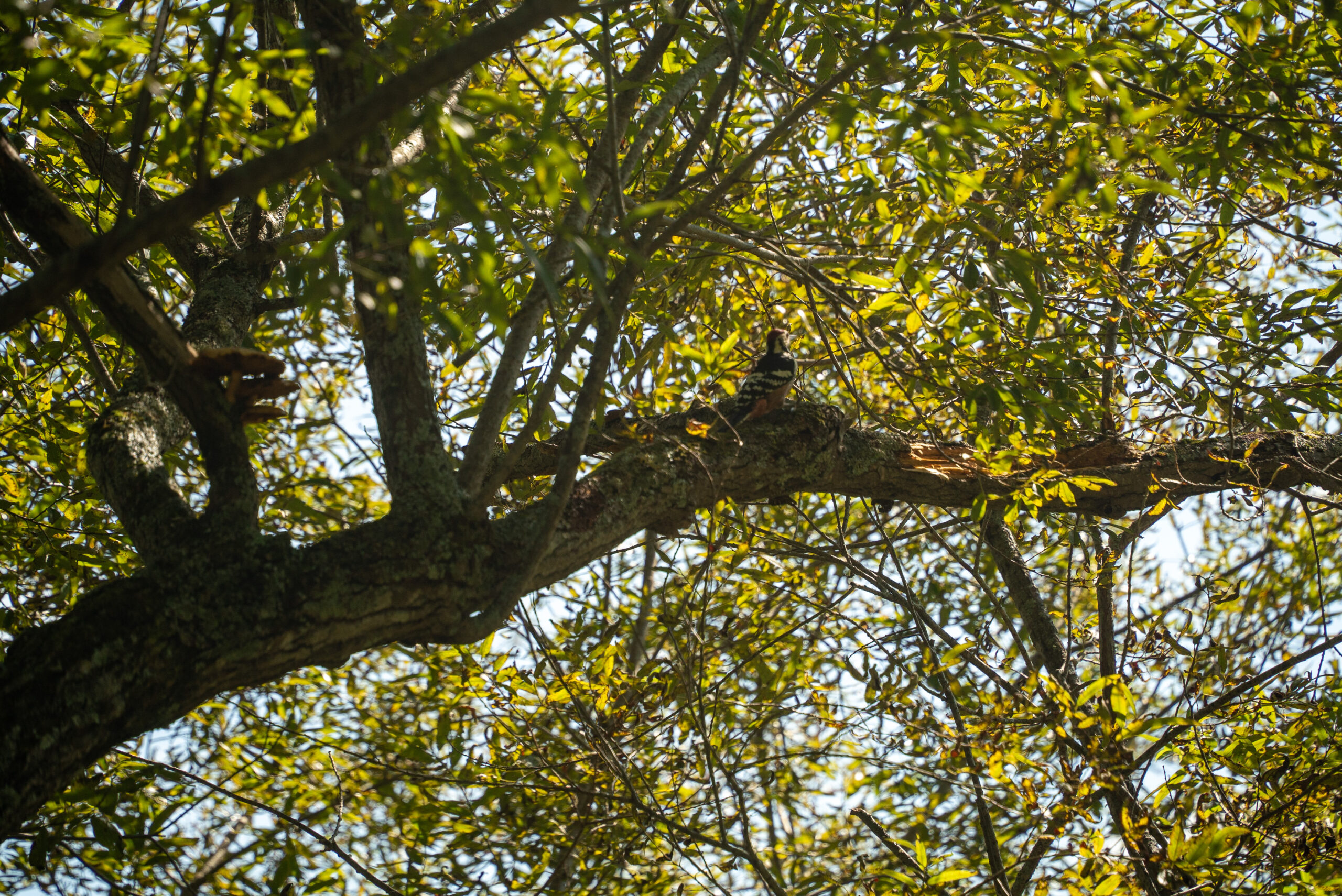
Actually there should have been birds as well (for example cranes like the ones shown on the life-sized printouts in the visitor center), but didn’t see a single one throughout the whole hike. Only when we returned to the visitor center, we saw a single spotted woodpecker.
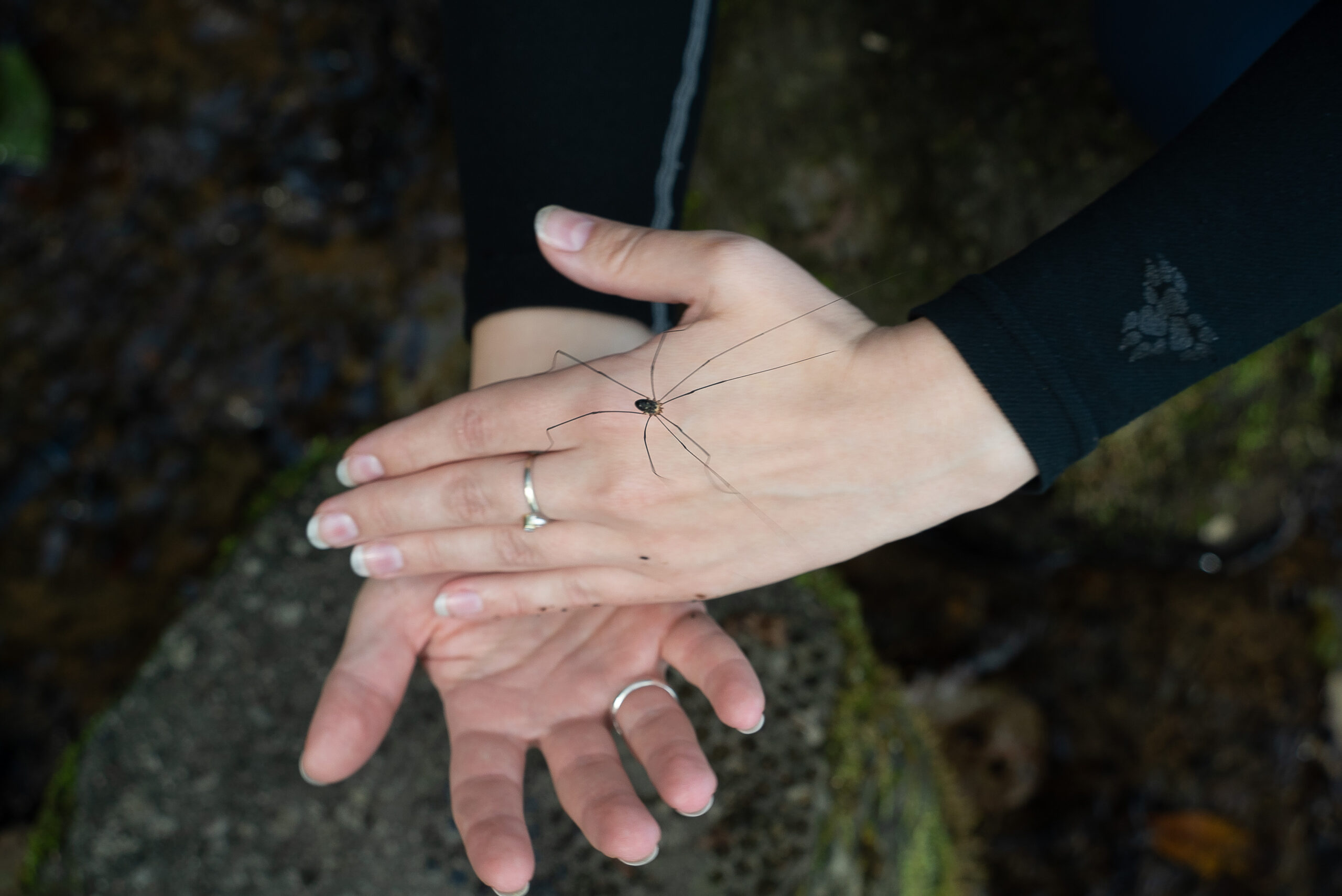
Such nice and big daddy long legs. In the forest we saw many that had especially thin legs that you could only see because they had white knees!
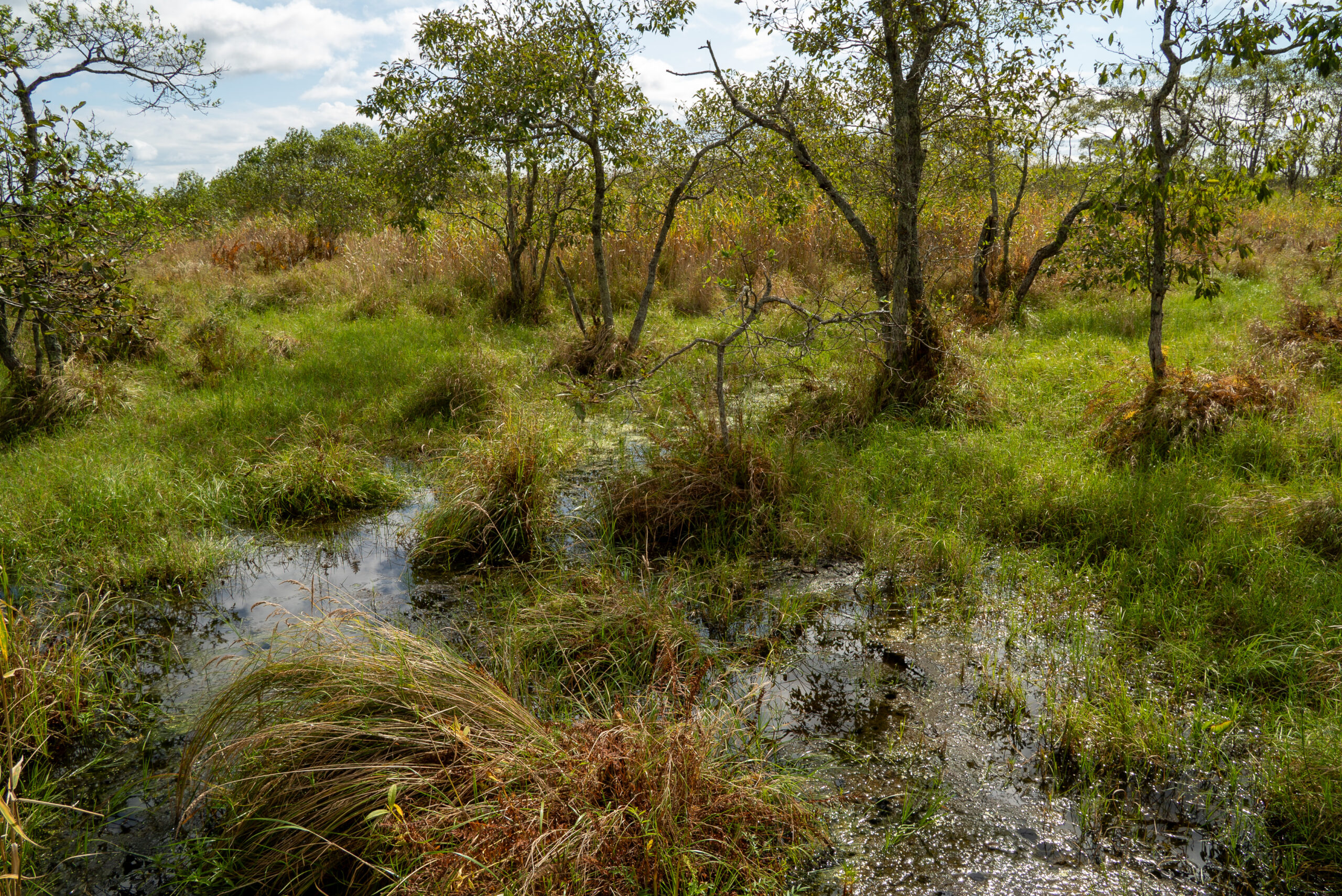
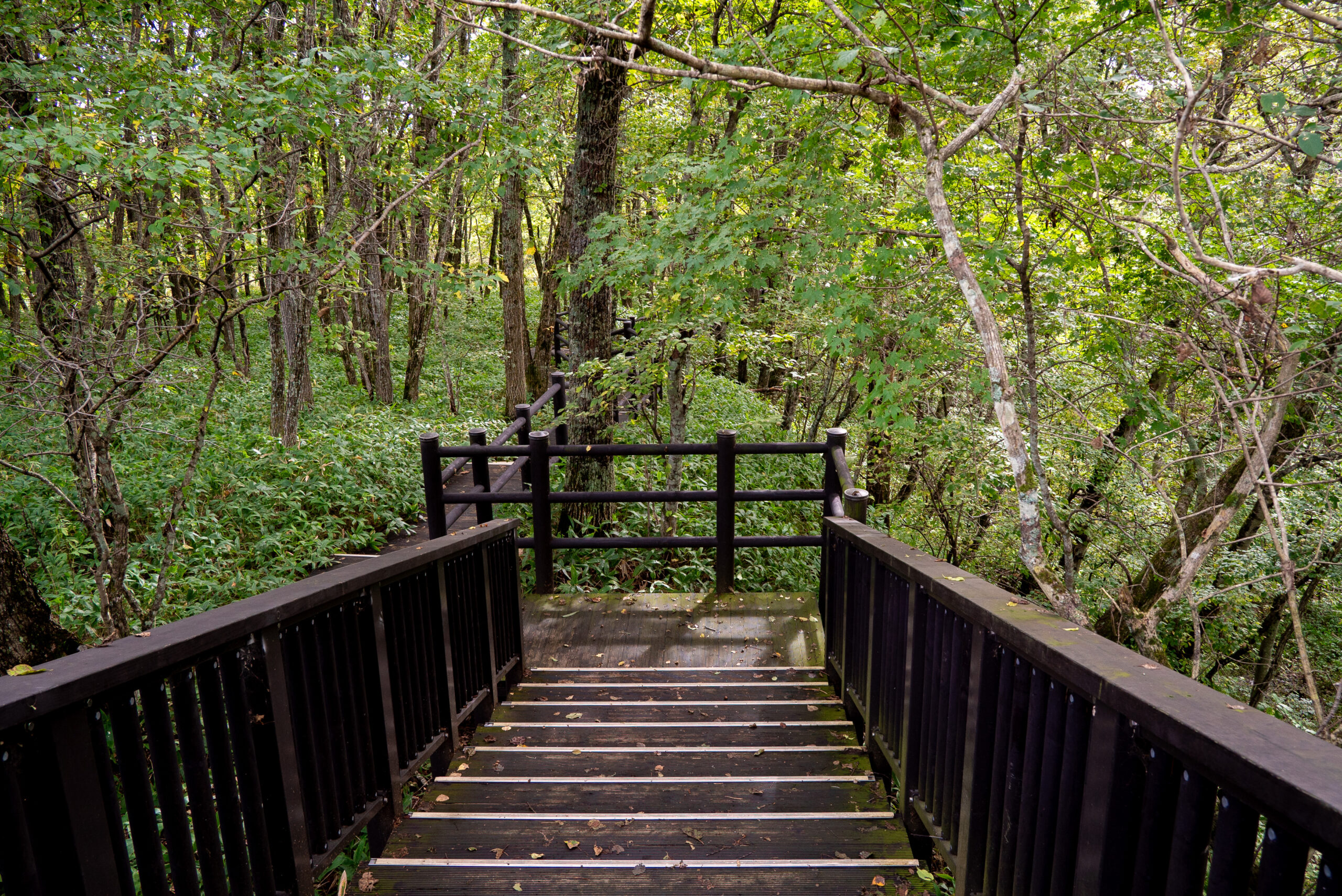
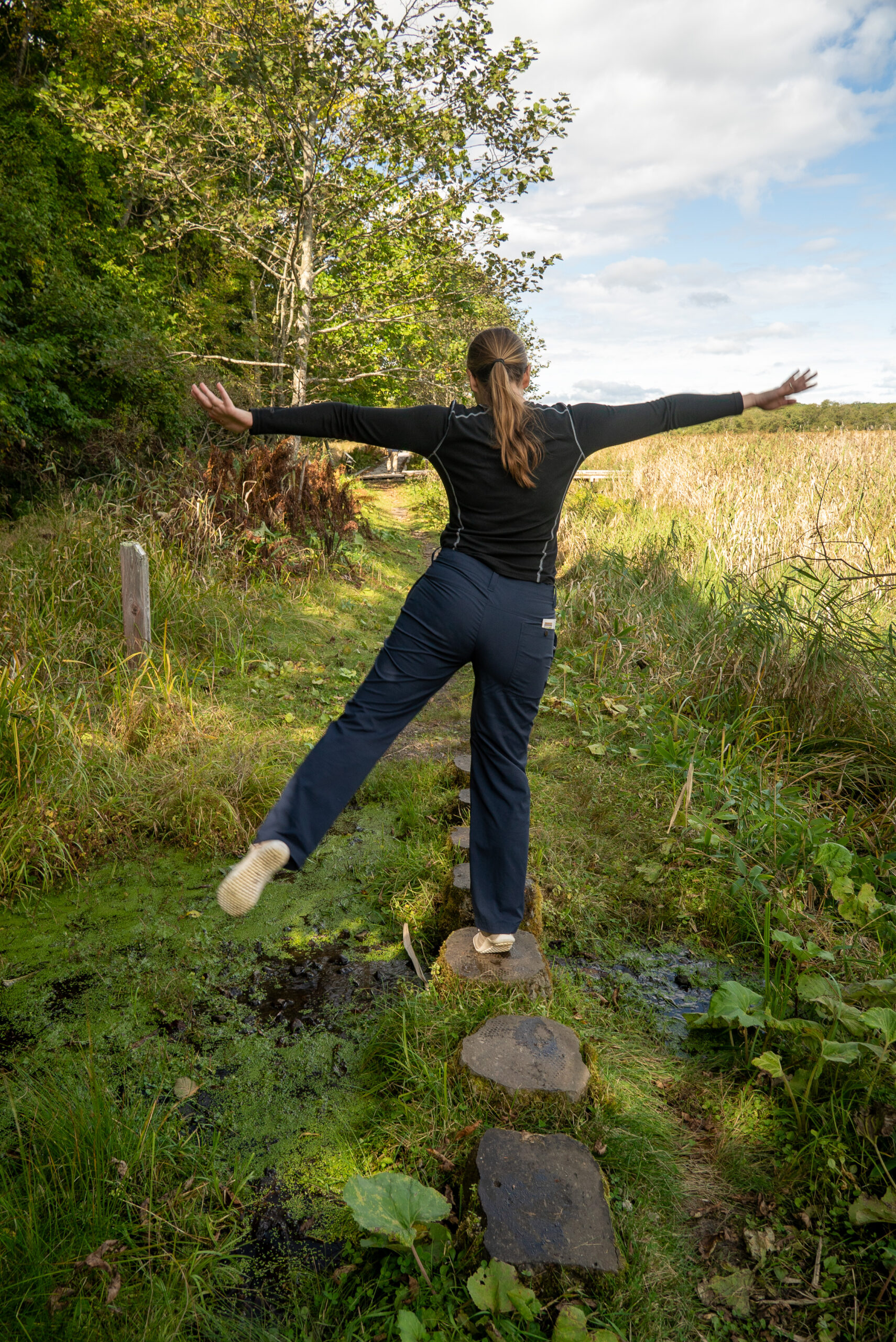
The bog is a bit barren, but it was fun walking through this unusual landscape. The boardwalk makes it really easy to get around and prevents you from falling into a hole which you can’t escape from. It was also an adventure trail at times. We were surprised that a construction like this has not been banned from entry in Japan, but obviously we were happy that at least this path was still open.
We were searching for a salamander that came up to a stone for sunbathing the whole time, but unfortunately we didn’t spot one. Instead, a snake suddenly appeared and let itself be photographed for a while, before slithering back into the undergrowth.
Here in the marshlands we first saw the question-and-anser-signs. By now we encountered the same design in Noboribetsu too, which leads us to believe that this might be universal in Japan. The conecept is as follows: on the first sign a question about the area will be asked and if you follow the path you’ll find another sign that gives you the answer and poses a new question. This kind of trail entertainment worked well for us, even though we got most of the questions wrong.
Stay strong, little lonesome tree!
We walked at an extremely leasurely pace, since we had a much longer tour planned. Nontheless we were done with the trail after 2 hours and took the bus back to Kushiro.
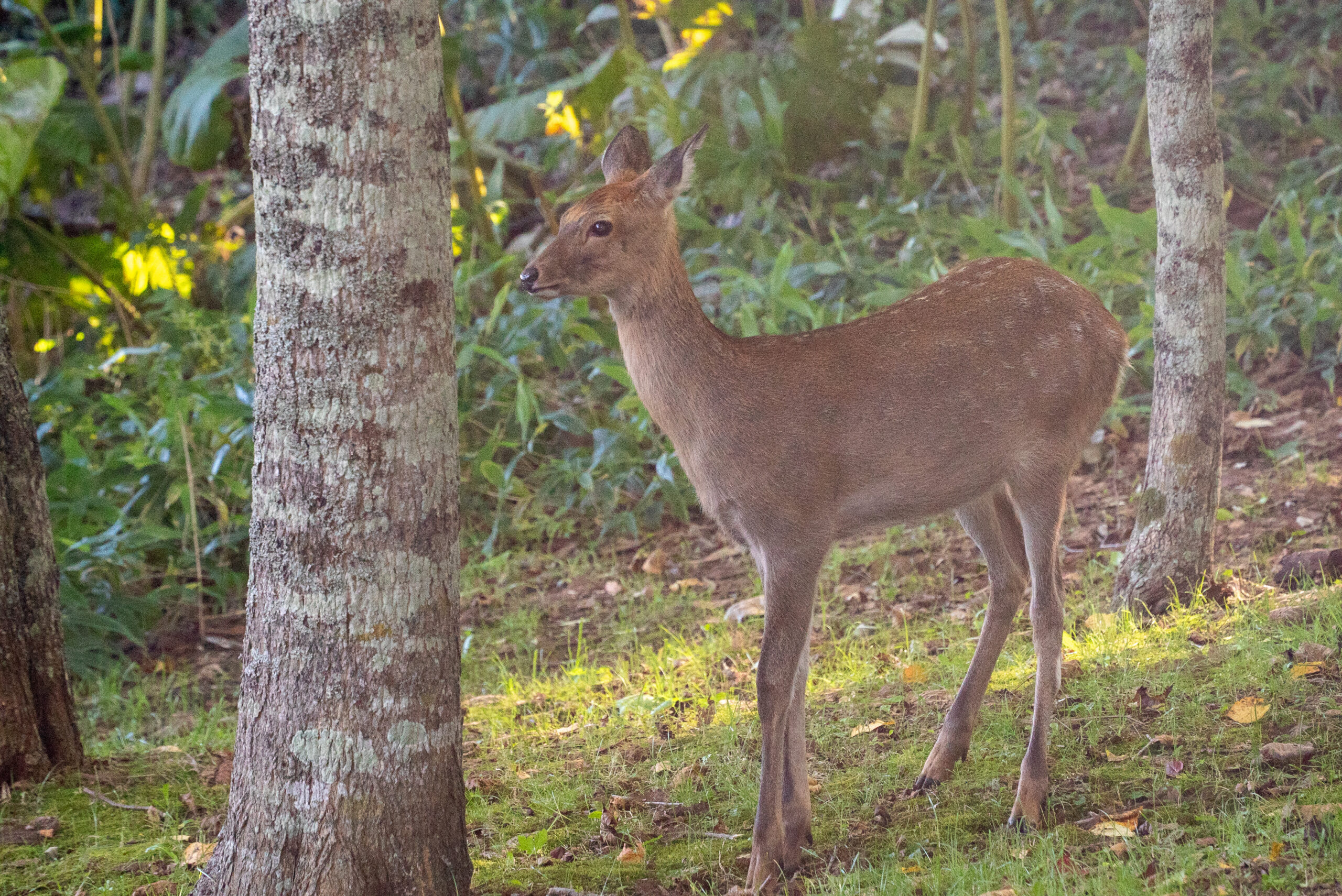
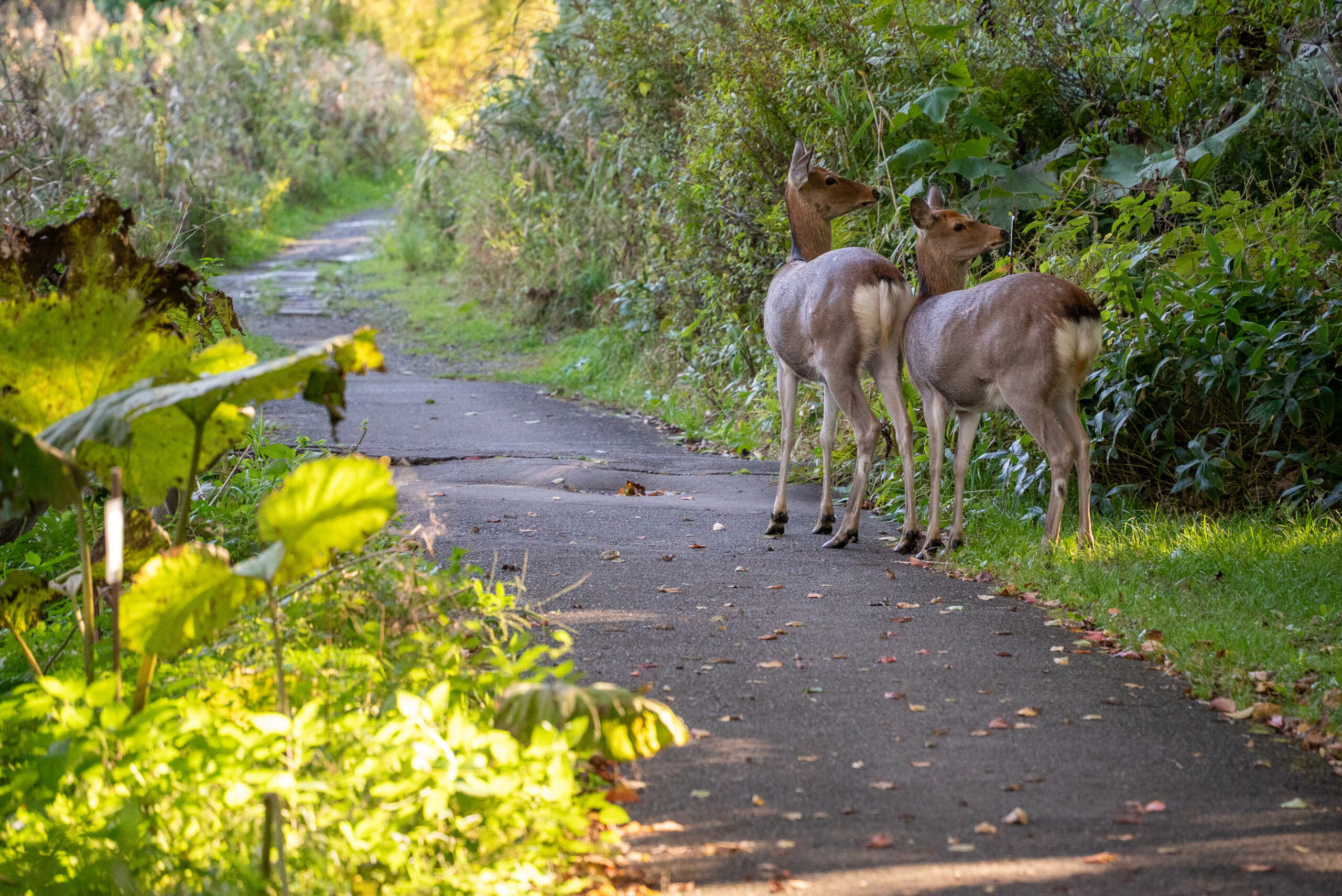
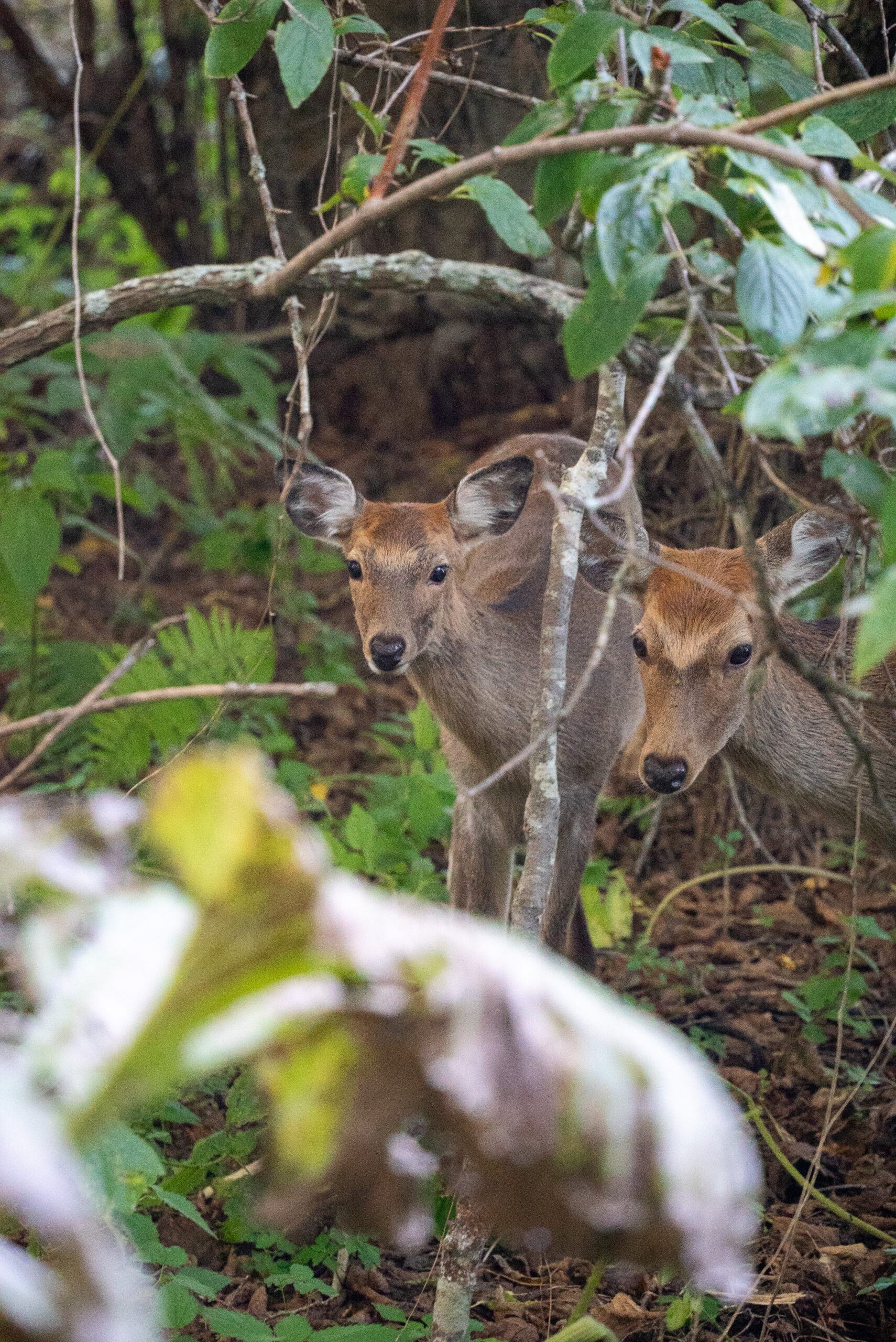
Here we walked through a park in which we amazingly saw deer again that were just crossing the path.
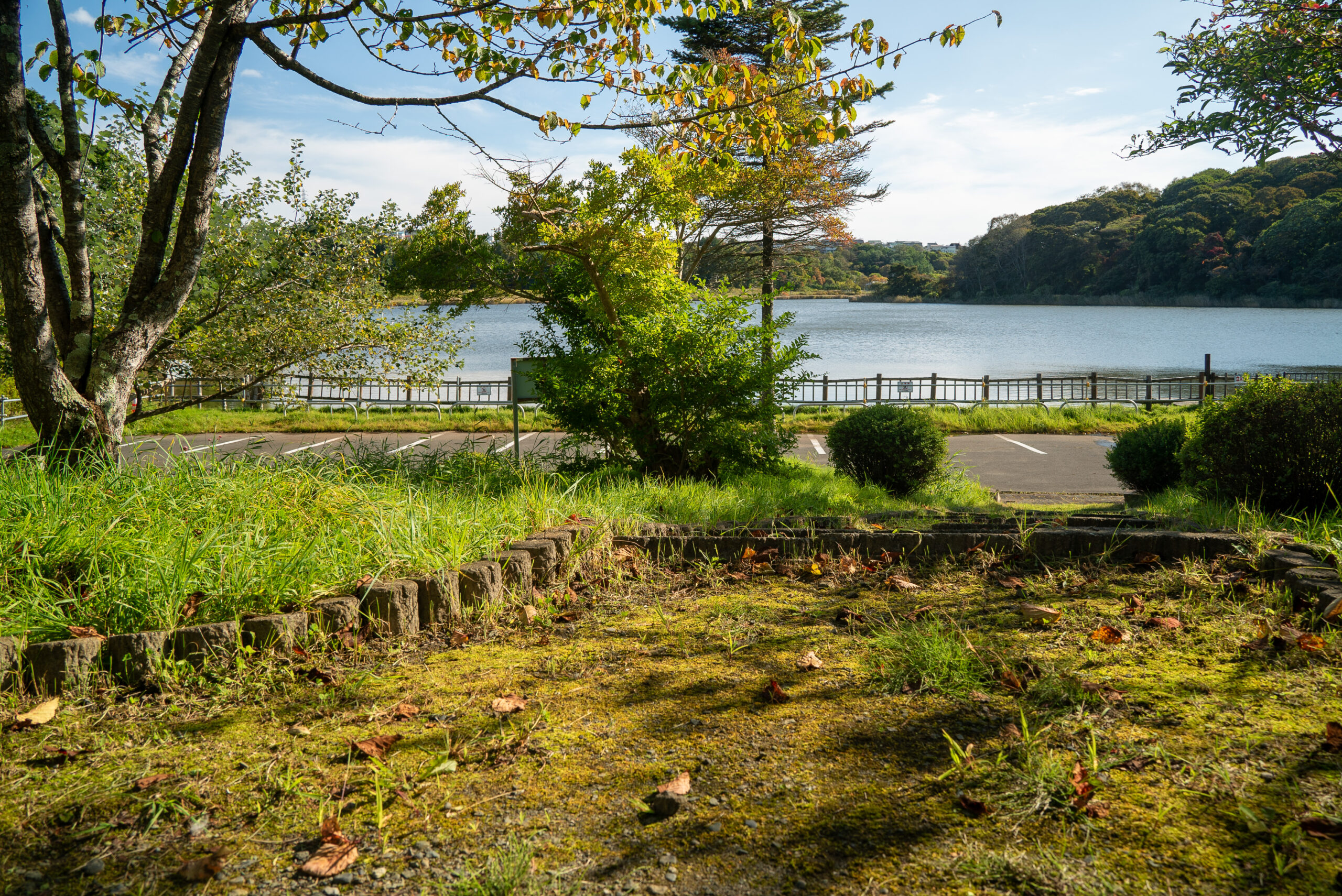
What we didn’t see were other people. It almost made us a bit sad, since we are used to Hamburg in which all pretty parks are used by the residents all the time and here in Kushiro there’s a really gorgeous lake that invites you to stroll around it, but we only saw maybe 6 other people – and Kushiro is not a tiny village. We wondered whether everyone was at work?
We actually wanted to eat here – a vegetarian café that also serves a curry. Unfortunately the owner was at a farmer’s market in a neighbouring town.
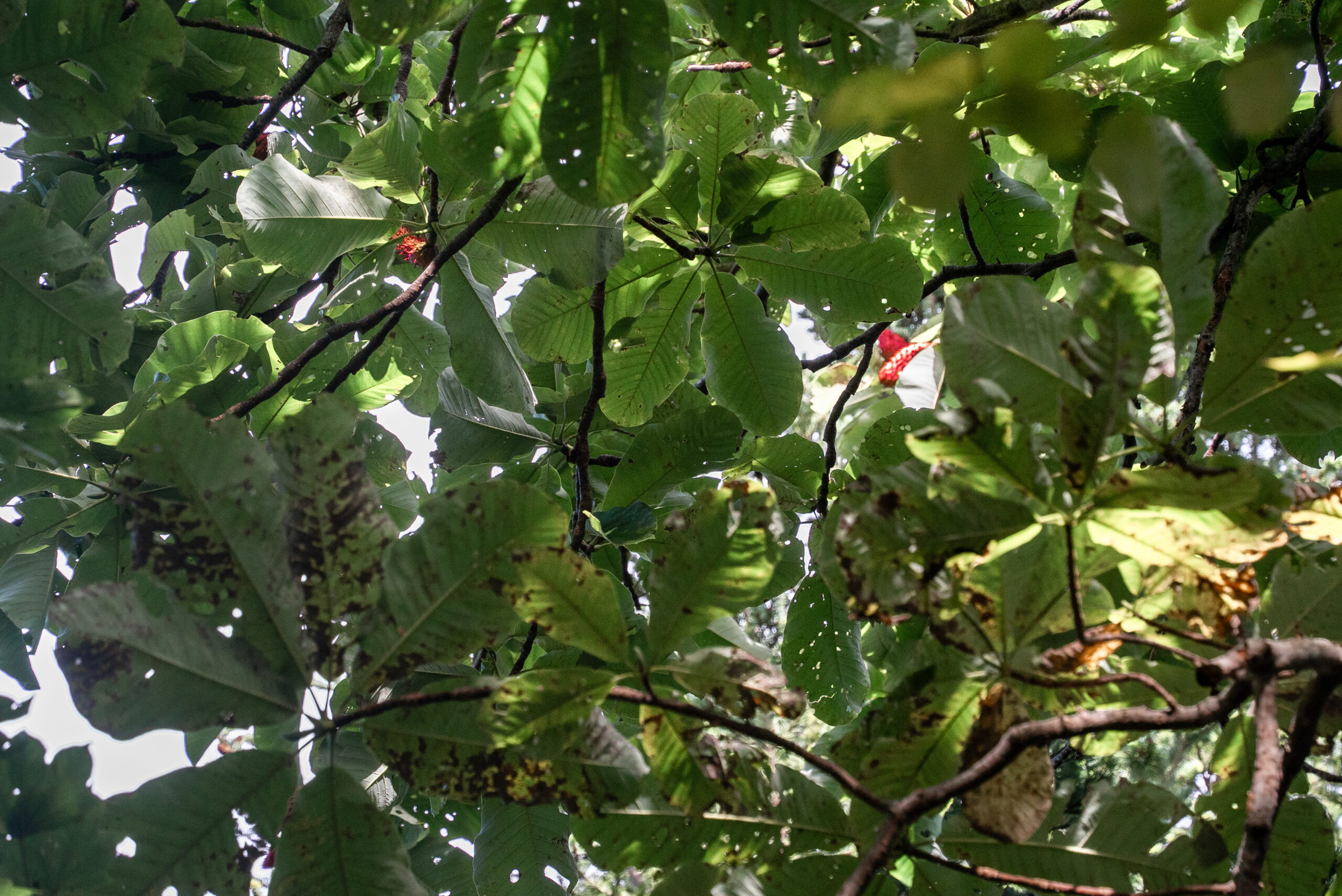
Here, the bright red fruits are still attached to the tree (Honoki-Magnolia)
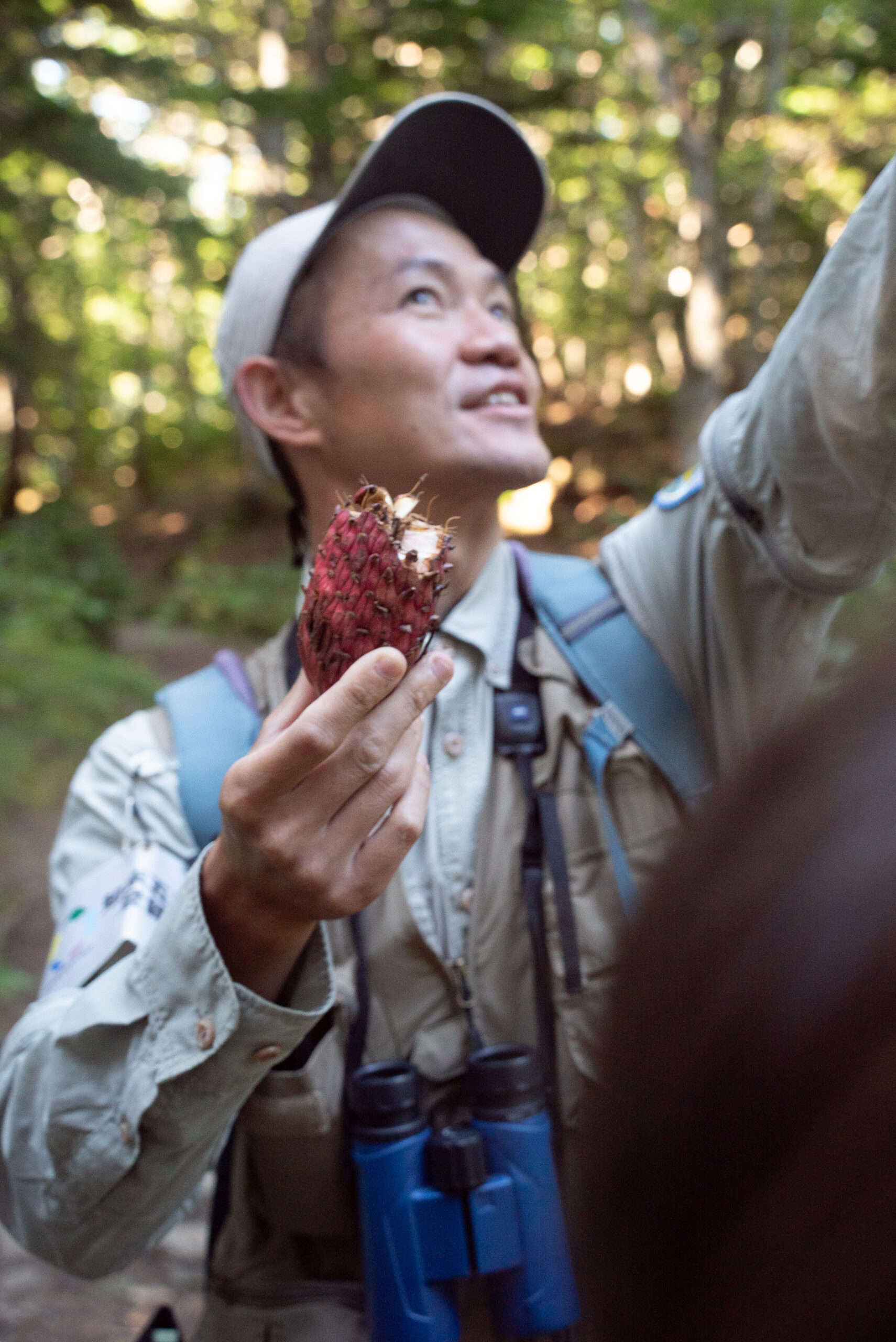
Makoto is holding the fruit of a honoki-magnoliathe fruit of the honoki-magnolia
Here we see Makoto with the fruit of a Honoki magnolia (in Japanese just Hounoki – “Hou tree”). From the outside it looks a bit like a dragonfruit but you can’t just bite into it since it’s a follicle like star anise (and crazily enough apples – but they are a special variety). The leaves of this magnolia are calles Houba (“Hou leave”) and are used for cooking in Gifu and Nagano prefecture. You cannot eat the leaves as such, but they supply their aroma to the foods they are warpped around. Maybe we can try some Houbayaki (“Hou leave fried”) when we’re in Gifu – let’s see!
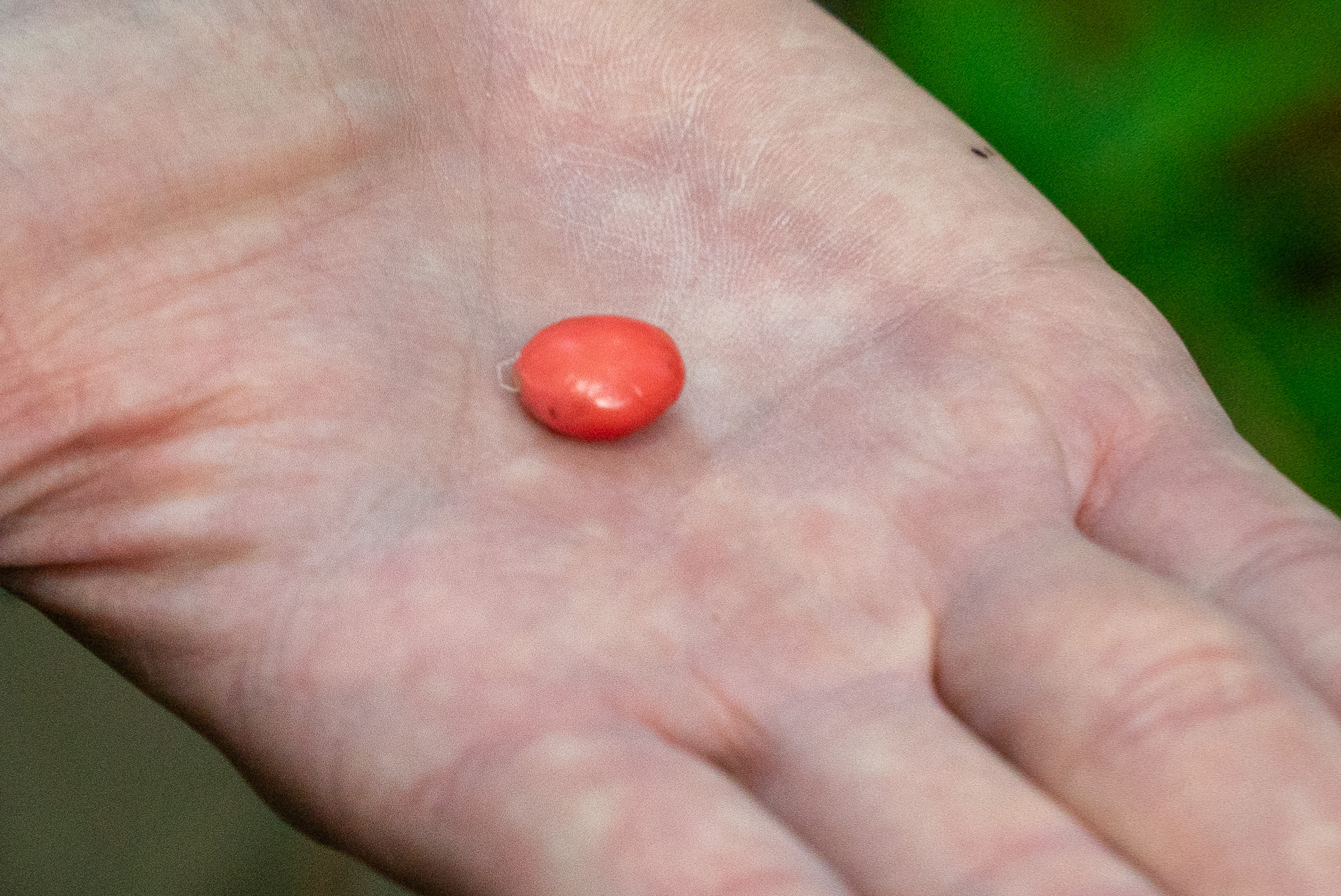
not an M&M, but the seed of a honoki magnolia
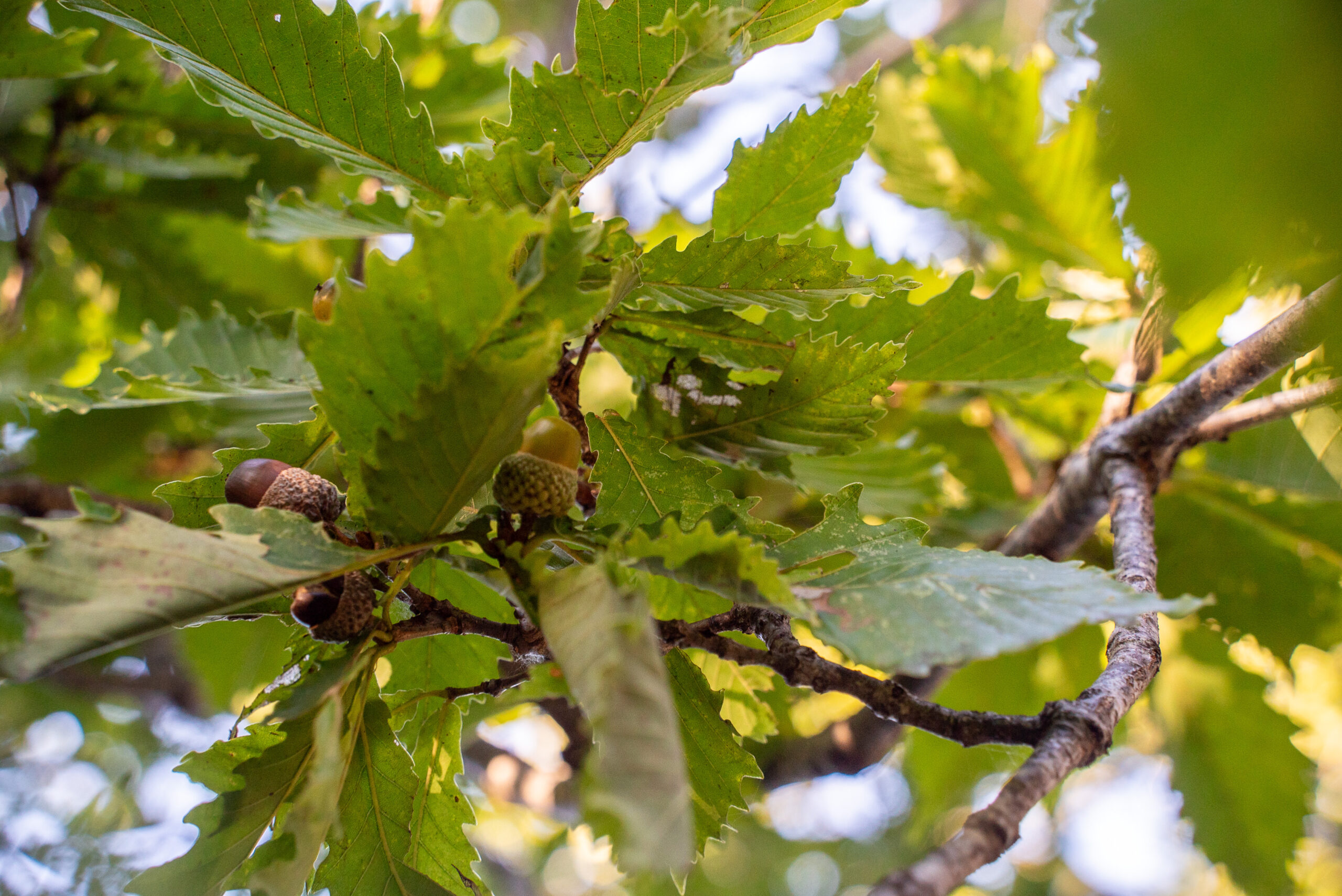
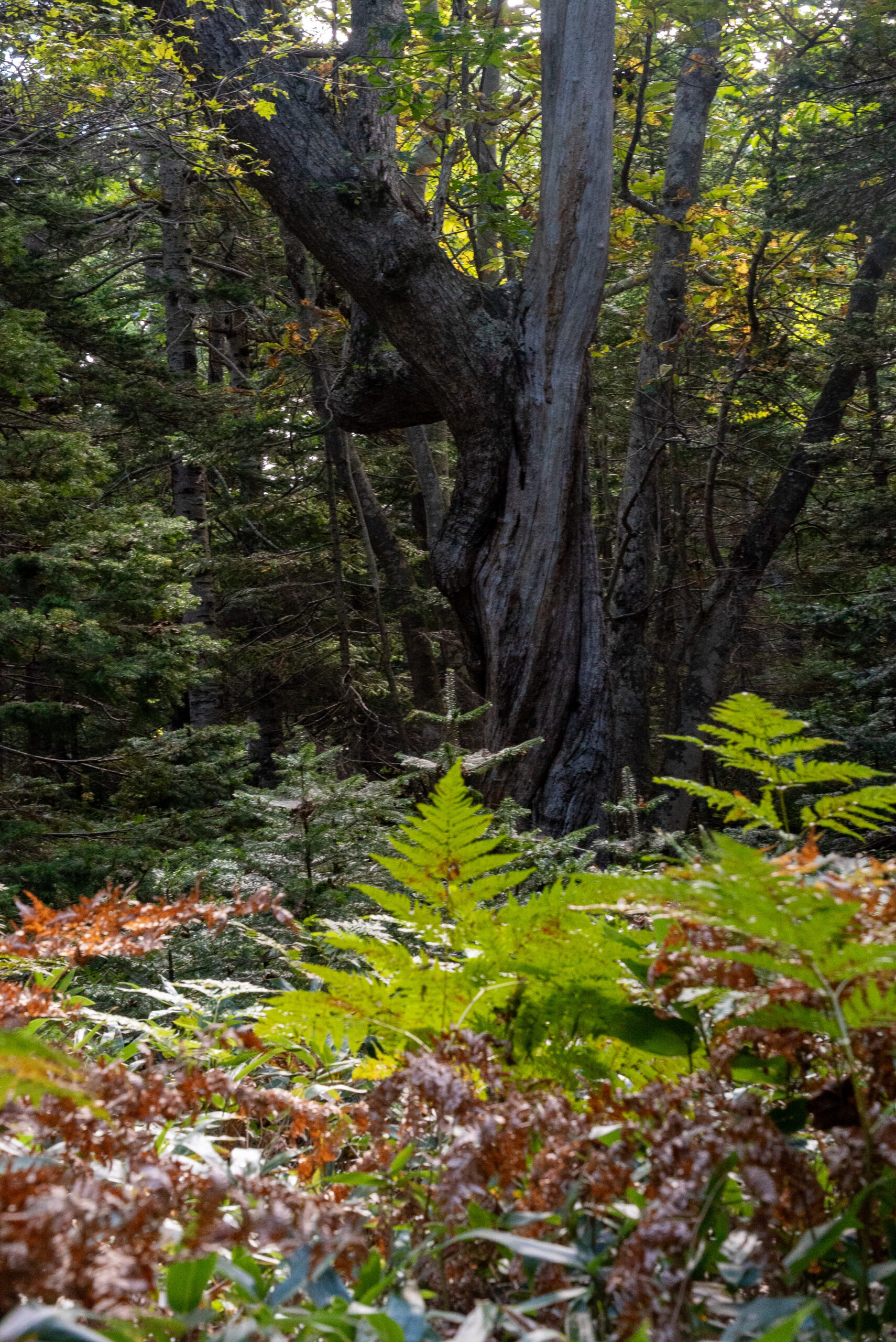
The forest here in Shiretoko feels very similar to a German forest, but all the plants are different. There are firs and oaks, but they are not the same as in Germany. The firs are Sakhalin firs and the oaks are apparently Japanese emperor oaks, the leaves are very differnt form our oaks at home.
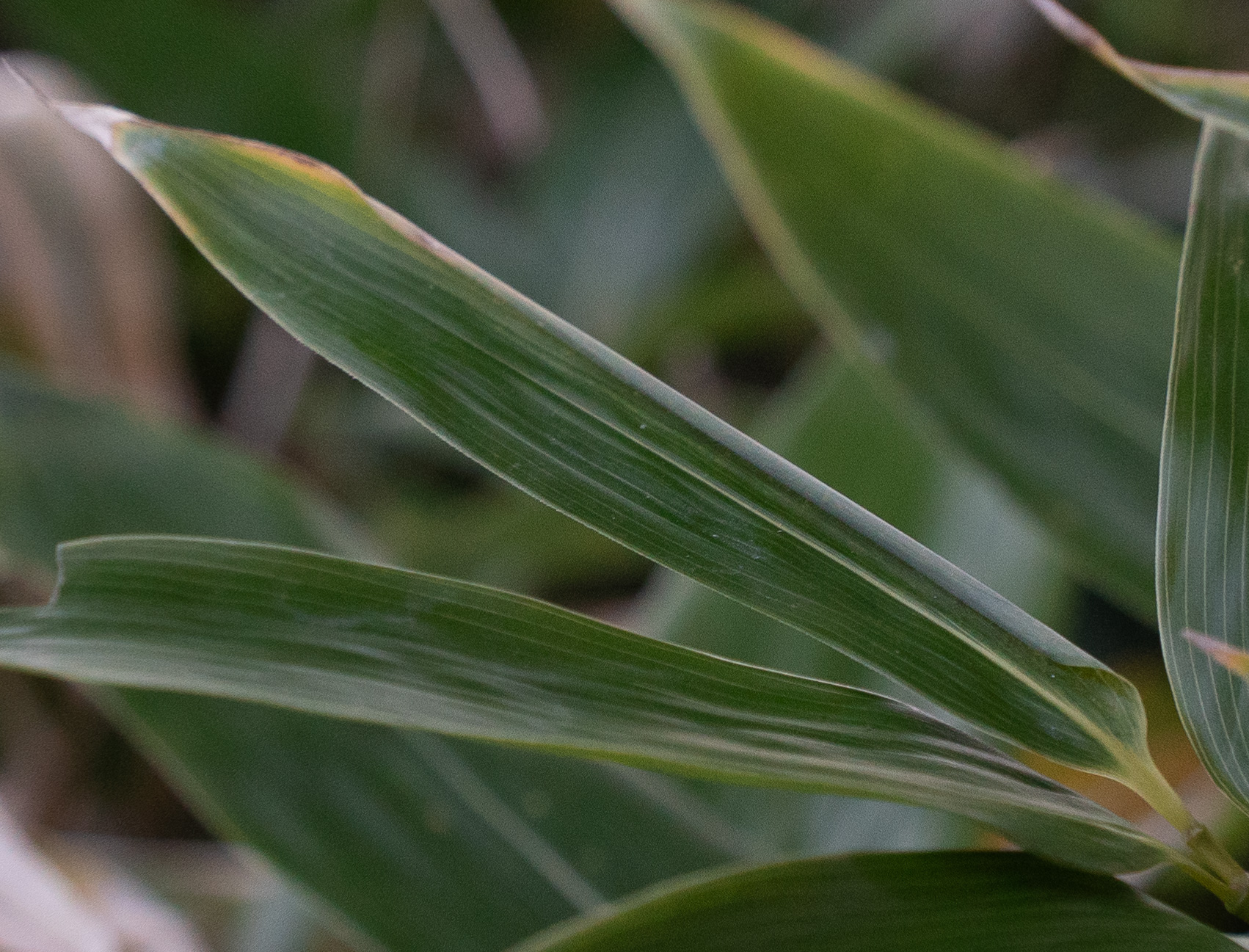
Also, the ground is not just covered by ferns, but mostly by two kinds of broad-leaf bamboo (I think it was Kuma-sasa (sasa veitchii) and Chishima-sasa (Kuril bamboo), but I couldn’t remember the names very well).
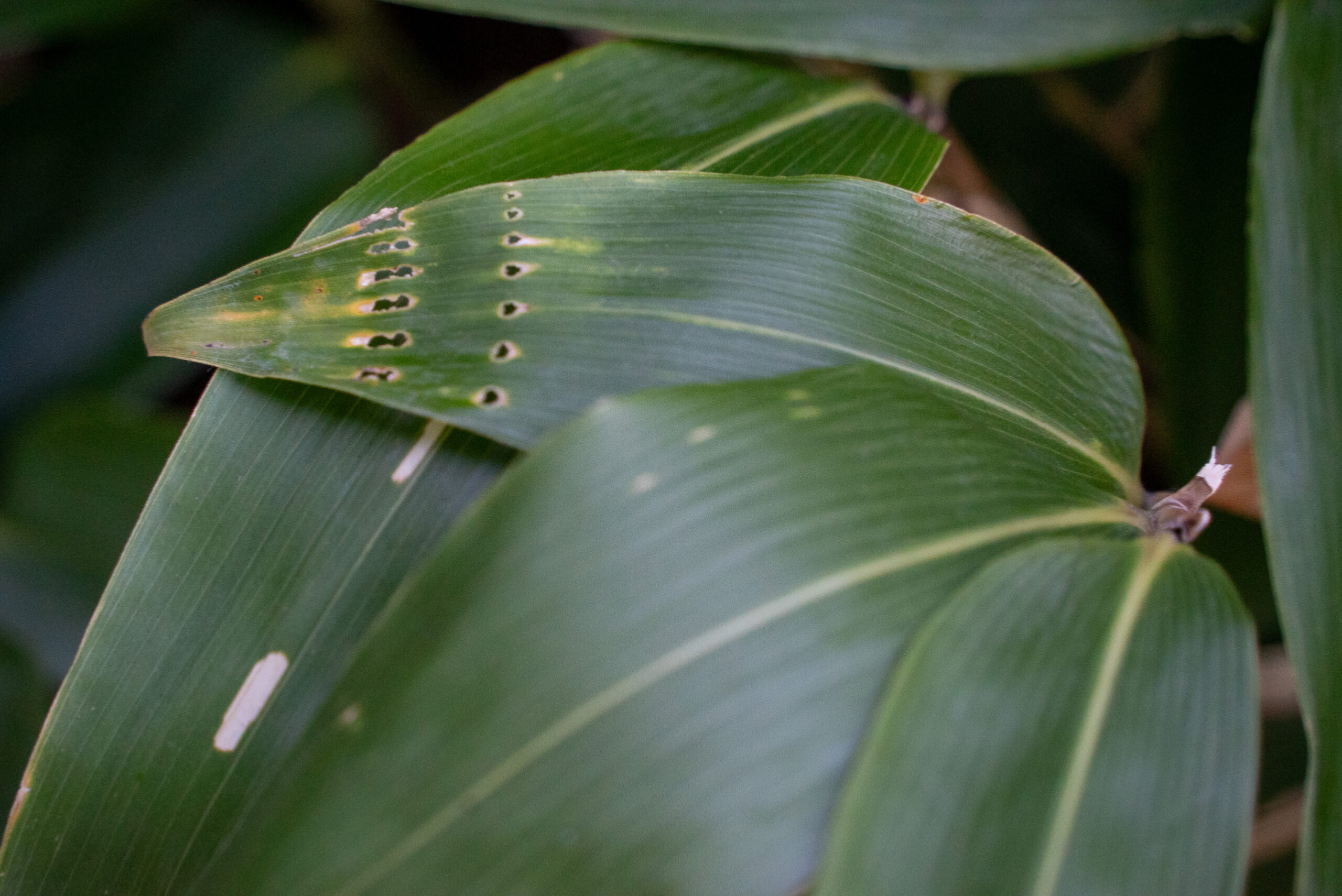
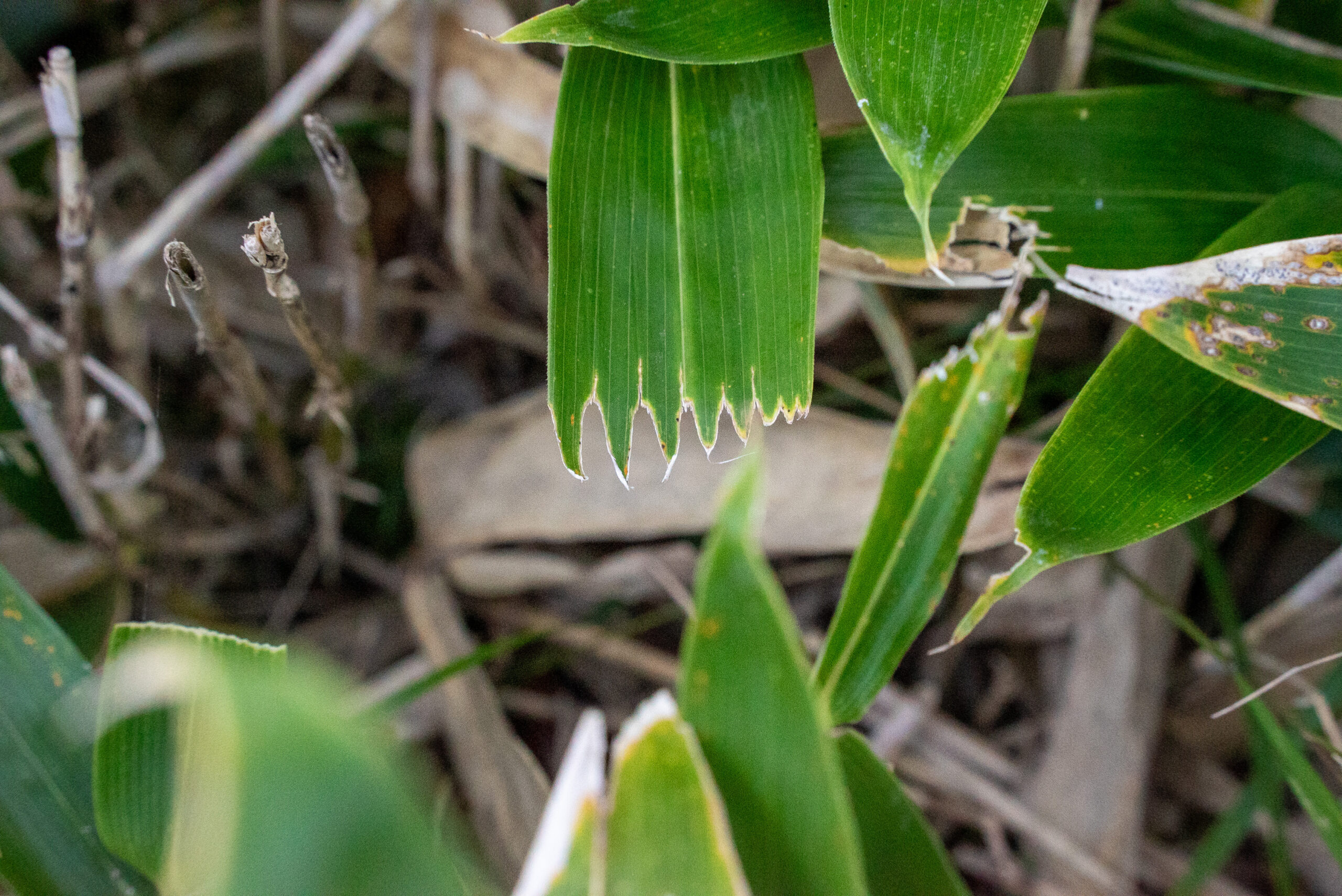
I’ve got a short anecdote about that: We saw a lot of leaves that seemed to be chewed off in a zig-zag pattern. This is the doing of a bug that knaws the young bamboo leaves while they are still coiled up. Once the leave unfolds, you can see a pattern of holes – in principle that’s similar to when you cut a snowflake from paper. When the hole is to big, the leave will rip off, leaving the zig-zag pattern.
Here you can see that the early bamboo leave is rolled up – a little before this state the bug attacks
The bug took two bites out of this leaf.
The bite was to big, the leaf ripped off – looks interesting, doesn’t it?
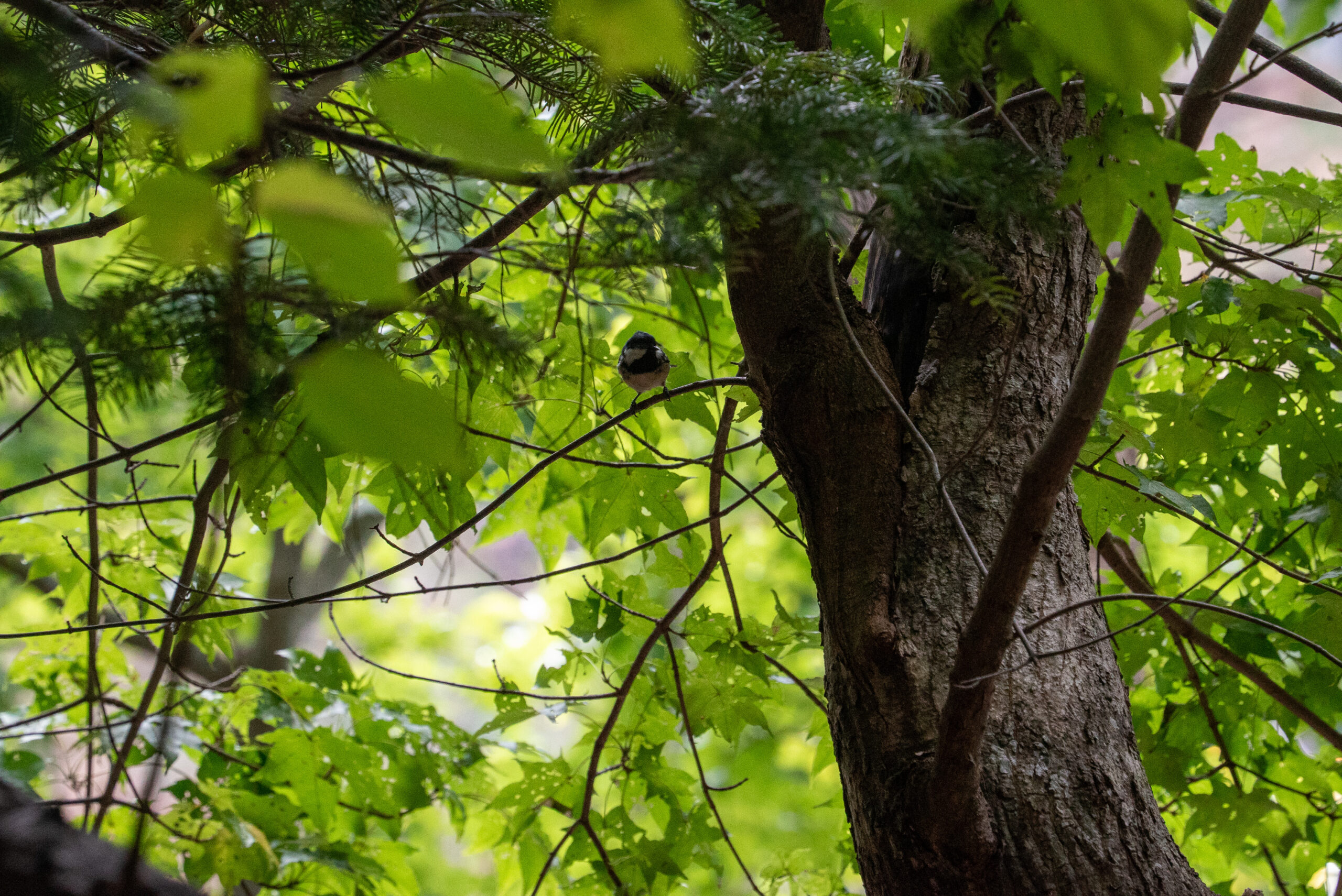
coal tit
The birds here are also differnt. We saw a coal tit which litterally translates to “Kohlmeise”, which is a bird we have, but the Japanese coal tit is the German bird “Tannenmeise” (which we hadn’t seen before). And there were birds looking similar to sparrows, but not just quite. Only the spotted woodpecker seems to be the same, or at least it looked the same to us.
the black woodpecker gets this big
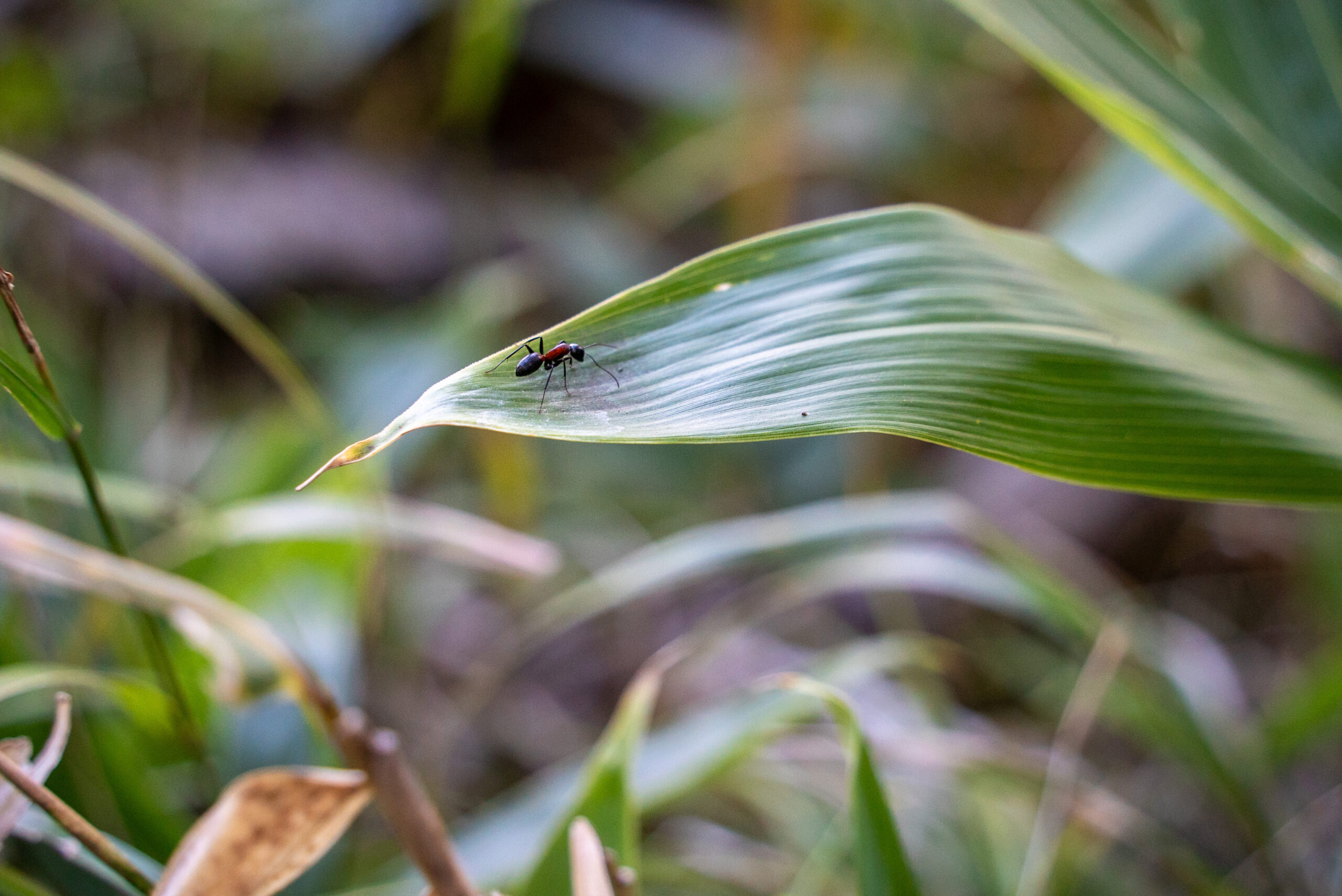
the black woodpecker’s favourite food: ant
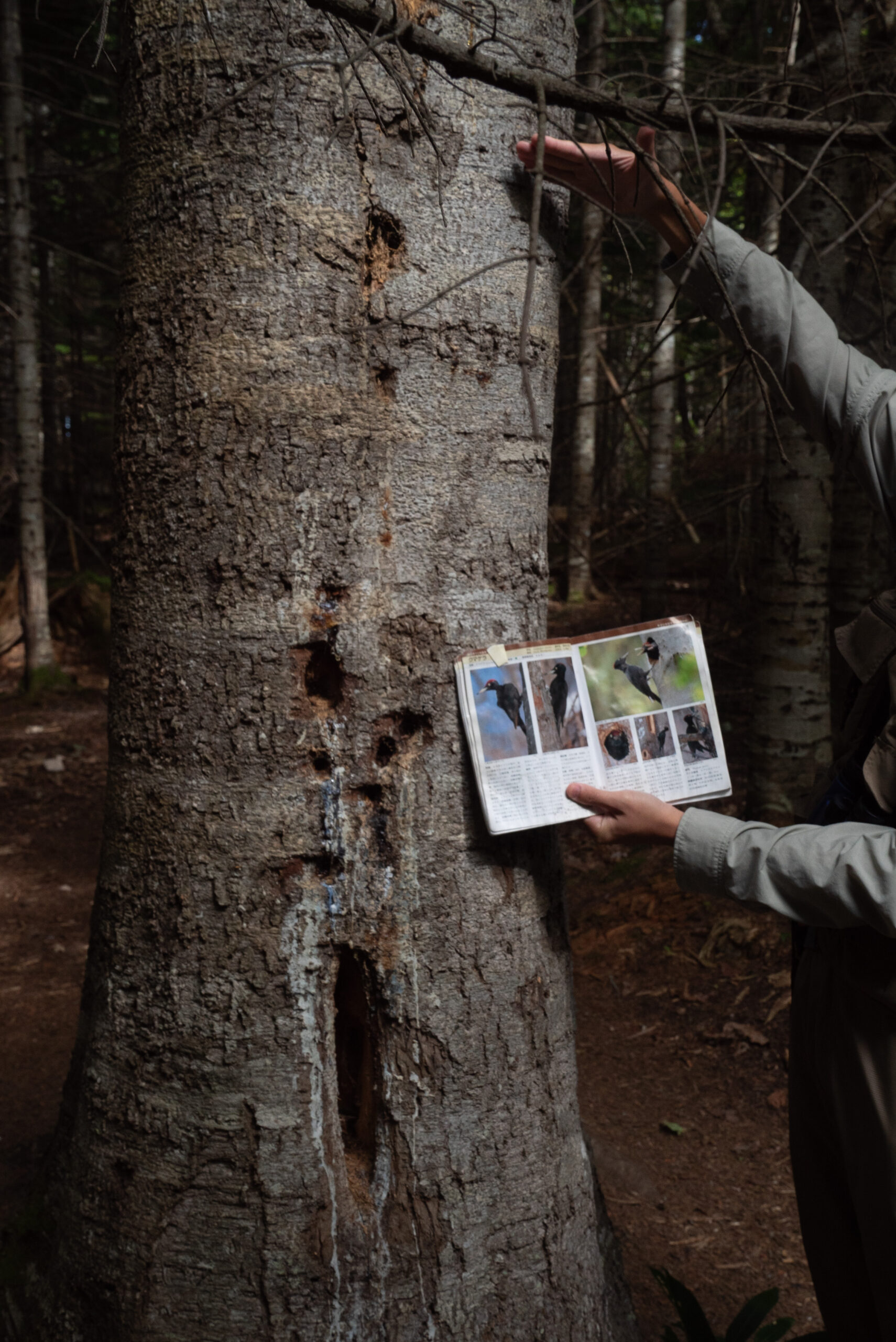
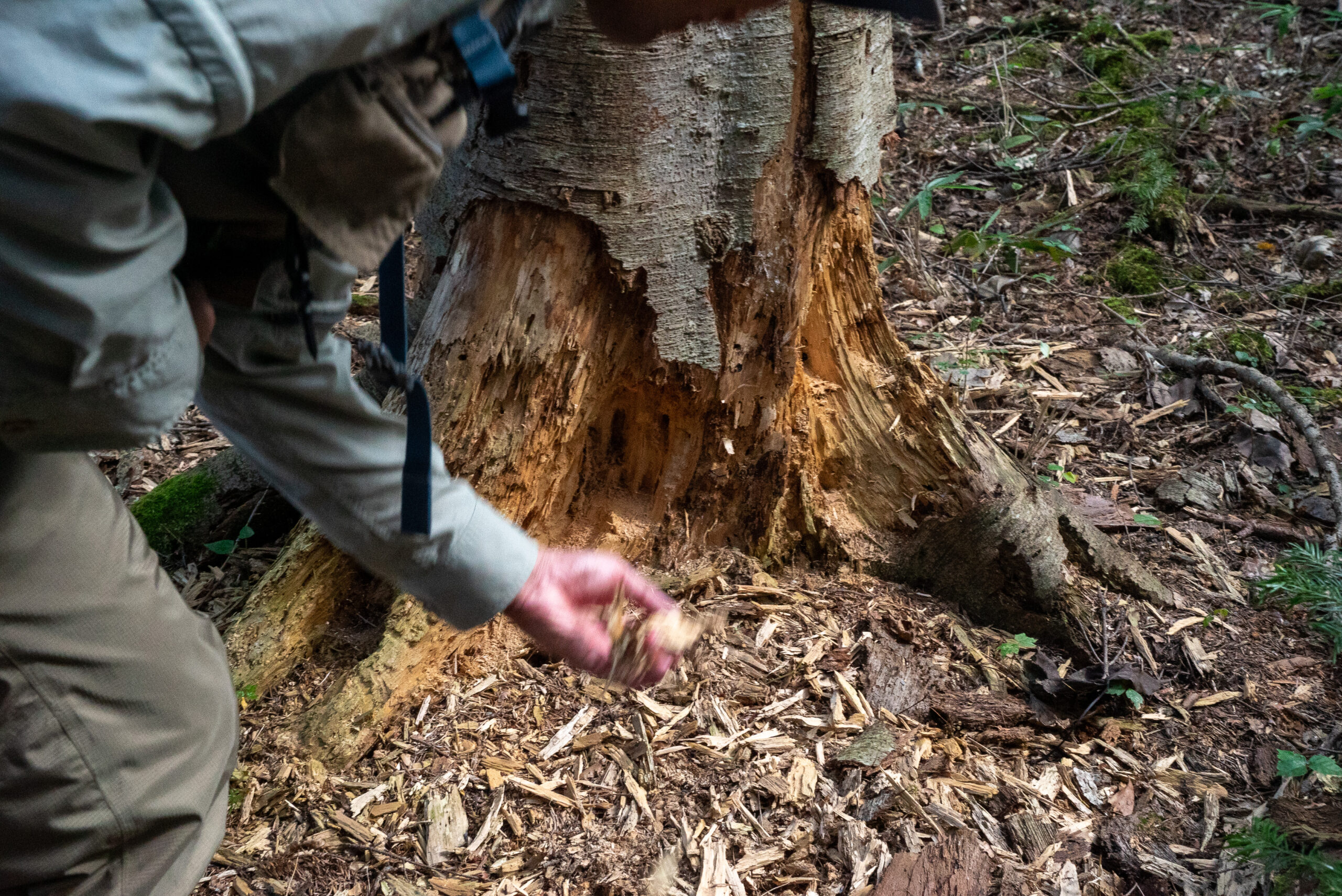
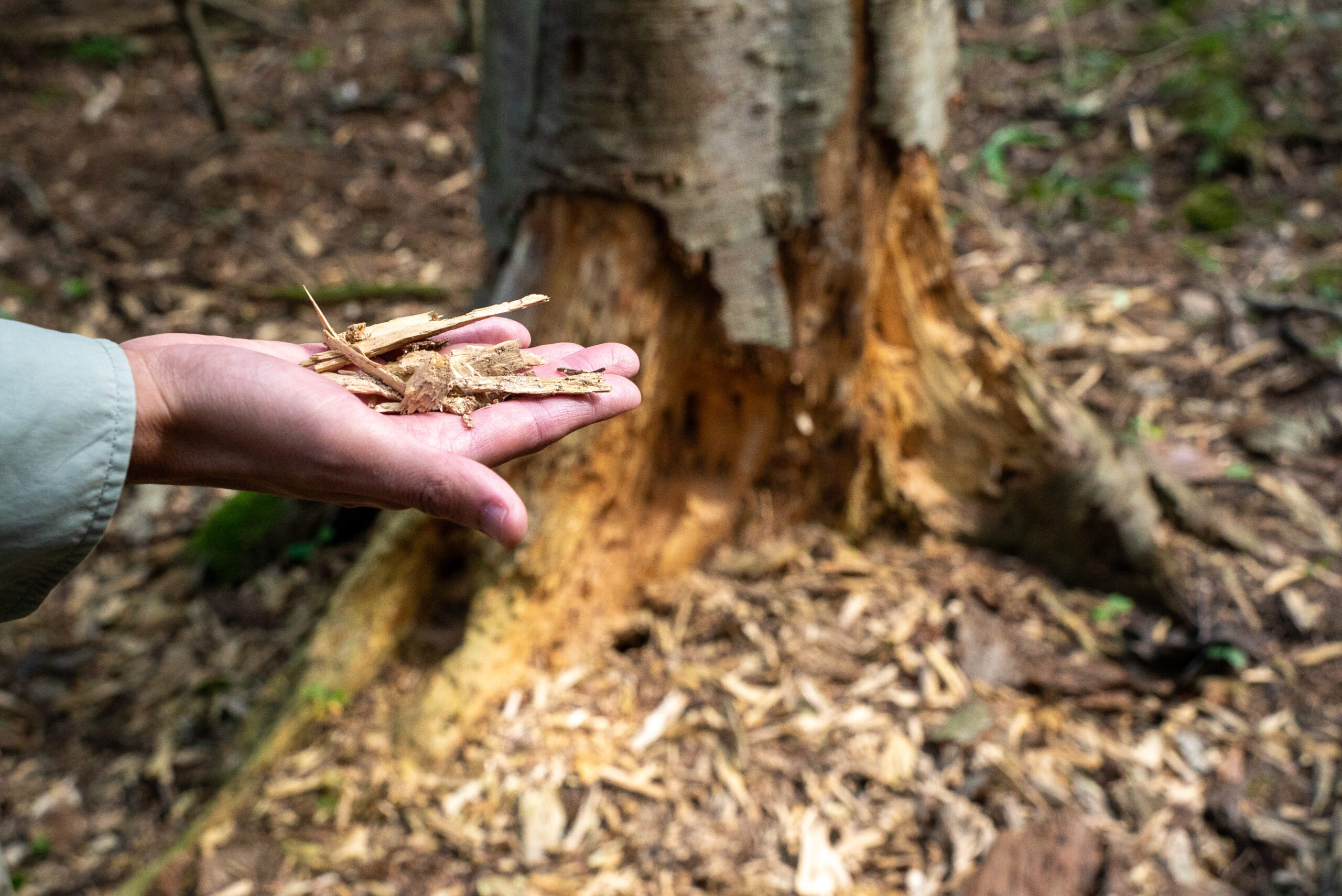
We also saw the traces of the black woodpecker, that wikipedia says also exists in Germany, but we’ve never seen it.
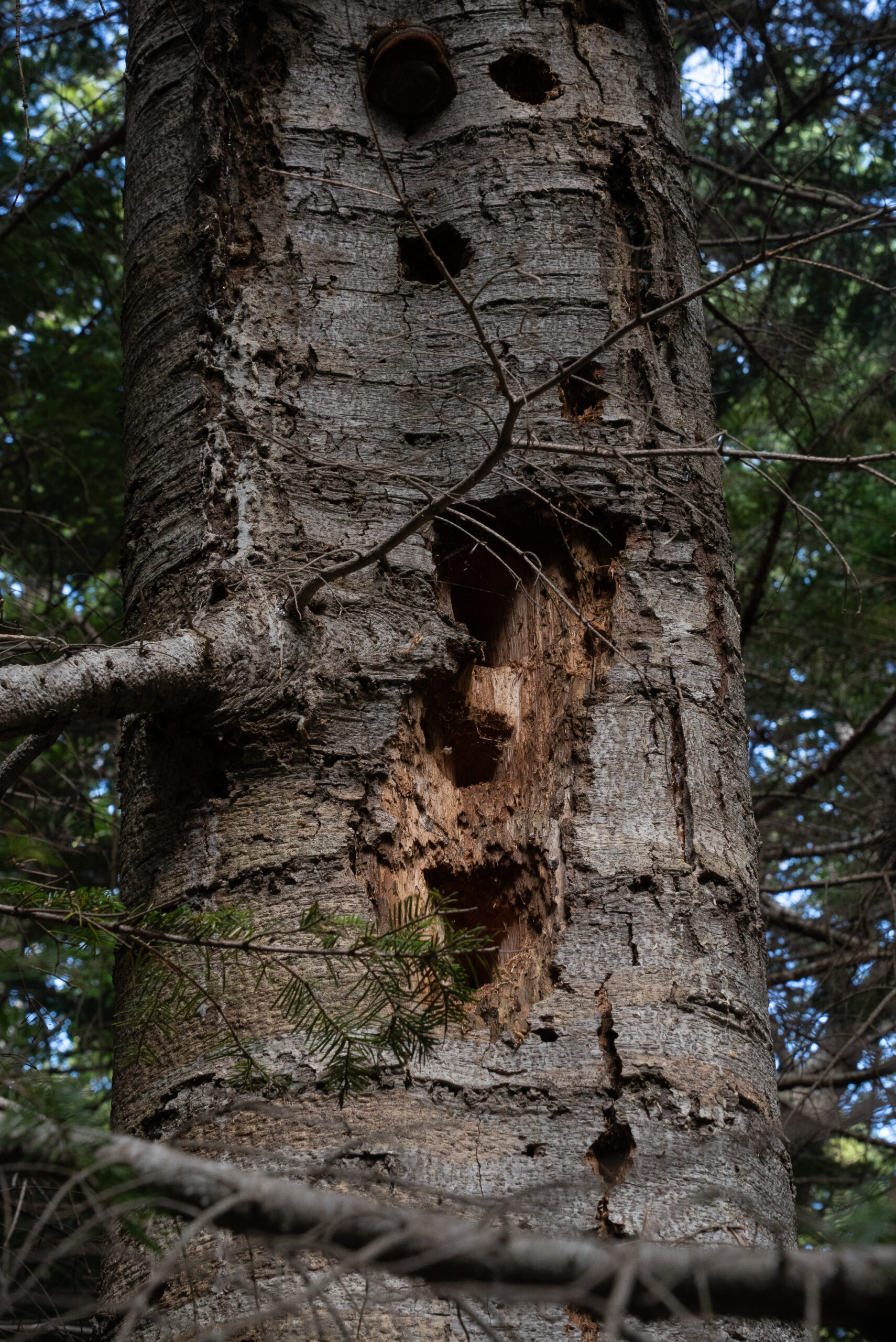
We didn’t know the traces yet though: on this tree you can see huge holes the woodpecker picks to get to its favorite food, ants. The ends live throughout the whole tree and so the the woodpecker picks open the whole tree in an almost straight line, sometimes even very low which seems a bit precarious.
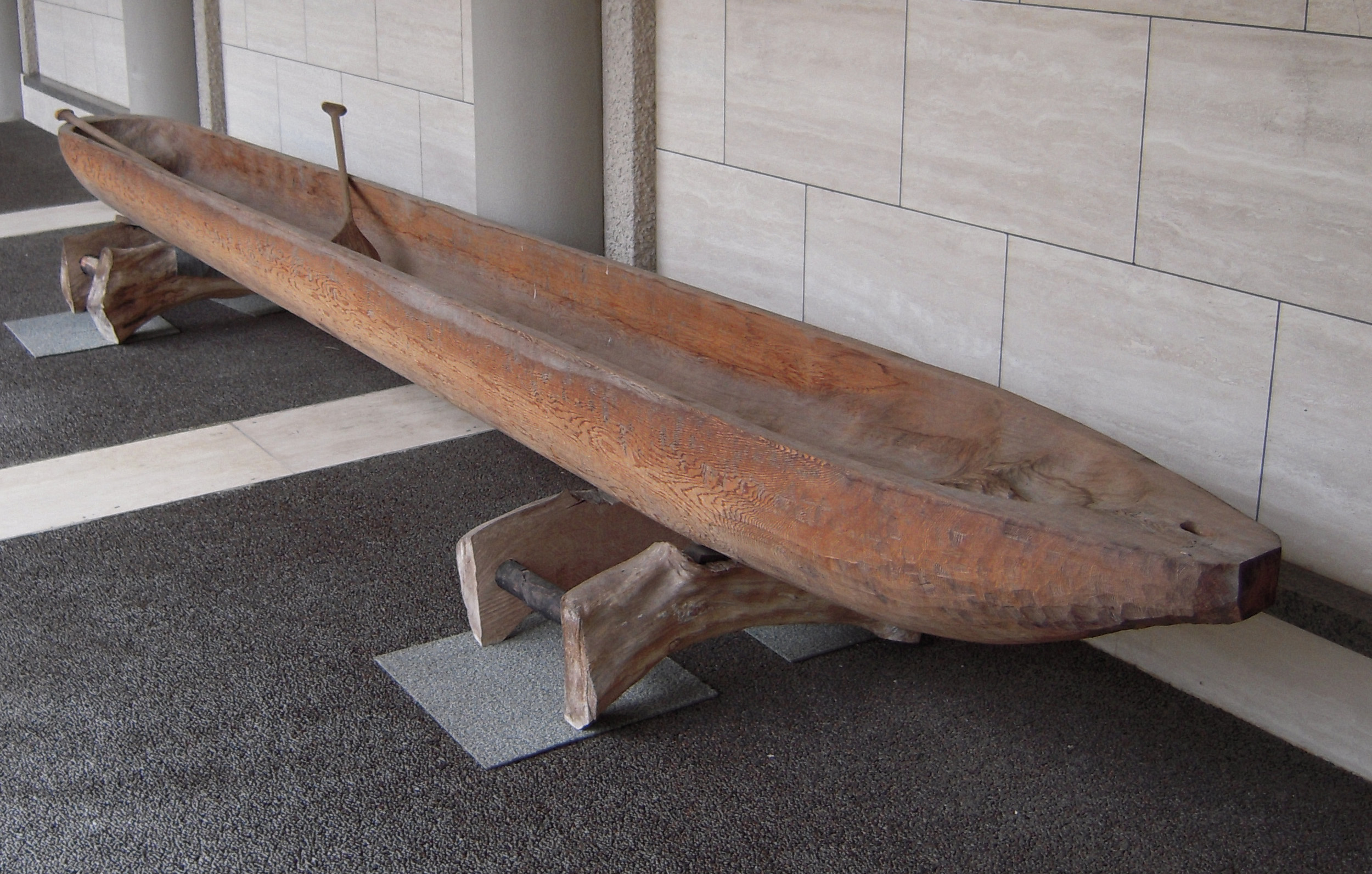
Because of this the black woodpecker is calles Cip ta cikap kamuy – boat hollowing bird god in the Ainu language, since the trunks that have been picked at look almost like a dugout-canoe. Maybe we find out the correct pronouncion in Biratori.
We don’t have this in Germany: poison ivy – don’t touch!
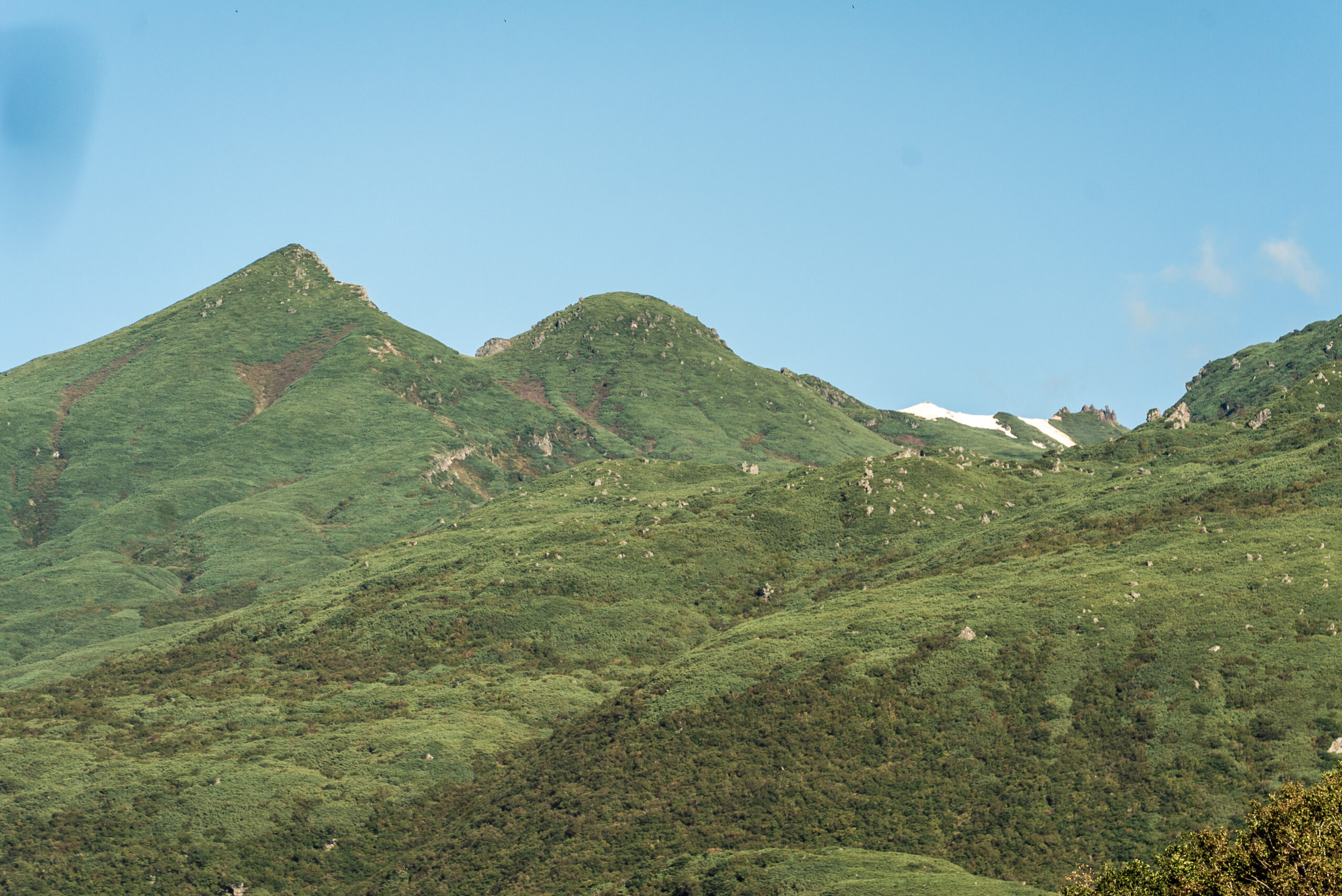
A mountain you could see from the five lakes had a white top. However, this is not snow but mineral resedue due to the vulcanic activity.
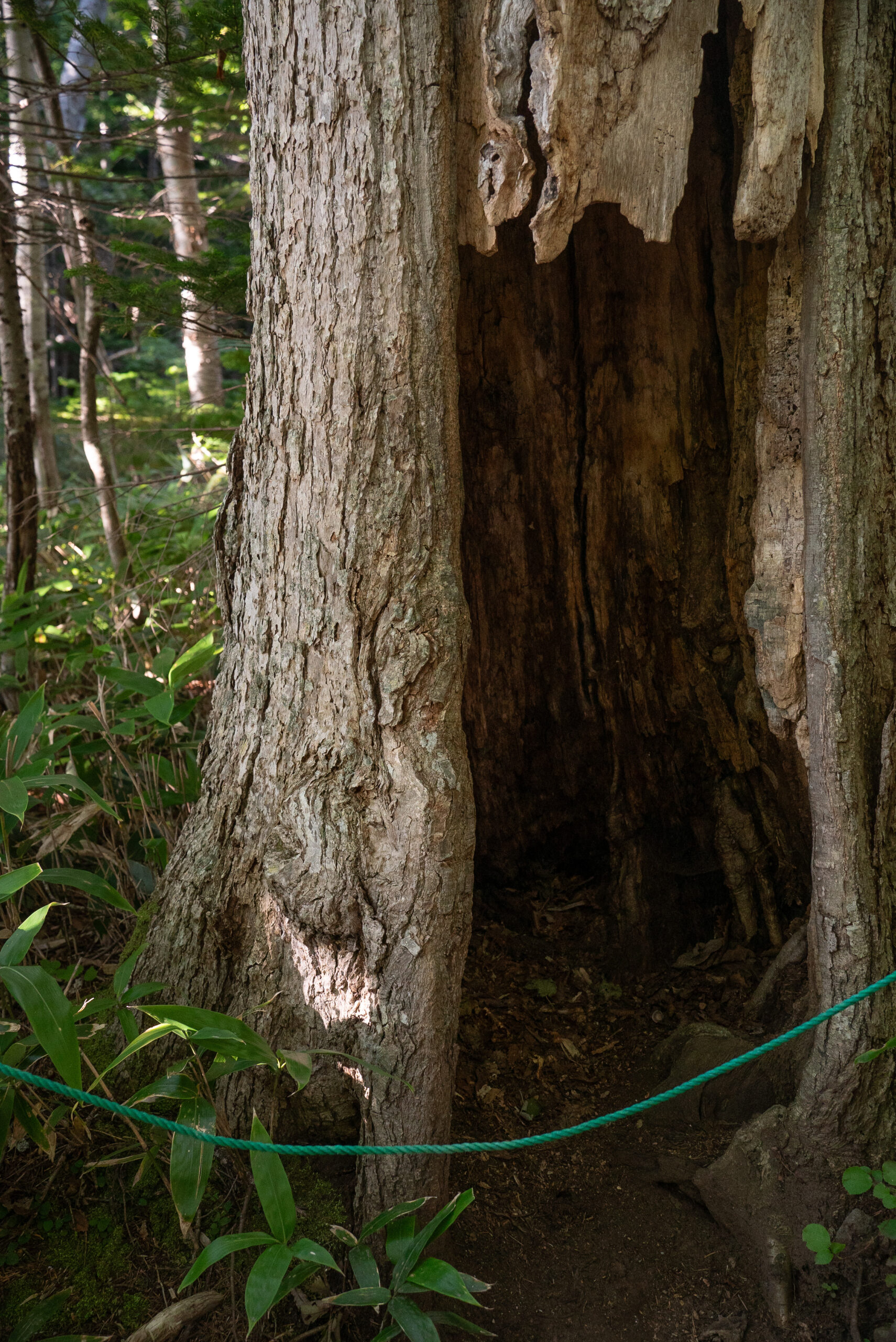
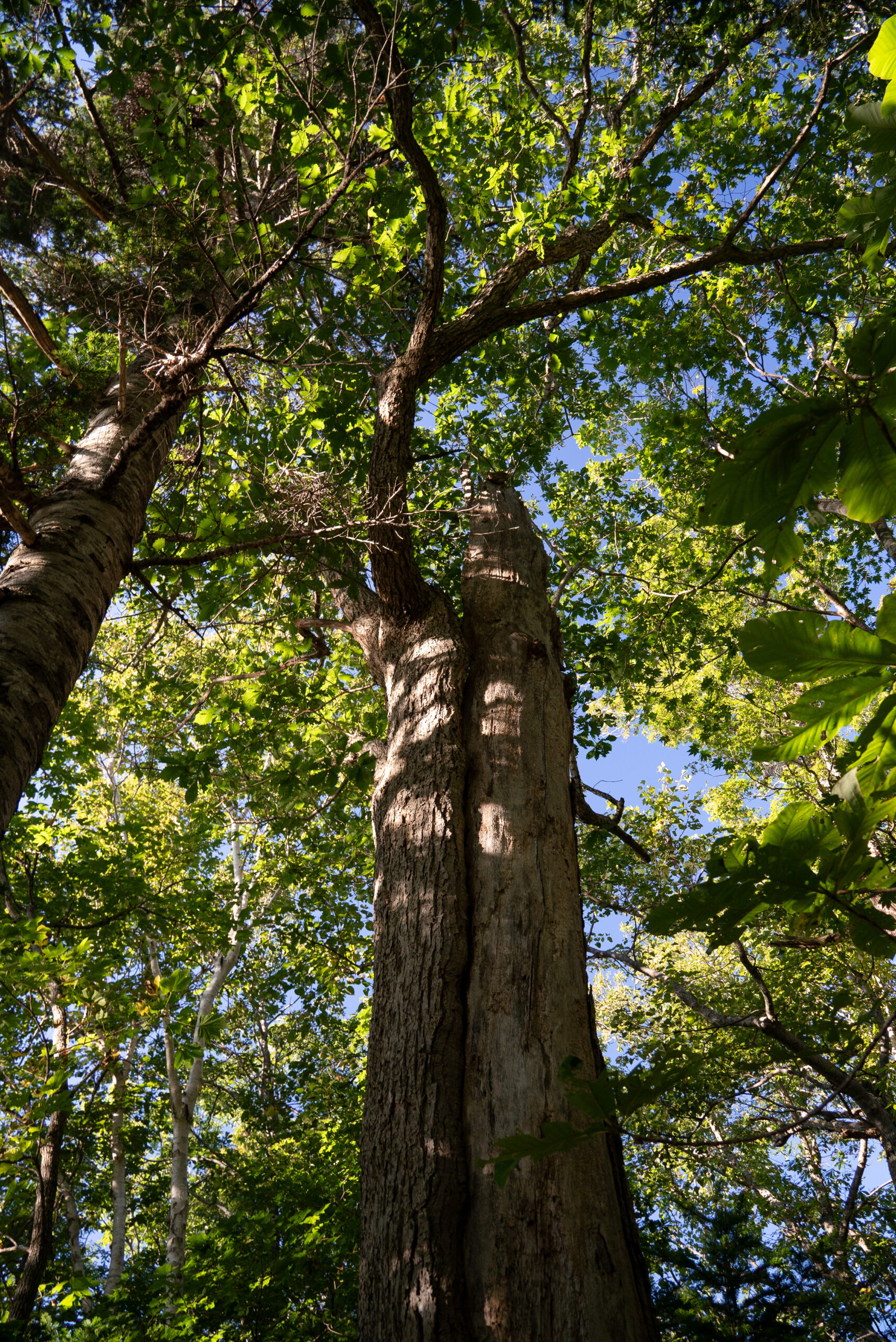
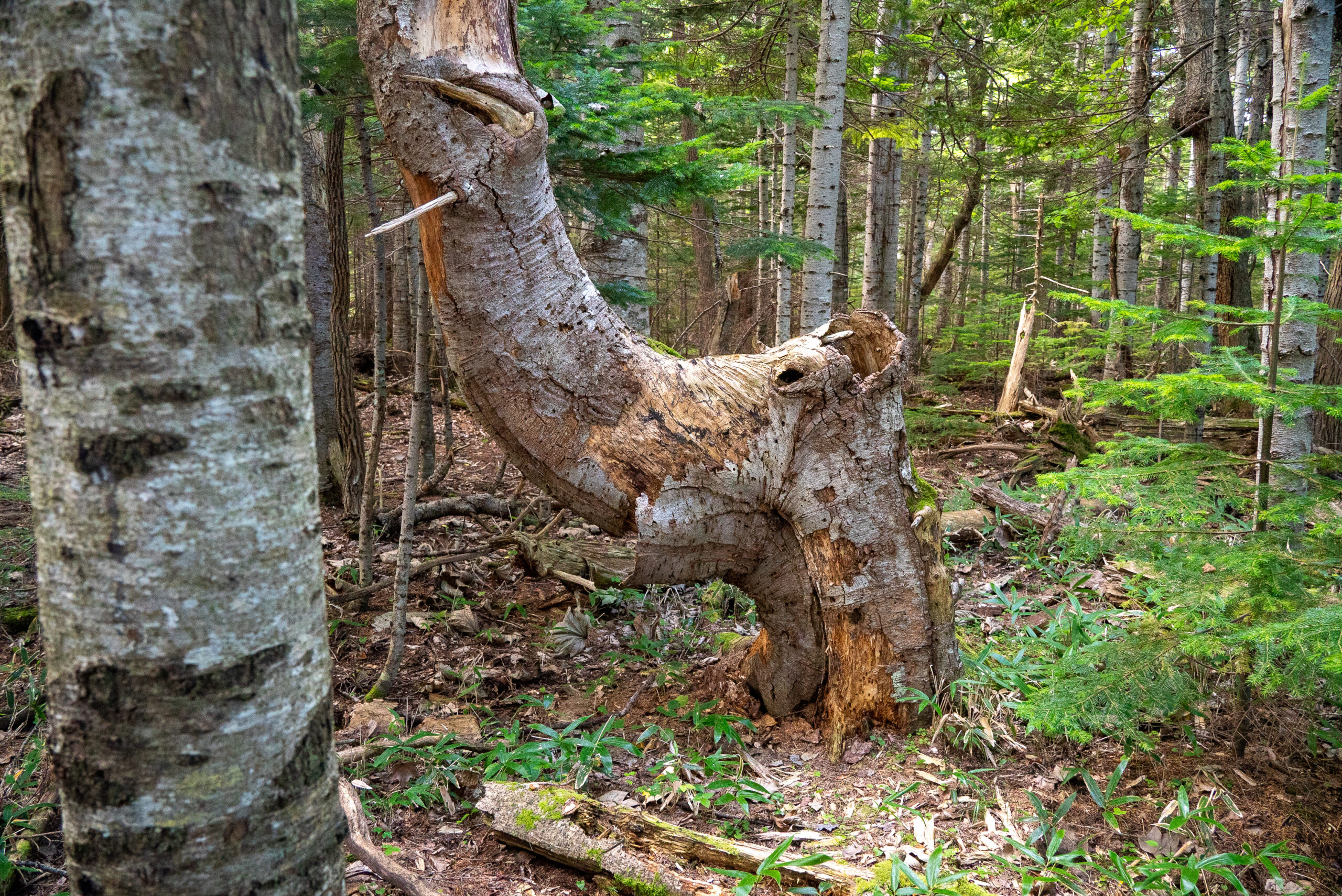
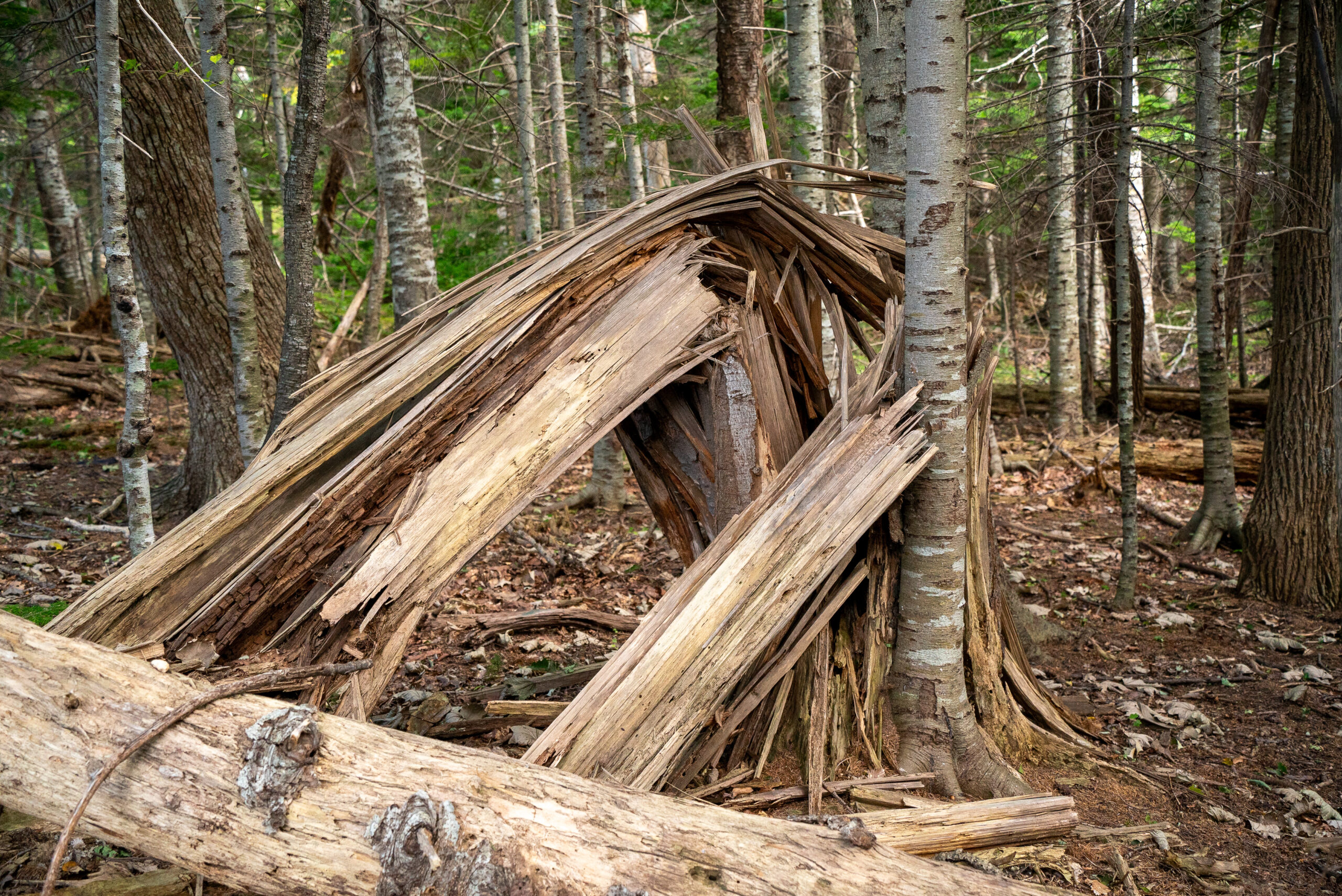
This tree is doing fine, since its bark is intact. However, it is in danger of been blown over due to its missing center. Luckly, it seems to be standing in a rather protected spot. Generally the trees here are very prone to being felld by the wind and you see a lot of trees that have all fallen in the same direction. This is due to the shallow roots that soon hit the hard rock of the volcanic island.
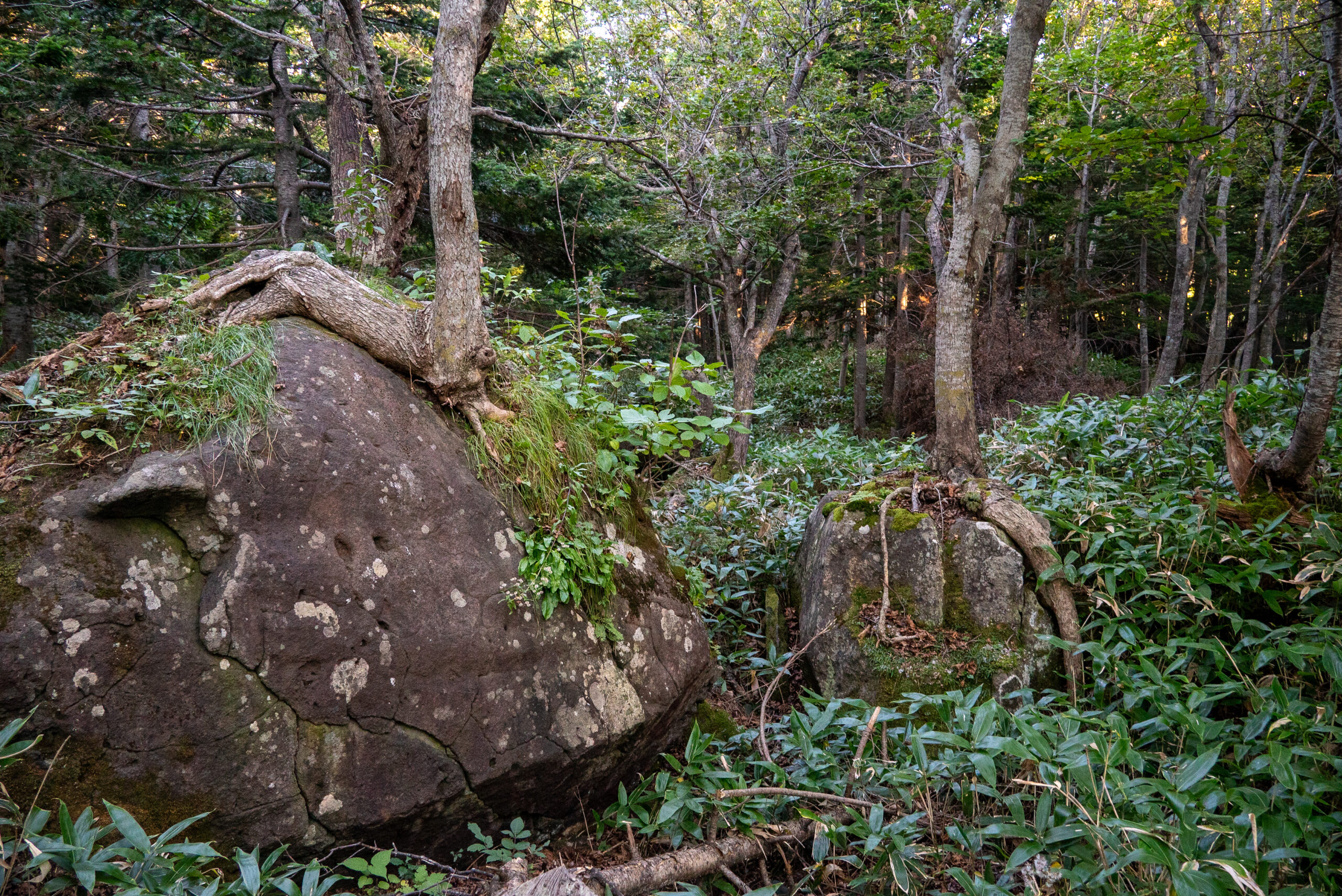
All of the trees in this area have shallow roots, but these two grow directly on the rocks!
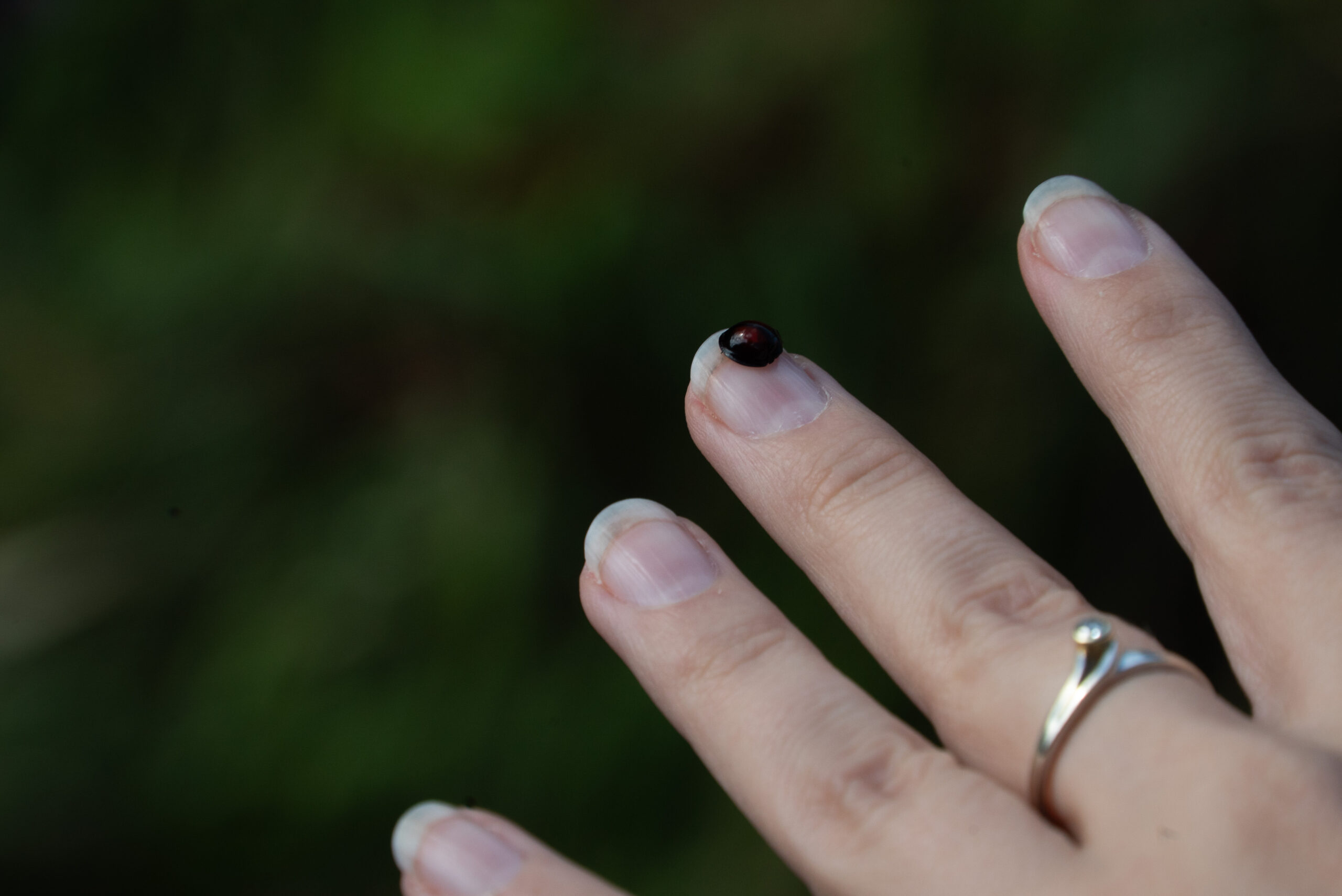
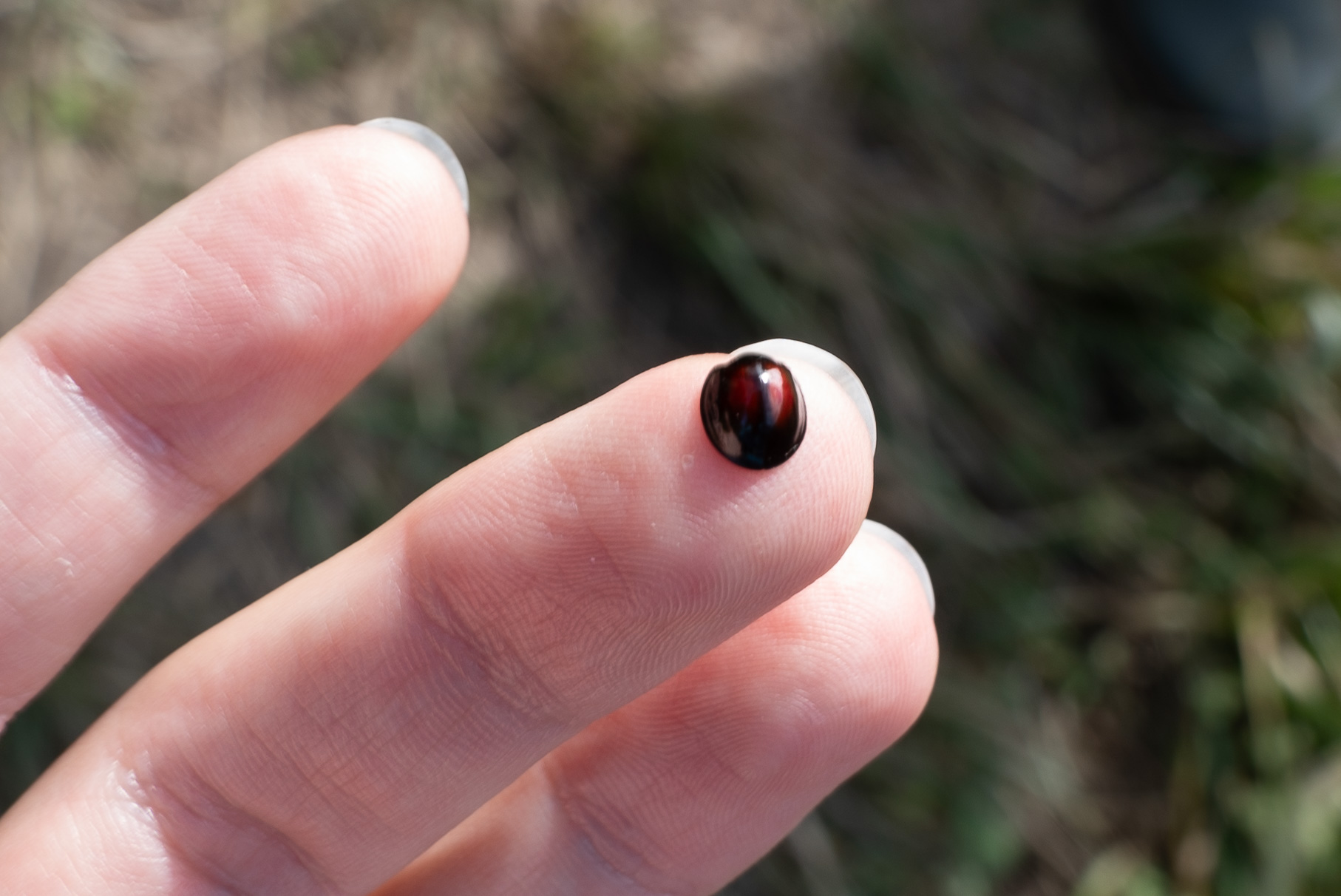
some sort of supercool pine lady bird – it doesn’t have any spots just a deep red shine
It wears its wingcaps like a dark emperor
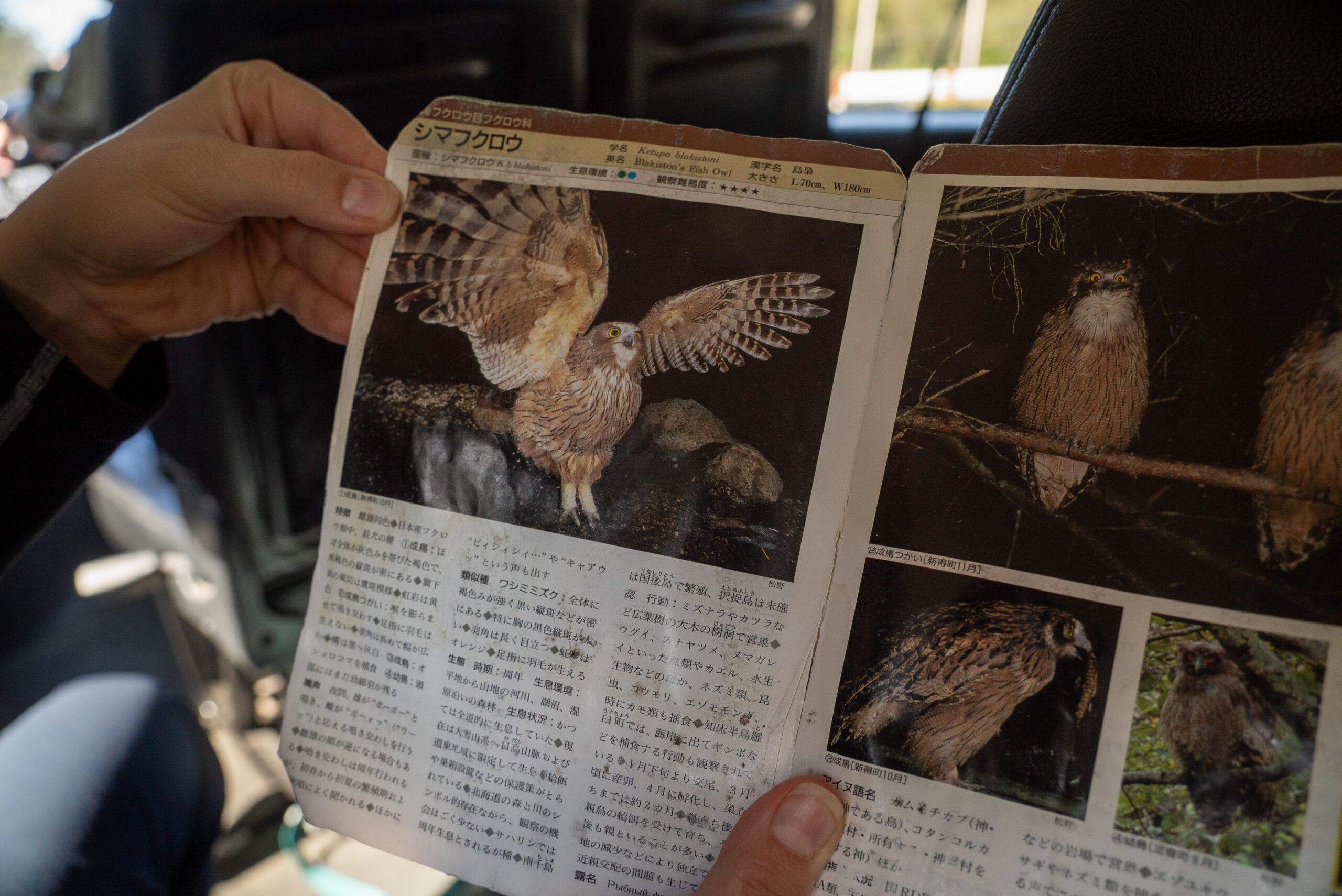
On the sides of the bridges there are long, white poles attached. They protect cars from colliding with the enormous Blakiston’s fish owl that is hunting in the river below the bridge. With their wingspan of two meters they just don’t fit inbetween the poles that are only one meter apart. On the way to Biratori we saw more bridges prepared like this. We never saw the accompanying olw though, because first of all it’s nocturnal and secondly there is less than 1000 of theses birds left : (
white poles on the sides of the bridge
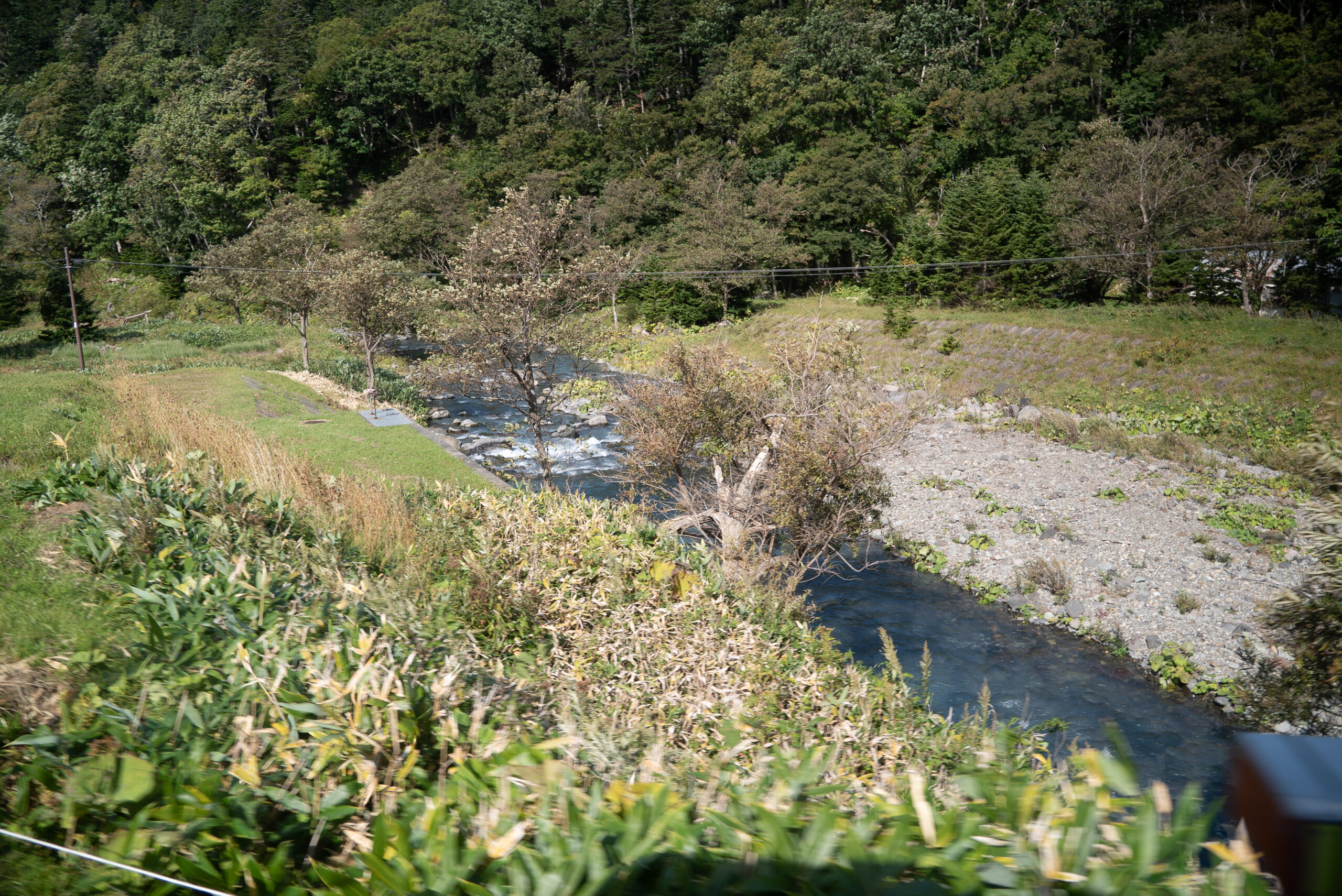
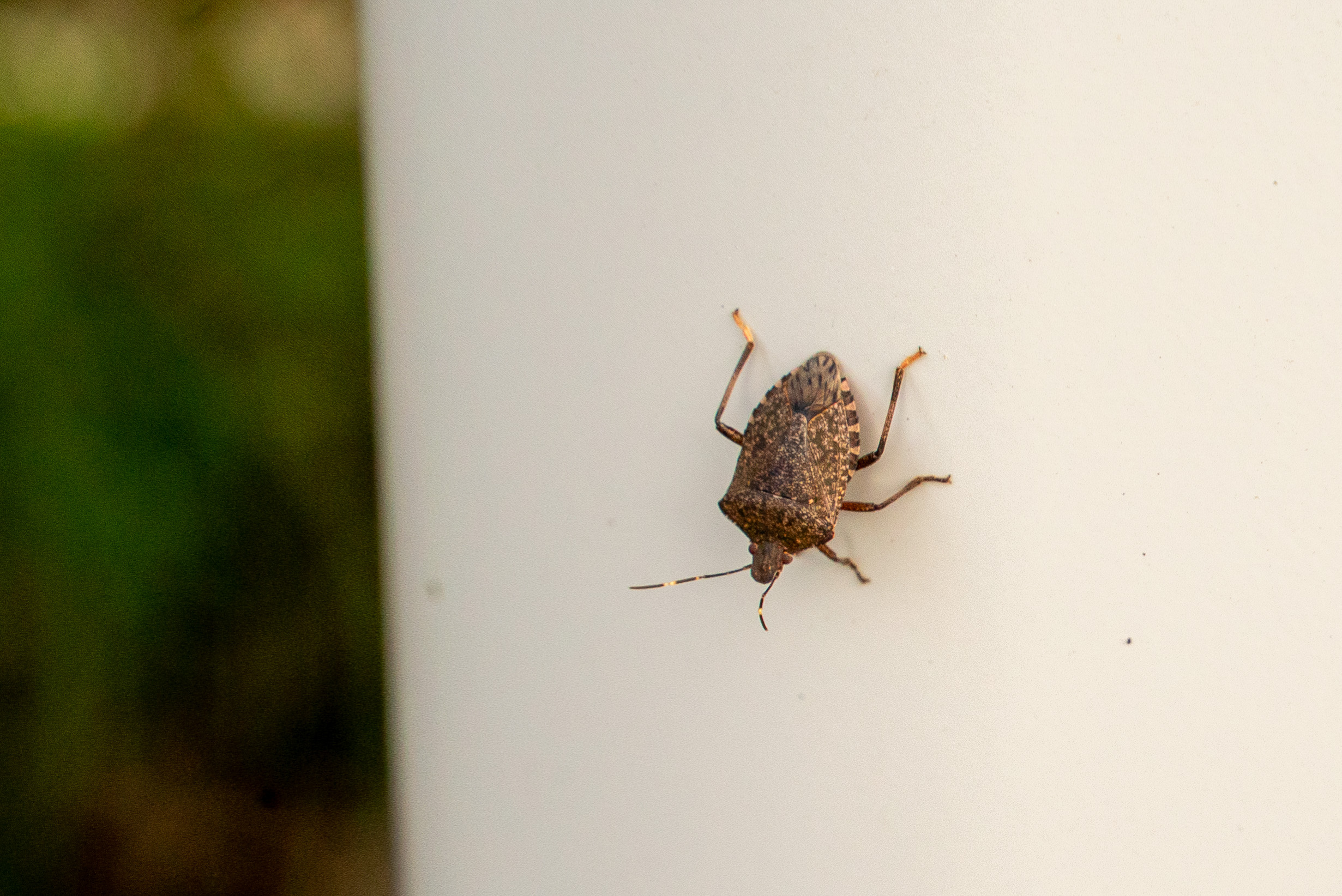
Salmon will jump upstream in this river to lay their eggs and will be captured by bears, owls and humansA stinkbug – in our hotel it was apparently a seasonal plague. In ever room there was tape to carefully collect the bug without squeing it, folding it into the tape and disposing of it in the trash. A bit cruel. We didn’t even find out how bad they stink…This cliff has been hollowed out by the drift ice as well.
We purposefully didn’t plan anything for our second day in Utoro, because we really wanted to see the 5 lakes and could not be sure that on the day we went there, everything would turn out the way we wanted it: Maybe we would miss the bus and wouldn’t be able to meet the tour group in time, or the weather could be so bad that we couldn’t see form all the rain, or the park could be closed off due to bear sightings. But all of that didn’t happen and so we had our “safety day” cleared for other things. When we told Makoto about that, he suggested that he could also do an primeval forest tour with us and we gladly agree to meet him again the next day!
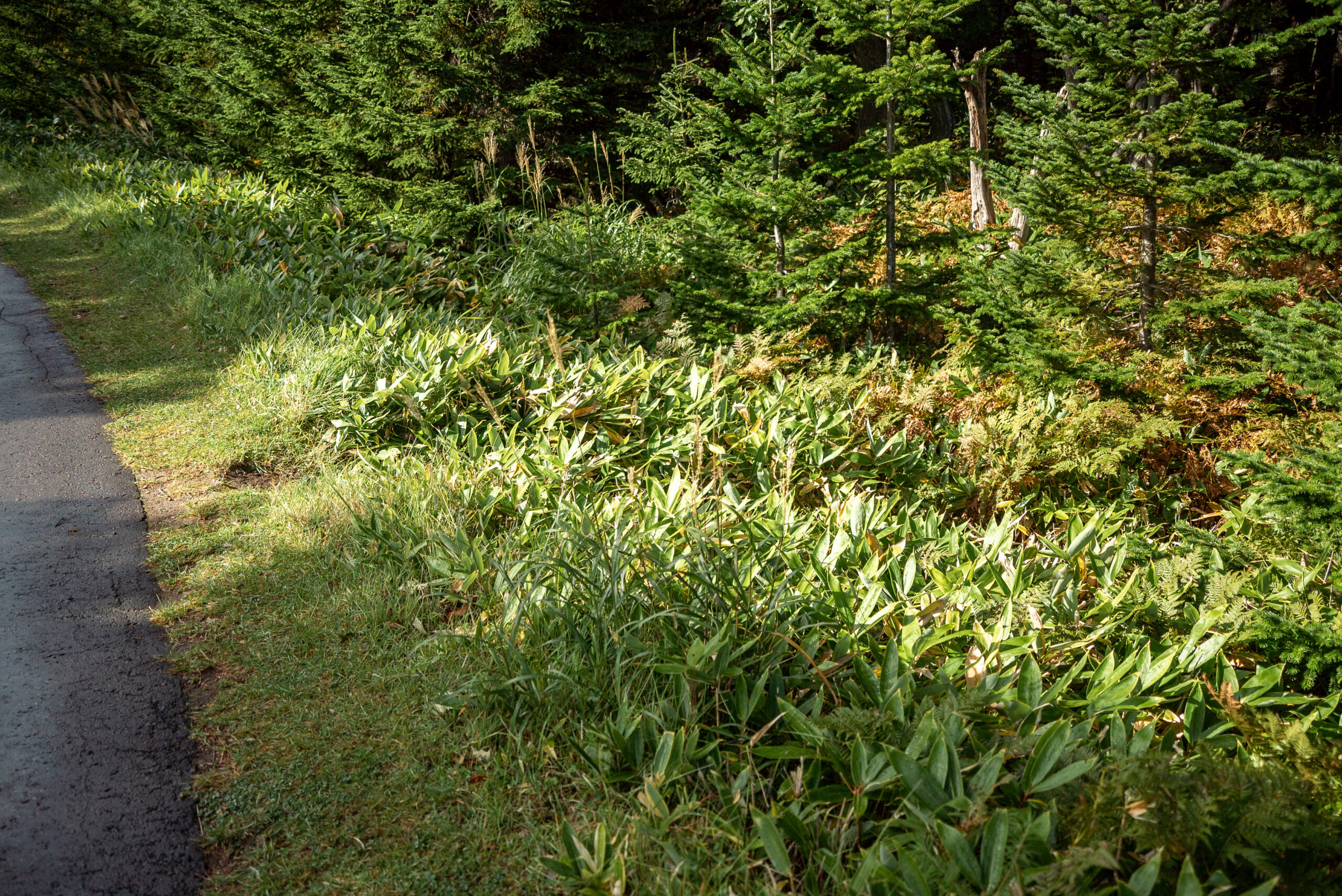
the path from the road to the primeval forest – we received rain pants and rubberboots to protect us from the ticks in the high bamboo grass
The weather was quite changable and windy, however. In Japanese you apparently say “Kitsune no yome iri”, which means something along the lines of “the fox is getting married” – and describes weather that is sunny and rainy at the same time. Due to the weather a lot of animals had reatreated into comfortable cover (or maybe to the wedding party), which is why we only saw a couple of insects and birds. But again there were traces of other wildlife: Here, a bear had dug up a wasps’ nest. Brown bears apparently like to eat their brood and are no unimaginably not bothered by getting stung on their noses.
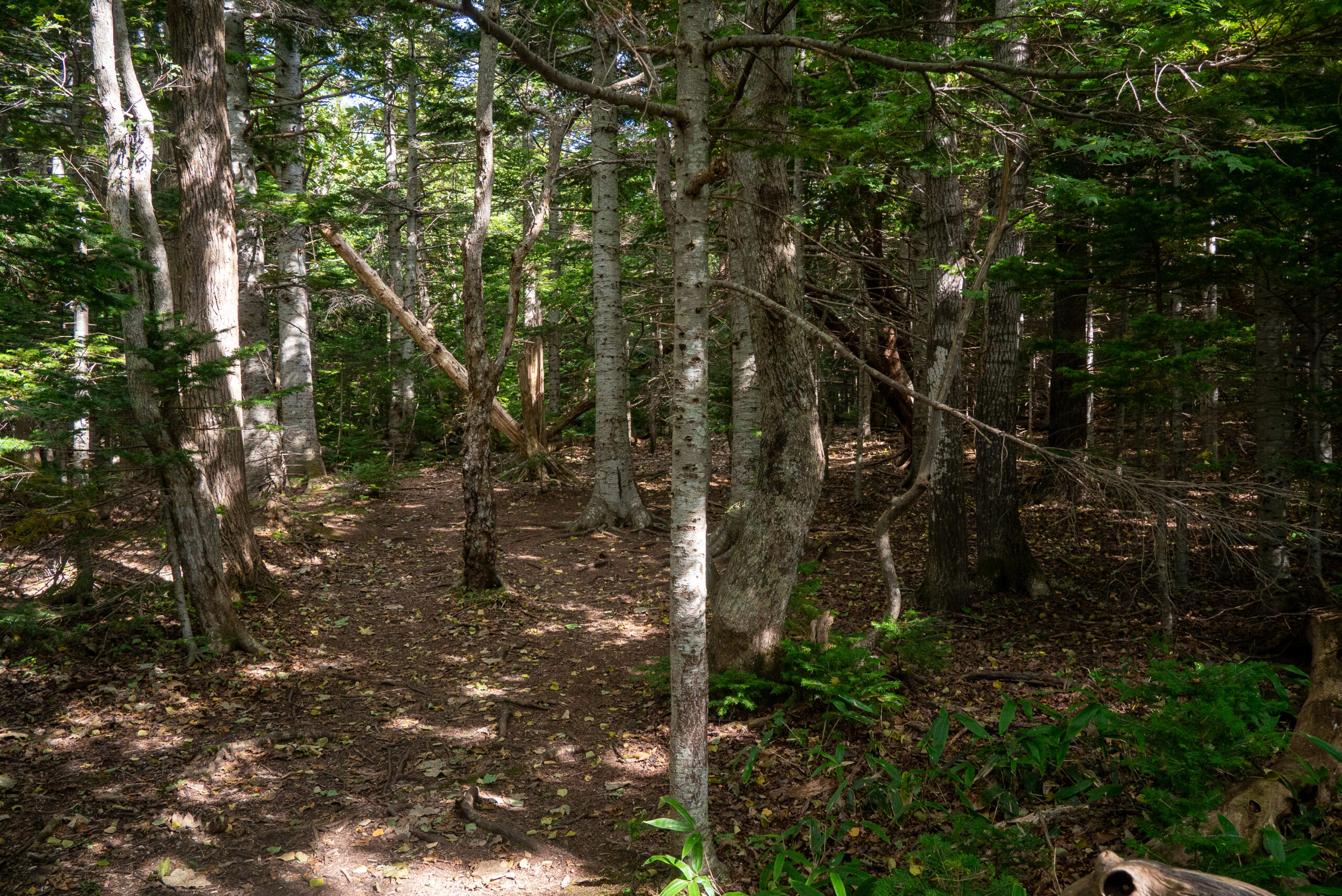
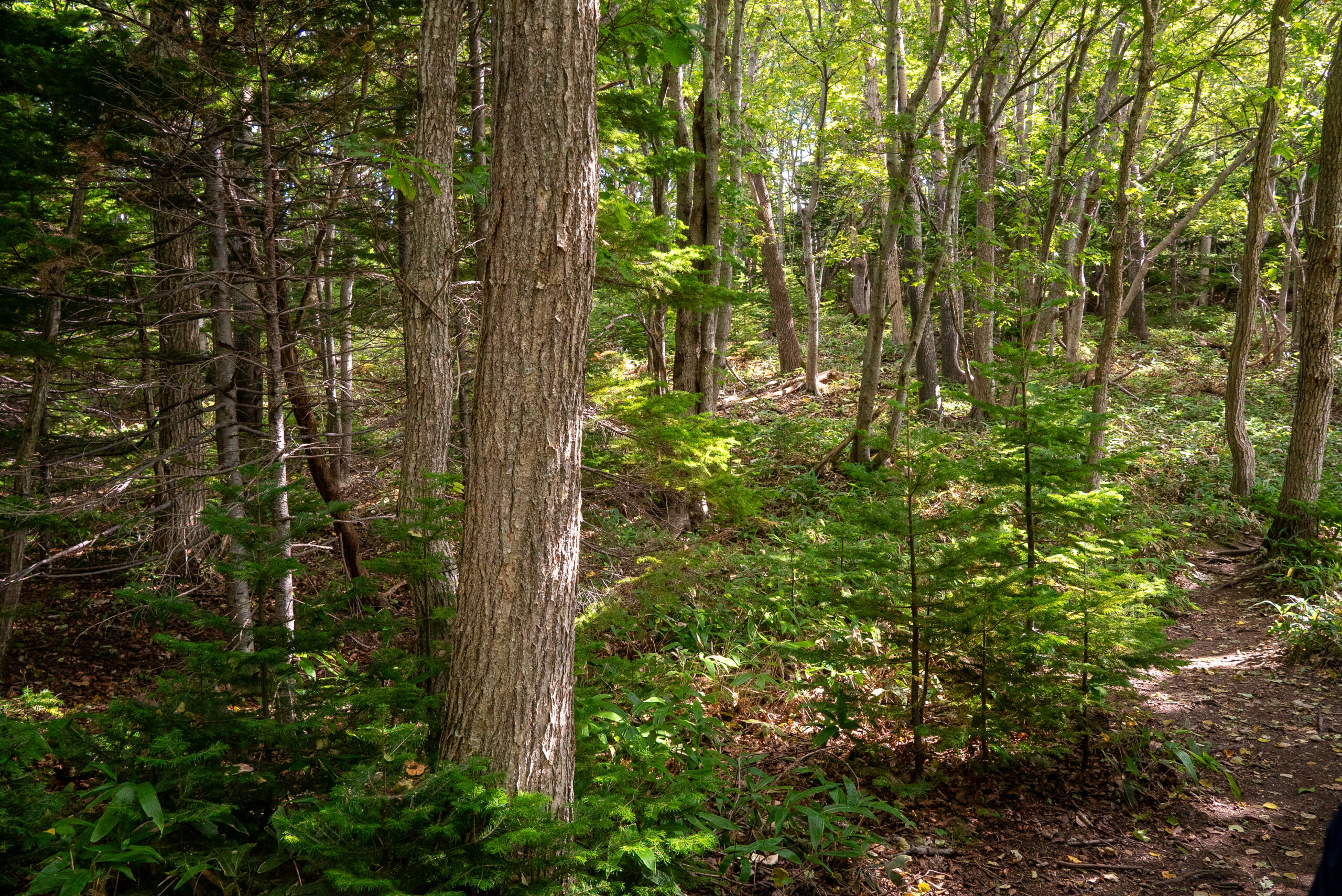
Here is the border between the secondary forest that has naturally regrown after Japanese settlers cleared the forest for potatoe fields, and the proper untouched forest that has never been cleared.
primeval forest
secondary forest
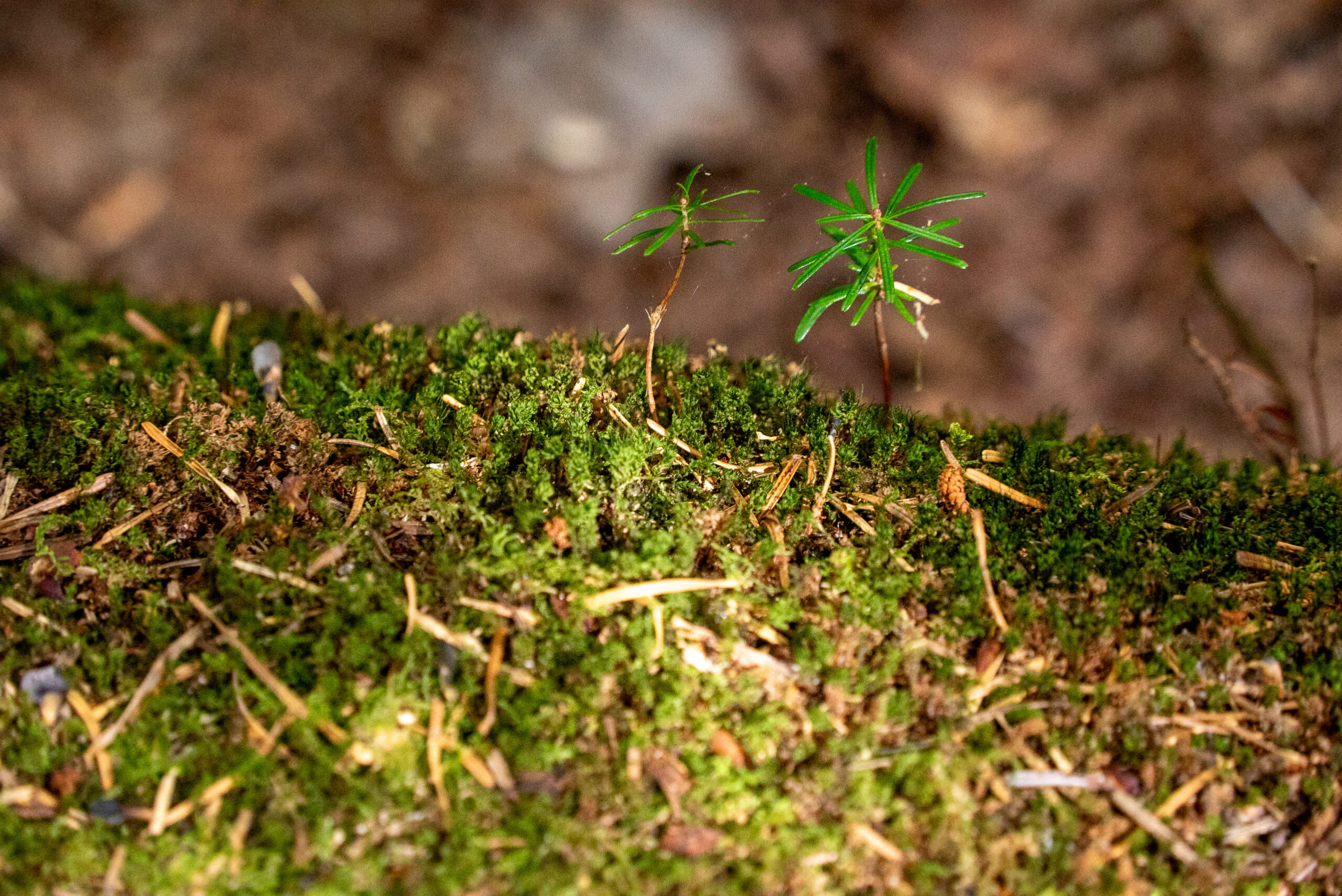
In the latter, there are mostly Sakhalin firs that are retreating more and more due to the growing temperatures. Here in the north of Hokkaido they still grow and they do so expecially well even without sunlight. When the canopy closes and the forest floor becomes uninhabitable to other plants, these small firs prosper and thrive until they themselves shadow the forest floor.
small firs, one and two years old
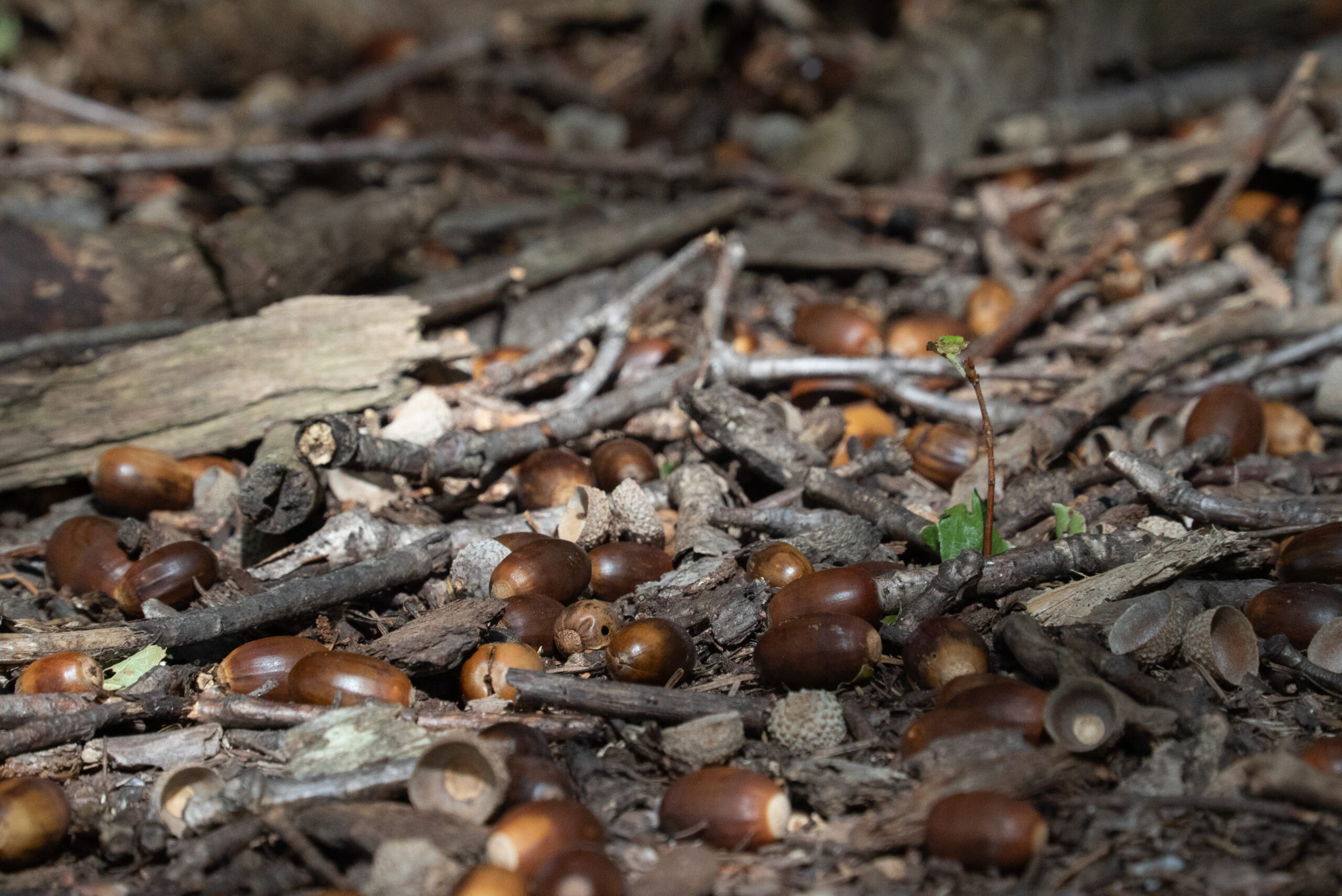
There are also many oaks that produce especially many acorns this year, so that in some parts these acrons almost completely blanketed the ground. One or two of these surely have the chance to compete with the firs.
Left and right of us there’s forest!
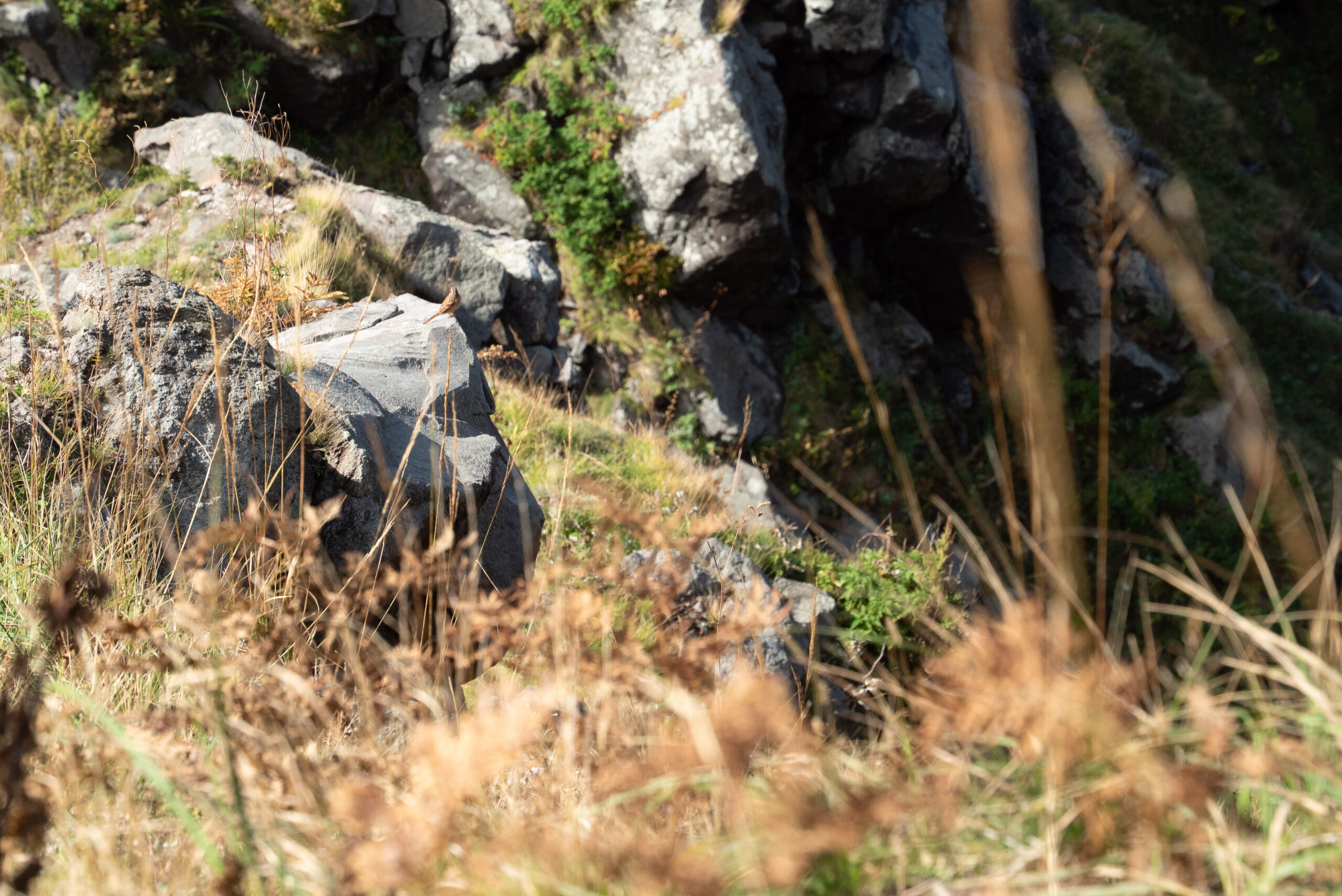
Here the wind has cut out a clearing. Since in this part every year strong winds blow from the mountains towards the sea and back again (depending on the time of year) the higher forest trees cannot establish themselves in the shallow soil and so the area belongs to the smaller shrubs and grases.
If you look closely, you can find a bird in this picture!
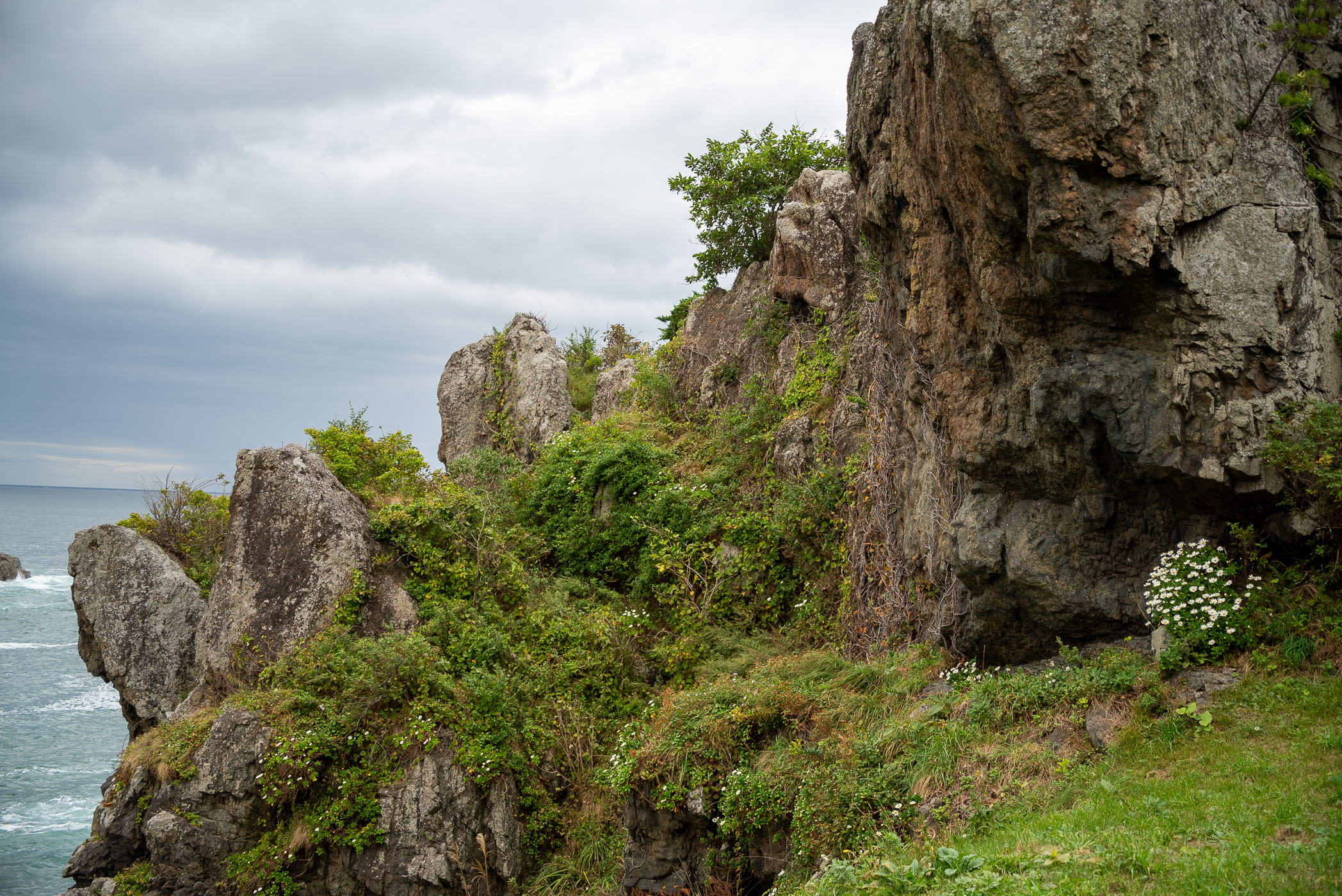
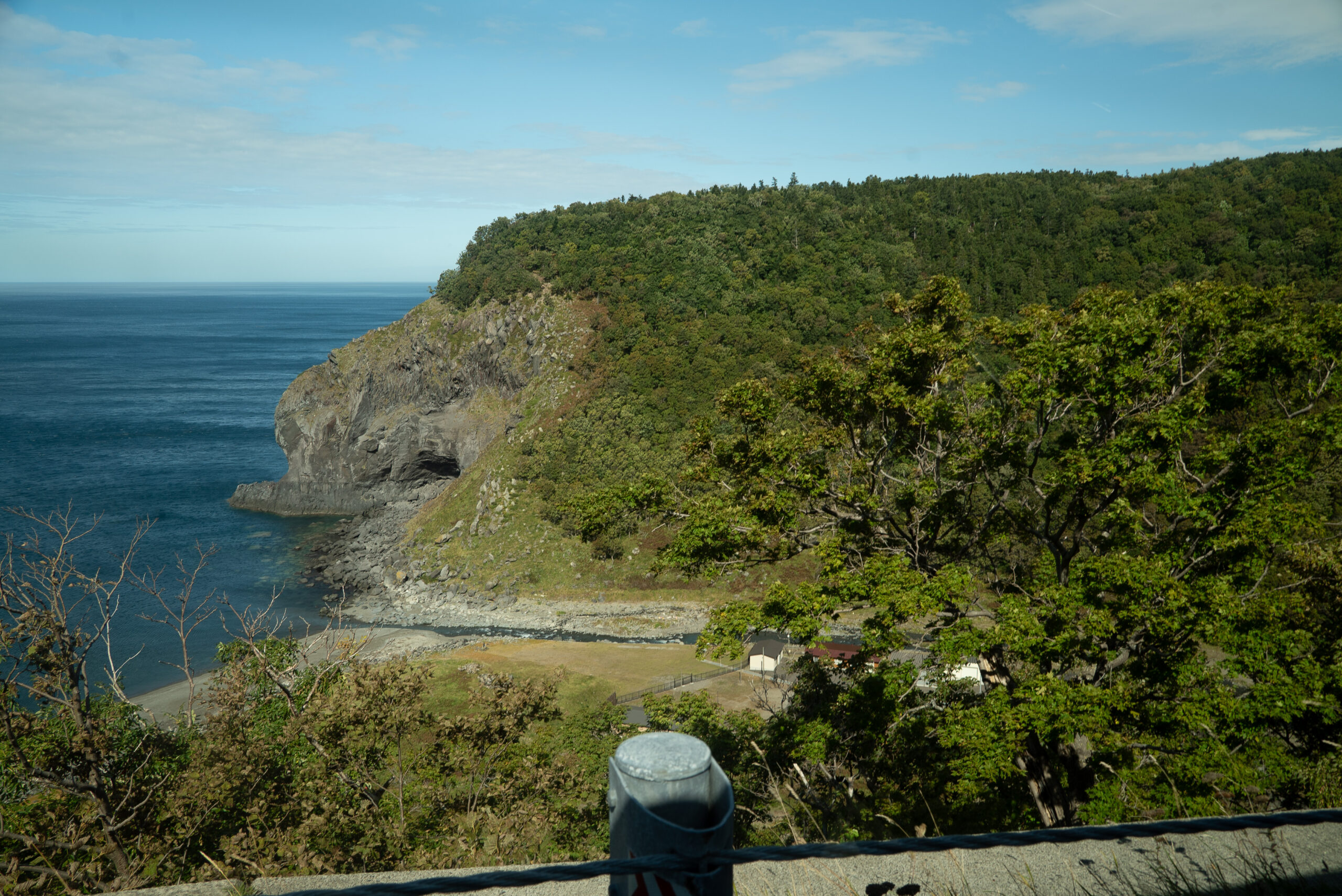
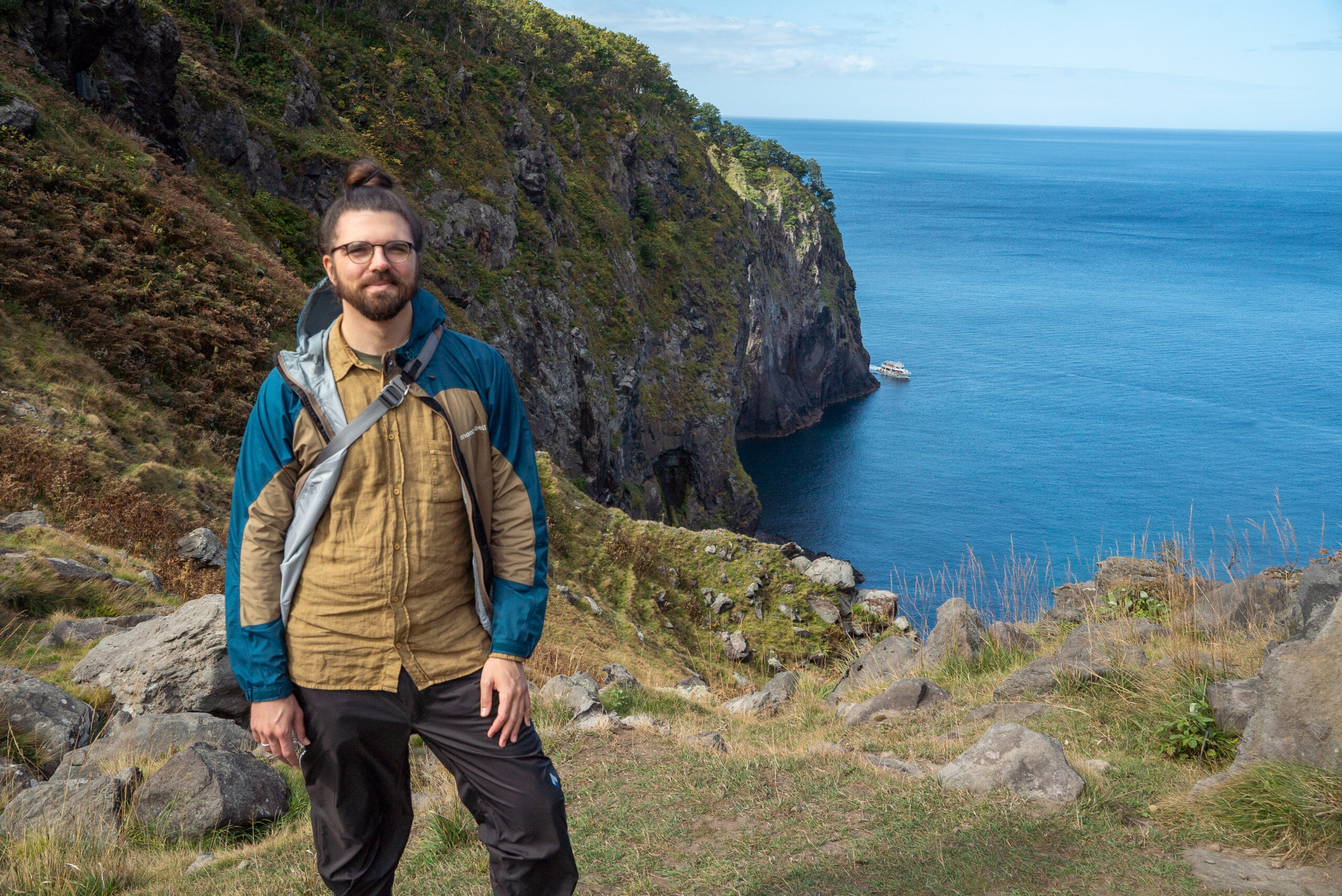
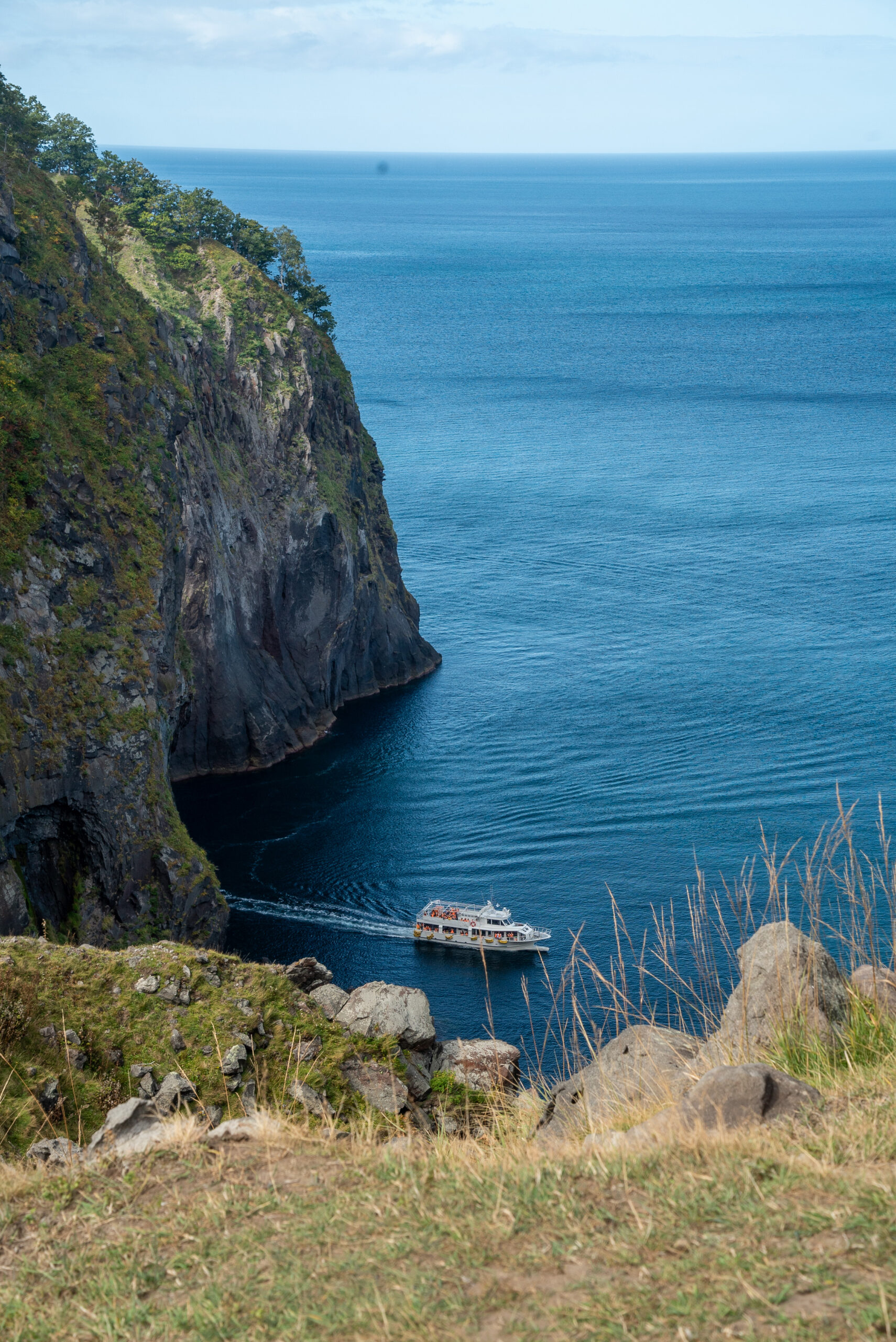
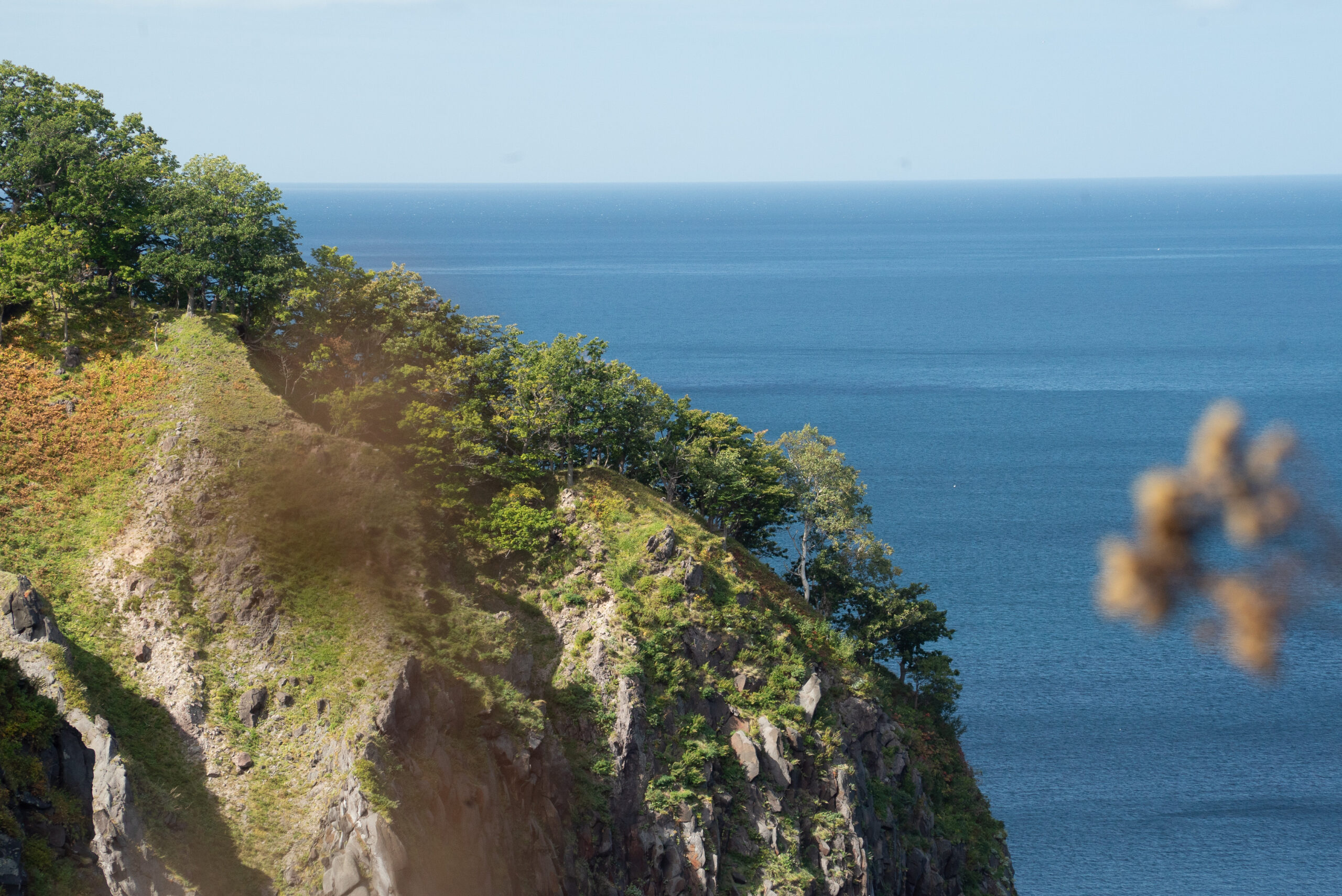
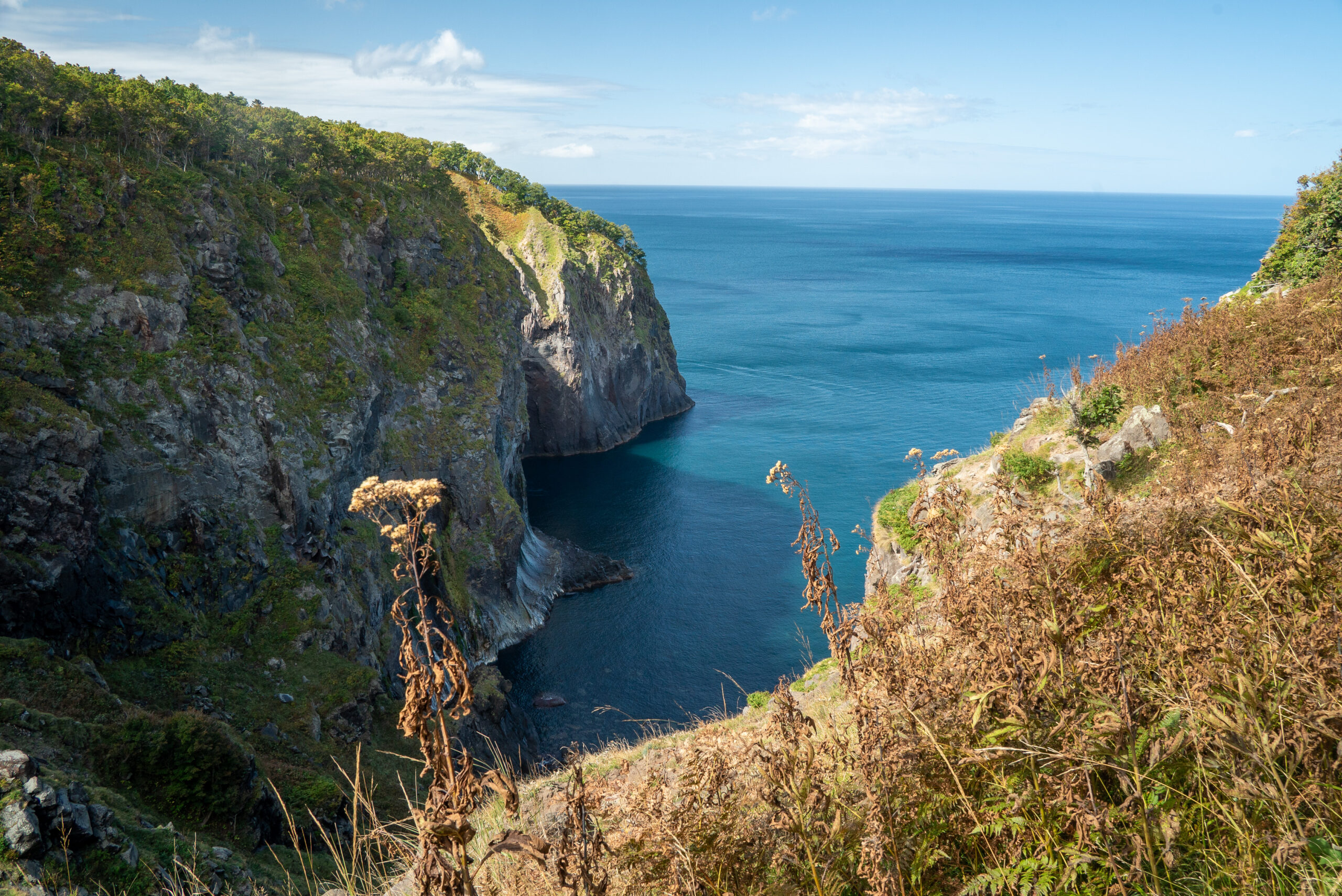
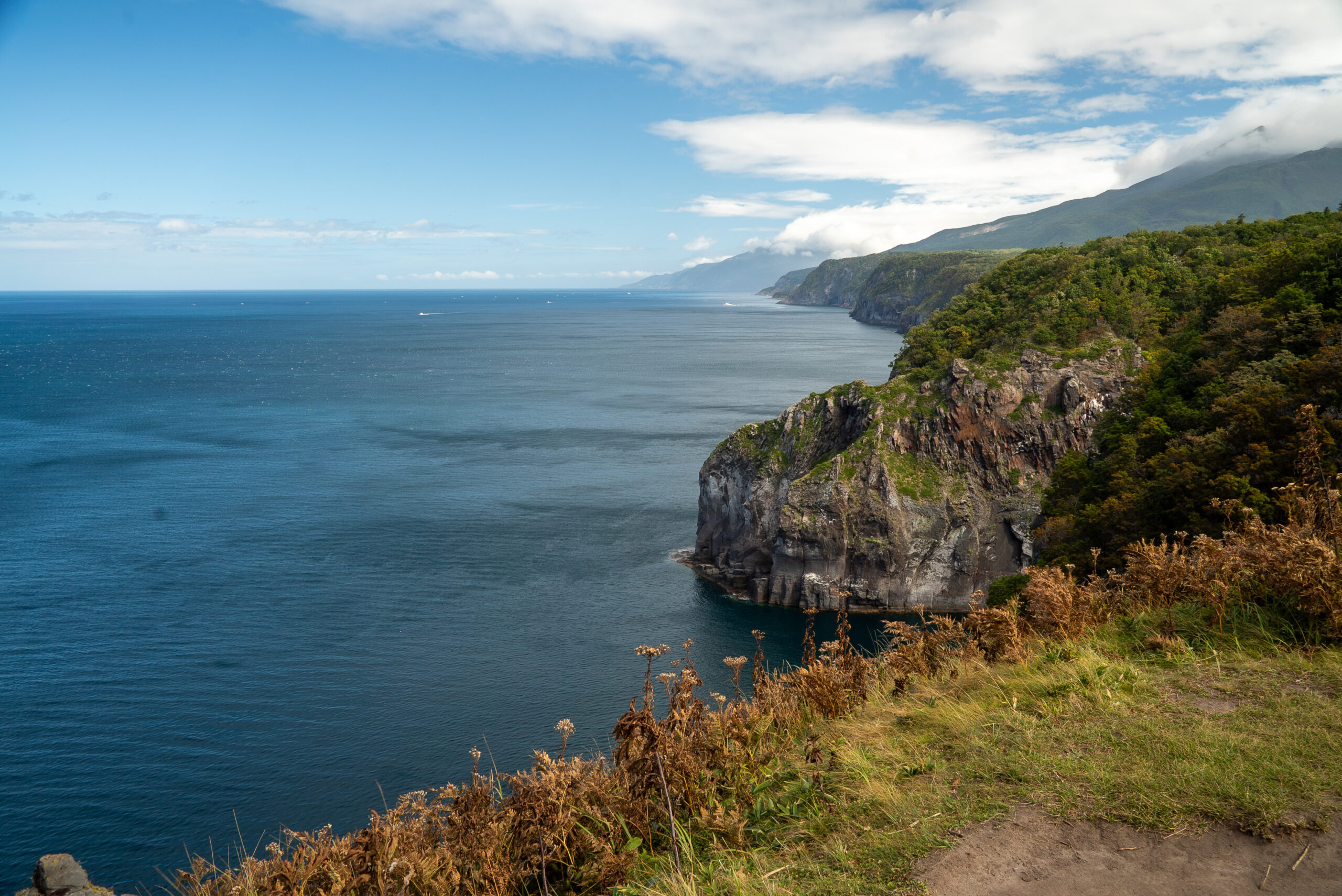
On these sceninc cliffs you can notice a characteristic of this area: The rockface looks almost carved out in parts! These erosions are caused by the drift ice that rubs against the cliff in winter. Of course, that’s a long process and some parts of the cliff must have broken off into the sea, they will only become hollowed out by the ice again after many centuries.
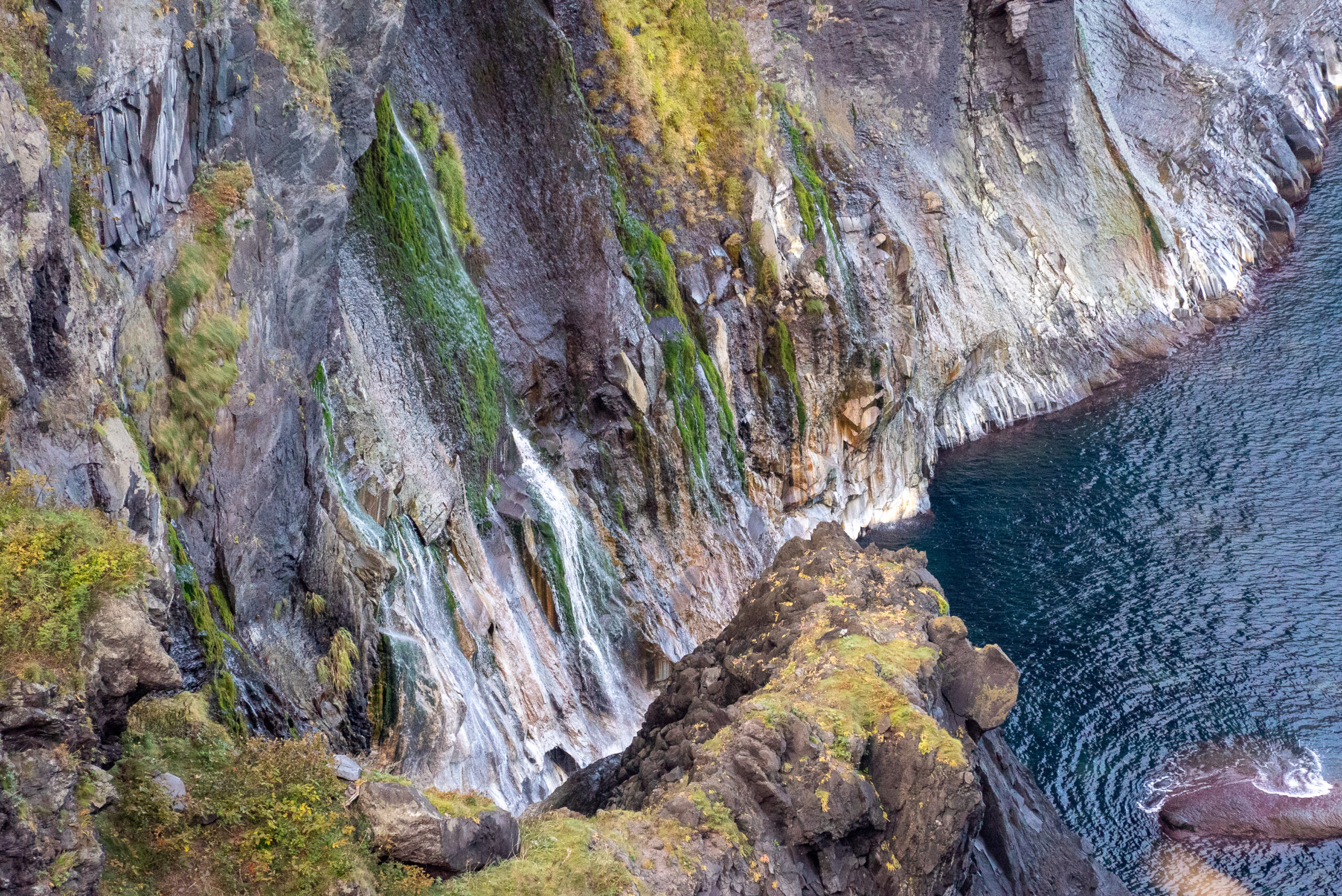
This nook of the coastline also hides a little waterfall, that is actually a spring. So no rain or riverwater is directly feeding it but the water comes us from the ground. This might be normal for some people, but we find it fascinating ^^”











































Leave a Reply