


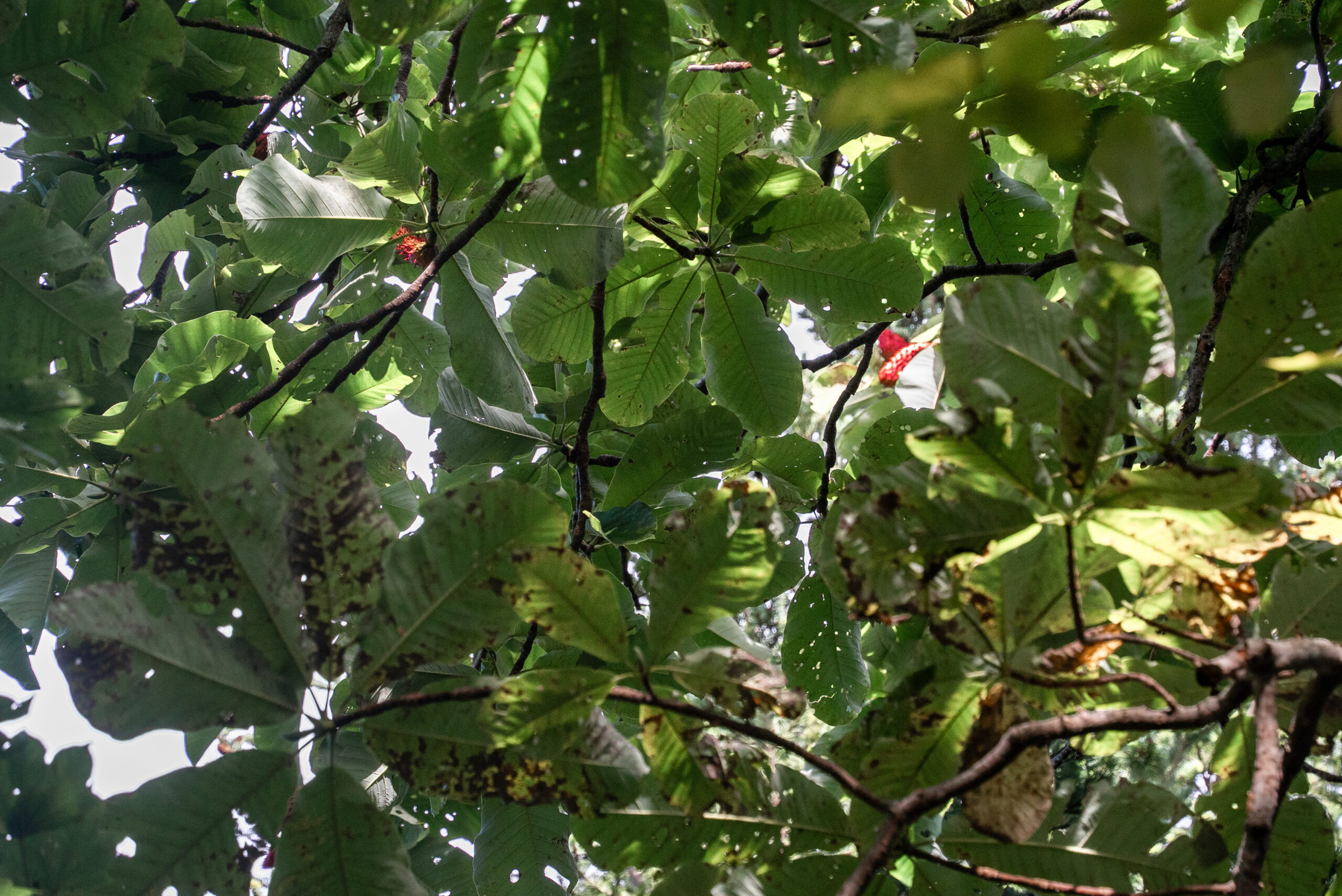
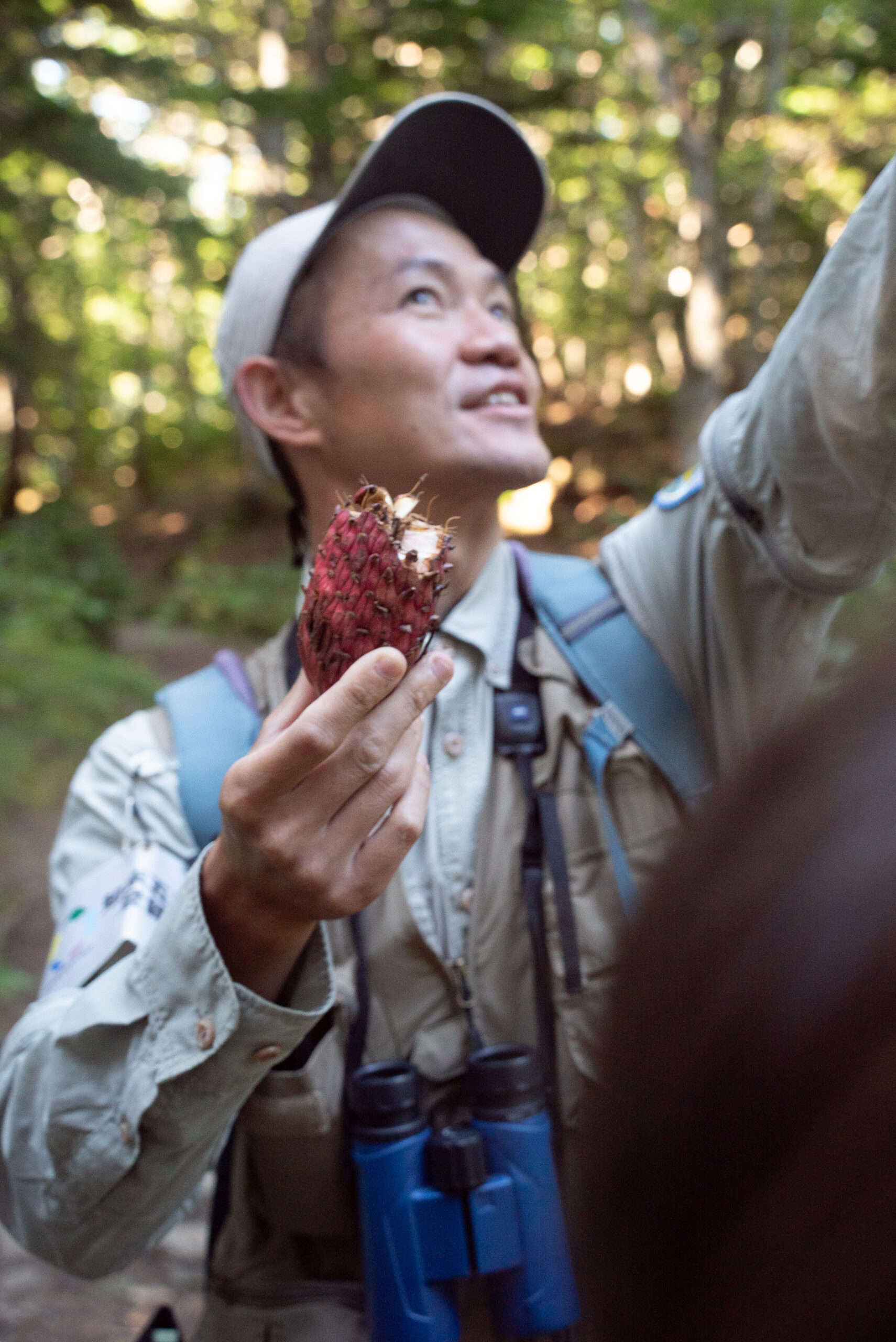

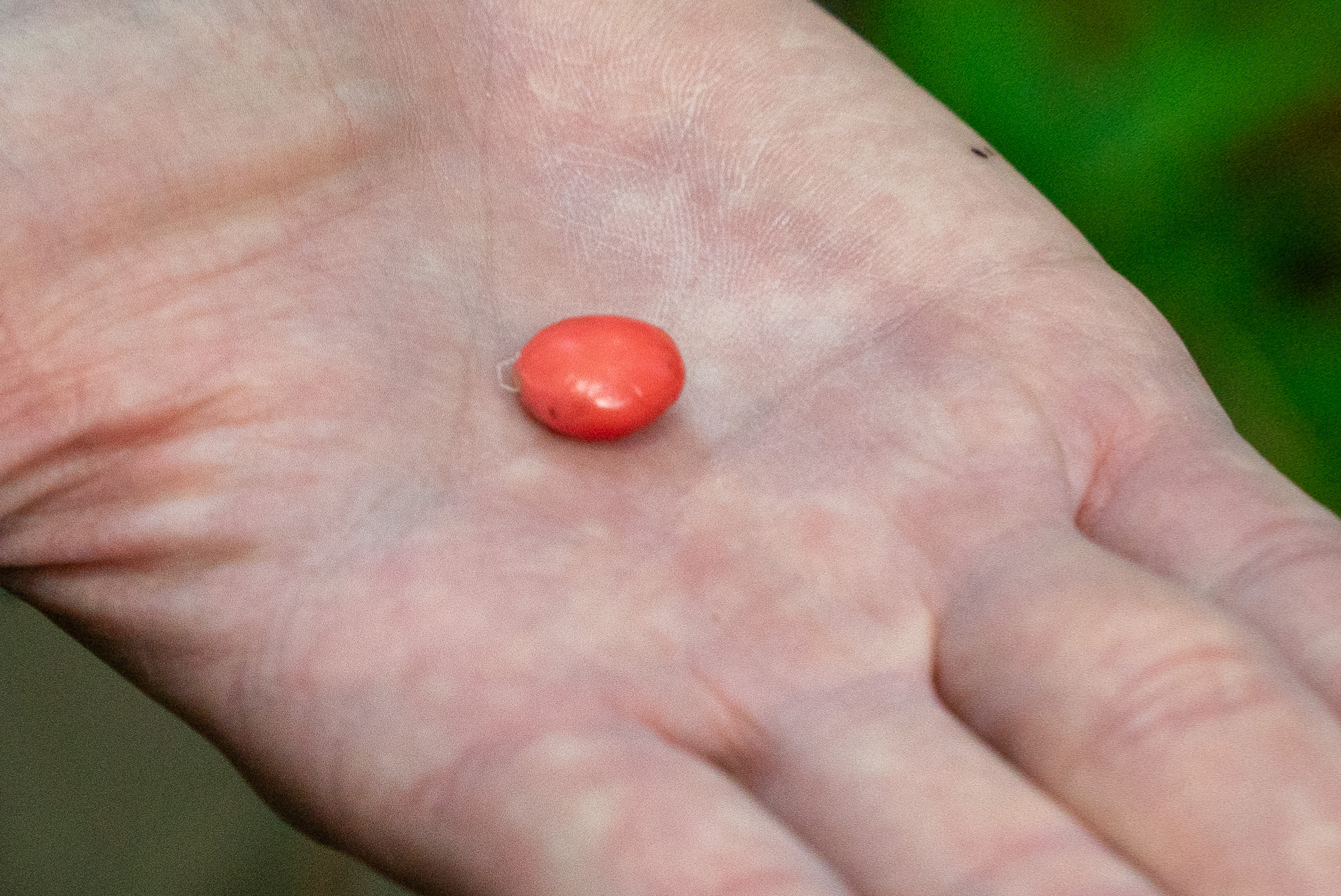
Here we see Makoto with the fruit of a Honoki magnolia (in Japanese just Hounoki – “Hou tree”). From the outside it looks a bit like a dragonfruit but you can’t just bite into it since it’s a follicle like star anise (and crazily enough apples – but they are a special variety). The leaves of this magnolia are calles Houba (“Hou leave”) and are used for cooking in Gifu and Nagano prefecture. You cannot eat the leaves as such, but they supply their aroma to the foods they are warpped around. Maybe we can try some Houbayaki (“Hou leave fried”) when we’re in Gifu – let’s see!
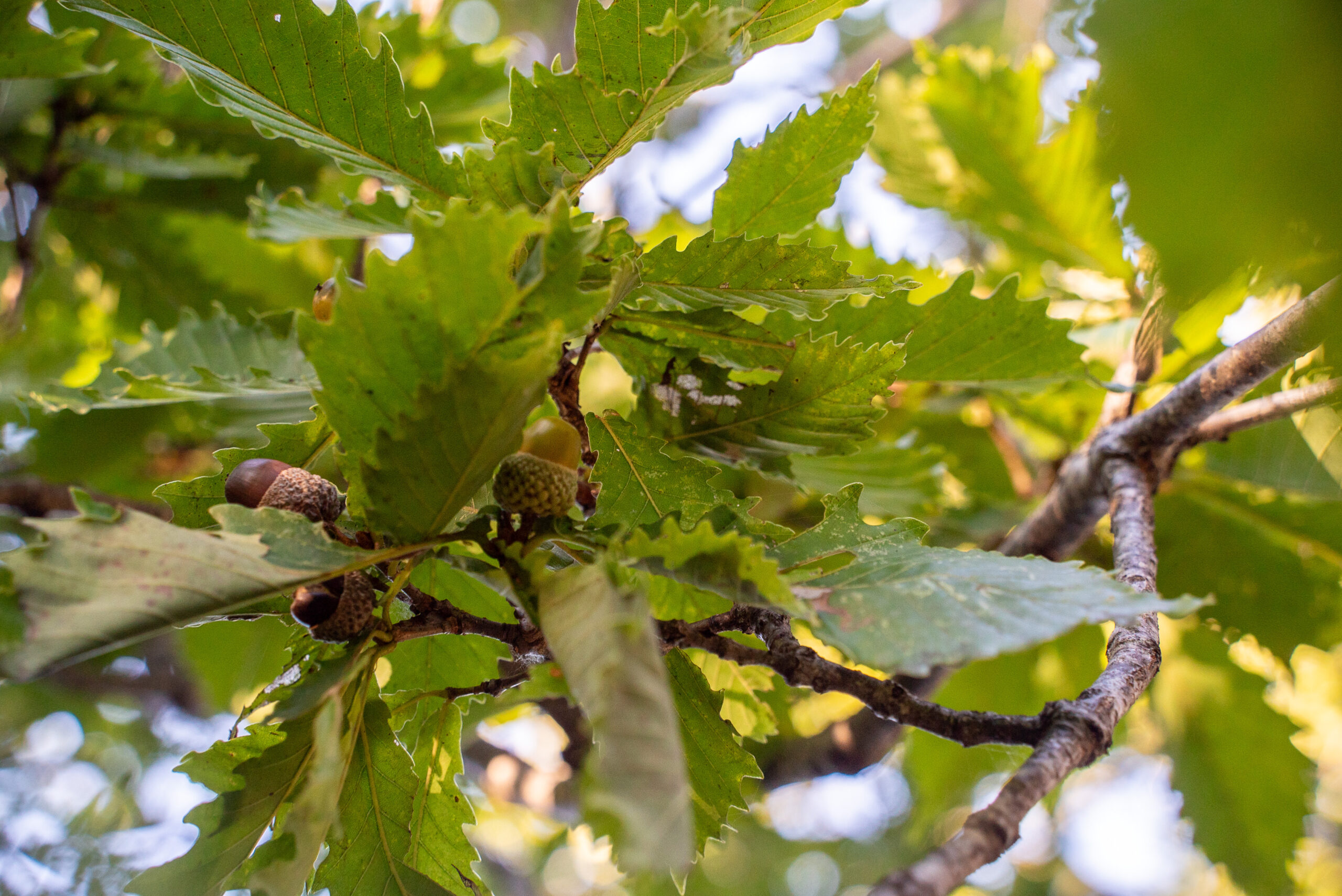
The forest here in Shiretoko feels very similar to a German forest, but all the plants are different. There are firs and oaks, but they are not the same as in Germany. The firs are Sakhalin firs and the oaks are apparently Japanese emperor oaks, the leaves are very differnt form our oaks at home.
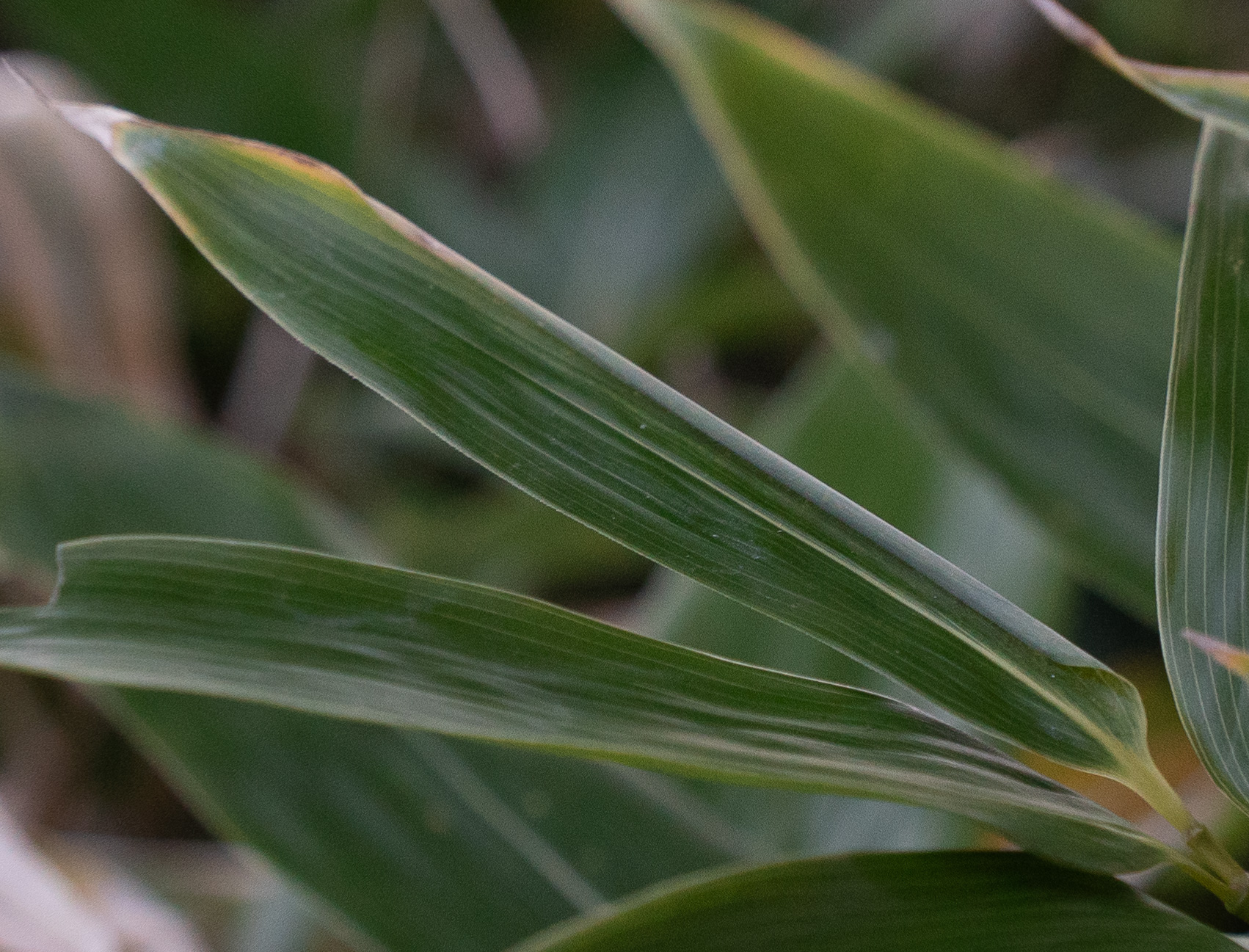
Also, the ground is not just covered by ferns, but mostly by two kinds of broad-leaf bamboo (I think it was Kuma-sasa (sasa veitchii) and Chishima-sasa (Kuril bamboo), but I couldn’t remember the names very well).
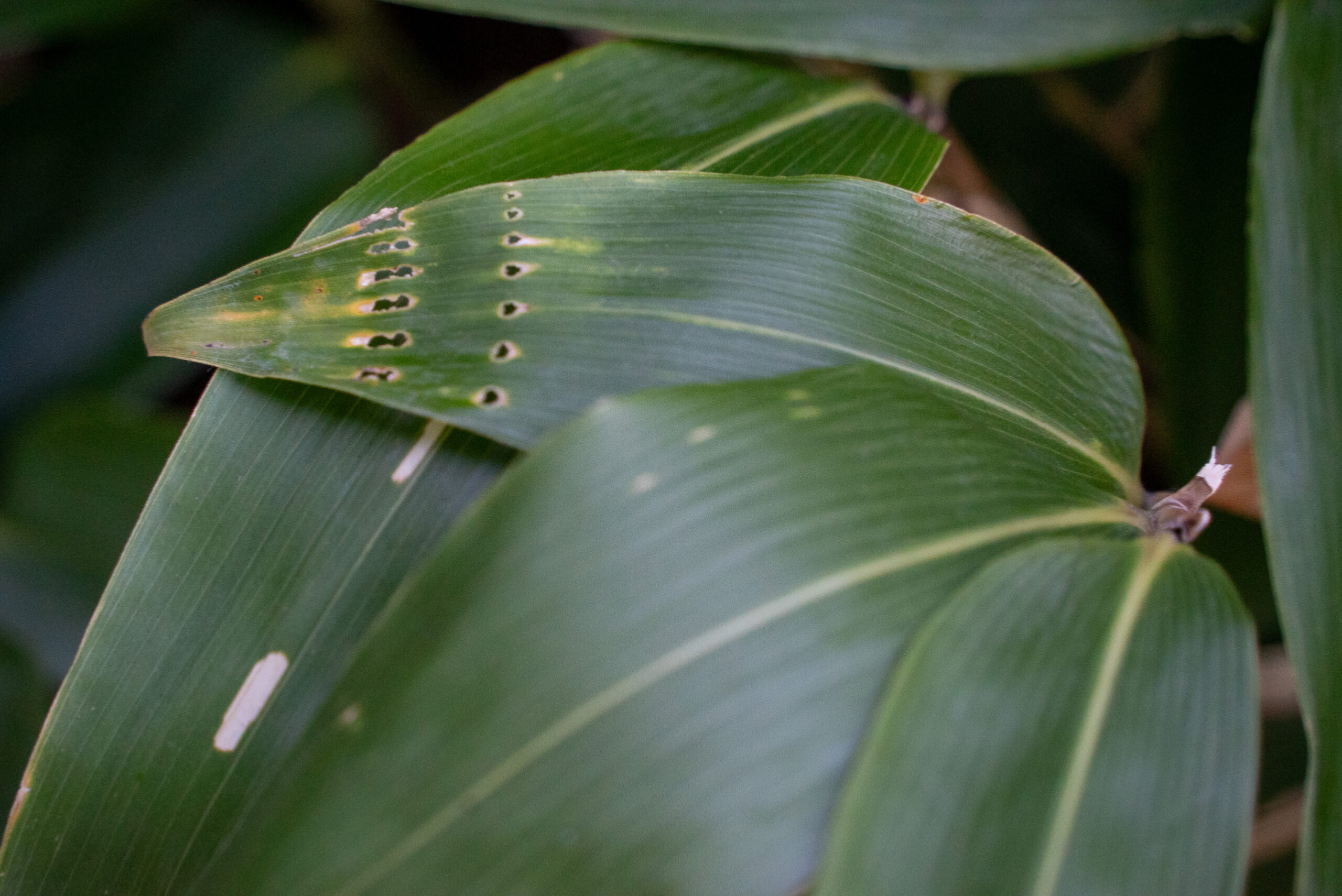
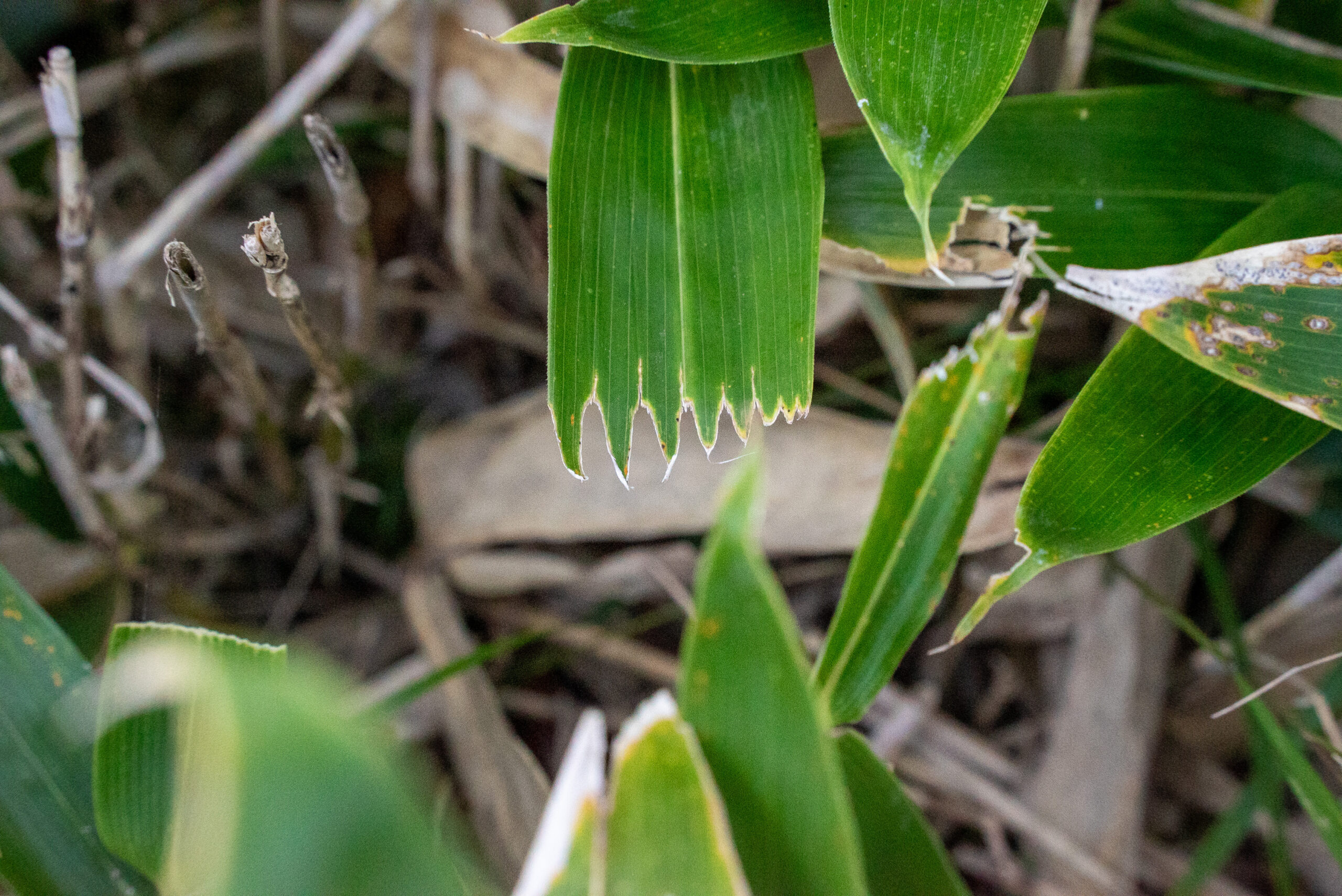
I’ve got a short anecdote about that: We saw a lot of leaves that seemed to be chewed off in a zig-zag pattern. This is the doing of a bug that knaws the young bamboo leaves while they are still coiled up. Once the leave unfolds, you can see a pattern of holes – in principle that’s similar to when you cut a snowflake from paper. When the hole is to big, the leave will rip off, leaving the zig-zag pattern.
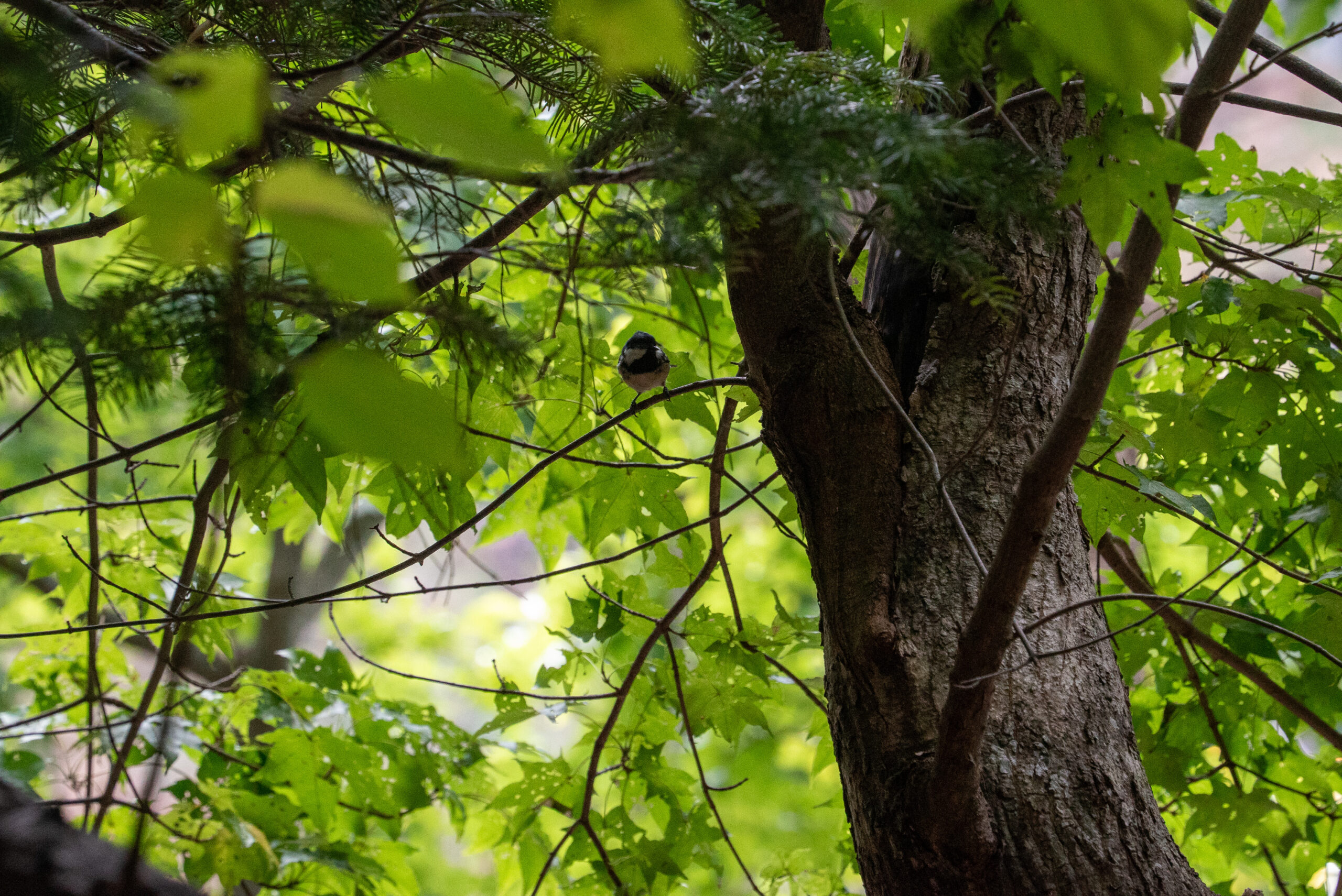
The birds here are also differnt. We saw a coal tit which litterally translates to “Kohlmeise”, which is a bird we have, but the Japanese coal tit is the German bird “Tannenmeise” (which we hadn’t seen before). And there were birds looking similar to sparrows, but not just quite. Only the spotted woodpecker seems to be the same, or at least it looked the same to us.
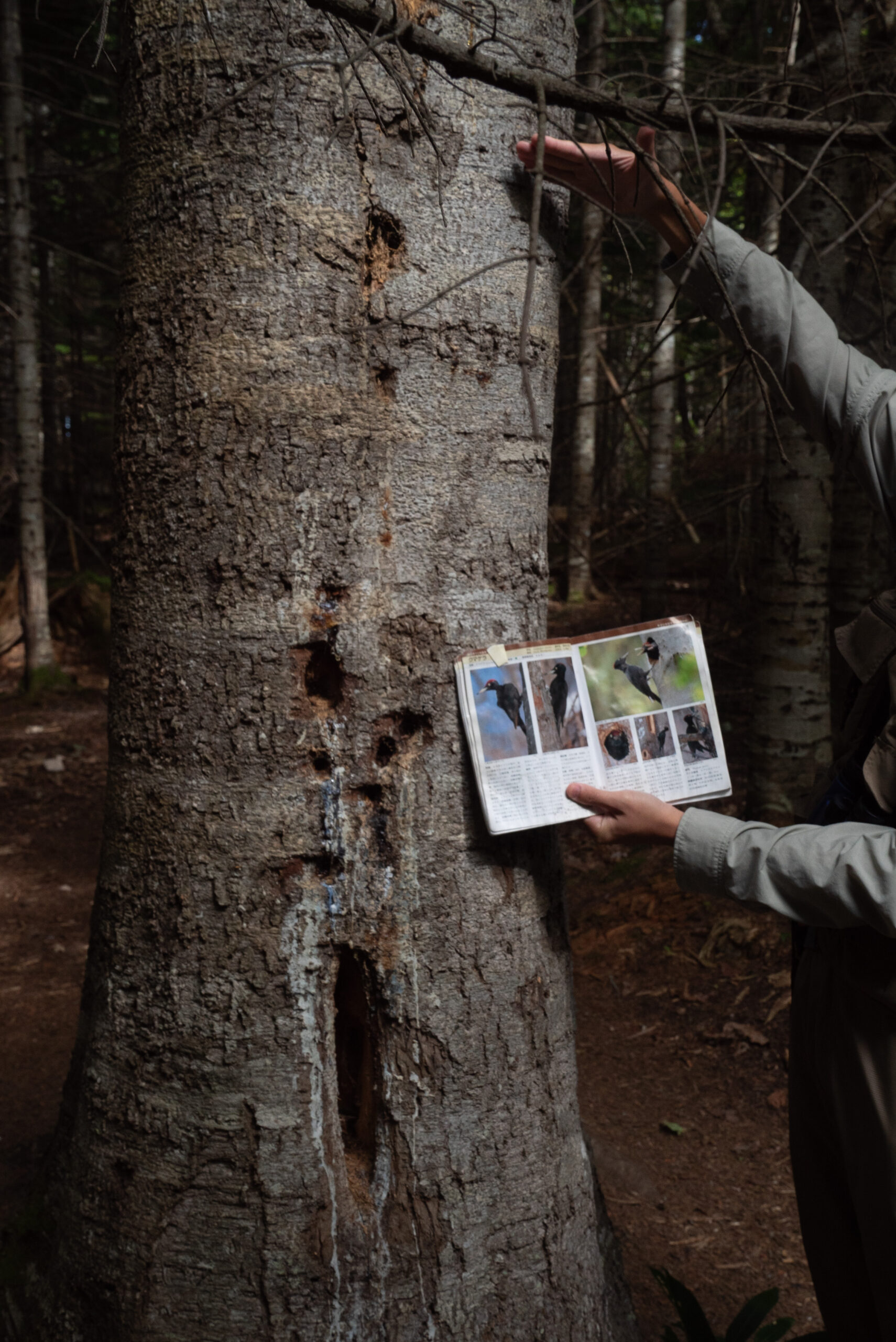
We also saw the traces of the black woodpecker, that wikipedia says also exists in Germany, but we’ve never seen it.
We didn’t know the traces yet though: on this tree you can see huge holes the woodpecker picks to get to its favorite food, ants. The ends live throughout the whole tree and so the the woodpecker picks open the whole tree in an almost straight line, sometimes even very low which seems a bit precarious.
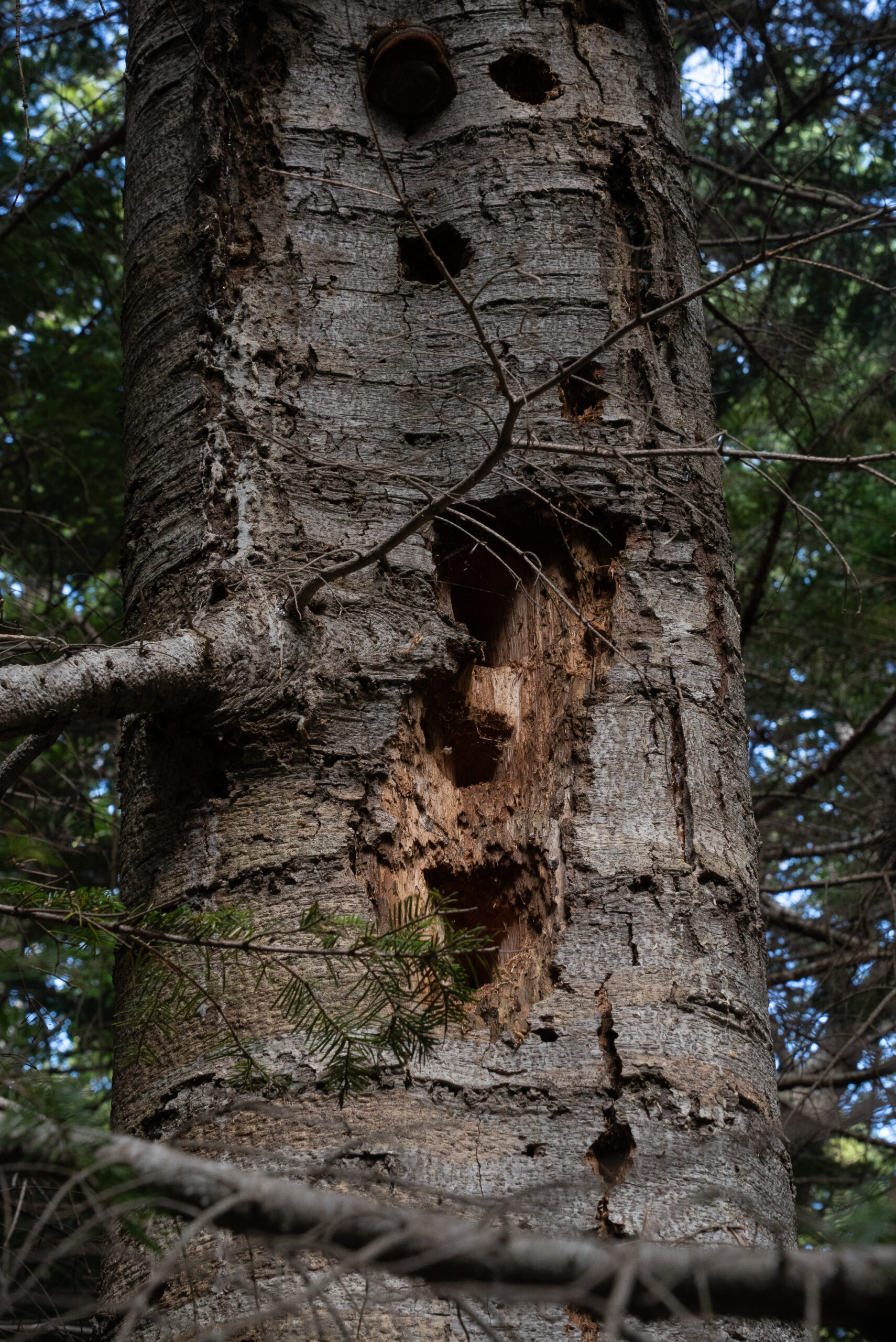
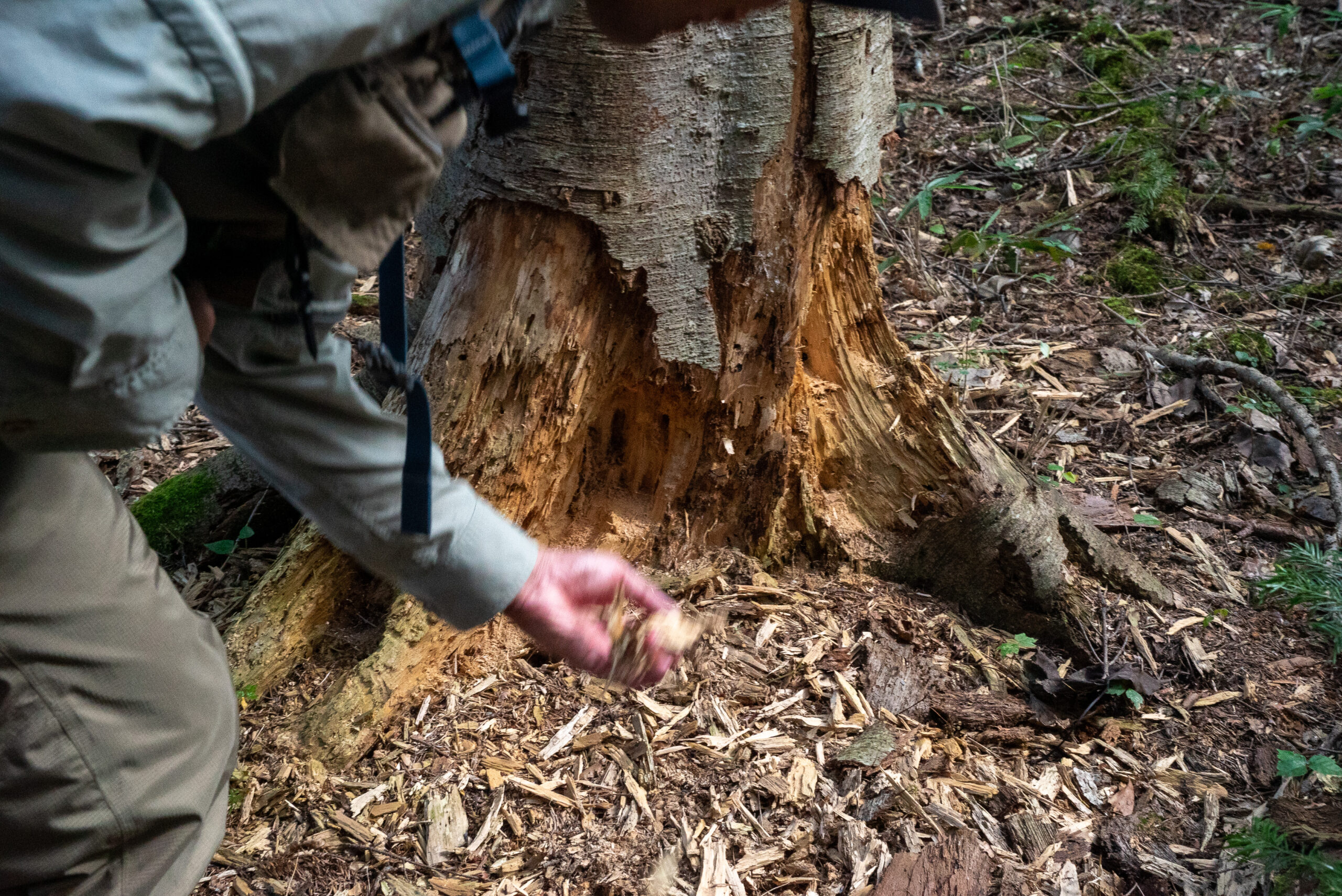
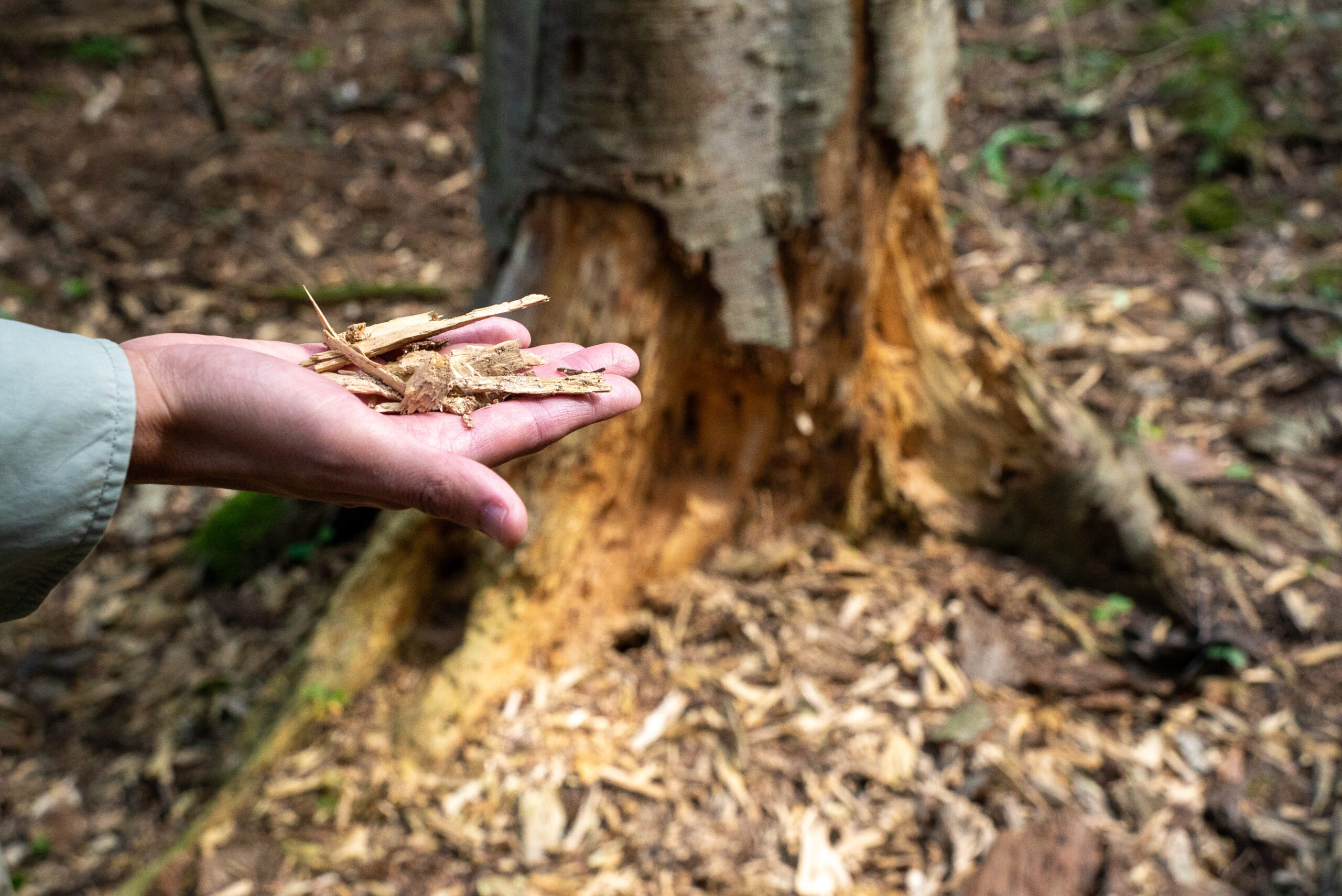
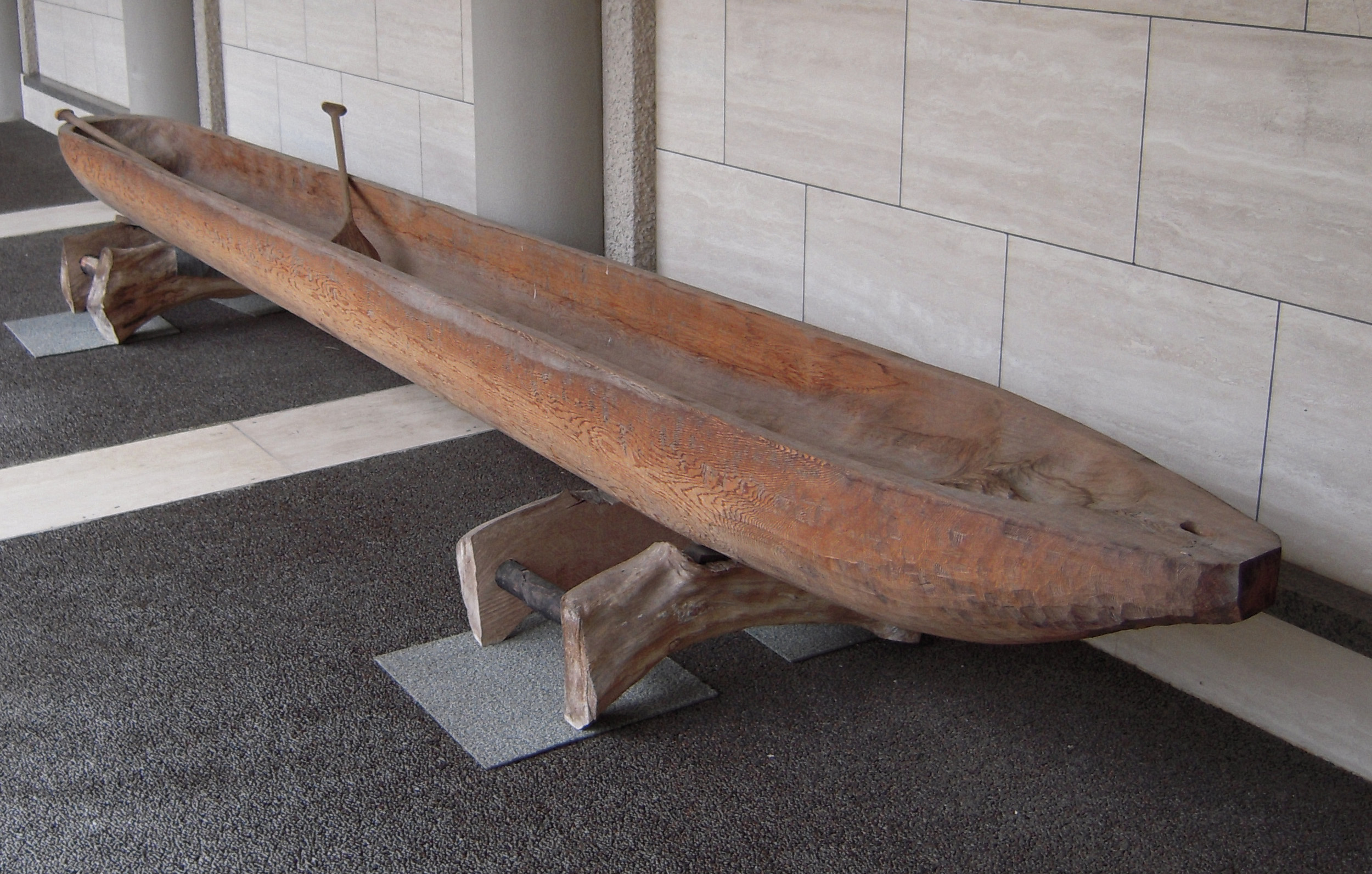
Because of this the black woodpecker is calles Cip ta cikap kamuy – boat hollowing bird god in the Ainu language, since the trunks that have been picked at look almost like a dugout-canoe. Maybe we find out the correct pronouncion in Biratori.
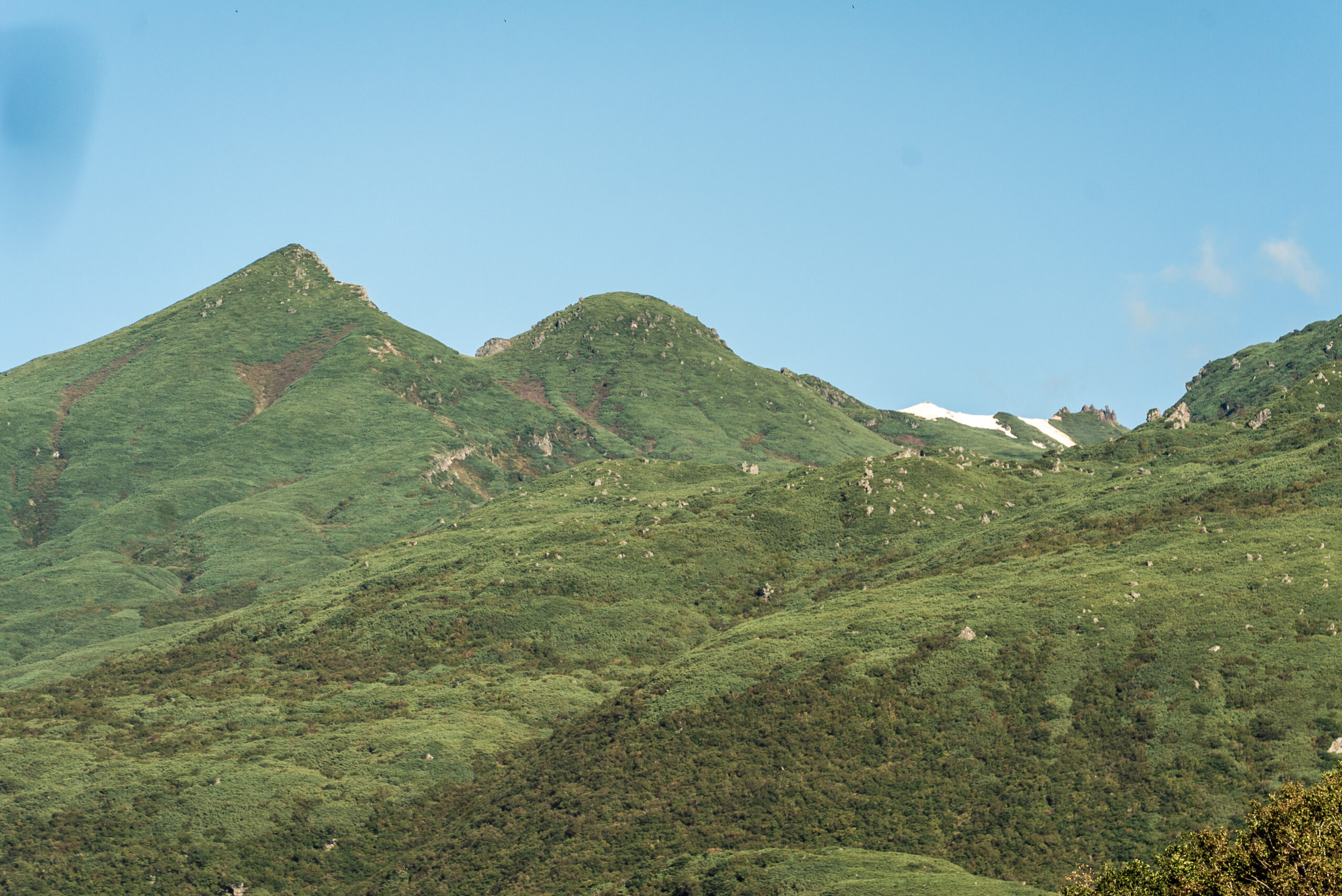
A mountain you could see from the five lakes had a white top. However, this is not snow but mineral resedue due to the vulcanic activity.
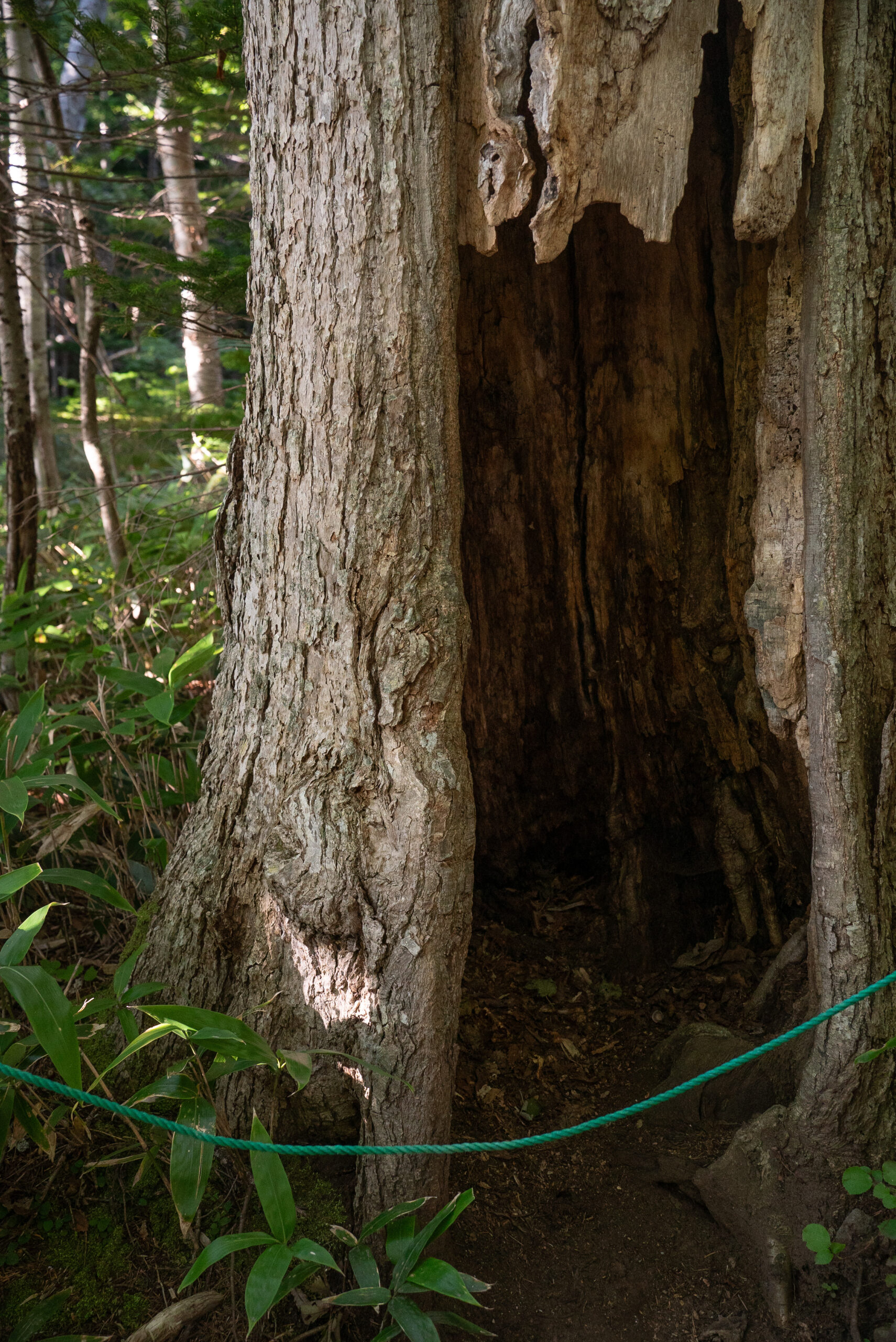
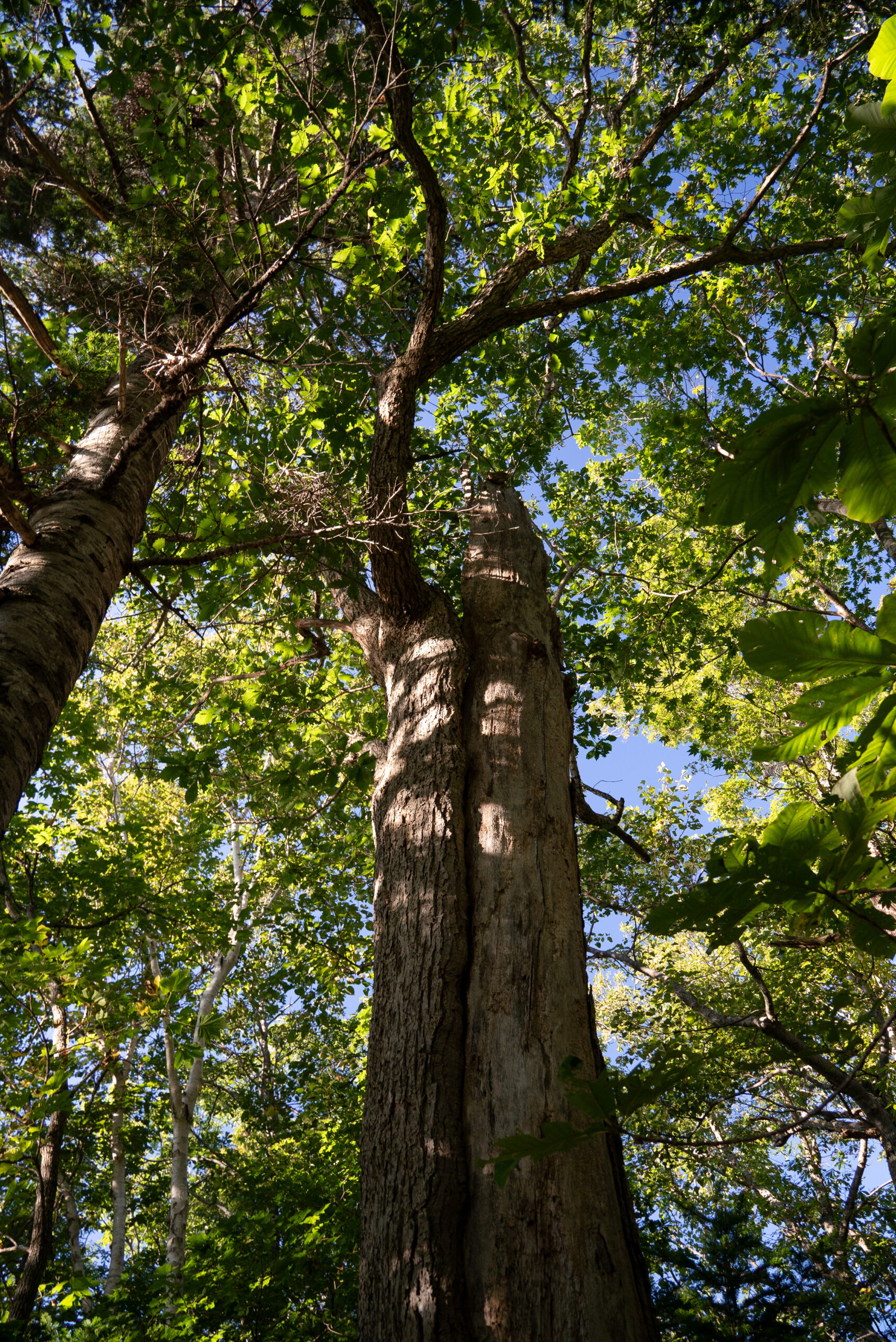
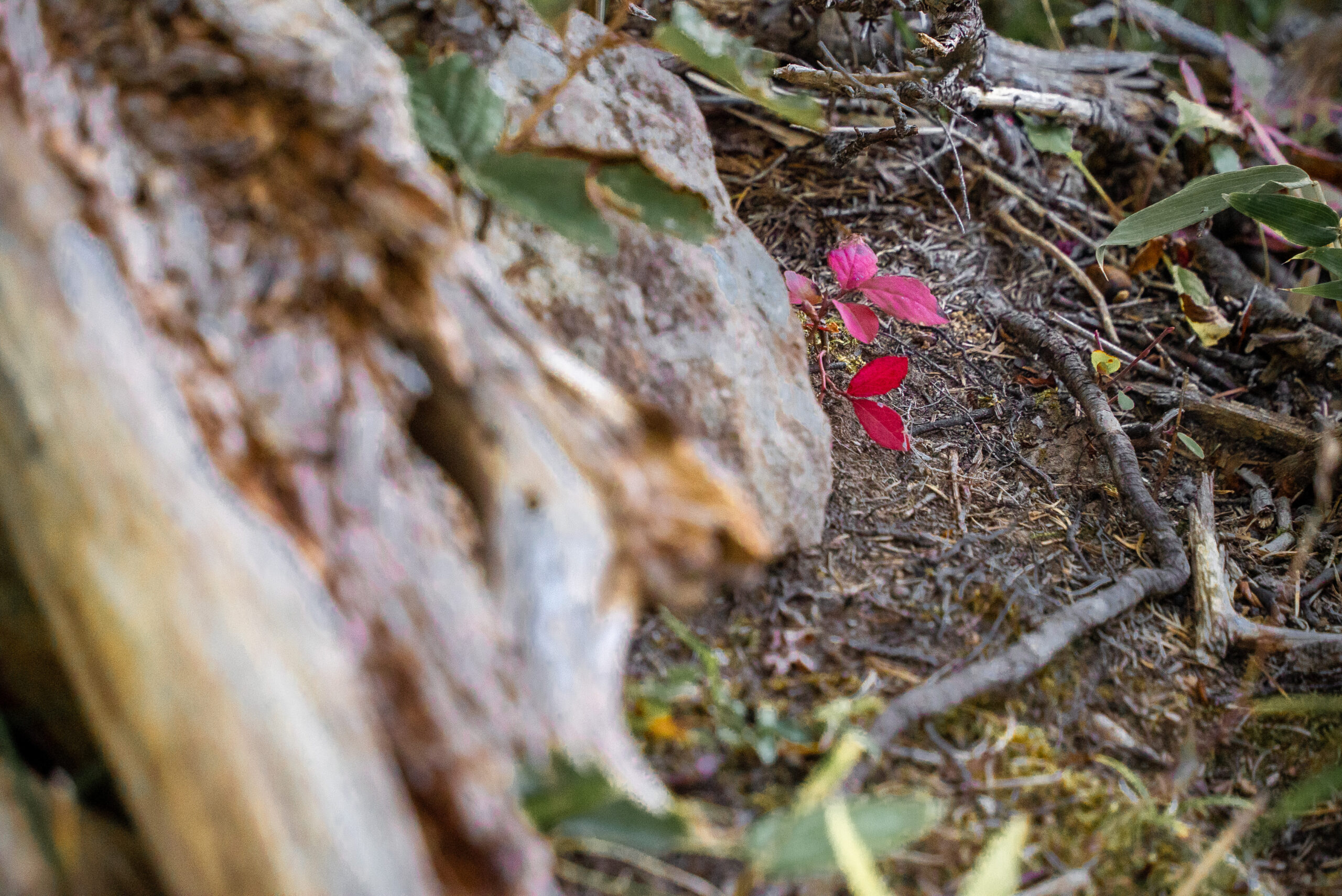
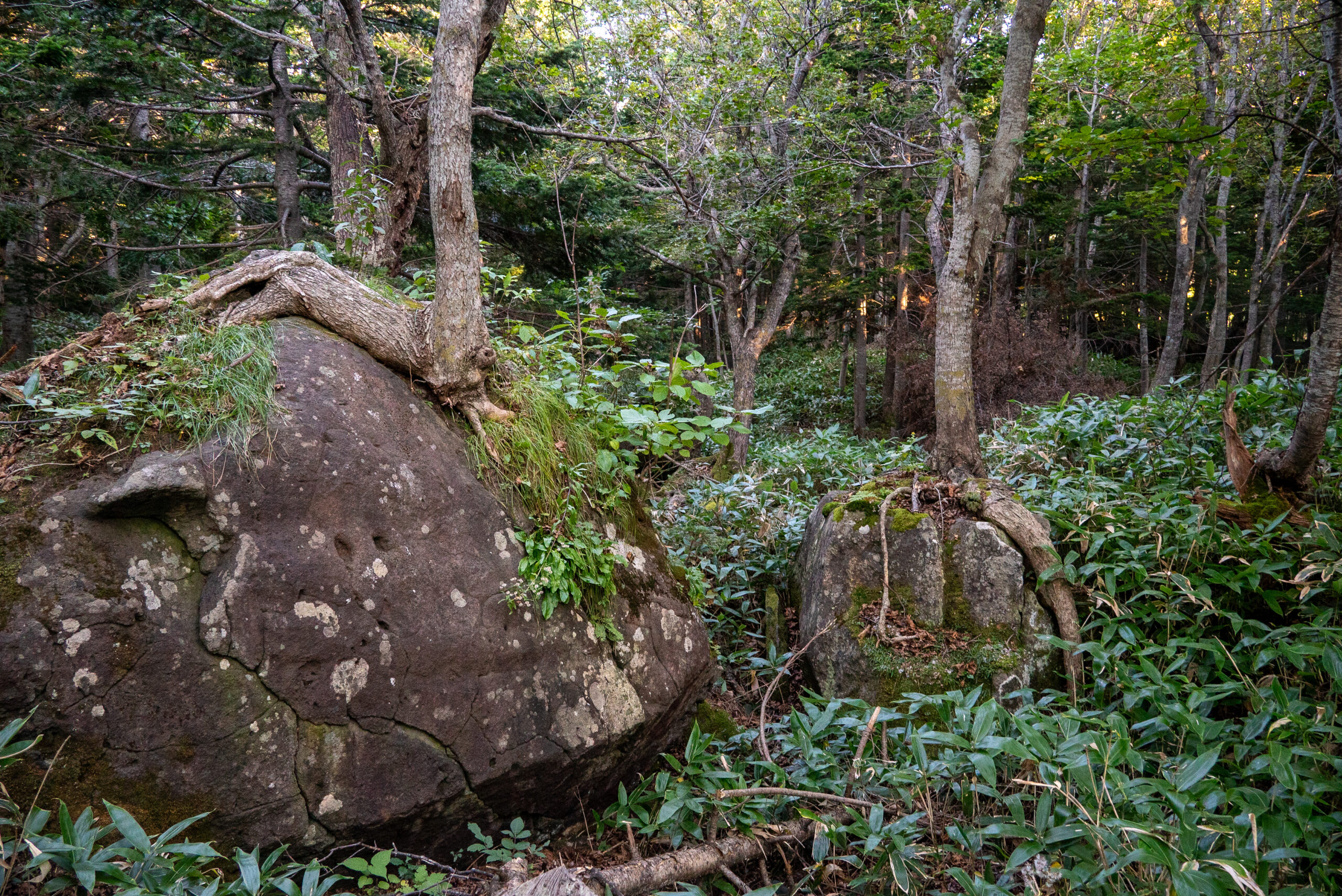
This tree is doing fine, since its bark is intact. However, it is in danger of been blown over due to its missing center. Luckly, it seems to be standing in a rather protected spot. Generally the trees here are very prone to being felld by the wind and you see a lot of trees that have all fallen in the same direction. This is due to the shallow roots that soon hit the hard rock of the volcanic island.

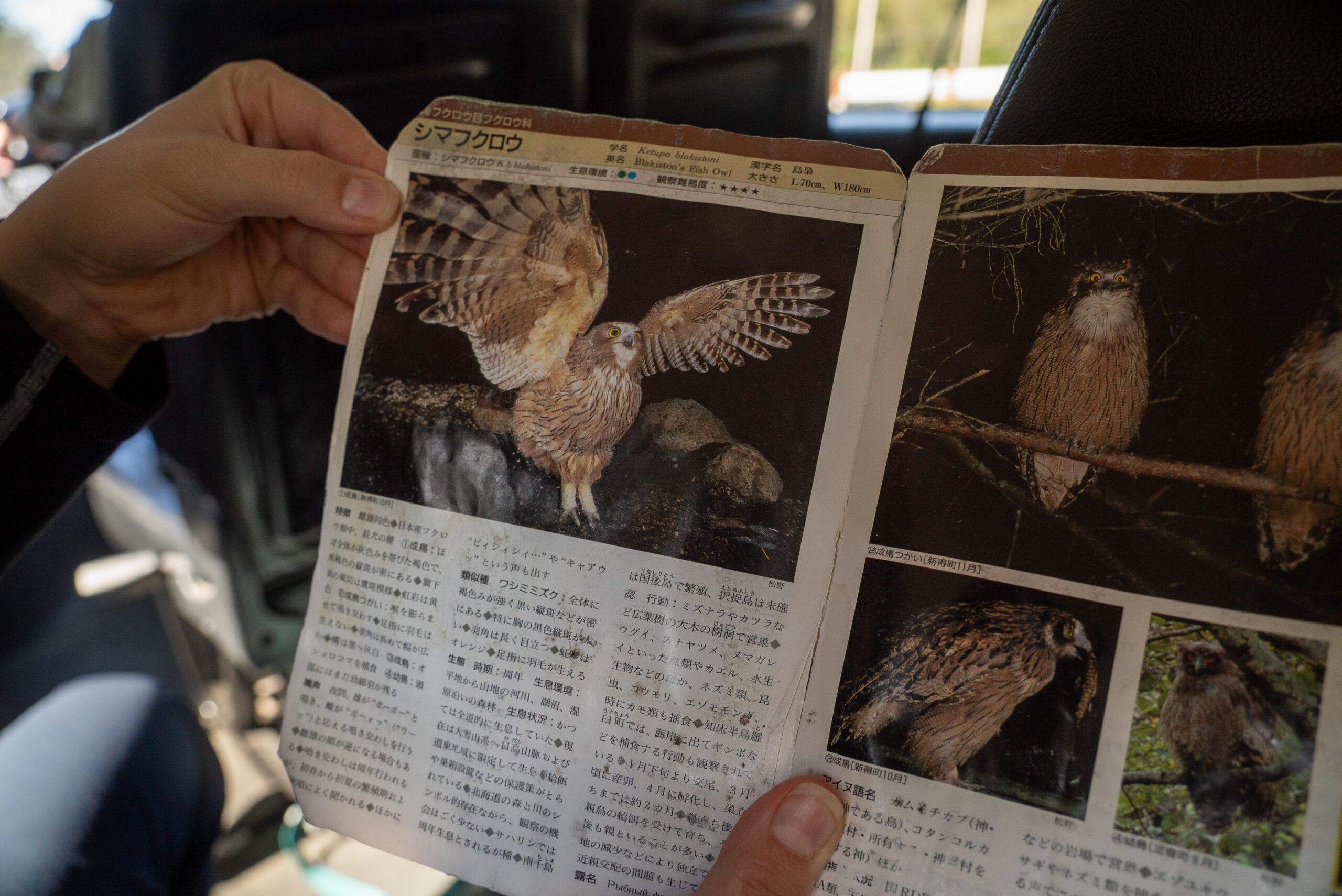
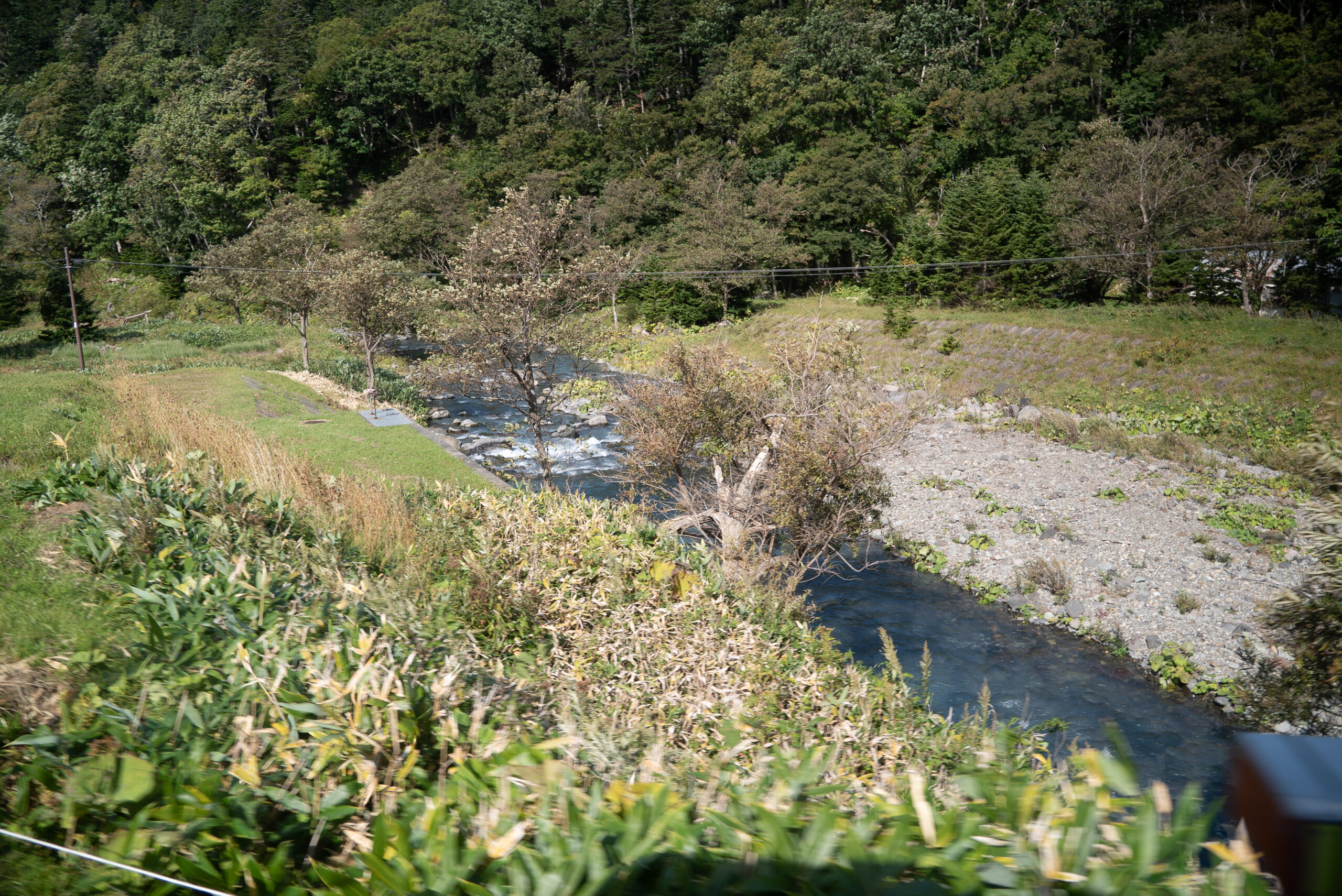
On the sides of the bridges there are long, white poles attached. They protect cars from colliding with the enormous Blakiston’s fish owl that is hunting in the river below the bridge. With their wingspan of two meters they just don’t fit inbetween the poles that are only one meter apart. On the way to Biratori we saw more bridges prepared like this. We never saw the accompanying olw though, because first of all it’s nocturnal and secondly there is less than 1000 of theses birds left : (

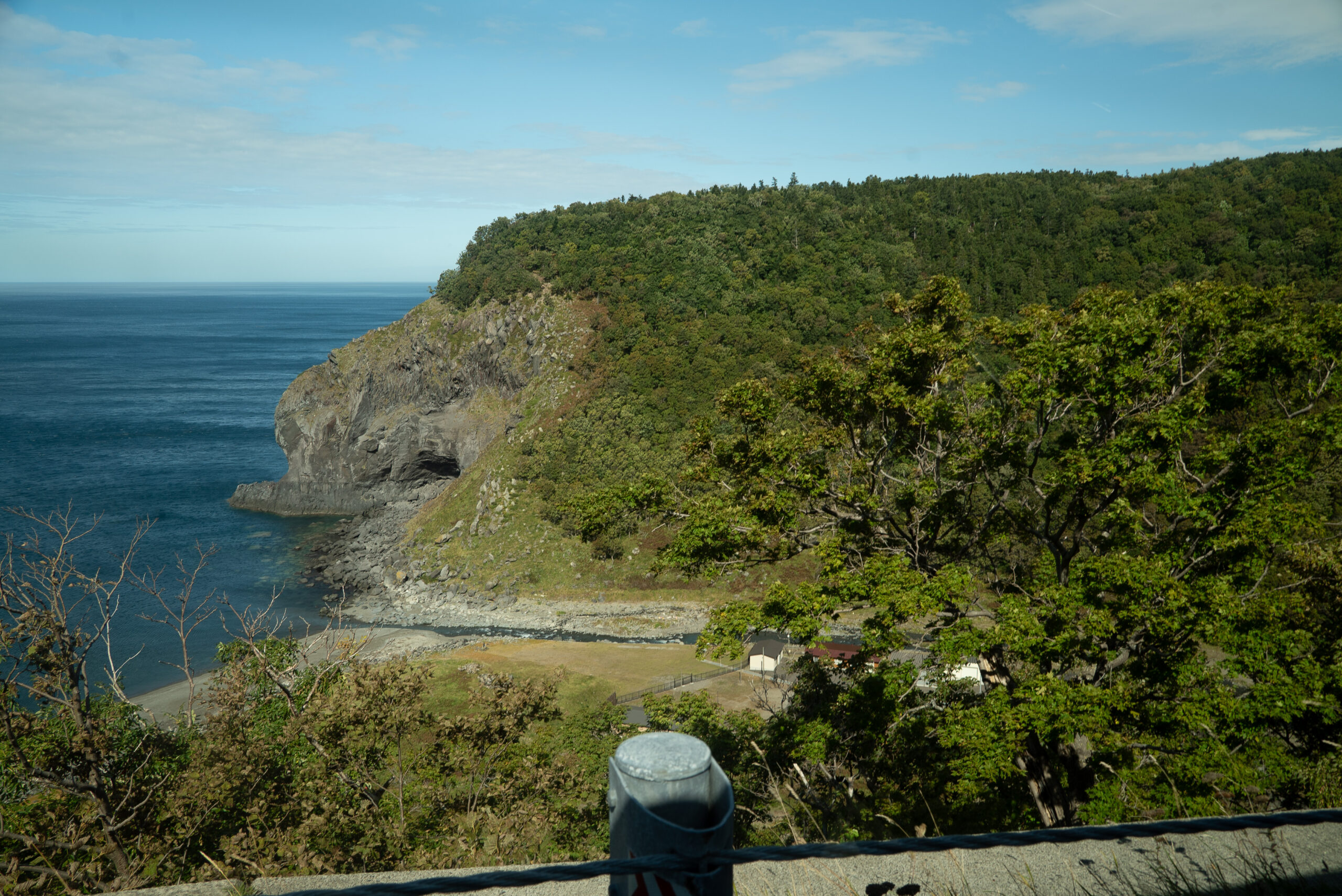
That’s it for Utoro!

Leave a Reply