


We are vegetarians and so it was quite a challenge to find food in Japan, if you’re outside of the larger metropolitan areas. For all the omnivors we can probably recommend everything, there’s mainly fish and different dishes containg bacon and we are certain that all of it tastes amazing, but for everyone who is in our position we have collected a few tips for the areas we visited.
Get an accomodation in which you can prepare fresh vegetables yourself. Almost everything else contains animals and/or animal products.
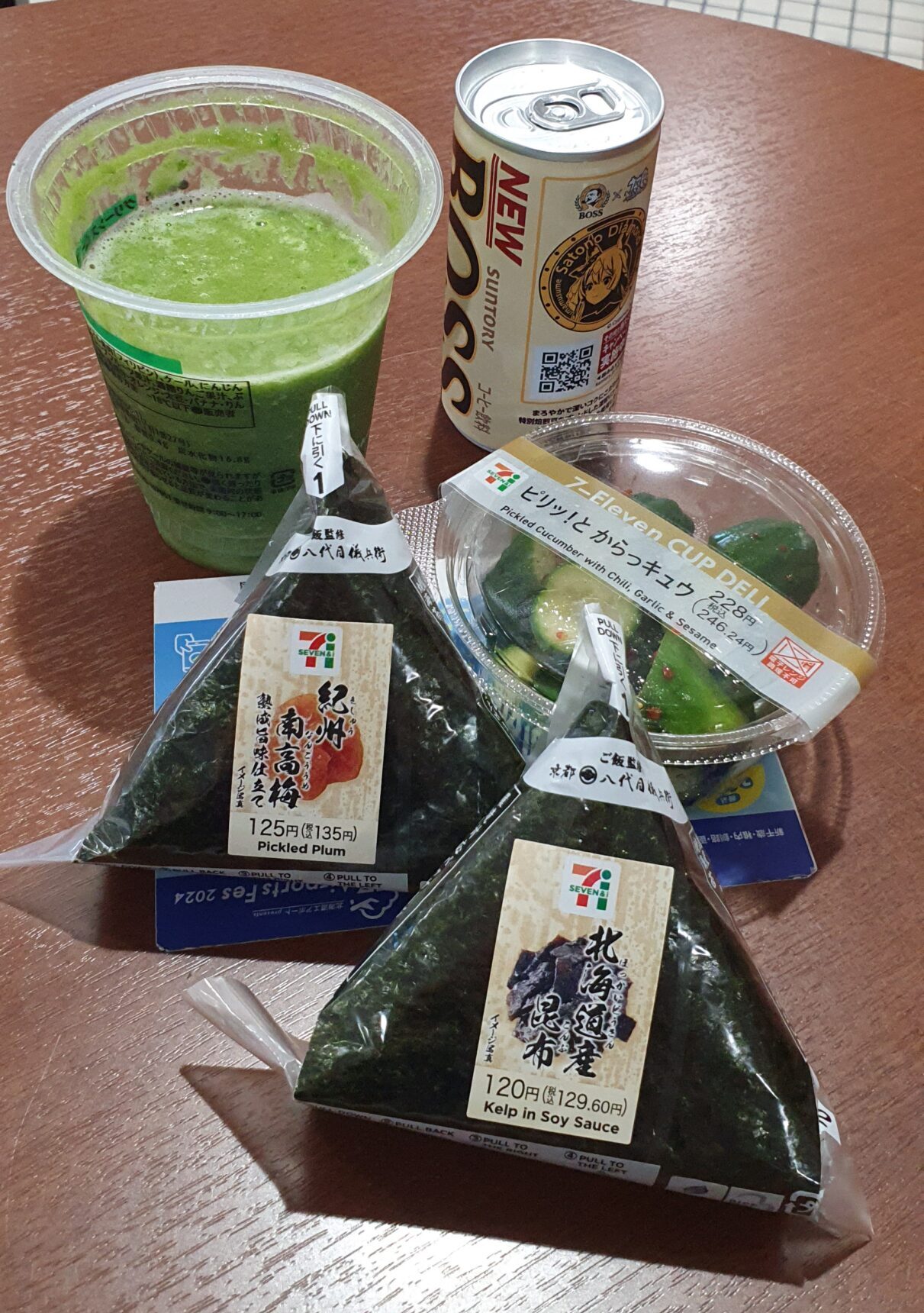
Don’t be deceived by clearly vegetarian looking foods! In most products there will be chicken stock, bacon, bonito flakes, beef extract and gelatin, even if you don’t see it at first. Here for example we bought some pickled cucumbers in a hurry. As we hadn’t eaten in a while and didn’t have a lot of time, we didn’t pay enough attention – obviously the dressing contains bonito flakes (katsuobushi).
We also saw a Sakuramochi (a desert) that contained fish protein. Often, the non-vegetarian ingredients feel completely pointless. We checked a package of instant noodles and they contained gelatin. What for? Vegans have even less chances of buying something ready-made. We bought a baguette that had the consistency of untoasted toast, but otherwise tasted like a normal German supermarket baguette. In Germany that would be made from flour and water, maybe a little yeast, raising agents, emulsifiers and conservatives. In Japan it additionally contains egg and milk. As though it was a cake.
7eleven sells nominally vegetarian (even vegan) products: Onigiri with pickled plum and algae. Neither could we find any non-vegetarian ingredients in the Inari-Sushi. But then we looked online and learned, that all of these are of course seasoned with katsuobushi, only that it doesn’t need to be delcared as the amount is so small. A fantastic piece of information… Before not being able to eat anything on the way, we decided to buy them anyways.
List of vegetarian products in konbini:
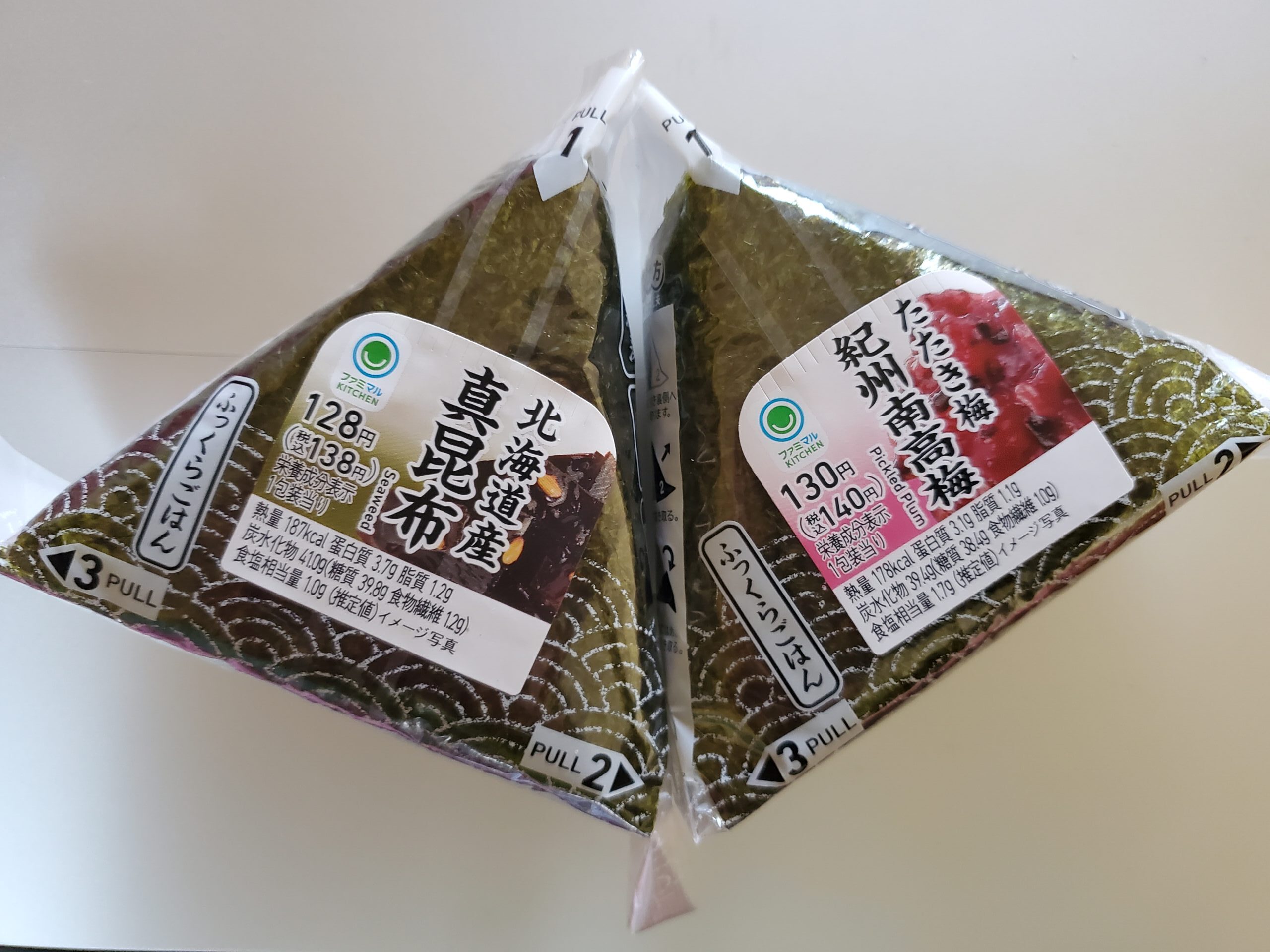
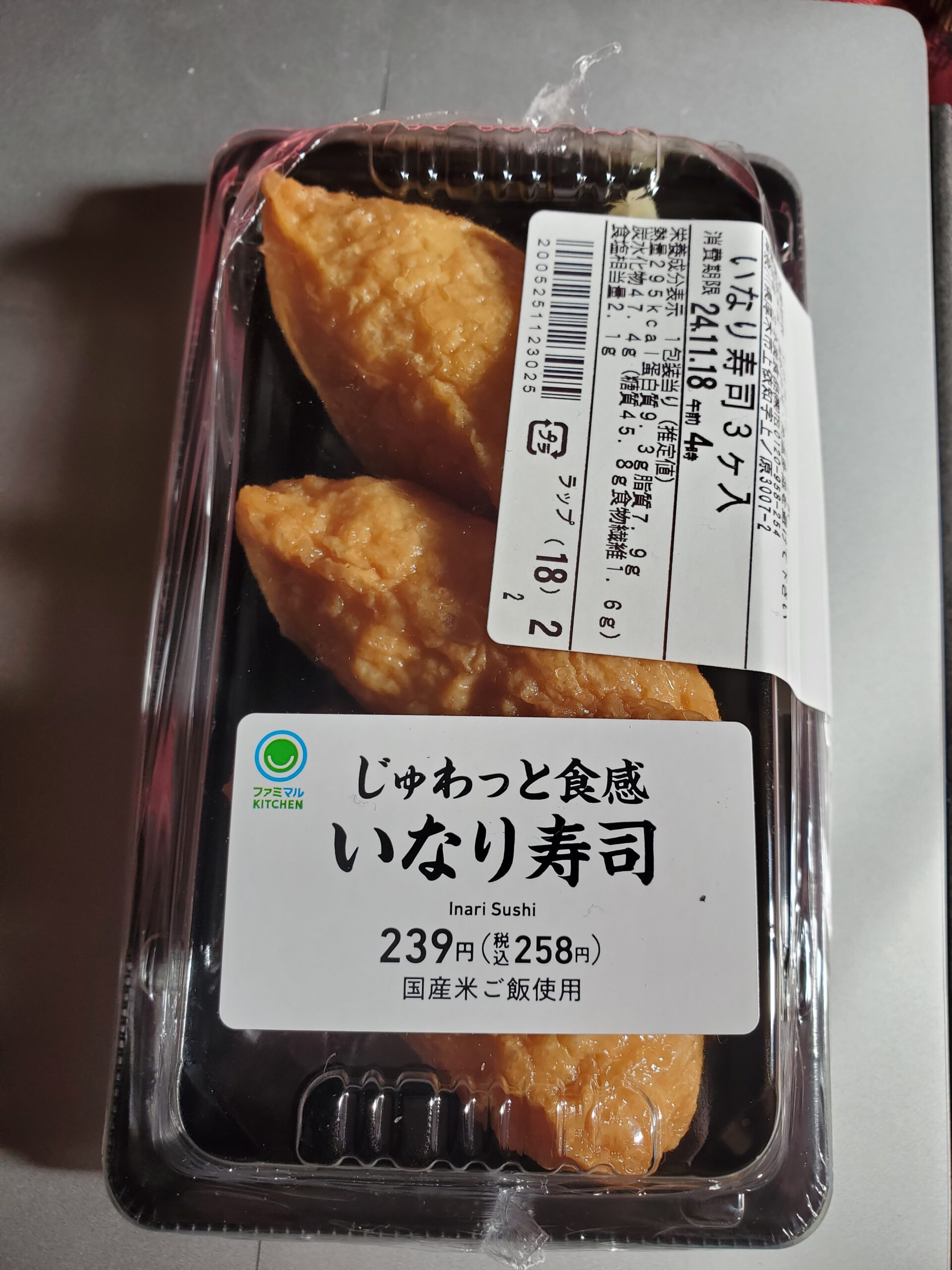
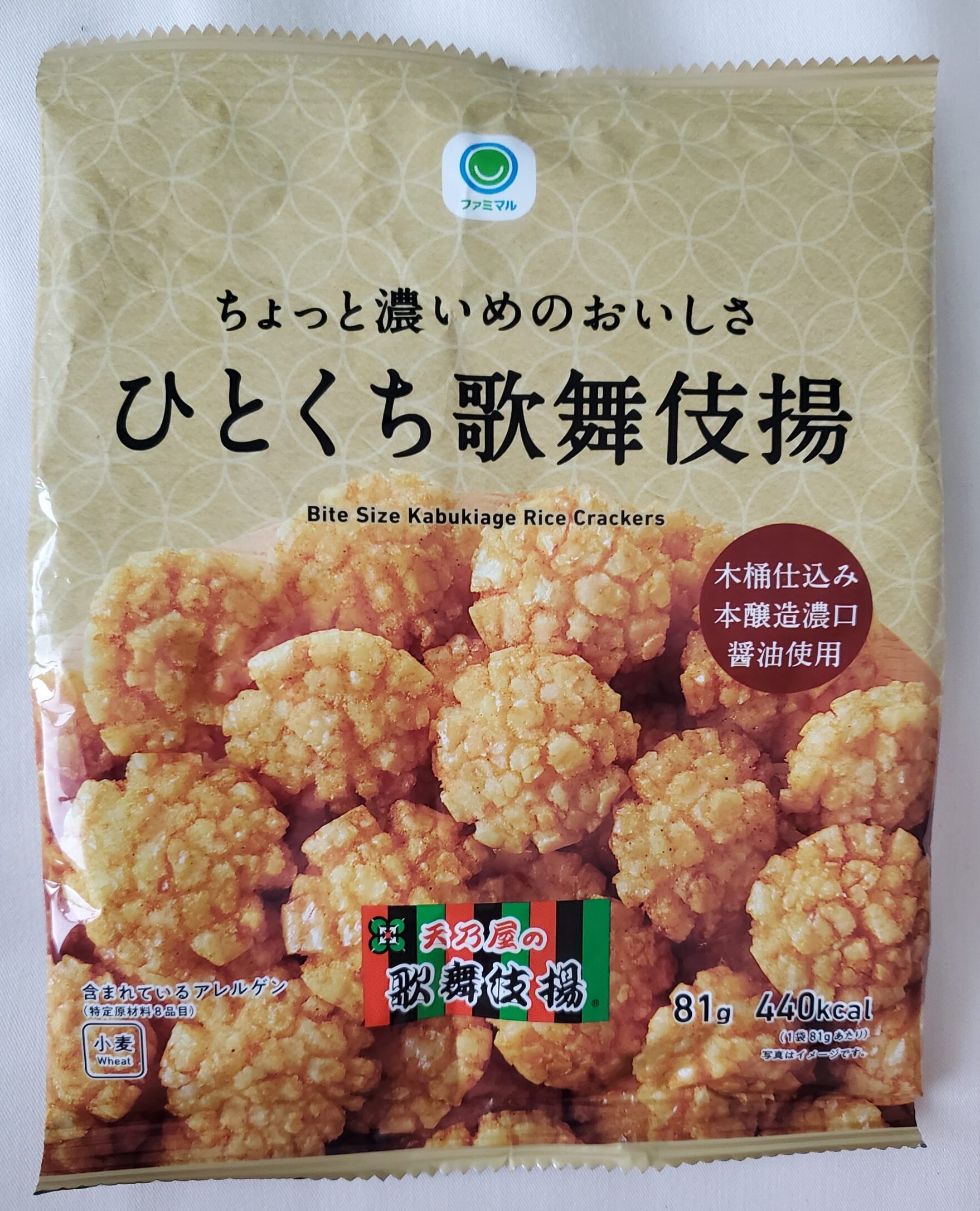
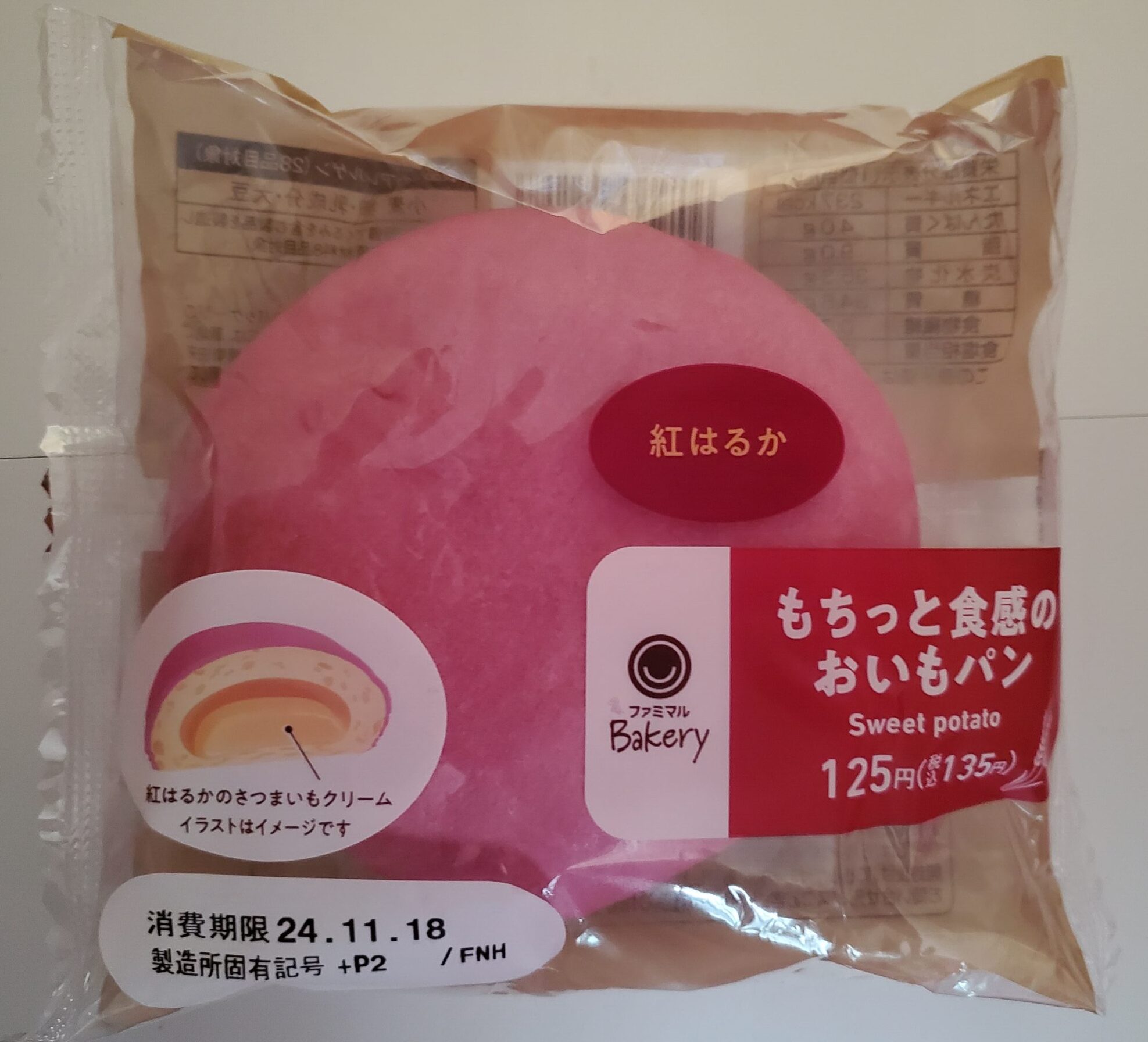
In all of the big konbini chains (7eleven, Family Mart and Lawson) they usually have onigiri of the types plum and kombu, inari-sushi. Among the snacks there’s kabuikage (rice crackers) that are vegetarian and at the register you can find a yellow-orange “pizza”-bun (“Pizaman” – the FamiMa one is the best) and the hash browns (hashutopoteto).
There’s also a margarita pizza-pocket that’s actually vegetarian (careful! the same product at Lawson contains fish!). Of course there’s all kinds of cake-like stuff, just have a look. We really like the “oimopan” (sweet potato bun) from FamiMa. The sweet potato sweets are generally surprisingly delicious and whenever we see something new in a sweet potato variant, we give it a try and are rarely disappointed.
Relevant symbols are 魚 (sakana, fish) and 肉 (niku, meat). They’re usually found in a compound with other kanji, but if they’re on there you should expect the product to be non-vegetarian. If you find something that clearly doesn’t contain meat but still includes a 肉 in the ingredient list, it’s probably fruit pulp 果肉 or cinnamon 肉桂 – so there’s no need to worry ; )
If you can read kana it’s quite helpful that the remaining non-vegetarian ingredients are often written in kana. Common offenders are チキン (chicken) ハム (ham) ベーコン (bacon) ビーフ (beef) ポーク (pork) くつお (katsuo) and of course ゼラチン (gelatin). Sometimes the products show a list of “allergens”, but beef and fish aren’t always included in that.
Sometimes you can get lucky with restaurants, too. Here our personal list of places where we could buy food in Hokkaido.
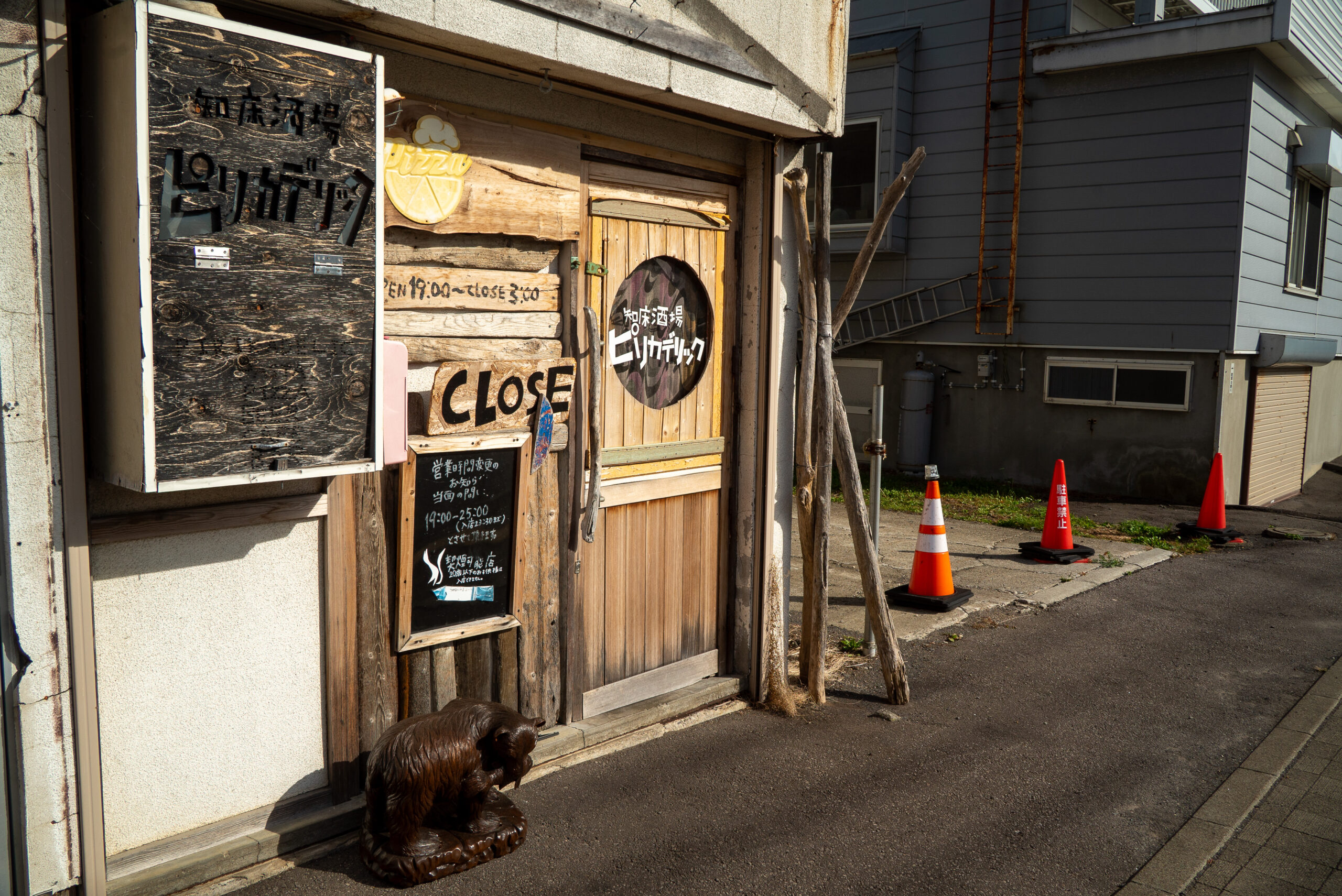
In Utoro we found something in 2 restaurants. Just vegetarian, though, not vegan. At Pirikaderikku we ate a pizza margherita and mushroom pasta. That might sound a bit boring, but it was not really comparable to the same dishes in Germany. It was delicious and the owner of the small shop was very friendly. We also tried a portion of potato salad, and that was actually quite similar to some german potato salads – delicious, at any rate.
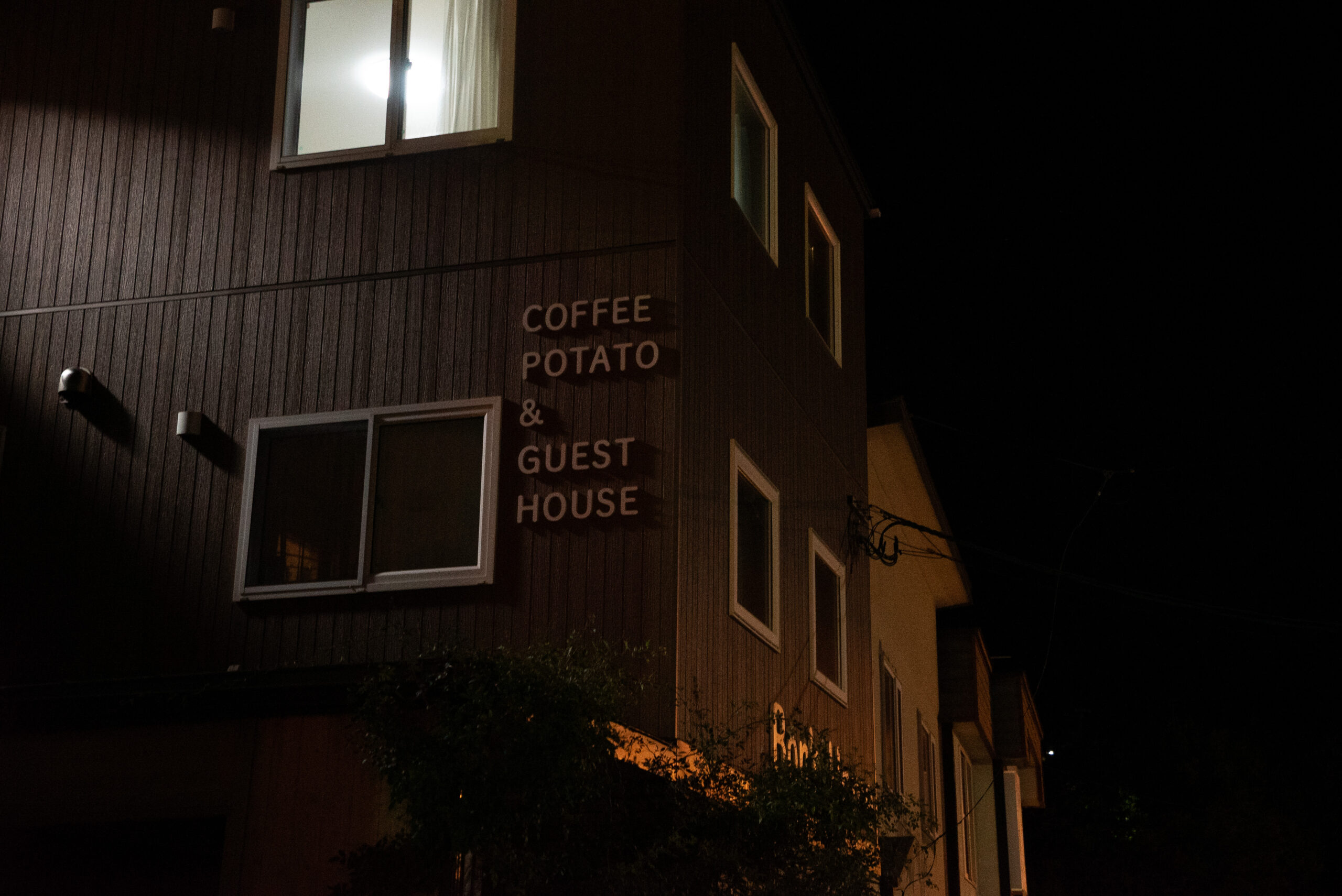
The next day we went to Bon’s Home: Coffee Potato & Guest House for lunch. We ate a portion of potatoes with butter and a potato casserole. The casserole usually contains bacon but it was no problem to get it without. The casserole was fine, the potatoes with butter delicious. A bit unusual in their consistency and also quite different from the varieties you get in a German supermarket. We can definitely recommend it, but know that you’ll only get three small potatoes, so if you’re really hungry, order two portions ; )
On our first day in Kushiro we ate at Hamashishi. That’s a sushi chain that serves the sushi you order via touchscreen at your table to you using multiple conveyor belts. As soon as you choose a dish on the screen it’s already on its way to you. We were still in the middle of ordering when we were quite surprised by the first little plate already arriving at our table. The vegetarian options aren’t that easy to find, but you can switch the menu to english and look at the details for every item, where they display all the “allergens” in the dish. Because Japanese people seem completely oblivious to the concept of “vegetarian”, you can’t use the actual filter function, because if you mark all meat and fish as “allergens”, no dish remains (maybe edamame). The filter knows no difference between “ingredients” and “may contain”. Because all products may contain traces of fish etc. due to the production methods (especially with the fried foods that’s understandable), all those dishes are marked with an exclamation mark. Once you know this, you can still quickly check whether it’s just traces or actual ingredients: ingredients have blue allergen icons and traces green.The only odd thing was that they had 3 kinds of fries (excellently fried, by the way, evene after standing around a bit they were super crispy), one with butter and soy sauce (making it the most interesting). For some reason that one contained gelatin and beef..
On the second day we wanted to go to a vegetarian/vegan café that also sells curry, but after the trail on that day being closed off it wasn’t much of a shock to find that the café (that we had went out of or way to walk to), was also closed for the day, because the owner was on a farmer’s market the next village over. The café looked nice from the outside. So it was instant noodles in the AirBnB for us.
On Sunday everything we wanted to try in Biratori was closed, but we found two vegetarian microwave dishes at Lawson and so we heated them up at our hostel and ate them there. As we got talking to the others in the community room, one woman was eating a pizza and we found out what had made the pizza dough at the Pikaderikku so different: Japanese people add milk and eggs to it! We’re not even sure whether it contains yeast at all. Since the topppings are also very different, a Japanese pizza and an Italian pizza share mostly optic similarities.
In Noboribetsu we asked the people ate our hostel’s reception for any recommendations for potentially vegetarian food options and were directed towards a close-by Yakitori-shop. Armed with this recommendation we made our way there and explained to the waiter that someone else already vouched for them being able to serve us vegetarian food by frying up vegetables and that we would like to have those. Whereupon we were shown the vegetable section in the menu. We are not certain if it would have worked if we had simply asked whether they had vegetarian options, because Japanese people seem to generally have no concept of vegetarianism and will rather be safe by saying “no, that’s not possible”. We tried all kinds of vegetable-yaki and meatless tempura and were fully satisfied. Everyone was really friendly and we only had bonito shavings on one dish ; ) We now told them that this isn’t vegetarian and if now and then someone comes by and orders vegetarian food, they will surely not forget. We are learning a lot in Japan and hope that some people will also learn a little from us.
In Onumakoen we ate 3 kinds of potato. It’s a bit crazy to order “Jagabataa” (“potaButter”) and to then eat a small cut open potato with a tiny piece of butter with chop sticks, but it tasts good and we are happy that no animals were harmed. 😀 We also had “Bataajaga” (butterPota), which is the same and “Imodango” (“tatoLump), which is quite unremarkable.
In Hakodate itself we didn’t eat anything since we were going to Hachinohe later in the evening and planned to try out the restaurant that was listed as “having a vegetarian option of a local dish” in the Michinoku Coastal Trail blog. Spoiler alert: the restaurant doesn’t exist.
Leave a Reply